Dak Galbi
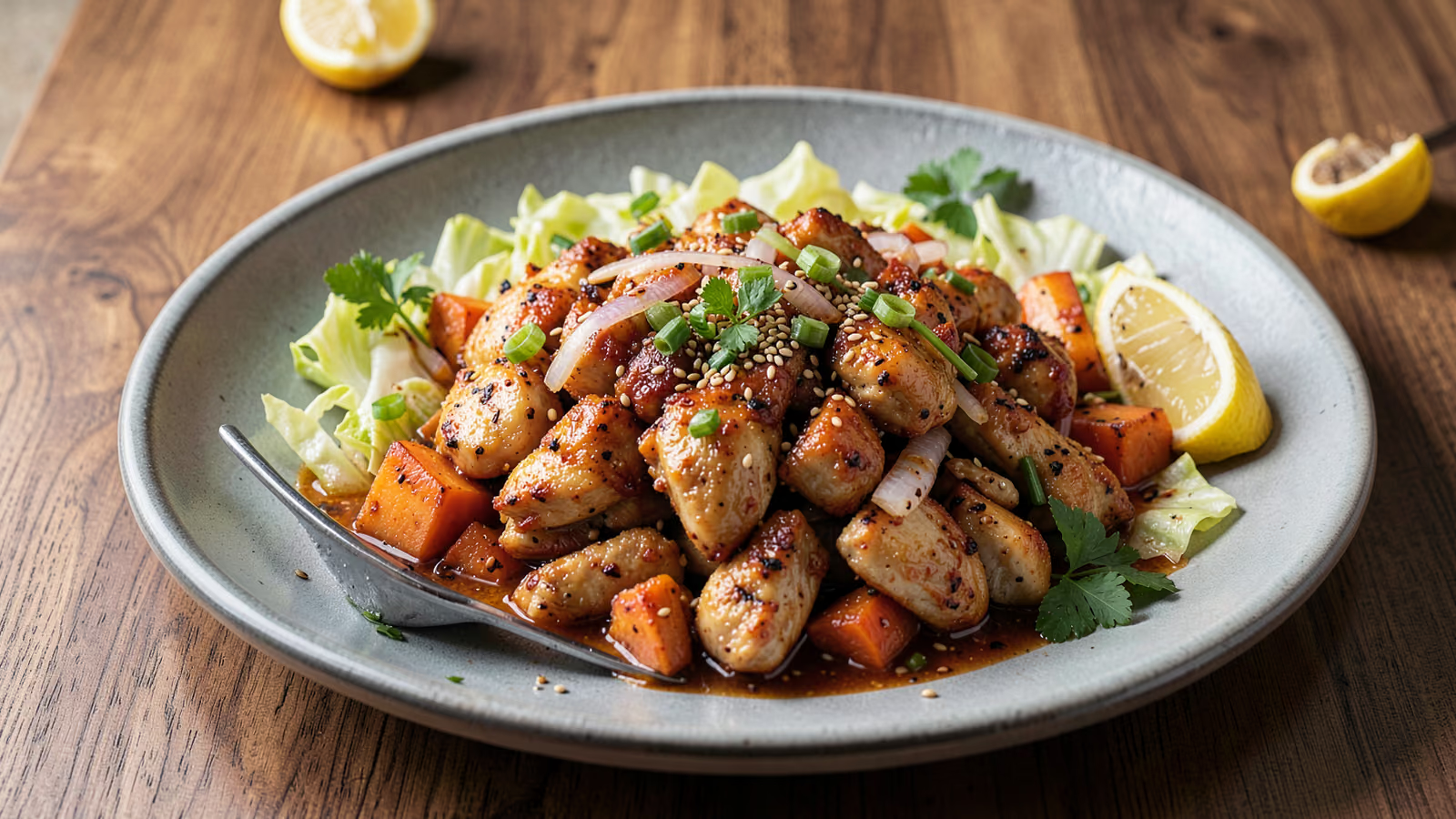
Dak galbi (닭갈비) is Chuncheon's signature one-pan stir-fry: bite-size chicken thighs tossed in a gochujang marinade, then cooked with green cabbage, sweet-potato half-moons, onion wedges and chewy rice cakes until everything wears a glossy, spicy glaze. This version keeps the whole dak galbi in one wide skillet, uses the marinade's fifteen minutes to get the vegetables cut, and melts optional mozzarella over the top for the modern cheese finish. Expect 20 minutes of prep and 25 minutes at the stove, enough for four.
- Prep
- 20 min
- Cook
- 25 min
- Total
- 60 min
- Additional time
- 15 min
- Serves
- 4
Ingredients
What you’ll need — tap to tick off as you go
- 700 g
- 3 tbsp
- 2 tbsp
- 2 tbsp
- 1 tbsp
- 1 tbsp
- 4 cloves
- 1 tbsp
- 1 tbsp
- 300 g
- 250 g
- 200 g
- 150 g
- 1 tsp
- 1 tbsp
Process
Timers built in · swap anything · ask as you cook
Whisk 3 tbsp gochujang, 2 tbsp gochugaru, 2 tbsp soy sauce, 1 tbsp sugar, 1 tbsp honey, the 4 grated garlic cloves, 1 tbsp grated ginger and 1 tbsp sesame oil in a large bowl until smooth. Add the 700 g of chicken pieces and toss until coated, then leave for 15 minutes while you cut the vegetables — the salt and sugar start seasoning the meat, and the paste thickens as it sits.
Cut the cabbage into 3 cm squares, the sweet potato into 1 cm half-moons, the onion into thick wedges and the green onions into 5 cm lengths. If the rice cakes feel firm, soak them in warm water for 10 minutes, then drain. Doing this before the pan goes on is not fussiness — from first sear to last glaze the dish moves in minutes, too fast to chop between stirs.
Heat the 1 tbsp of vegetable oil in a wide skillet over medium-high heat until it shimmers. Add the chicken in a single layer — use two batches if your pan is narrower than 30 cm — and leave it without stirring for 3 minutes so the undersides brown, then stir and cook 2 minutes more, until the pieces are lightly browned outside but still pink at the center.
Add the sweet potato and onion and stir-fry for 3 minutes, then add the cabbage and drained rice cakes and pour in 60 ml of water. Cover and cook for 6 to 8 minutes, stirring once or twice, until the sweet potato gives to a knife and the chicken is cooked through — check a thick piece; it should read 74°C on an instant-read thermometer.
Uncover, raise the heat to high and cook for 3 to 4 minutes, turning the pieces so the glaze coats them evenly. The sauce is ready when it no longer pools and clings to the chicken and vegetables; if it tightens toward a paste first, loosen it with a splash of hot water, and if it stays thin, give it another minute.
If using the mozzarella, push the chicken and vegetables to the sides of the pan, scatter the 150 g into the center, cover and melt over low heat for 2 minutes — gentle heat keeps the cheese smooth and stretchy, where high heat turns it oily. No lid, or a smaller pan? Transfer everything to a platter and melt the cheese under the broiler for 1 to 2 minutes.
Turn off the heat, scatter the green onions and toasted sesame seeds over the top and take the pan to the table. Serving straight from the pan keeps the dak galbi hot and lets everyone help themselves; the residual heat softens the scallions just enough, and nothing in this dish needs to rest.
Why this recipe works
Three things make dak galbi work. First, the marinade: gochujang and soy sauce season the chicken while the sugar and honey help its surface brown, then thicken into a glaze as moisture cooks off. Second, the pan: a single layer over real heat browns the pieces; pile them up and they steam pale in their own juices. Third, the sequence: a measured splash of water and the cabbage's own steam cook the dense sweet potato and rice cakes through under the lid, and the final uncovered minutes boil that water off so the sauce clings instead of pooling. Thigh meat stays juicy through both phases, and cheese melted over low heat stays smooth.
Equipment
- Wide, heavy skillet or shallow braising pan, about 30 cm across, with a lid — dak galbi needs the chicken in one layer, and a crowded pan steams instead of browns
- Large mixing bowl, for tossing the 700 g of chicken pieces through the marinade
- Small bowl and whisk, for smoothing the gochujang paste before it meets the chicken
- Instant-read thermometer, for checking the chicken at the thickest part (74°C)
- Chef's knife and cutting board, for the 3 cm chicken pieces, cabbage squares and sweet-potato half-moons
- Shallow dish of warm water, for soaking firm rice cakes until they bend
- Wooden spoon or flat-edged spatula, for turning the pieces and scraping the glaze back over them
Kitchen notes
Kitchen notes
- Marinate longer for deeper flavor: the 15-minute rest works, but the sauce can be mixed and the chicken left covered in the refrigerator for up to 24 hours; the salt and sugars work their way in, and the glaze tastes rounder.
- Grate the garlic and ginger to a paste rather than chopping them; a paste dissolves into the marinade and seasons every piece evenly and will not leave scorched bits when the sauce tightens at the end.
- Judge the glaze with the spoon test, not the clock: when it coats the back of a spoon and stops pooling, it is ready. Gone too far? A splash of hot water brings it back; still loose? Another minute uncovered fixes it.
- Prep everything before the pan goes on. From the first sear to the last glaze the dak galbi is minutes of fast work, and the sequence — chicken, then sweet potato and onion, then cabbage and rice cakes — depends on each addition being ready the moment its turn comes.
- Once the water cooks off, stay at the stove: the sugars in the marinade can scorch within moments. Keep the pieces turning through the glaze, tilt the pan and spoon the sauce back over anything sitting high.
Common mistakes
- Pale, steamed chicken: the pan was crowded or not hot enough, so the pieces poached in their own juices instead of browning. Keep the chicken in a single layer in the widest skillet you own, and sear in two batches if needed — the browning is where much of the flavor is built.
- Watery sauce: more liquid went in than could cook off, or the lid came off too late. Stick to the 60 ml, and finish with the lid off over high heat for 3 to 4 minutes; the sauce should thicken enough to cling to the pieces before the cheese, if using, goes in.
- Rice cakes hard at the center: they went in straight from the fridge or freezer without soaking. Soak firm cakes in warm water for 10 minutes until they bend, then drain well — soaked cakes turn pillowy in the sauce instead of staying tough.
- Raw sweet potato while the cabbage collapses: the slices were cut too thick or joined the pan too late. Keep them at an even 1 cm and add them with the onion, a full 3 minutes before the cabbage, so the covered stretch has time to soften them.
- Dry, stringy chicken: breast meat was used, or the pieces cooked past their moment. Thighs stay juicy through the glaze phase; check for 74°C at the thickest part and stop there.
- Greasy, splitting cheese: high heat or wet fresh mozzarella makes it weep oil instead of melting smoothly. Use low-moisture shredded mozzarella, drop the heat to low and cover the pan for 2 minutes — the trapped warmth melts it into a clean, stretchy pool.
Serving suggestions
- Take the pan to the table and serve dak galbi straight from it with steamed rice — the communal setup is how it lands in Chuncheon, and it keeps every bite hot.
- Set out lettuce and perilla leaves for wraps: a piece of chicken, a rice cake and a little cabbage, with a dab of ssamjang, is the classic bite.
- Cold, crunchy sides cut the heat — kimchi, pickled radish or a sesame-dressed cucumber salad work especially well against the gochujang glaze.
- Keep something cold and unsweetened on the table, such as barley tea or sparkling water, and remember the pan feeds four as a main; rice and wraps stretch it further.
Variations
- Cheese moat: push the finished dak galbi to the center, ring the outside of the pan with the full 150 g of mozzarella, cover and melt over low heat — the restaurant version, built for dragging each spicy bite through stretching cheese.
- Charcoal-grilled (sutbul) style: Chuncheon's older way grills the marinated chicken over charcoal rather than stir-frying it; at home, cook the pieces on a ridged grill pan or under the broiler, then fold them into the pan-cooked vegetables and rice cakes.
- Fried-rice finish (bokkeumbap): when only sauce and scraps remain, add cooked rice and chopped kimchi to the pan and fry over medium heat until the rice takes on the glaze — the standard ending to a dak galbi dinner in Korea.
Refrigerator
- RefrigeratorCool the pan quickly — spread the dak galbi into a shallow container rather than leaving it in the skillet — and refrigerate within 2 hours. It keeps for up to 3 days; the rice cakes firm up in the cold and the cabbage gives off a little liquid, so the texture softens on reheating.
- ReheatingWarm it in a covered skillet over medium heat with a splash of water for 5 to 7 minutes, or microwave it covered in 2 to 3 minutes; either way, bring it back to 74°C throughout before serving.
- FreezingNot recommended for the whole dish: thawed rice cakes turn hard and the cabbage and sweet potato go watery. In a pinch, freeze just the chicken and sauce for up to 3 months, thaw overnight in the refrigerator, reheat to 74°C and serve with freshly cooked vegetables.
- Make aheadMix the sauce and toss the chicken in it up to 24 hours ahead, covered in the refrigerator, and cut the vegetables up to 2 days ahead. Cook the dak galbi fresh — it takes 25 minutes and does not benefit from being reheated as a whole.
Updated:
How this recipe was developed
- USDA FSIS, Safe Minimum Internal Temperature Chart — poultry such as chicken must reach 74°C, and leftovers must be reheated to 74°C
- USDA FSIS, Leftovers and Food Safety — refrigerate cooked food within 2 hours, keep leftovers 3 to 4 days refrigerated or 3 to 4 months frozen, and reheat to 74°C
- Korean Bapsang (Hyosun Ro), Dakgalbi (Stir-Fried Spicy Chicken) — soaking the rice cakes, marinating the chicken in the sauce while the vegetables are prepped, the covered simmer that uses the vegetables' steam, and serving in lettuce and perilla wraps with ssamjang
- Korea Tourism Organization, VisitKorea, Dakgalbi: A Stir-Fried Delicacy on an Iron Plate — the Chuncheon origin story, the shift from charcoal grilling to the iron plate, boneless chicken thigh as the standard cut, and the two local styles
Editorial references are kept internally for verification. This page makes no claim of external certification or professional testing.
FAQ
The questions we get asked most
What is dak galbi made of?
Dak galbi centers on 700 g of boneless chicken thighs marinated in 3 tbsp gochujang, 2 tbsp gochugaru, 2 tbsp soy sauce, 1 tbsp each of sugar and honey, plus 4 grated garlic cloves, 1 tbsp grated ginger and 1 tbsp toasted sesame oil. That marinade becomes the cooking sauce, and the pan adds 300 g of green cabbage, 250 g of sweet potato, 1 onion, 200 g of rice cakes and 4 green onions, with shredded mozzarella and sesame seeds optional at the end. Everything cooks together in one wide skillet and serves four.
Is dak galbi the same as galbi?
No. Galbi (갈비) is the Korean name for grilled or braised short ribs — galbi-gui, LA galbi and galbijjim all sit in the rib family — while dak (닭) means chicken, and dak galbi is a boneless chicken stir-fry. The dish took on the galbi name in Chuncheon, where chicken was the affordable way to cook something in the rib-grill style, so the two share a word, not a recipe. Order galbi when you want ribs; order dak galbi for a spicy one-pan stir-fry with cabbage, sweet potato and rice cakes.
What does dak galbi taste like, and how spicy is it?
Dak galbi tastes sweet, savory and spicy at once: gochujang and gochugaru bring both heat and a fermented depth, while the sugar and honey round it into something glossy rather than sharp. The vegetables turn soft and sweet, the rice cakes stay chewy and soak up sauce, and the optional cheese cools every bite. With the full 2 tbsp of gochugaru and a standard gochujang, the heat lands at a firm medium — noticeable, but not punishing — and the mozzarella softens it further.
What is cheese dak galbi?
Cheese dak galbi is the modern version of the dish, finished with shredded mozzarella that melts into a stretchy pool for dipping each spicy bite. In Korean restaurants the cheese is usually ringed around the pan or run in a river down the middle and left bubbling at the table; the same shortcut works at home with 150 g melted in the cleared center of the pan for 2 minutes under a lid. The dairy tames the chili and adds richness, which is much of the cheese version's appeal.
What can I use instead of rice cakes?
For the closest match, 200 g of cooked udon or thick rice noodles, stirred in for the last minutes of the covered simmer so they warm through without turning mushy. Sliced waxy potato keeps the one-pan ease but loses the chewy pull, and plain steamed rice on the side covers the starch without pretending to be tteok. If you do have rice cakes, soak the firm ones in warm water first — a plush, sauce-drinking cake depends on it.
Why is my dak galbi sauce too watery?
Usually because more liquid went in than came out: this version needs just 60 ml of added water, and the cabbage sheds plenty of its own. If the pan still looks soupy once the chicken is cooked, take the lid off and keep cooking over high heat for 3 to 4 minutes — the water must evaporate before the sugars can thicken into a glaze. A crowded pan is the other culprit, because a pile of vegetables steams and releases water instead of letting the sauce reduce.
How do I make dak galbi less spicy?
Adjust at the mixing bowl: use a mild gochujang and pull the gochugaru down from the full 2 tbsp, because the paste and the flakes each add heat, and reducing only one leaves the dish hot. The measured honey and sugar round off the burn, and melting the mozzarella over the top softens it further. Taste the marinade before the chicken goes in; once the sauce has cooked down, the heat is hard to dial back.
Ask KitchenMind about this recipe
Tell it what’s different tonight — it works within the actual recipe.