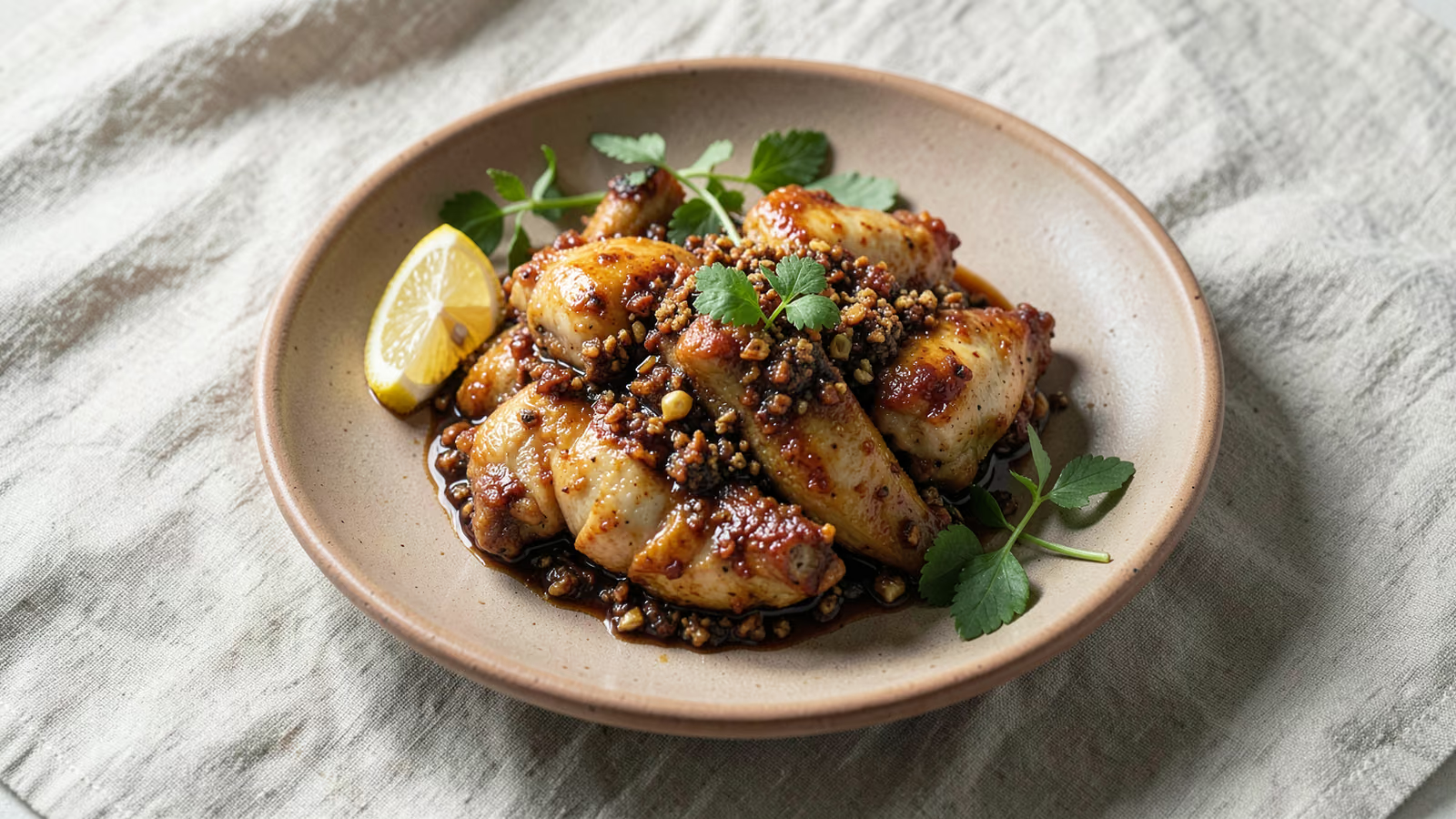
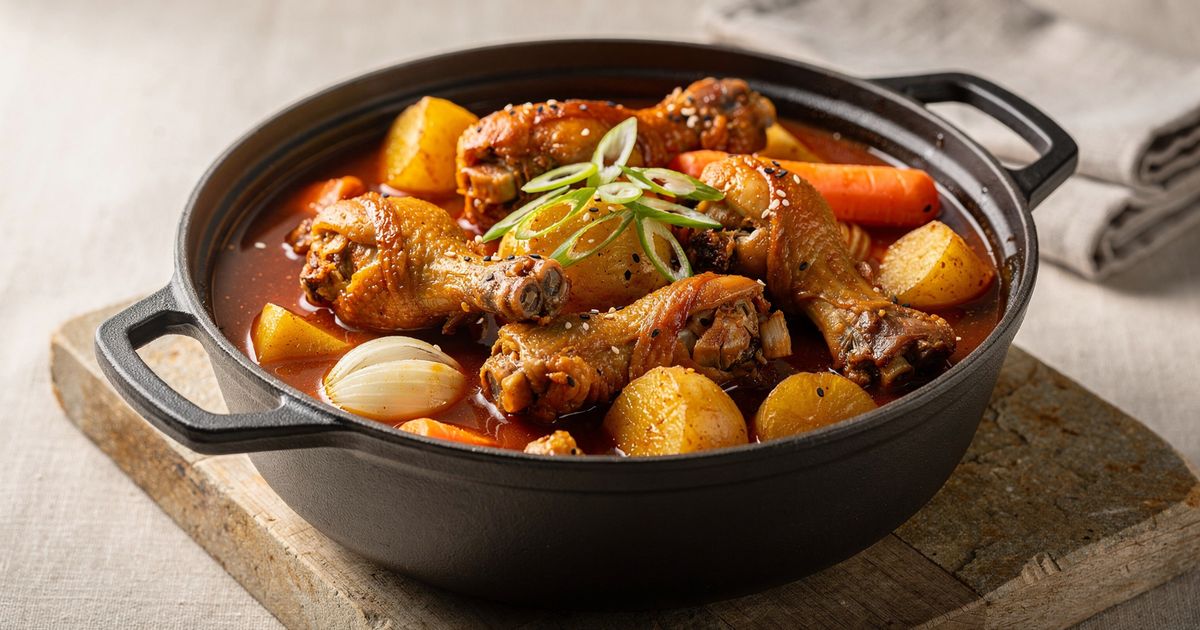
- Prep
- 20 min
- Cook
- 25 min
- Total
- 45 min
- Serves
- 4
Ingredients
What you’ll need — tap to tick off as you go
- 700 g
- 3 tbsp
- 2 tbsp
- 2 tbsp
- 1 tbsp
- 1 tbsp
- 4 cloves
- 15 g
- 1 tbsp
- 300 g
- 200 g
- 200 g
- 6 slices
- 1 tbsp
- 1 tbsp
- 1 g
Process
Timers built in · swap anything · ask as you cook
In a large bowl, whisk together the gochujang, gochugaru, soy sauce, sugar, honey, garlic, ginger and sesame oil until smooth. Add the chicken thigh pieces and turn to coat. Set aside while you prepare the vegetables.
If using rice cakes straight from the fridge, soak them in warm water for 10 minutes, then drain. Cut the cabbage into 3 cm squares, peel and slice the sweet potato into 5 mm half-moons, slice the onion 1 cm thick, and cut the spring onions into 5 cm lengths.
Heat a wide, heavy skillet or shallow pot over medium-high heat. Add the vegetable oil, then the marinated chicken in a single layer. Cook for 3 minutes without moving, then stir and cook 2 minutes more until the outside is no longer pink.
Add the sweet potato and onion to the pan. Stir-fry for 4 minutes until the onion starts to soften and the sweet potato edges look glossy.
Add the cabbage and drained rice cakes. Toss everything together and cook for 5 to 6 minutes, stirring often, until the cabbage wilts and the rice cakes are soft and chewy. If the pan looks dry, add 2 to 3 tablespoons of water rather than more oil.
Push the ingredients to one side and let the sauce at the bottom bubble and caramelize for 1 minute, then stir it back through. Taste and add the salt only if needed.
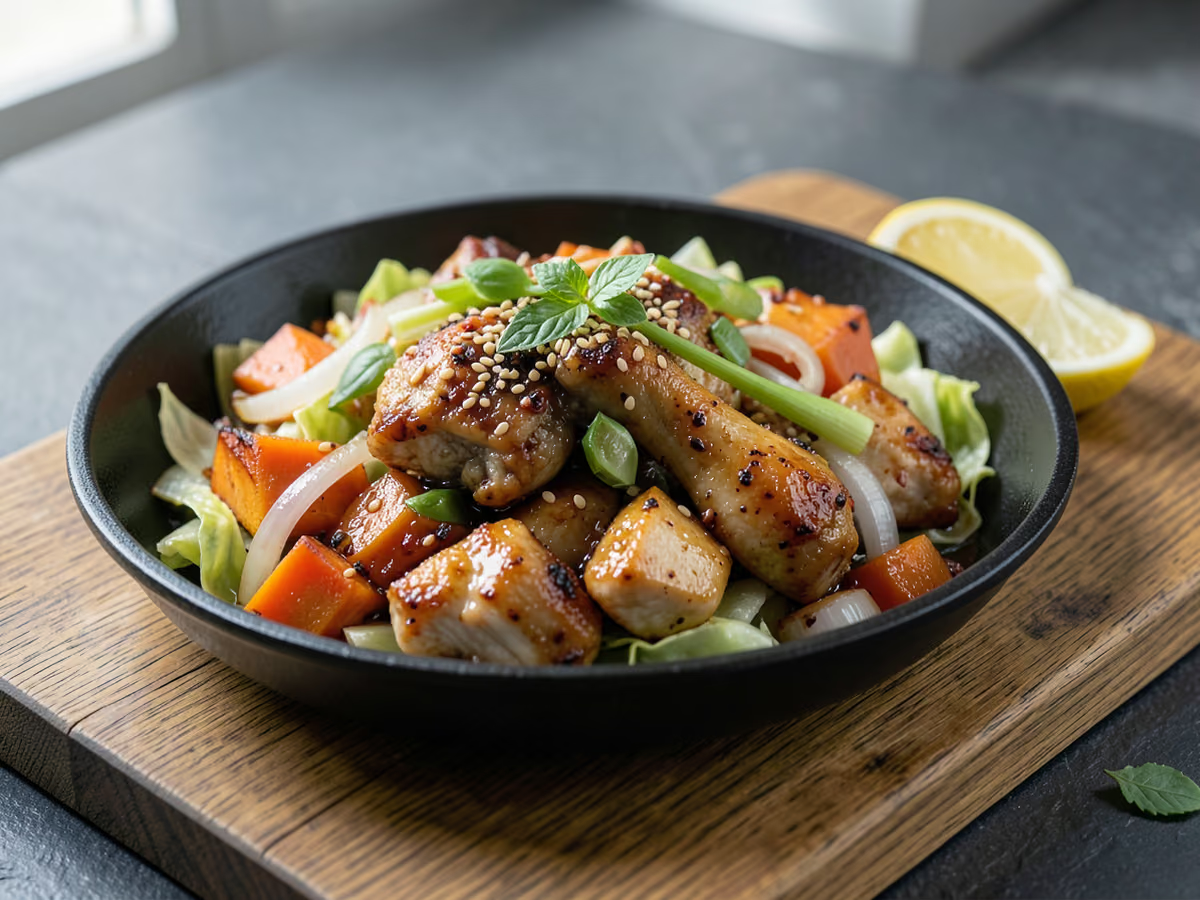
Turn off the heat. Scatter over the spring onions, perilla leaves and toasted sesame seeds. Serve straight from the pan with steamed rice.
Kitchen notes
Kitchen notes
- The most common mistake is crowding the pan: use the widest skillet you own, or cook in two batches, otherwise the chicken and cabbage steam instead of caramelizing.
- Dakgalbi is done when the sauce clings to the chicken and rice cakes rather than pooling, and the cabbage is wilted but still has a slight bite, about 12 to 14 minutes total cooking.
- Soaking refrigerated rice cakes in warm water for 10 minutes keeps them chewy; skipping this makes them hard and rubbery in the finished dish.
- If your gochujang is old and thick, loosen it with 1 tablespoon of water before whisking the marinade so it coats the chicken evenly.
Substitutions
- chicken thighs→boneless chicken breast or firm tofu
- gochugaru→1 tbsp sweet paprika plus 1 tsp chilli flakes
- rice cakes→cooked udon noodles or thick sliced potatoes
- sweet potato→carrot cut into 5 mm rounds
- honey→maple syrup or extra 1 tsp sugar
Storage & reheating
Cool leftovers within 1 hour and store in an airtight container in the fridge for up to 3 days. Freeze in portions for up to 1 month; thaw overnight in the fridge. Reheat in a covered skillet over medium heat with 1 tablespoon of water for 5 to 7 minutes, or in the microwave at 700 W for 2 to 3 minutes, until piping hot. The rice cakes soften further on reheating, so add them fresh if you can.
FAQ
The questions we get asked most
Why did my dakgalbi turn out watery instead of sticky?
The cabbage released water because the pan was too crowded or the heat was too low. Cook in a single layer over medium-high heat and let the sauce bubble at the end for 1 minute before stirring it back through. If it is still loose, remove the solids with a slotted spoon and reduce the sauce for 2 minutes.
Can I make dakgalbi ahead of time?
Yes, the marinade can be mixed and the chicken left to marinate in the fridge for up to 24 hours. You can also stir-fry the whole dish up to 1 day ahead and reheat it gently. Add the spring onions, perilla leaves and sesame seeds only after reheating so they stay fresh.
How do I know when the chicken is fully cooked?
Cut the thickest piece of chicken in half: the centre should be opaque white with no pink, and the juices should run clear. At a steady medium-high heat this takes about 5 to 6 minutes for 4 cm pieces. If you are unsure, cook 1 to 2 minutes longer; the sauce keeps it moist.
Can I use chicken breast instead of thighs?
Yes, but breast dries out faster. Cut it into slightly larger 5 cm pieces, marinate for only 15 minutes, and add it to the pan after the sweet potato has had 2 minutes head start. Reduce the total stir-fry time by about 2 minutes.
What can I use if I do not have rice cakes?
Cooked udon noodles, thick slices of potato, or even chewy Korean-style noodles work well. If using potato, add it with the sweet potato so it cooks through. Udon should go in during the last 2 minutes just to heat through.
Is dakgalbi very spicy, and can I tone it down?
It is moderately spicy, driven by the gochujang and gochugaru. For a milder version, use 1 tbsp gochujang and 1 tsp gochugaru, and add 1 extra tsp honey. The sweetness and sesame oil round off the heat, so do not skip them.
Can I cook dakgalbi in a slow cooker or on a portable burner at the table?
A portable burner at the table is traditional: stir-fry the chicken and vegetables in the pan, then let everyone eat as it finishes cooking. A slow cooker makes the cabbage mushy, so if you must, cook on high for 2 hours and add the cabbage in the last 30 minutes.
Ask KitchenMind about this recipe
Tell it what’s different tonight — it works within the actual recipe.