Vegetable Couscous
Vegetable couscous is a complete meatless one-pot dinner from the Maghreb: fluffy steamed semolina under a stew of carrots, zucchini and chickpeas in a cumin-and-paprika-scented tomato broth. The stew simmers in one pot, and the couscous itself needs only boiling water and ten covered minutes in a bowl. Prep runs about 20 minutes, the pot is hands-off for another 20, and four generous plates are ready in well under an hour. It is vegetarian, vegan and dairy-free as written, and hearty enough to carry the meal on its own.
- Prep
- 20 min
- Cook
- 35 min
- Total
- 55 min
- Serves
- 4
Ingredients
What you’ll need — tap to tick off as you go
- 300 g
- 3 tbsp
- 3 cloves
- 400 g
- 2 tbsp
- 2 tsp
- 1 tsp
- 1 tsp
- ½ tsp
- 500 ml
- 1 tsp
- ½ tsp
- 15 g
Process
Timers built in · swap anything · ask as you cook
Heat 2 tbsp of the olive oil in a large pot over medium heat. Add the diced onion and cook for about 5 minutes, until soft and translucent, then add the 3 minced garlic cloves and cook for 1 minute more, until fragrant but not browned. Garlic caught this early and kept brief turns sweet instead of bitter.
Stir in the 2 tbsp tomato paste, 2 tsp ground cumin, 1 tsp ground coriander, 1 tsp sweet paprika and 0.5 tsp cinnamon. Cook for 1 minute, stirring constantly, so the spices toast in the hot oil and the paste darkens to brick red. Toasting is not optional here: it is what turns raw powder into the deep, rounded flavour the whole stew rests on.
Add the 2 carrots and 2 zucchini in 2 cm chunks, along with the drained 400 g chickpeas. Pour in the 500 ml hot vegetable broth and season with the 1 tsp salt and 0.5 tsp black pepper. Bring to a boil, then reduce the heat to low, cover and simmer for 20 minutes, until the carrots are tender when pierced with a knife while the zucchini still holds its shape.
While the vegetables simmer, put the 300 g couscous in a wide bowl and drizzle with the remaining 1 tbsp olive oil, rubbing it in with your fingers until every grain is coated. Pour over 300 ml boiling water, cover the bowl tightly with a plate and leave it for 10 minutes without touching it. The trapped steam rehydrates the grains; stirring now would release starch and glue them together.
Uncover the couscous and fluff it thoroughly with a fork, lifting and breaking apart any lumps rather than pressing them down. Taste it and add a pinch of salt if the grains need it, then cover loosely again so the bowl stays warm while the stew finishes on the stove.
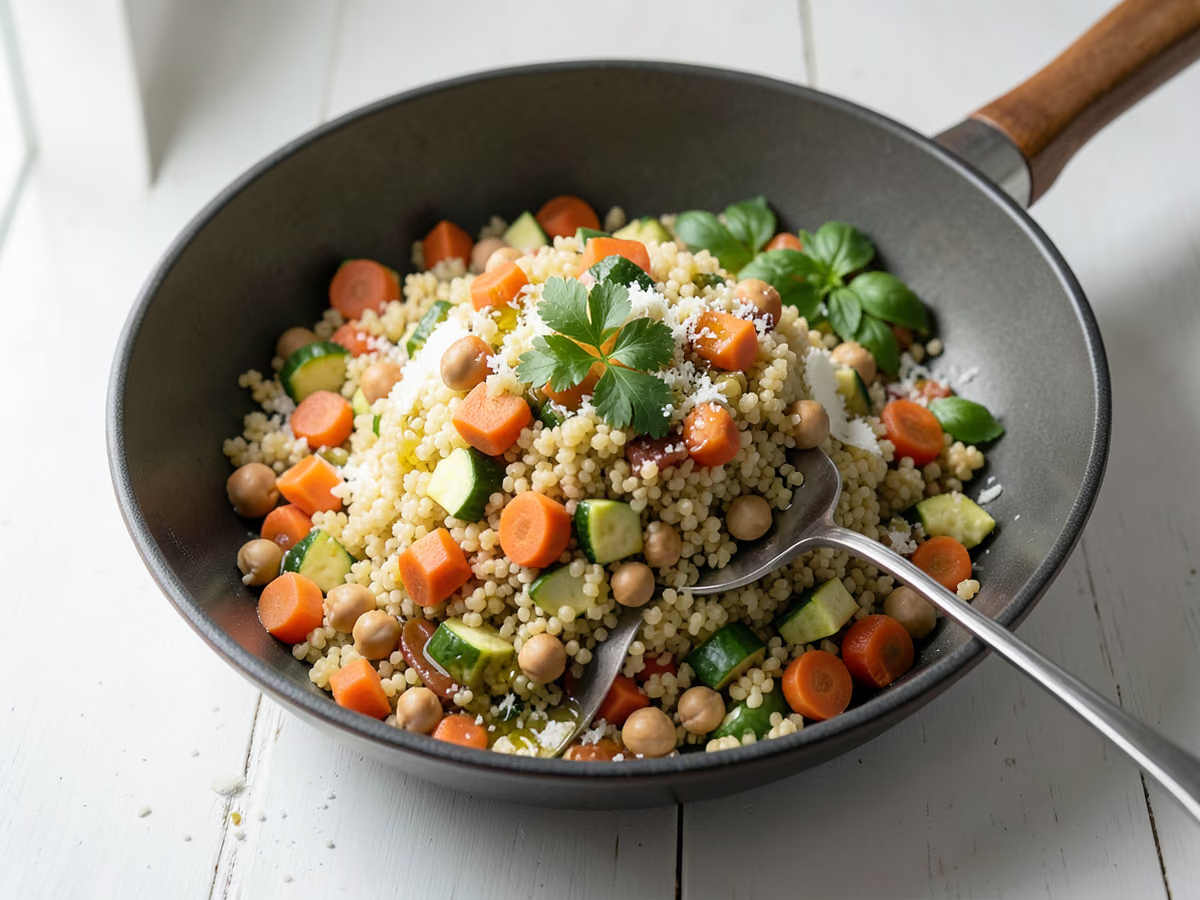
Spoon the couscous onto a large platter or into four shallow bowls and shape it into a low mound. Ladle the stew and chickpeas over the top, with plenty of broth, and scatter over the 15 g chopped parsley. Serve with the lemon wedges for squeezing at the table, and bring any extra broth along, since the grains keep drinking it.
Why this recipe works
The method splits the work for a reason: the stew simmers covered while the couscous rehydrates off the heat, so the grains never sit in liquid or get stirred into paste. Rubbing the last of the oil through the dry grains gives each one a film of fat that keeps it separate as it swells, and the ten sealed minutes let steam finish the job evenly. In the pot, the spices hit the hot oil with the tomato paste for a full minute before any liquid arrives; the flavour compounds in cumin, coriander and paprika are fat-soluble, and that minute is what draws them out. The chickpeas thicken the broth just enough to cling to every grain.
Equipment
- Heavy 4 to 5 liter pot with a lid, wide enough to hold the vegetables in one layer
- Wide heatproof bowl, big enough to hold 300 g of couscous with room to swell
- Plate or lid that sits snugly over the bowl to trap the steam
- Kettle, for the 300 ml of boiling water
- Chef's knife and cutting board
- Measuring cups and spoons
- Fork, for fluffing the grains
- Large serving platter or four shallow bowls
Kitchen notes
Kitchen notes
- Build the traditional mound: spoon the couscous onto the platter, hollow a crater in the middle, and ladle the stew into the crater so the broth sinks through the grains on its way down, then heap the vegetables on top. That is how the dish is presented across the Maghreb, and the layers keep the grains from flooding all at once.
- Cut the vegetables to one size and the 20-minute simmer does everything right: square off the carrots and zucchini at 2 cm, and halve any thick carrot lengthwise so every piece finishes at the same moment.
- Let the finished stew sit off the heat, covered, for about 5 minutes before you fluff the couscous: the flavours meld, the starch from the chickpeas tightens the broth slightly, and the pot tastes finished rather than sharp.
- Taste the broth twice — once when the salt first goes in and once when the vegetables are tender; the second taste is the one that decides dinner, because the zucchini and chickpeas have moved the balance by then.
- Add the lemon at the table rather than into the pot: fresh acid cuts the starchy weight of the semolina and sharpens the cumin, while a simmer would only flatten it.
Common mistakes
- Mushy, clumped couscous: too much water, or a stir at the wrong moment. Use exactly 300 ml of boiling water for the 300 g of grain, cover tightly and leave it alone for 10 minutes, then fluff with a fork — stirring presses the grains together and the starch they release sets into lumps.
- Flat, bland bowl: the semolina was expected to season itself, but it brings no salt and tastes only of what it absorbs. Season the stew properly with the 1 tsp salt and 0.5 tsp black pepper, taste it before ladling, and adjust the grains with a pinch at the end.
- Zucchini collapsing into the broth: it was cut smaller than the carrots, or the simmer ran long. Keep every chunk at 2 cm, start testing the carrots at 18 minutes, and pull the pot as soon as a knife slides in easily.
- Raw or bitter spice note: the spices went in too dry or at too high a heat. Let them cook in the oil with the tomato paste for a full minute, stirring, until the paste turns brick red and the smell turns sweet; scorched spices cannot be rescued later.
- Dry or clumped grains at serving time: the bowl was covered loosely and the steam escaped, or the couscous sat too long after fluffing. Seal it with a snug plate, keep the bowl warm while the stew finishes, and fluff a second time right before serving.
Serving suggestions
- Serve hot in shallow bowls or on one platter, the stew ladled over the mound with plenty of broth; bring extra broth to the table, because the grains keep drinking.
- Plain yogurt and harissa make the classic pair of additions — one cooling, one hot — for anyone who wants them; the dish is complete without either.
- It is written as a main; halve the portions and it makes a generous side next to grilled fish or tofu.
- A cucumber-and-tomato salad, a handful of olives and warm flatbread round out the table; finish with the lemon wedges.
Variations
- Market vegetables: bell peppers, green beans or butternut squash can stand in for part of the carrots and zucchini — squash goes in with the carrots because it needs the full simmer, while peppers and peas need only the last 5 minutes. If the pot gains a lot of vegetables, add a little more broth.
- Steamed the traditional way: with a couscoussier, steamer insert or a colander that fits over the pot, steam the couscous over the simmering stew for about 15 minutes instead of soaking it, sprinkling it with water and fluffing with a fork twice along the way; the grains come out even lighter, and the pot does double duty.
- Warmer and spicier: stir a little harissa or chopped fresh chile into the tomato paste as it fries, Tunisian style; keep the lemon wedges on the table, because they matter even more against the heat.
Refrigerator
- RefrigeratorCool the pot within 2 hours, then refrigerate the couscous and stew in airtight containers for up to 3 days. Keep them separate if you can: stored together, the grains keep drinking the broth and soften by the second day.
- ReheatingReheat gently, covered, over medium-low heat with a splash of water or broth until steaming hot, about 5 minutes, or microwave covered portions for 2 to 3 minutes. Leftovers should reach 74°C (USDA reheat guidance), and the grains want another fork-through once hot.
- FreezingNot recommended as made — the zucchini turns mushy on thawing and the soaked grains lose their fluff. The stew alone, ideally without the zucchini, freezes for up to 3 months; cook a fresh batch of couscous to serve with it.
- Make aheadThe stew cooks up to 2 days ahead and reheats gently with a splash of broth. Make the couscous fresh when you can; otherwise it holds covered at room temperature for up to 4 hours — fluff it again and warm it briefly before serving.
Updated:
How this recipe was developed
- USDA FSIS, Leftovers and Food Safety (refrigerate cooked food within 2 hours; use leftovers within 3 to 4 days; reheat to 74°C; freeze up to 3 to 4 months)
- Academy of Nutrition and Dietetics (EatRight), All About Couscous (couscous is a durum wheat semolina pasta; soak 1 cup couscous in 1 cup boiling liquid, cover 5 to 7 minutes and fluff with a fork; contains gluten, with corn, millet and buckwheat alternatives; cooked couscous keeps up to 4 days refrigerated; UNESCO intangible heritage, served from a large communal dish)
- Taste of Maroc, Moroccan Couscous with Seven Vegetables and How to Steam Couscous (Maghrebi weekly couscous; meat omitted for a vegetable version; vegetables added in stages by cooking time; traditional grains steamed over the simmering broth and fluffed between steamings)
- Foodess, How to Cook Couscous (mushy or clumpy grains come from too much liquid, stirring while they steam, or skipping the fluff; couscous is a wheat pasta)
Editorial references are kept internally for verification. This page makes no claim of external certification or professional testing.
FAQ
The questions we get asked most
What is vegetable couscous?
Vegetable couscous is a North African one-pot dinner: fluffy steamed semolina served under a stew of carrots, zucchini and chickpeas in a tomato-and-spice broth scented with cumin, coriander, sweet paprika and a touch of cinnamon. The grains and the vegetables are cooked separately — the couscous soaks up boiling water in a covered bowl while the stew simmers — and they meet on the plate with plenty of broth ladled over. This version keeps the pot vegetarian, vegan and dairy-free, and it serves four as a main.
Is couscous a grain or a pasta?
Couscous is a pasta, not a grain. It is made by rolling and sifting moistened durum wheat semolina into tiny granules, which are then steamed and dried; that is why it behaves like a quick-soak pasta rather than a rice or a porridge. It also means couscous contains gluten, so it cannot be part of a gluten-free plate — see the gluten-free swap below.
Is this vegetable couscous vegan?
Yes — everything in it is plant-based, so it is vegan and dairy-free as written: the semolina, olive oil, vegetables, chickpeas and vegetable broth carry the whole dish. Only the optional extras deserve a label check, since some harissa brands or yogurts brought to the table contain animal ingredients, and a few stock cubes are not vegan either.
Is couscous gluten-free?
No. Couscous is made from durum wheat semolina and contains gluten, so anyone with coeliac disease or a wheat sensitivity should skip it. Everything else in this vegetable couscous is naturally gluten-free — the vegetables, olive oil, chickpeas and tomato. For a gluten-free plate, swap the couscous for 300 g of quinoa or millet cooked by the package directions, or look for a certified gluten-free couscous made from corn, millet or buckwheat.
Why is my couscous mushy and clumpy?
Nearly always too much water or a stir at the wrong moment. This recipe uses 300 ml of boiling water for 300 g of couscous — equal volumes — and the bowl then needs a tight cover and 10 undisturbed minutes. When you open it, fluff with a fork: stirring with a spoon presses the grains together and releases starch that sets into lumps. If it is already sticky, spread it on a tray for a minute so the extra steam escapes, then fork it through again.
How much water do I need for couscous?
For this vegetable couscous, 300 ml of boiling water for 300 g of medium or fine couscous — one part liquid to one part grain by volume, which leaves the grains separate with nothing to drain. Coarser grades and some packages ask for a little more water; if your package specifies a different amount, follow it and check the grains after the covered rest, because more water than the grains can hold is the usual road to mush.
Is vegetable couscous a main dish or a side?
It is written here as a main: the chickpeas bring the protein and the stew fills four plates, the way it is traditionally served, as the center of the table. It also works as a side — serve half portions next to grilled fish or tofu, and let the broth act as the sauce.
Ask KitchenMind about this recipe
Tell it what’s different tonight — it works within the actual recipe.