Vegetable Paella
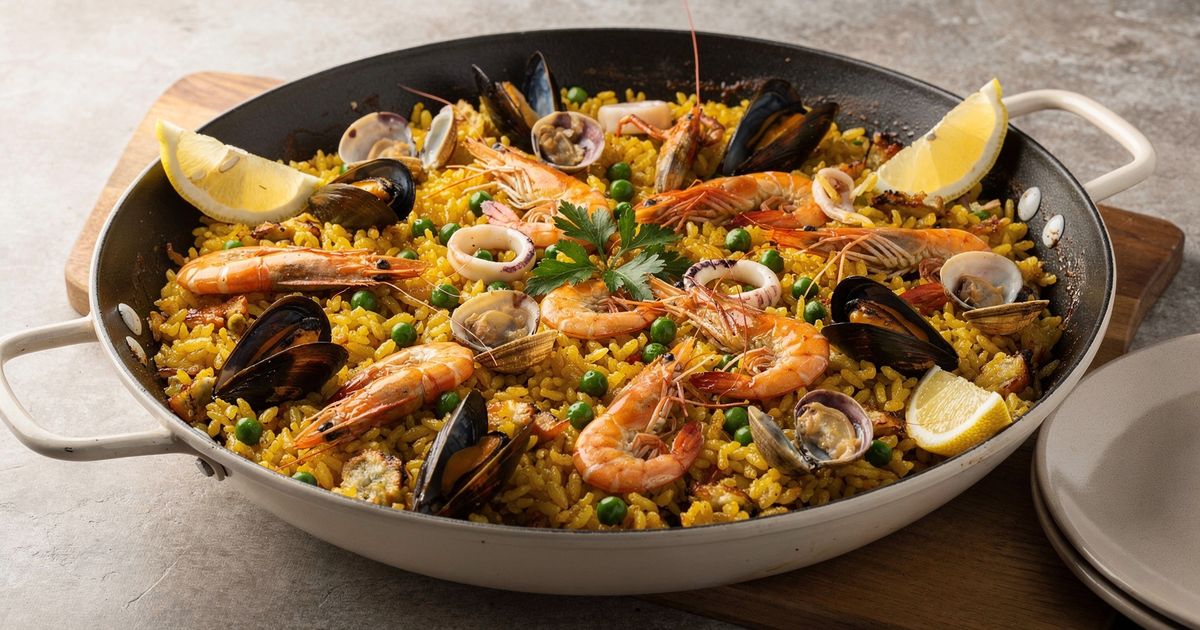
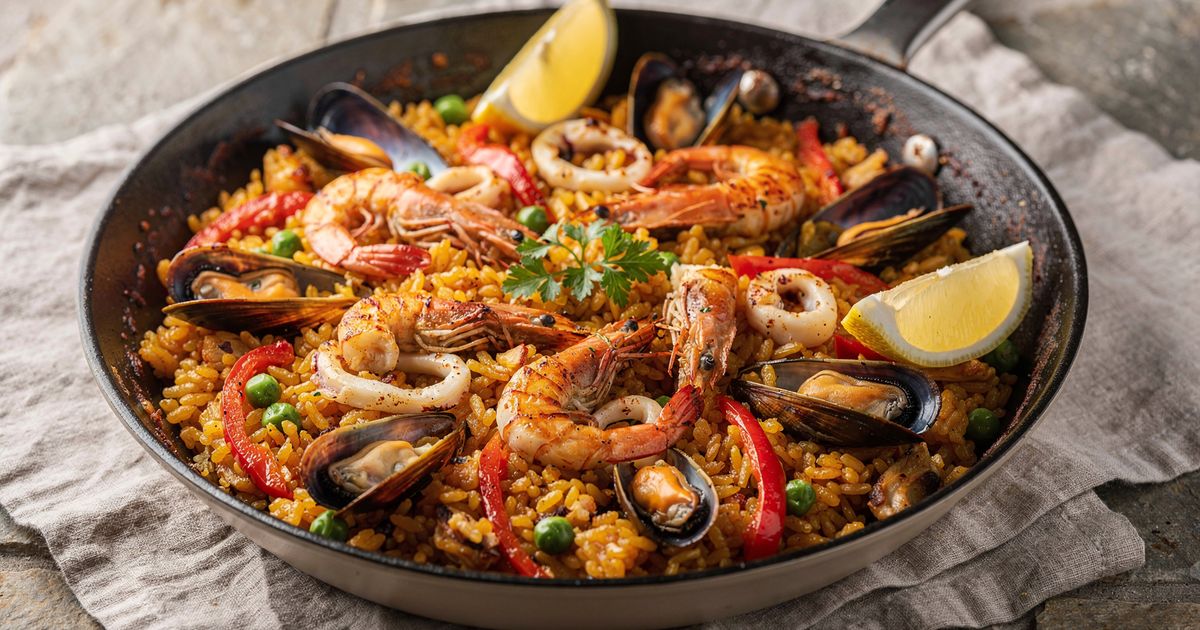
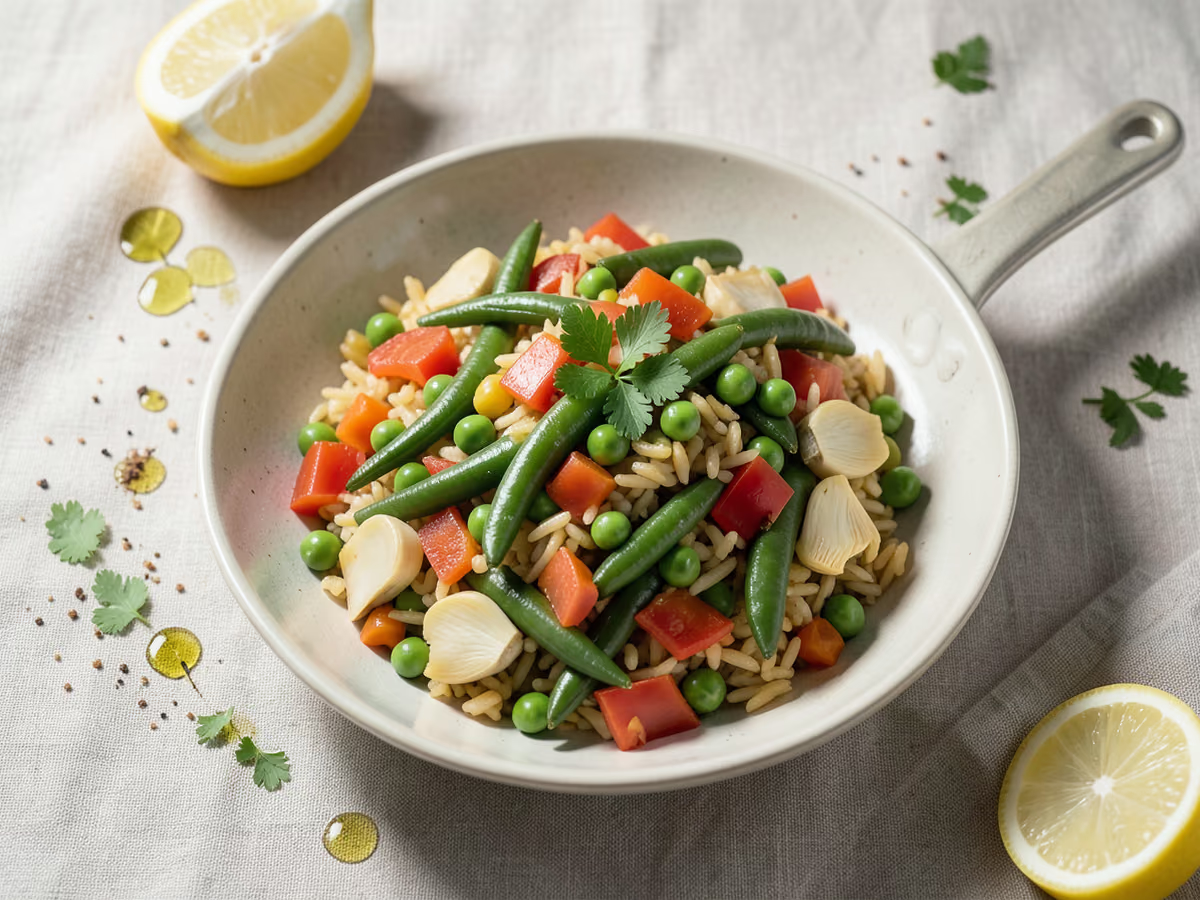
Saffron threads and smoked paprika give this vegetable paella its character, with rice, beans, artichoke hearts and peas simmered in broth. Serves 4; 20 minutes prep, 40 minutes cooking.
- Prep
- 20 min
- Cook
- 40 min
- Total
- 60 min
- Serves
- 4
Ingredients
What you’ll need — tap to tick off as you go
- 300 g
- 900 ml
- 3 tbsp
- 3 cloves
- 150 g
- 150 g
- 100 g
- ½ tsp
- 1 tsp
- 1 tsp
Process
Timers built in · swap anything · ask as you cook
Warm the vegetable broth in a saucepan and keep it hot over low heat. Crumble the saffron threads into a small cup, add a few tablespoons of the hot broth, and let steep.
Heat the olive oil in a wide paella pan or large skillet over medium heat. Add the chopped onion and cook for 4–5 minutes until soft and translucent.
Add the minced garlic and sliced red bell pepper. Cook for 3 minutes, stirring, until the pepper begins to soften.
Stir in the green beans and artichoke hearts. Cook for 3 minutes, then add the grated tomato and smoked paprika. Cook for 2 minutes until the tomato darkens and thickens.
Add the rinsed rice and stir to coat it well with the vegetable mixture. Cook for 1–2 minutes until the rice looks slightly translucent at the edges.
Pour in the hot broth and the saffron infusion. Add the salt, stir once to distribute everything evenly, then spread the rice flat. Do not stir again from this point.
Bring to a boil, then reduce the heat to low and simmer gently for 15 minutes. Scatter the frozen peas over the top and continue cooking for 5–7 minutes, until the rice is tender and most of the liquid has been absorbed.
Increase the heat to medium for 1–2 minutes to form a golden crust on the bottom, the socarrat. Listen for a light crackling and smell the toasted rice, then remove from the heat.
Cover the pan with a clean kitchen towel or foil and let the paella rest for 5 minutes. Serve directly from the pan with lemon wedges on the side.
Kitchen notes
Kitchen notes
- The most common mistake is stirring the rice after adding the broth. Once the broth goes in, stir only once to even it out, then leave it alone so the rice cooks evenly and a socarrat can form.
- Use a wide, shallow pan so the rice cooks in a thin layer. A deep pot steams the rice and you will lose the characteristic texture.
- The socarrat is the prize: when you hear a gentle crackle and smell toasted rice, it is ready. If you wait until it smells burnt, the crust will be bitter.
- Keep the broth hot when you add it. Cold broth lowers the pan temperature and makes the rice cook unevenly.
Substitutions
- short-grain rice→medium-grain rice
- vegetable broth→water with an extra pinch of salt
- artichoke hearts→canned hearts of palm, drained and sliced
- frozen peas→fresh shelled peas, added 2 minutes earlier
Storage & reheating
Cool leftovers within 1 hour, then store in an airtight container in the fridge for up to 3 days. To reheat, sprinkle with 1-2 tablespoons of water, cover, and warm in a skillet over low heat or in a 160°C oven for 10-12 minutes, until steaming hot. Do not microwave on high, as it makes the rice rubbery. Freezing is not recommended because the rice becomes mushy.
FAQ
The questions we get asked most
Why did my vegetable paella turn out mushy?
Mushy paella usually comes from stirring the rice after the broth is added or from using too much liquid. Once the broth goes in, stir only once and then leave it alone. Also measure the broth accurately: the rice should absorb it all in about 20 minutes.
Can I make vegetable paella ahead of time?
Paella is best freshly made, but you can prep the vegetables up to 1 day ahead and refrigerate them. Cook the rice just before serving. Reheated paella is acceptable but the rice will be softer and the socarrat will not re-form.
How do I get the socarrat without burning it?
After the rice has absorbed the liquid, raise the heat to medium for only 1-2 minutes. Listen for a light crackling and smell toasted rice. If you smell acrid burning, remove the pan from the heat immediately and transfer the rice to a serving dish, leaving the burnt layer behind.
Can I use a different type of rice?
Yes, use a short or medium-grain rice such as arborio or bomba. Long-grain rice like basmati or jasmine will not absorb the broth in the same way and will give a drier, less creamy result. Do not use instant rice.
Is vegetable paella gluten-free?
Yes, this recipe is naturally gluten-free as long as your vegetable broth and any canned artichokes do not contain gluten-containing additives. Check the labels of the broth and artichoke hearts to be sure.
Can I add other vegetables to this paella?
Yes, you can add chopped zucchini, mushrooms or asparagus. Add firm vegetables like zucchini and mushrooms with the green beans, and tender asparagus in the last 5 minutes of cooking so it does not overcook. Avoid watery vegetables like cucumber.
How do I know when the paella is done?
The rice should be tender but still have a slight bite, and the liquid should be fully absorbed. Tilt the pan: if you hear a faint sizzle and see no pooling liquid, it is ready. If there is still liquid, cook for 2 more minutes over low heat.
Ask KitchenMind about this recipe
Tell it what’s different tonight — it works within the actual recipe.