- Prep
- 45 min
- Cook
- 20 min
- Total
- 65 min
- Serves
- 4
Ingredients
What you’ll need — tap to tick off as you go
- 300 g
- 250 g
- 40 g
- 15 g
- 2 cloves
- 2 tbsp
- 1 tbsp
- 1 tsp
- 1 tsp
- 1 tbsp
- 2 tbsp
- 120 ml
- 2 tbsp
- 1 tsp
Process
Timers built in · swap anything · ask as you cook
Finely chop the green cabbage, put it in a bowl, sprinkle with 1 tsp fine salt, toss, and let sit for 10 minutes. Squeeze handfuls of cabbage firmly over the sink to remove as much liquid as possible, then set aside.
In a large bowl, combine 300 g ground chicken, the squeezed cabbage, 40 g finely chopped garlic chives, 15 g grated fresh ginger, 2 grated garlic cloves, 2 tbsp soy sauce, 1 tbsp sesame oil, and 1 tsp granulated sugar. Mix with your hand or a spoon until sticky and evenly combined.
Lightly dust a large tray or plate with 1 tbsp all-purpose flour. Have the 30 gyoza wrappers covered with a clean towel so they do not dry out.
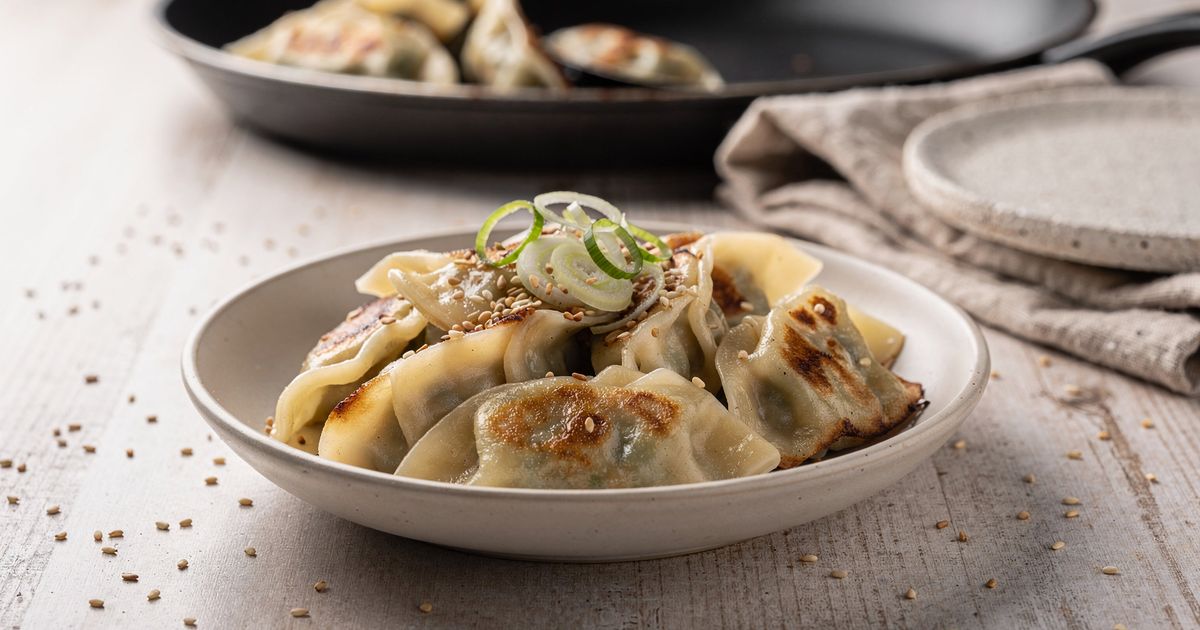
Place one wrapper in your palm, add about 1 heaped teaspoon of filling to the center, and wet the rim with a little water. Fold the wrapper in half and pleat the top edge 4 to 5 times, pressing firmly to seal. Set the finished gyoza on the floured tray and repeat with the remaining wrappers and filling.
Heat 1 tbsp vegetable oil in a large non-stick skillet over medium-high heat. Arrange half the gyoza flat-side down in a single layer, leaving a little space between them. Cook for 2 to 3 minutes until the bottoms are golden brown.
Carefully pour 60 ml water into the skillet, cover immediately with a lid, and reduce heat to medium. Steam for 5 to 6 minutes, until the wrappers are translucent and the filling is cooked through.
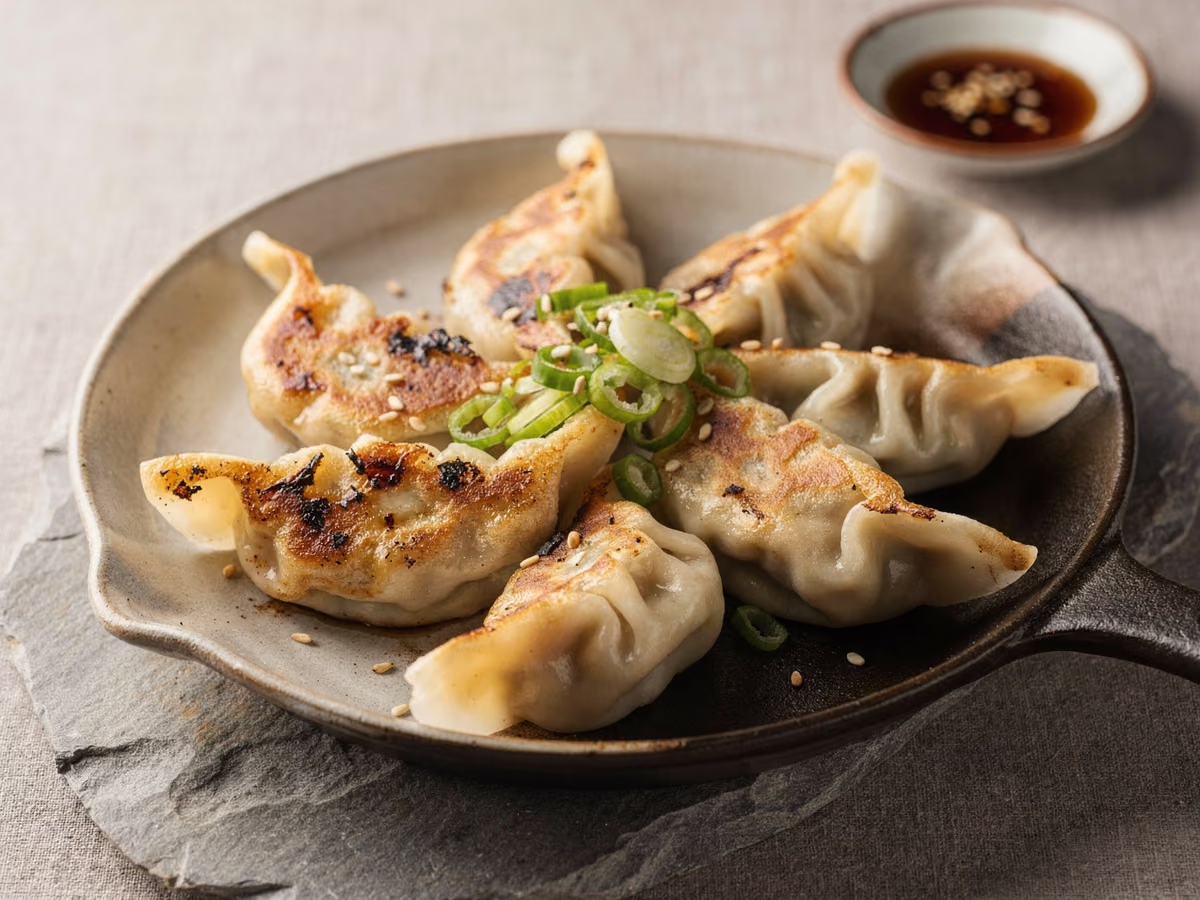
Remove the lid and cook for 1 to 2 minutes more, until the water has evaporated and the bottoms re-crisp. Transfer to a plate and repeat with the remaining 1 tbsp vegetable oil, gyoza, and 60 ml water.
Stir together 2 tbsp soy sauce, 2 tbsp rice vinegar, and 1 tsp chili oil if using, for the dipping sauce. Serve the gyoza hot with the sauce.
Kitchen notes
Kitchen notes
- The most common mistake is skipping the salt-and-squeeze step for the cabbage. If you do not remove that water, the filling turns soupy and the wrappers tear or become soggy.
- Do not overfill the wrappers. About 1 heaped teaspoon is enough; too much filling prevents a tight seal and the gyoza will burst during steaming.
- Keep unused wrappers under a damp towel while you fold. Dry wrappers crack and will not seal, no matter how much water you use.
- A good seal is the difference between crisp gyoza and a skillet full of loose filling. Press the pleated edge firmly with your fingertips, then give it a final pinch before placing it on the tray.
Substitutions
- ground chicken→ground turkey or finely chopped shrimp
- green cabbage→napa cabbage
- garlic chives→regular chives or the green parts of scallions
- rice vinegar→apple cider vinegar
- gyoza wrappers→round wonton wrappers
Storage & reheating
Store cooked gyoza in an airtight container in the refrigerator for up to 3 days. To reheat, place them in a single layer in a skillet over medium heat with 1 tbsp water, cover, and steam for 3 to 4 minutes, then uncover and cook 1 minute to re-crisp. Uncooked assembled gyoza can be frozen on a floured tray until solid, then transferred to a freezer bag for up to 2 months; cook from frozen, adding 1 to 2 extra minutes to the steaming time.
FAQ
The questions we get asked most
Why did my gyoza filling turn out watery and make the wrappers soggy?
The cabbage was not salted and squeezed enough. Salt draws out water, and if you skip that step the liquid leaks during cooking and steams the wrappers from the inside. Squeeze the cabbage in handfuls until it feels dry, then mix it with the meat.
Can I make gyoza ahead of time and cook them later?
Yes. Assemble the gyoza, place them in a single layer on a floured tray, cover tightly, and refrigerate for up to 24 hours. For longer storage, freeze them solid on the tray first, then move them to a freezer bag for up to 2 months. Cook straight from frozen, adding 1 to 2 minutes to the steaming step.
Why did my gyoza stick to the pan and tear apart?
The pan was not hot enough or did not have enough oil before the gyoza went in. Heat the oil over medium-high until it shimmers, then add the gyoza flat-side down and do not move them for 2 to 3 minutes. A non-stick skillet makes this much easier.
How do I know when the gyoza are fully cooked?
The wrappers turn translucent and slightly glossy, and the filling feels firm when pressed with a spoon. If you are unsure, cut one open: the ground chicken should be opaque all the way through with no pink. Steaming for 5 to 6 minutes after the water is added is usually enough for this size.
Can I use regular cabbage instead of napa cabbage?
Yes, green cabbage works well and is what this recipe uses. Napa cabbage is more tender and releases water more easily, so if you swap it in, salt and squeeze it the same way. Either way, the key is removing excess moisture before mixing.
Can I steam gyoza instead of pan-frying them?
Yes. Arrange the gyoza in a steamer basket lined with parchment, leaving space between them, and steam over boiling water for 7 to 8 minutes. They will be soft rather than crisp, so if you want a little texture, sear them in a hot oiled skillet for 1 minute after steaming.
Why did my gyoza wrappers crack while folding?
The wrappers dried out while you were working. Keep the stack covered with a damp towel and only take one wrapper at a time. If a wrapper feels stiff, cup it in your hand for a few seconds to warm it, or brush the edge lightly with water before pleating.
Ask KitchenMind about this recipe
Tell it what’s different tonight — it works within the actual recipe.