- Prep
- 40 min
- Cook
- 20 min
- Total
- 60 min
- Serves
- 4
Ingredients
What you’ll need — tap to tick off as you go
- 300 g
- 360 ml
- 45 ml
- 20 g
- 4 g
- 300 g
- 60 ml
- 5 g
- 30 g
Process
Timers built in · swap anything · ask as you cook
Put the sushi rice in a bowl and rinse it under cold running water, stirring with your hand, until the water runs almost clear. Drain well.
Transfer the rice to a heavy saucepan with 360 ml water. Bring to a boil over medium heat, then cover and cook on low for 12 minutes. Do not lift the lid.
Remove the pan from the heat and let the rice steam, covered, for 10 minutes. Meanwhile, stir the rice vinegar, sugar and salt in a small bowl until dissolved.
Spread the hot rice into a wide non-metal dish, drizzle with the vinegar mixture and fold gently with a spatula to coat every grain. Cool to room temperature, about 15 minutes.
Place one nori sheet shiny side down on a bamboo mat lined with cling film. Wet your hands and spread about a quarter of the rice over the nori, leaving a 2 cm border at the far edge.
Lay a quarter of the salmon strips and a quarter of the avocado strips in a line across the near third of the rice.
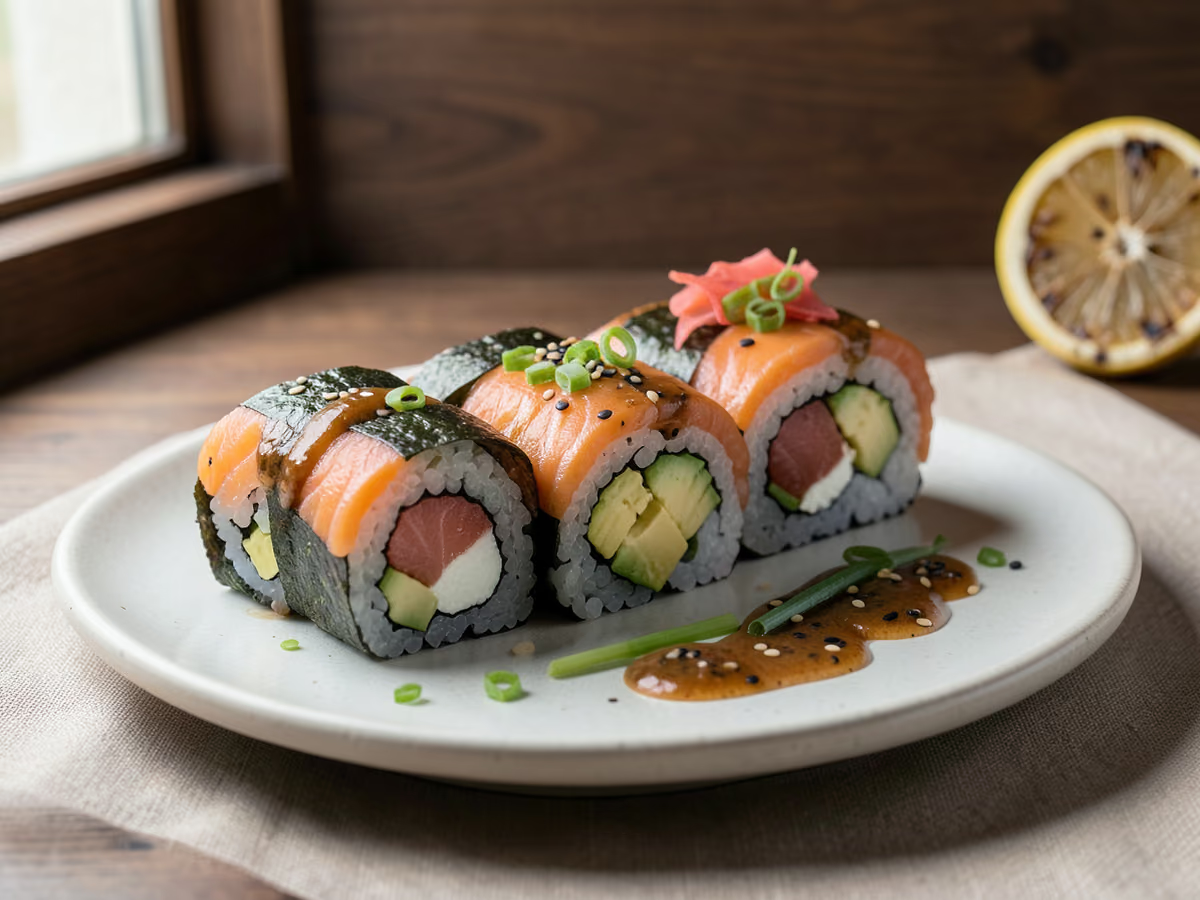
Roll from the near edge, using the mat to lift and tuck the rice over the filling. Press firmly along the length, then roll to the end. Repeat with the remaining nori, rice, salmon and avocado.
Wipe a sharp knife with a damp cloth and cut each roll in half. Wipe again and cut each half into three pieces, cleaning the blade between cuts.
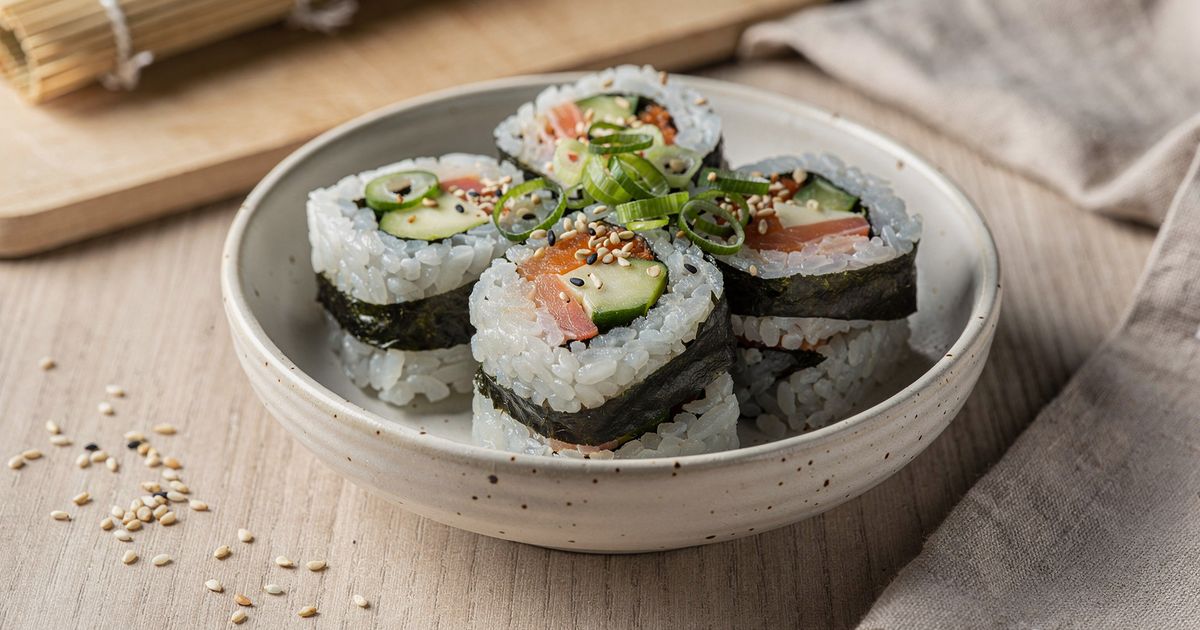
Arrange the rolls on a plate and serve with soy sauce, wasabi paste and pickled ginger on the side.
Kitchen notes
Kitchen notes
- The most common mistake is overfilling: keep the salmon and avocado in a single neat line, or the roll will split when cut.
- Rice must be cooled to room temperature before rolling. Hot rice steams the nori and makes it soggy and impossible to slice cleanly.
- Wipe the knife with a damp cloth between every cut. A sticky blade drags the rice and crushes the roll.
- Buy salmon labeled sushi-grade and keep it refrigerated until the moment you slice it. If you cannot confirm sushi-grade, sear the strips in a hot pan for 30 seconds per side and cool before rolling.
Substitutions
- salmon→sushi-grade tuna or cooked prawns
- avocado→cucumber strips
- rice vinegar→apple cider vinegar mixed with a pinch of sugar
- wasabi paste→a mix of hot mustard and a little soy sauce
Storage & reheating
Sushi is best eaten within 2 hours of rolling. If you must keep it, wrap the rolls tightly in cling film and refrigerate for up to 24 hours; the nori will soften but the flavor stays fine. Do not freeze rolled sushi, as the rice turns grainy and the avocado becomes mushy. To serve leftovers, bring them to room temperature for 15 minutes rather than reheating, and dip in soy sauce as usual.
FAQ
The questions we get asked most
Why did my sushi rolls fall apart when I cut them?
The usual causes are too much rice, overfilling, or a blunt knife. Spread the rice no thicker than a grain and a half, keep the salmon and avocado in one thin line, and use a very sharp knife wiped with a damp cloth between cuts. Press the roll firmly with the mat before slicing.
Can I make sushi rice without rice vinegar?
Yes, but the flavor changes. Mix 45 ml apple cider vinegar with 20 g sugar and 4 g salt as a substitute. The rice will still season and hold together, though the aroma will be slightly sharper than traditional sushi vinegar.
Is it safe to eat raw salmon at home?
Only if the fish is labeled sushi-grade or sashimi-grade and has been handled properly. Keep it refrigerated below 4°C and use it the same day you buy it. If you cannot confirm the grade, sear the strips briefly in a hot pan and cool them before rolling.
How do I stop the nori from getting chewy or soggy?
Work quickly and use rice that has cooled to room temperature. Hot rice releases steam that softens the nori, and a wet filling like avocado can also seep through. If you are not eating the rolls immediately, wrap them tightly in cling film and refrigerate for no more than a few hours.
Can I prepare the components ahead of time?
Yes. Cook and season the rice up to 4 hours ahead, then cover it with a damp cloth at room temperature. Slice the salmon and avocado just before rolling so they stay fresh. Assembled rolls should be eaten within 2 hours for the best texture.
How do I know when the sushi rice is cooked?
The rice is done when the water is fully absorbed and the grains are tender but still hold their shape. Taste a grain: it should be soft with a slight bite, not mushy. After cooking, let it steam covered for 10 minutes to finish evenly.
Can I use brown rice for these rolls?
Brown short-grain rice works but needs more water and a longer cooking time, about 45 minutes, and the texture will be chewier. Season it with the same vinegar mixture and cool completely before rolling. The rolls will be slightly heavier and may need a firmer press.
Ask KitchenMind about this recipe
Tell it what’s different tonight — it works within the actual recipe.