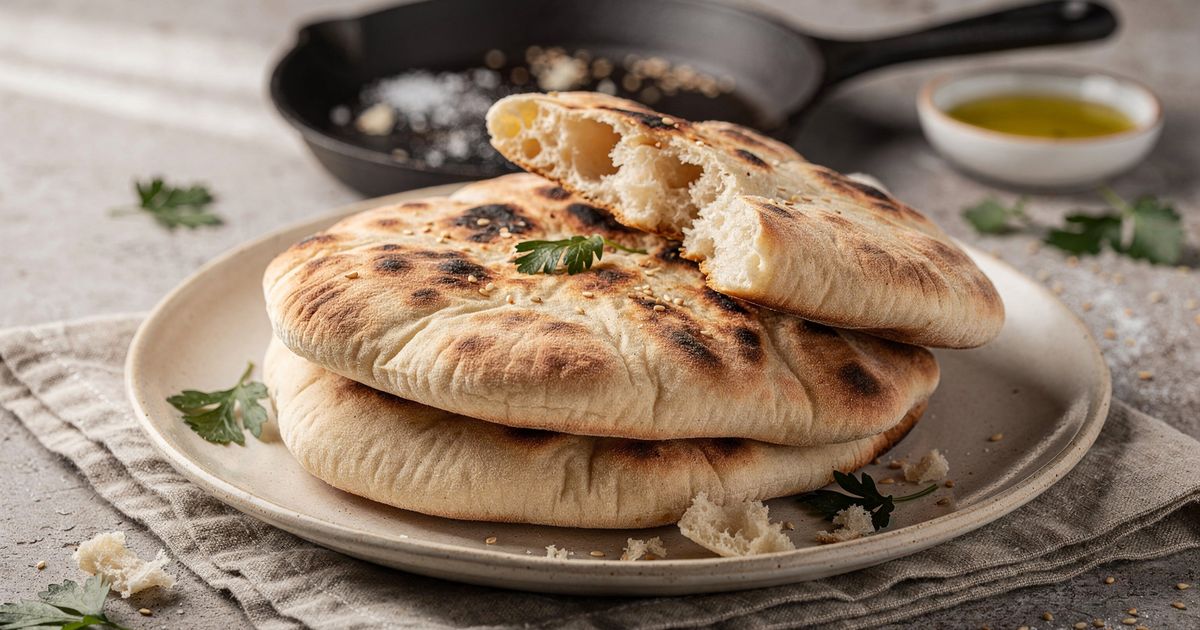
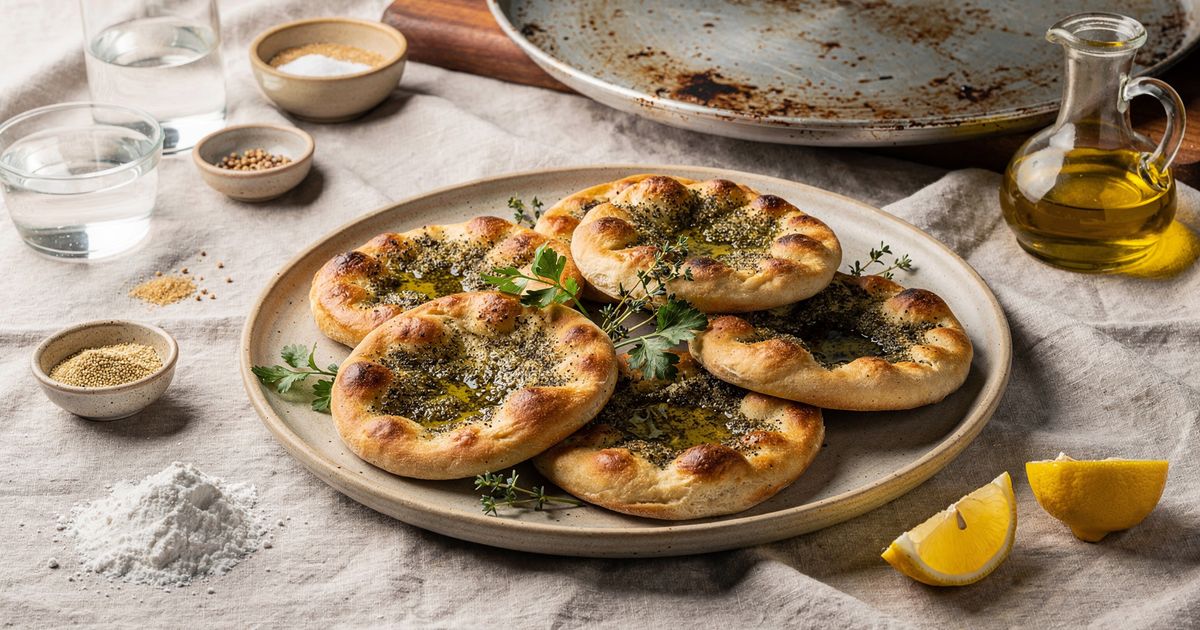
Lavash Flatbread
Bread flour, instant yeast, and warm water are all you need for Lavash Flatbread. It makes 8 servings, with 20 minutes of prep and 12 minutes in the oven.
- Prep
- 20 min
- Cook
- 12 min
- Total
- 32 min
- Serves
- 8
Ingredients
What you’ll need — tap to tick off as you go
- 400 g
- 7 g
- 6 g
- 5 g
- 260 ml
- 15 ml
Process
Timers built in · swap anything · ask as you cook
In a large bowl whisk together the bread flour, instant yeast, fine salt and sugar until evenly combined.
Pour in the warm water and olive oil, then mix with a wooden spoon until a shaggy dough forms.
Turn the dough onto a lightly floured surface and knead for 8 to 10 minutes until smooth, elastic and slightly tacky but no longer sticky.
Place the dough in a lightly oiled bowl, cover with a damp cloth and let it rise at room temperature for 60 to 90 minutes, until roughly doubled in size.
Preheat the oven to 250°C with a baking stone or an upturned heavy baking tray inside for at least 30 minutes.
Punch down the dough and divide it into 8 equal pieces, about 85 g each. Roll each piece into a ball, cover and rest for 10 minutes so the gluten relaxes.
On a floured surface roll each ball into a very thin oval, about 2 mm thick and 25 cm long. Keep the remaining dough covered while you work.
Slide one or two lavash onto the hot stone or tray and bake for 90 seconds to 2 minutes, until puffed in spots and lightly blistered but still pale and pliable.
Stack the baked lavash under a clean kitchen towel as they come out of the oven to keep them soft, then repeat with the remaining dough.
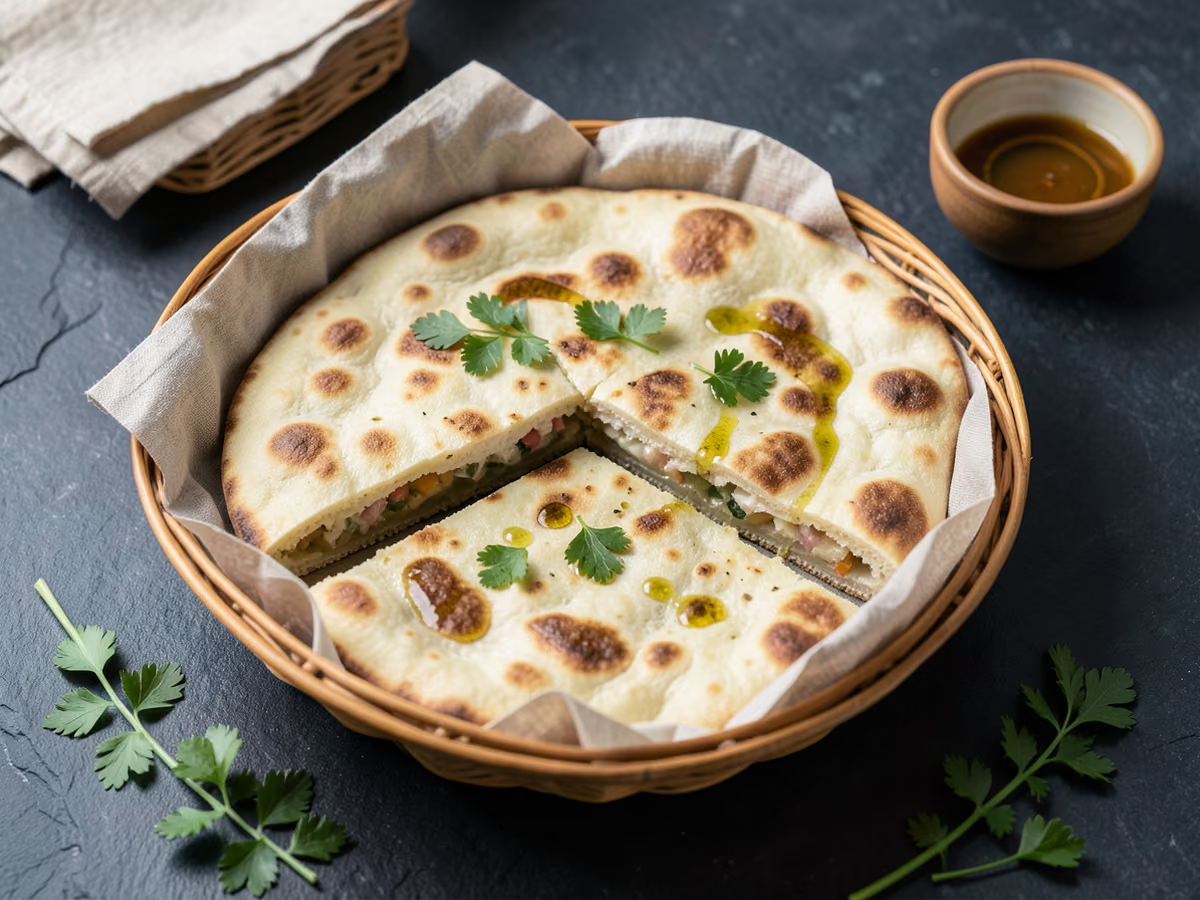
Kitchen notes
Kitchen notes
- The most common mistake is rolling the dough too thick — lavash should be thin enough to almost see your hand through it, or it bakes into a stiff cracker instead of a pliable flatbread.
- Watch the oven closely: lavash goes from pale and soft to brittle in under 30 seconds. Pull it as soon as you see puffed bubbles and small brown blisters.
- Stacking the hot breads under a towel traps steam, which is what keeps them soft and foldable for wrapping.
- If your kitchen is cold, let the dough rise in an oven with only the light on; a warm draft-free spot matters more than exact timing.
Substitutions
- bread flour→all-purpose flour (add 1 tbsp extra water if the dough feels stiff)
- instant yeast→active dry yeast (proof it in the warm water with the sugar for 10 minutes first)
- olive oil→any neutral vegetable oil
Storage & reheating
Cool the lavash completely, then stack and wrap tightly in a clean cloth or place in a zip-top bag with the air pressed out. It keeps at room temperature for 2 days or in the fridge for up to 5 days. To reheat, sprinkle lightly with water and warm in a 180°C oven for 2 to 3 minutes, or wrap in a damp paper towel and microwave for 15 to 20 seconds until soft and foldable again. For longer storage, freeze the flatbreads with baking paper between them for up to 2 months and thaw at room temperature before reheating.
FAQ
The questions we get asked most
Why did my lavash turn out hard and cracker-like?
The dough was likely rolled too thick or baked too long. Lavash should be about 2 mm thin and pulled from the oven the moment it puffs and blisters, usually within 90 seconds at 250°C. Stacking the hot breads under a towel also keeps them soft as they cool.
Can I make lavash dough ahead of time?
Yes. After kneading, cover the bowl and refrigerate the dough for up to 24 hours for a slow cold rise. Let it sit at room temperature for 30 minutes before dividing and rolling, since cold dough springs back and is harder to stretch thin.
Can I cook lavash on the stovetop instead of the oven?
Yes. Heat a dry cast-iron or non-stick skillet over medium-high heat and cook each rolled flatbread for 30 to 45 seconds per side, until puffed and spotted. Press gently with a spatula so it puffs evenly, and stack the cooked breads under a towel.
How thin should I roll the dough?
Roll until the dough is roughly 2 mm thick and about 25 cm long, thin enough that you can almost see the counter through it. If the dough keeps shrinking back, let it rest for 5 to 10 minutes to relax the gluten, then continue rolling.
Can I freeze lavash flatbread?
Yes. Cool the breads completely, layer them with baking paper, and seal in a freezer bag for up to 2 months. Thaw at room temperature, then refresh in a 180°C oven for 2 to 3 minutes or wrap in a damp towel and microwave briefly to restore softness.
Why is my lavash dough so sticky and hard to roll?
Too much water or under-kneading makes the dough tacky. Knead for the full 8 to 10 minutes until smooth, and dust the surface and rolling pin lightly with flour rather than adding a lot of extra flour at once. A 10-minute rest before rolling also makes it far easier to handle.
Ask KitchenMind about this recipe
Tell it what’s different tonight — it works within the actual recipe.