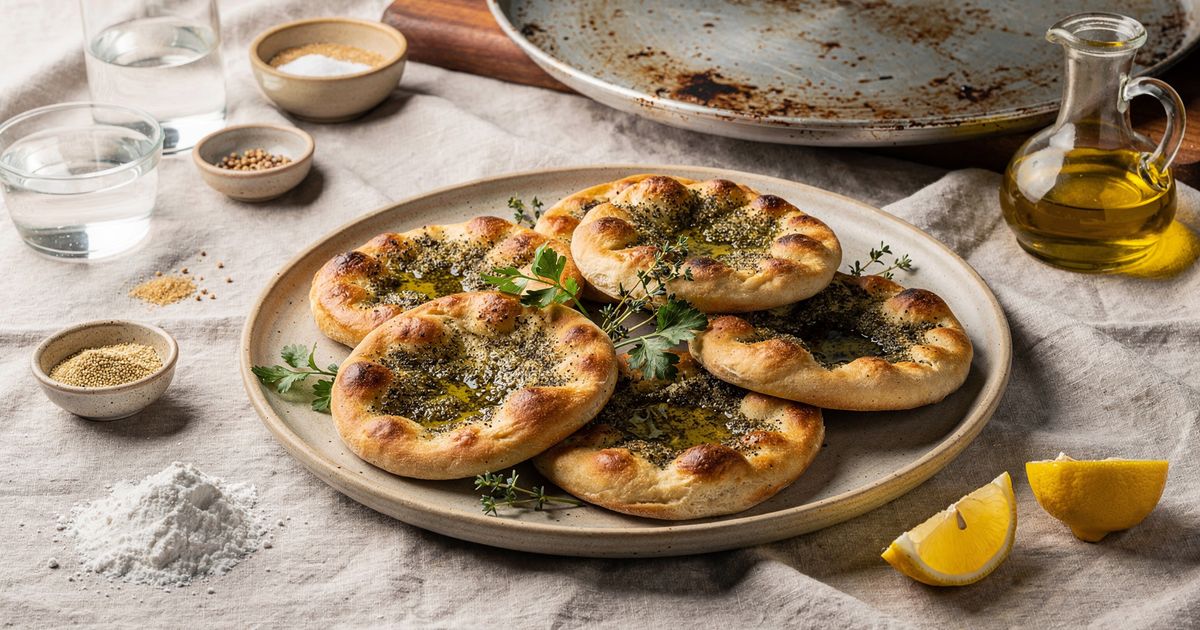
Tannour Bread
Mix whole wheat and instant yeast with warm water, let it rise, then bake 25 minutes for a soft, sesame-topped loaf that serves 8. 20 minutes of prep, the rest is oven time.
- Prep
- 20 min
- Cook
- 25 min
- Total
- 45 min
- Serves
- 8
Ingredients
What you’ll need — tap to tick off as you go
- 400 g
- 100 g
- 7 g
- 8 g
- 5 g
- 340 ml
- 20 ml
- 10 g
Process
Timers built in · swap anything · ask as you cook
In a large bowl, whisk together the bread flour, whole wheat flour, instant yeast, fine salt and sugar until evenly combined.
Pour in the warm water and olive oil. Mix with a wooden spoon or your hand until a shaggy dough forms and no dry flour remains.
Turn the dough out onto a lightly floured surface and knead for 8 to 10 minutes, until smooth, elastic and slightly tacky but not sticky. If it sticks, dust with a little more bread flour.
Lightly grease a clean bowl with olive oil, place the dough inside, cover with a damp cloth or plastic wrap and let it rise in a warm spot for 45 to 60 minutes, until doubled in size.
Punch down the dough and divide it into 8 equal pieces, about 105 g each. Roll each piece into a smooth ball, cover and rest for 10 minutes to relax the gluten.
Heat a heavy cast-iron skillet, baking stone or saj griddle over high heat for 5 to 8 minutes, until a drop of water flicked on the surface sizzles and evaporates instantly.
On a lightly floured surface, roll one dough ball into a thin round about 2 to 3 mm thick and 20 cm wide. Keep the remaining balls covered so they do not dry out.
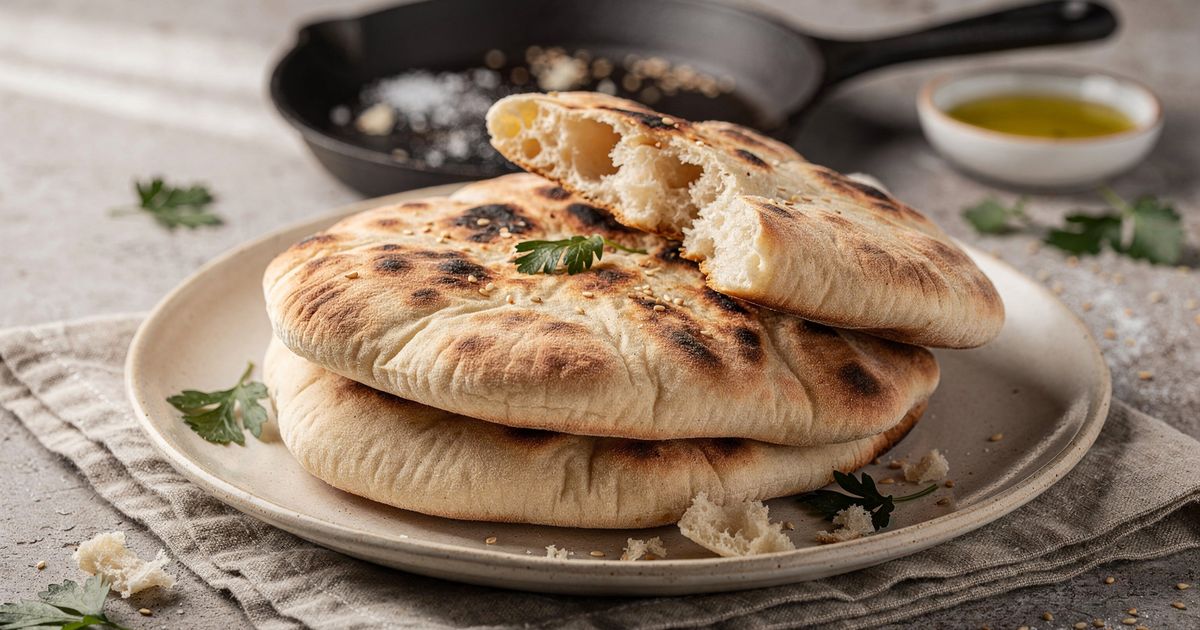
Carefully lay the round onto the hot surface. Cook for 60 to 90 seconds, until the underside is blistered with dark spots and the top looks dry and puffed in places.
Flip with tongs and cook for another 45 to 60 seconds, until the second side is spotted and the bread is pliable, not crisp. If using sesame seeds, sprinkle them over the bread right after flipping and press gently.
Transfer the bread to a clean kitchen towel and wrap it loosely to keep it soft. Repeat with the remaining dough balls, adjusting the heat to medium-high if the bread chars too quickly.
Serve warm or at room temperature, stacked and covered, so the bread stays tender for scooping and wrapping.
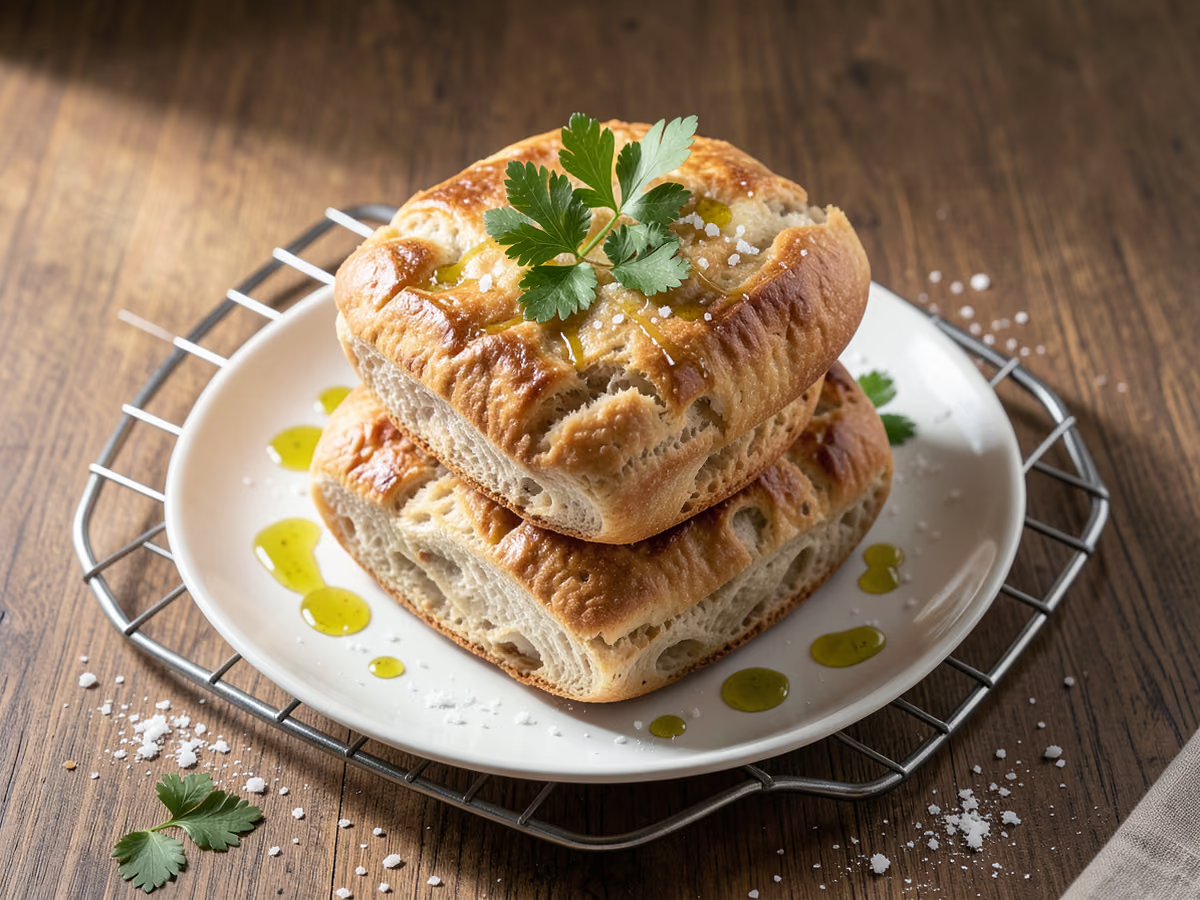
Kitchen notes
Kitchen notes
- The most common mistake is rolling the dough too thick. Tannour bread should be 2 to 3 mm thin so it bakes through in under 2 minutes and stays foldable rather than bready.
- Your pan is hot enough when a flick of water evaporates within 1 second. If the bread takes longer than 90 seconds per side, the pan is too cool and the bread will dry out instead of blister.
- Do not skip the 10-minute rest after shaping. It relaxes the gluten so the rounds roll out evenly without springing back.
- Wrap the baked breads in a clean towel as they come off the heat. The trapped steam keeps them soft and prevents them from turning crisp like a cracker.
Substitutions
- whole wheat flour→additional bread flour for a lighter, whiter bread
- instant yeast→active dry yeast, dissolved in the warm water for 5 minutes first
- olive oil→any neutral vegetable oil
- sesame seeds→nigella seeds or leave plain
Storage & reheating
Cool the bread completely, then stack and wrap tightly in plastic wrap or place in a zip-top bag. It keeps at room temperature for 2 days or in the fridge for up to 5 days. To reheat, sprinkle lightly with water, wrap in foil and warm in a 180°C oven for 5 to 7 minutes, or heat directly in a dry skillet for 30 seconds per side. For longer storage, freeze the baked breads with parchment between them for up to 2 months and reheat from frozen in a hot skillet.
FAQ
The questions we get asked most
Why did my tannour bread turn out hard and cracker-like?
The dough was likely rolled too thin or the pan was too hot, baking out all the moisture before the bread could puff. Aim for 2 to 3 mm thickness and cook over medium-high heat, not maximum. Also wrap the breads in a towel immediately after baking so they steam and stay pliable.
Can I make tannour bread without a baking stone or saj?
Yes. A heavy cast-iron skillet or a thick-bottomed nonstick pan works well and is what most home cooks use. Preheat it dry over high heat for 5 to 8 minutes before the first bread. The key is even, retained heat, so avoid thin pans that cool down the moment dough touches them.
How do I know when the bread is done?
The first side is ready when it is blistered with dark spots and the surface looks dry, about 60 to 90 seconds. After flipping, the second side needs only 45 to 60 seconds, until spotted and the bread is flexible when you lift it with tongs. If it feels stiff and brittle, it is overcooked.
Can I prepare the dough ahead of time?
Yes. After kneading, cover the dough and refrigerate it for up to 24 hours for a slow rise. Let it come to room temperature for 30 minutes before shaping, then divide, rest and roll as usual. The cold ferment gives a slightly tangier flavor and makes the dough easier to roll.
Can I freeze tannour bread?
Freeze fully cooled breads with a sheet of parchment between each one, sealed in a freezer bag, for up to 2 months. Reheat straight from frozen in a dry skillet over medium heat for about 1 minute per side, or in a 180°C oven wrapped in foil for 6 to 8 minutes. They come back soft and fresh-tasting.
Why is my dough sticky and hard to roll?
A sticky dough usually means too much water or not enough kneading. Knead for the full 8 to 10 minutes until the dough is smooth and elastic, and dust your surface lightly with bread flour as you roll. If it still sticks, chill the dough for 15 minutes before shaping.
What can I serve with tannour bread?
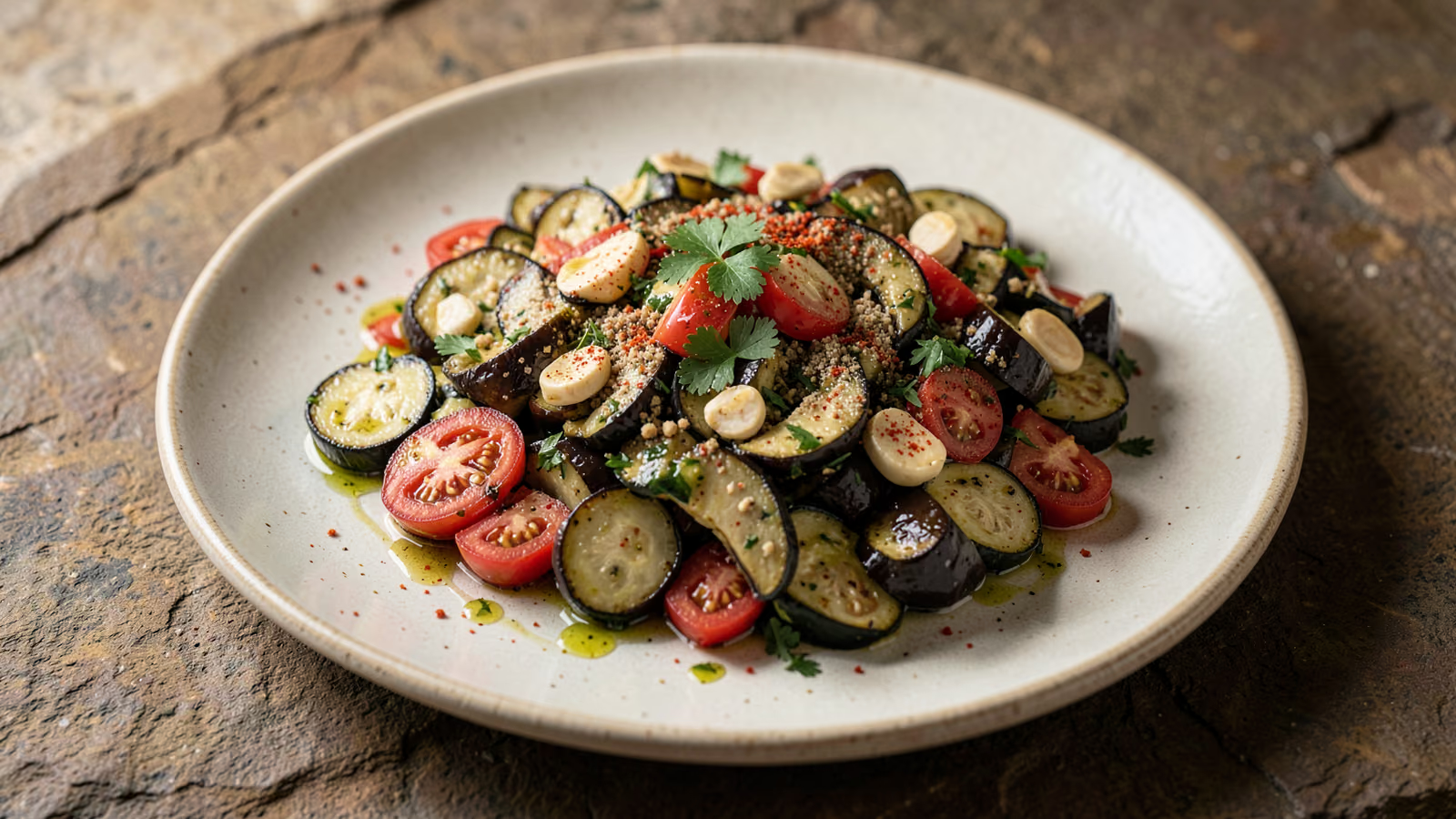
It is traditionally used to scoop hummus, baba ghanoush, labneh and olive oil with za'atar. It also works as a wrap for grilled meats, falafel or vegetables, and as a base for manakish-style toppings. Serve it warm and stacked so it stays soft at the table.
Ask KitchenMind about this recipe
Tell it what’s different tonight — it works within the actual recipe.