- Prep
- 20 min
- Cook
- 10 min
- Total
- 30 min
- Serves
- 2
Ingredients
What you’ll need — tap to tick off as you go
- 400 g
- 200 g
- 200 g
- 2 tbsp
- 1 pinch
- 2 tbsp
Process
Timers built in · swap anything · ask as you cook
Place a pizza stone or heavy baking sheet on the middle rack of the oven and preheat to 250°C (maximum temperature) for at least 30 minutes.
In a small bowl, combine the canned San Marzano tomatoes with a pinch of salt. Crush them with your hands or blend briefly until smooth. Set aside.
On a lightly floured surface, divide the pizza dough into 2 equal portions. Shape each into a ball, then flatten and stretch into a 25–30 cm round, leaving a slightly thicker rim. If the dough springs back, let it rest for 5 minutes and continue.
Transfer one dough round to a piece of parchment paper. Spread half of the tomato sauce (about 100 g) evenly over the dough, leaving a 2 cm border. Scatter half of the torn fresh mozzarella (about 100 g) over the sauce. Drizzle with 1 tbsp extra-virgin olive oil and add a few fresh basil leaves.
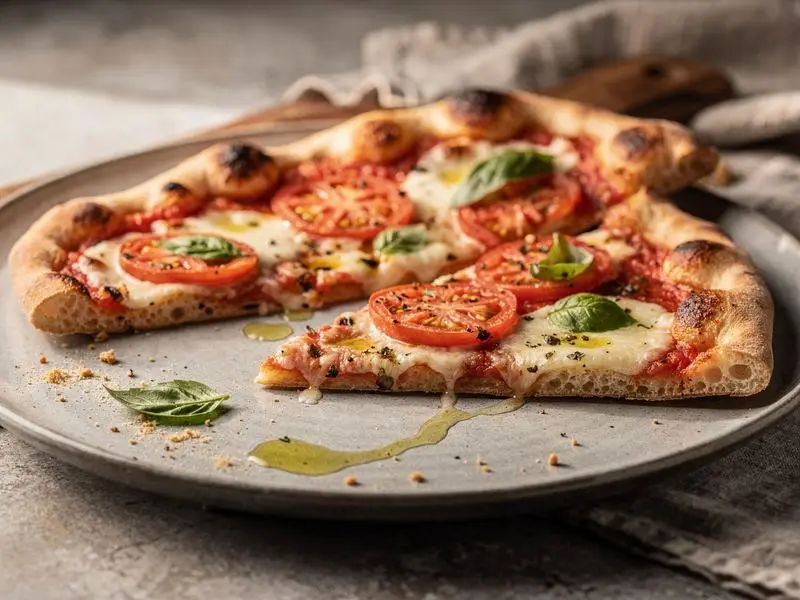
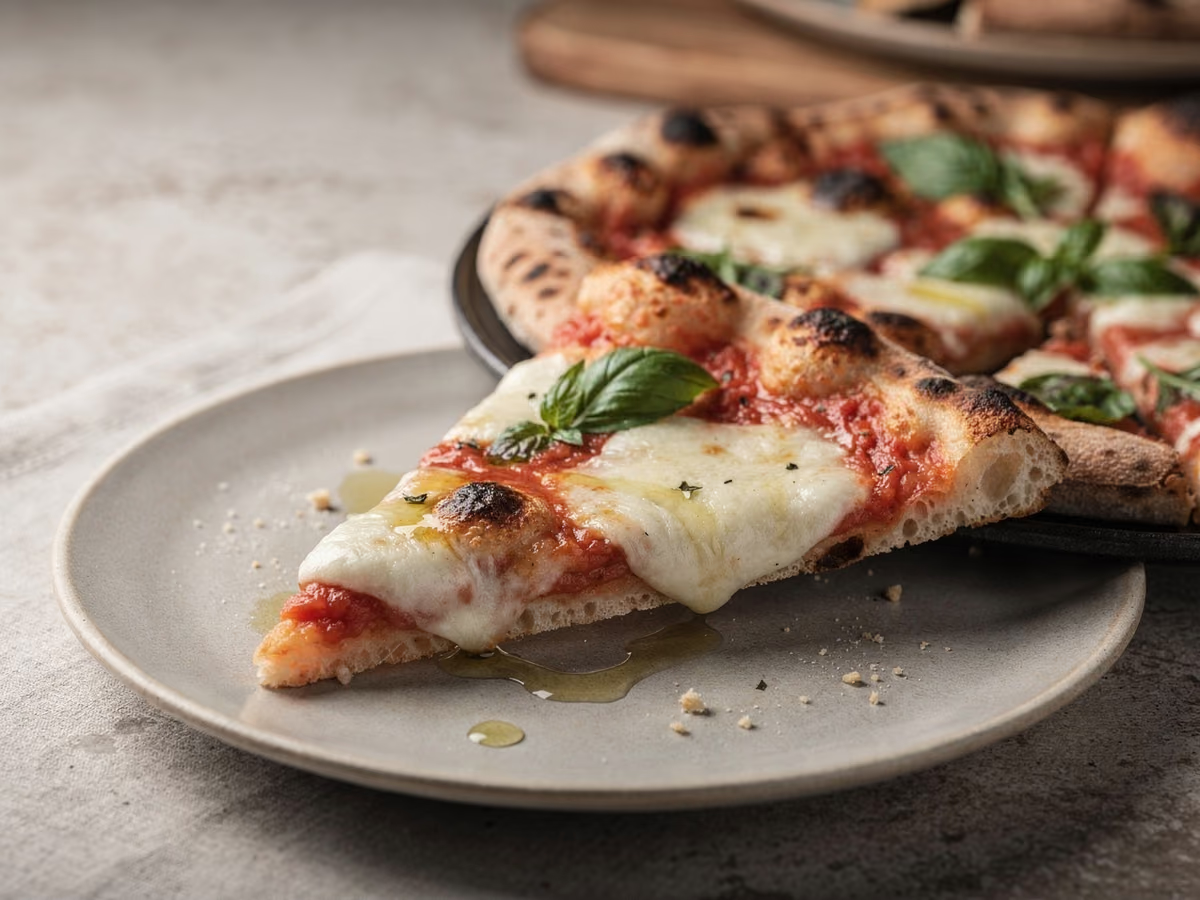
Slide the pizza (with parchment) onto the preheated stone or baking sheet. Bake for 7–10 minutes, until the crust is puffed and blistered and the cheese is melted and bubbling. Rotate halfway if needed.
Remove from oven, transfer to a cutting board, and garnish with additional fresh basil leaves. Repeat with the remaining dough, sauce, mozzarella, olive oil, and basil to make the second pizza.
Kitchen notes
Kitchen notes
- The most common mistake is overloading the pizza with sauce and cheese, which makes the crust soggy. Use a light hand and spread the sauce thinly.
- For a crispier crust, preheat the oven with a pizza stone or an inverted baking sheet for at least 30 minutes. A hot surface is key to a blistered, puffy rim.
- Pat the fresh mozzarella dry with paper towels before adding it to the pizza. Excess moisture can make the center watery.
- If you do not have a pizza stone, bake the pizza on the back of a preheated baking sheet or on a perforated pizza pan.
Substitutions
- fresh mozzarella→low-moisture mozzarella, shredded
- canned San Marzano tomatoes→canned whole peeled tomatoes, crushed
- fresh basil leaves→dried oregano (use 1 tsp)
Storage & reheating
Store leftover pizza in an airtight container in the refrigerator for up to 3 days. To reheat, place in a preheated oven at 180°C for 5-7 minutes, or in a skillet over medium heat until the bottom is crisp and the cheese is melted. Avoid microwaving, as it makes the crust tough.
FAQ
The questions we get asked most
Why is my pizza crust soggy in the middle?
A soggy center usually comes from too much sauce or wet mozzarella. Pat the mozzarella dry and use only a thin layer of sauce. Also, make sure your oven and baking surface are fully preheated to 250°C before baking.
Can I use fresh tomatoes instead of canned for the sauce?
Yes, but fresh tomatoes have higher water content, which can make the pizza watery. If using fresh, seed and drain them well, then crush. You may need to cook the sauce briefly to thicken it.
How do I know when the pizza is done?
The crust should be puffed and have dark blistered spots, and the cheese should be fully melted and bubbling. This typically takes 7-10 minutes at 250°C. If the crust is pale, bake for another 1-2 minutes.
Can I make the pizza dough ahead of time?
Yes, you can make the dough up to 24 hours in advance and store it in the refrigerator. Let it come to room temperature for 1-2 hours before shaping. Cold dough is stiff and hard to stretch.
Can I freeze the pizza dough?
Yes, pizza dough freezes well. Wrap each dough ball tightly in plastic wrap and place in a freezer bag. Freeze for up to 3 months. Thaw in the refrigerator overnight, then bring to room temperature before shaping.
Why did my cheese burn before the crust cooked?
This happens if the oven is not hot enough or the cheese is too close to the top heating element. Use the middle rack and preheat the oven thoroughly. If needed, tent the pizza with foil after 5 minutes to prevent burning.
Can I use a different type of cheese?
Fresh mozzarella is traditional, but you can substitute low-moisture mozzarella for a less watery result. Avoid aged cheeses like cheddar, as they do not melt smoothly and can overpower the delicate flavors.
Ask KitchenMind about this recipe
Tell it what’s different tonight — it works within the actual recipe.