Potato Gnocchi al Pomodoro
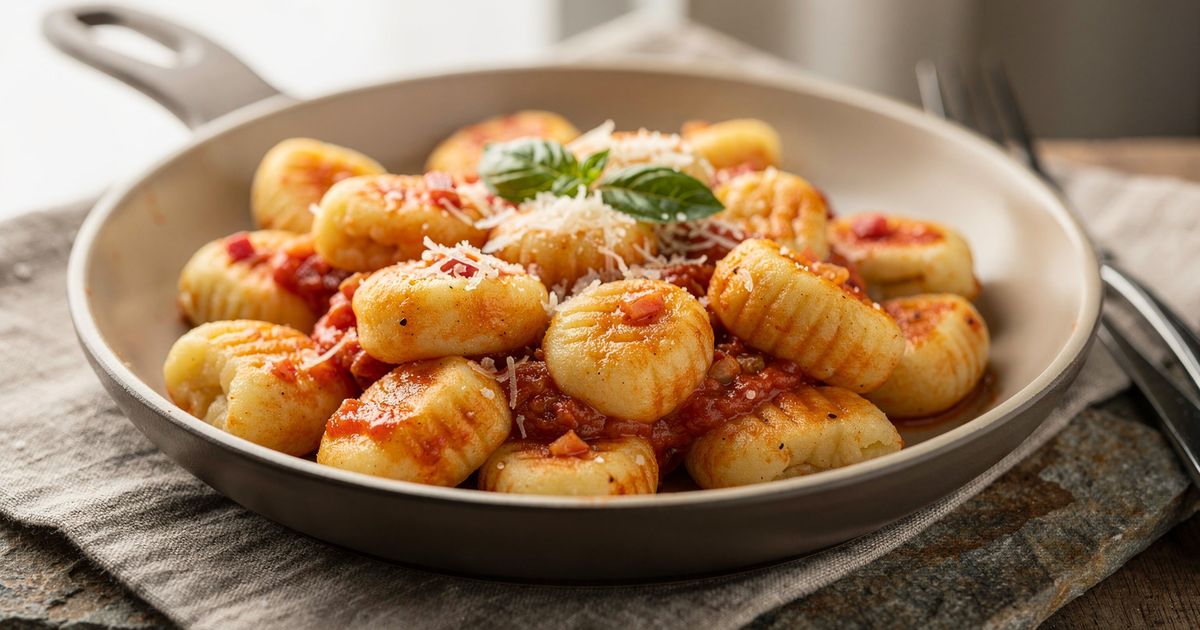
Potato gnocchi al pomodoro is the Roman trattoria combination at its most direct: 900 g of riced russet potatoes bound with 1 egg and just enough flour to hold, boiled in salted water until they float, then folded into a garlicky tomato sauce that simmers while you shape. Prep runs about 40 minutes, most of it waiting for the potatoes to dry and cool, and the sauce and boil take a final 20. The result is 4 servings of light, tender dumplings that taste of potato rather than paste, finished with torn basil and Parmesan.
- Prep
- 40 min
- Cook
- 20 min
- Total
- 75 min
- Additional time
- 15 min
- Serves
- 4
Ingredients
What you’ll need — tap to tick off as you go
- 900 g
- 250 g
- 1 tsp
- 2 tbsp
- 3 cloves
- 800 g
- 1 pinch
- 50 g
Process
Timers built in · swap anything · ask as you cook
Place the 900 g peeled and quartered potatoes in a large pot, cover with cold water by about 3 cm and add a generous pinch of salt. Bring to a boil over high heat, then drop to a steady simmer for 15 to 20 minutes, until a knife slides into the thickest piece with no resistance. Starting from cold water cooks the potatoes evenly from edge to centre; dropping them into boiling water leaves the outside waterlogged before the middle is done.
Drain the potatoes thoroughly, then let them sit in the colander for a few minutes until just warm enough to handle. Pass them through a potato ricer onto a clean work surface and spread the riced potato into an even layer about 2 cm deep. Leave it until completely cool and no longer steaming, about 15 minutes; warm potato steams, the steam soaks into the flour, and you end up needing more of it.
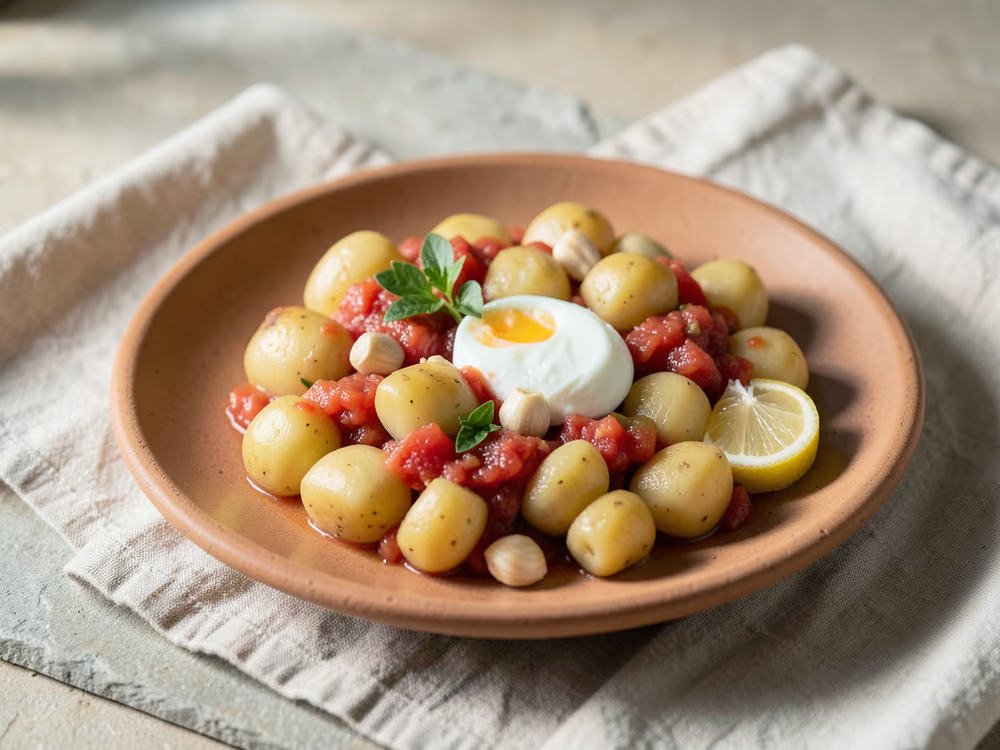
Sprinkle the 250 g flour and 1 tsp salt over the cooled potato, make a well in the centre and add the 1 beaten egg. Mix with your hands, gathering and folding, just until a soft dough forms that holds together and feels slightly tacky. Stop the moment it comes together: overworking develops gluten and the gnocchi turn dense and rubbery, a mistake no sauce can hide.
Bring a small pot of salted water to a rolling boil and drop in one piece of dough the size of a walnut. If it floats and holds together, the dough is ready; if it breaks apart, work 1 to 2 tbsp more flour in and test again. This 3 minute test is the only reliable way to read how much flour your potatoes need, because their moisture varies from bag to bag.
Lightly flour the work surface and cut the dough into 4 portions. Roll each into a rope about 2 cm thick, cut it into 2 cm pieces, and roll each piece over the tines of a fork to add ridges, pressing lightly. Set the finished gnocchi on a floured baking sheet without letting them touch, and keep the dough you are not working with covered, because a skin forms fast on the surface.
Heat the 2 tbsp olive oil in a large skillet over medium heat, add the 3 minced garlic cloves and cook for about 1 minute, stirring, until fragrant and pale gold. Keep the garlic moving: half a minute past fragrant it colours, and a bitter garlic note cannot be taken back out of the sauce.
Pour in the 800 g crushed tomatoes, add the 10 torn basil leaves and a pinch of black pepper, and season with a little salt if the tomatoes need it. Bring to a gentle simmer and cook uncovered for 10 to 15 minutes, stirring now and then, until the sauce thickens enough to hold a trail behind the spoon. Uncovered is the point: the water that leaves is what concentrates the flavour. Keep it warm over low heat.
While the sauce simmers, bring a large pot of salted water to a boil. Drop the gnocchi in small batches, never crowding the pot, and cook for 2 to 3 minutes, until they rise to the surface. Scoop them out within about 30 seconds of floating and slide them straight into the skillet: that extra half minute in the water is the difference between tender and mushy.
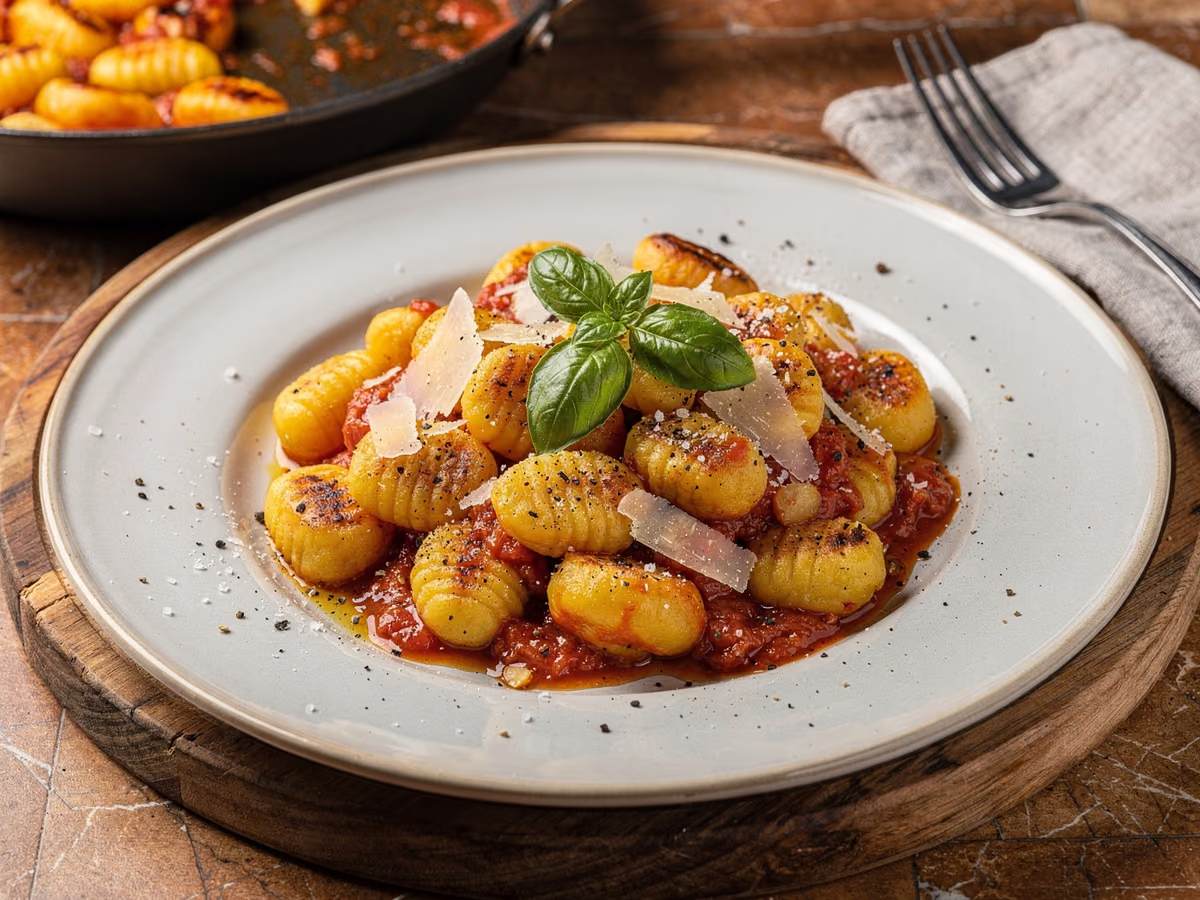
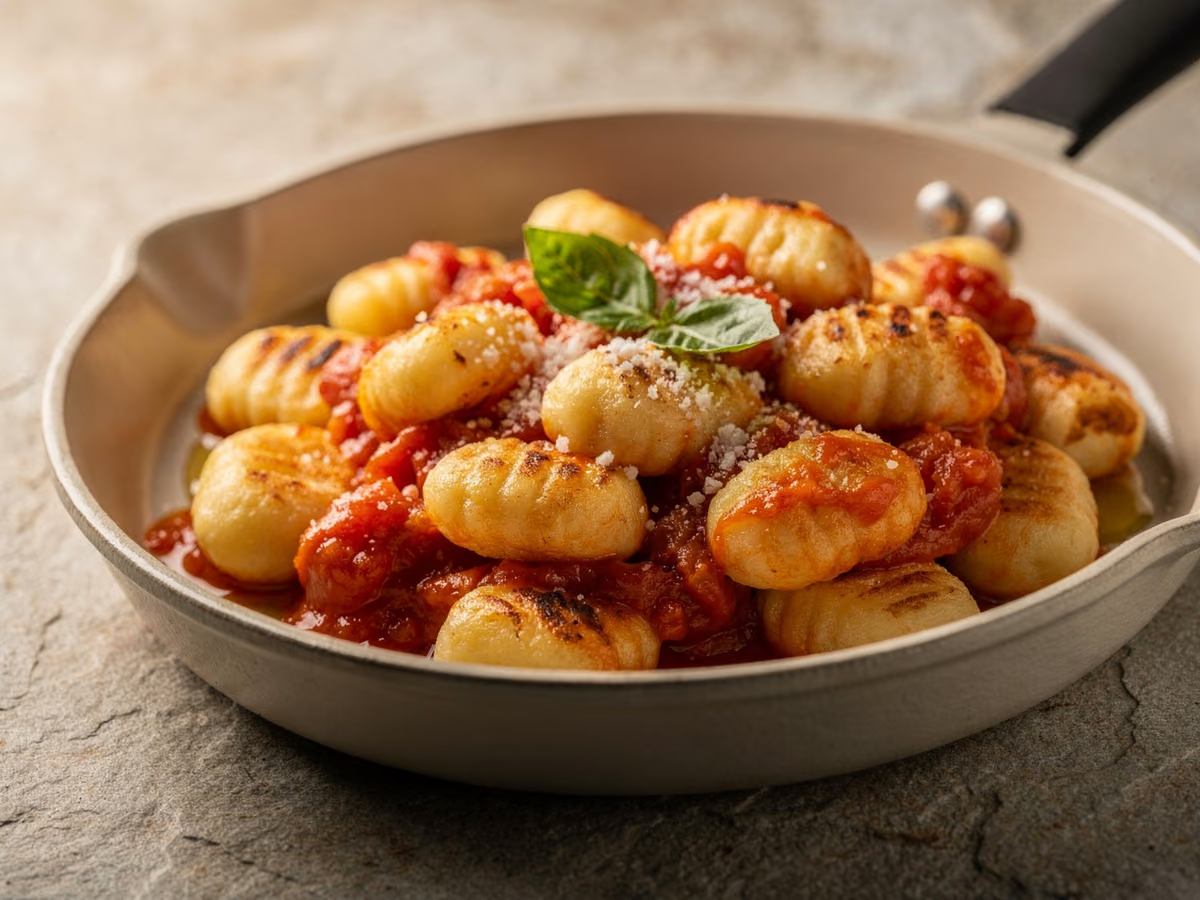
Fold the gnocchi gently through the warm sauce until every piece is coated, then serve at once in warmed bowls with extra torn basil and the 50 g grated Parmesan if you like. The sauce is thick enough to cling to the ridges, so a light toss is all it needs; stirring hard breaks the dumplings apart.
Why this recipe works
Gnocchi live or die on moisture and gluten. Ricing breaks the cooked potato into granules without the smearing a masher causes, and letting the riced flesh sit until it is completely cool releases steam that would otherwise demand more flour. The drier the potato, the less of the 250 g the dough drinks, and the less flour and handling it takes, the lighter the dumplings; folding rather than kneading limits gluten development, which is what keeps them tender rather than rubbery. In the sauce, 1 minute of garlic in medium oil extracts its sweetness without the bitterness that browned garlic carries, and 10 to 15 minutes of simmering drives off water and cooks the raw edge off canned tomatoes.
Equipment
- Potato ricer or food mill (the lighter the mash, the lighter the gnocchi)
- Large pot, 5 to 6 litres, for the potatoes and later the gnocchi
- Large skillet or saute pan, about 28 cm, for the sauce
- Rimmed baking sheet for the shaped gnocchi
- Bench scraper or a table knife for cutting the ropes
- Fork or gnocchi board for the ridges
- Slotted spoon or spider
Kitchen notes
Kitchen notes
- Rice the potatoes onto the work surface rather than into a bowl: the shallow layer releases steam fastest, and speed here is the same thing as lightness.
- Treat the 250 g flour as a range, not a rule. A dry batch of potatoes may take a little less; the dough, not the clock, tells you when to stop.
- Keep the small pot of water boiling while you shape. Retesting one piece after any adjustment costs 3 minutes and protects the whole batch from a pot of dumplings that fall apart.
- Roll the ridges rather than leaving the pieces smooth: the fork marks are what hold the sauce, and gnocchi without them taste thinner in the same bowl.
- A ladle of the starchy cooking water stirred into the tomato before the gnocchi go in makes the sauce cling like a dressing.
- Warm the bowls and sauce the gnocchi at the last second. They stiffen as they cool, and the second helping never tastes quite like the first.
Common mistakes
- Dense, rubbery gnocchi: too much flour, or the dough was kneaded like bread. Fold until it just holds, stop while it is still slightly tacky, and add flour a spoonful at a time; once the gluten tightens, no amount of sauce loosens it.
- Gnocchi that break apart in the water: the dough was too wet, usually because warm potatoes forced in extra flour or the egg went in before the potato cooled. Rice and spread the potatoes, wait the full 15 minutes, and use the test piece before shaping the whole batch.
- Watery sauce that slips off the gnocchi: it was simmered with a lid on or pulled early. Give the tomatoes the full 10 to 15 minutes uncovered, and if the pan still looks loose, keep it at a gentle bubble rather than pouring it off.
- Sauce that tastes raw and sharp: it needed the full simmer with the basil, and probably a pinch of salt. If it still tastes acidic at 15 minutes, add a small knob of butter or a little more olive oil and cook 3 to 5 minutes longer.
- Mushy, waterlogged gnocchi: crowded into the pot or left swimming after they rose. Boil in batches and lift them out within about 30 seconds of floating; they finish in the sauce, not in the water.
- Bitter edge in every bite: the garlic browned before the tomatoes went in. One minute at medium is the whole window; if it colours, start the sauce again rather than burying the bitterness under sugar.
Serving suggestions
- Serve straight away in warmed bowls as 4 portions; gnocchi wait for no one and tighten as they cool.
- Finish with torn basil and the 50 g Parmesan grated at the table, plus a thread of olive oil over the top.
- A crisp green salad or a plate of roasted vegetables keeps the meal light, with bread to swipe the last of the sauce.
- Keep the drinks simple and cold: sparkling water with a strip of lemon peel, or iced tea.
Variations
- Baked-potato version: roast the 900 g of potatoes whole at 230°C for about 45 minutes, scoop out the flesh and rice it. Baked potatoes are drier, so the dough usually drinks less flour and tastes more strongly of potato.
- Brown-butter and sage, a different sauce: toss the same gnocchi in butter browned with a handful of sage leaves and finish with Parmesan; the tomato, garlic and basil are replaced, not added.
- Arrabbiata heat: add 0.5 tsp crushed red pepper flakes with the garlic and let them sizzle for 30 seconds before the tomatoes go in for a clean, slow burn.
- Vegan version, a different dish: leave out the egg and the Parmesan, test a piece before shaping as in step 4, and sauce immediately; the dough is softer and needs gentle handling in the water.
Refrigerator
- RefrigeratorCool any leftovers within 2 hours, then refrigerate them in an airtight container for up to 3 days. Uncooked shaped gnocchi keep on a floured tray, covered, for up to 24 hours in the fridge; they go into the pot from cold and cook in the same 2 to 3 minutes.
- ReheatingReheat cooked leftovers in a covered skillet over medium-low heat with 1 to 2 tbsp of water for 5 to 7 minutes, until steaming, or microwave them covered at 70 percent power in 1-minute bursts. Do not boil or bake them: the potato dough toughens the second time it meets high heat.
- FreezingFreeze uncooked shaped gnocchi on the tray until solid, then bag them for up to 2 months and boil from frozen with 1 to 2 minutes added. Freezing the finished dish is not recommended: the sauce goes watery and the dumplings come back heavy.
- Make aheadShape the gnocchi a day ahead and keep them covered on a floured tray in the fridge, or cook the sauce up to 3 days ahead and reheat it gently. From there, the last 20 minutes are just the boil and the toss, so the timing stays friendly.
Updated:
How this recipe was developed
- Serious Eats, Light and Tender Potato Gnocchi (dry, starchy potatoes make lighter gnocchi; rice and fold rather than knead, and taste a piece about 20 seconds after the gnocchi float to confirm doneness)
- Serious Eats, How to Make Potato Gnocchi gallery (russets are the starchy, dry choice; less flour means lighter dumplings; shaped gnocchi freeze well on a tray)
- USDA FSIS leftovers and food safety guidance (refrigerate leftovers within 2 hours; 3 to 4 days in the fridge)
Editorial references are kept internally for verification. This page makes no claim of external certification or professional testing.
Gallery
FAQ
The questions we get asked most
Why did my gnocchi turn out dense and chewy?
Almost always too much flour or too much handling. Add the flour gradually, stop the moment a soft dough forms and treat the dough as little as possible. Warm or wet potatoes are the other cause, because they push you toward extra flour, so drain thoroughly and let the riced potato cool and dry completely before the egg goes in.
How do I know when the gnocchi are done?
They rise to the surface, and they are ready about 30 seconds after that, usually 2 to 3 minutes in gently boiling salted water. Scoop them out the moment they float, because a dumpling left in the water drinks it and turns mushy.
Can I make gnocchi ahead of time?
Yes. Shape them onto a floured baking sheet, cover and refrigerate for up to 24 hours, or freeze the tray until solid and bag them for up to 2 months. Boil from frozen without thawing and add 1 to 2 minutes to the cooking time.
Can I use another potato or instant mashed potatoes?
Russets are the best choice: their high starch and low moisture need less flour and give the lightest gnocchi. Yukon Golds work with about 2 to 3 tbsp less flour, while waxy potatoes and instant flakes give a gluey, heavy texture, so keep them for another dish.
Why is my tomato sauce too thin or too acidic?
It usually needs the full 10 to 15 minutes uncovered, which both thickens it and cooks off the raw canned flavour. If it still tastes sharp, add a pinch of salt and a small knob of butter or a little more olive oil, and simmer 3 to 5 minutes longer.
Can I use dried basil or pre-grated Parmesan?
Yes to the first: 1 tsp of dried oregano or dried basil goes in with the tomatoes when fresh basil is not around. For the cheese, grate a block fresh; pre-grated Parmesan carries anti-caking starch that melts poorly and turns gluey on hot dumplings.
Do I really need a potato ricer?
It gives the lightest, most even result and is the one tool worth borrowing for this dish. A food mill works the same way, a box grater on the large holes is the next best option, and a standard masher leaves lumps and starts to paste the potato, which pushes you toward more flour and heavier gnocchi.
Ask KitchenMind about this recipe
Tell it what’s different tonight — it works within the actual recipe.