Chicken Souvlaki Skewers
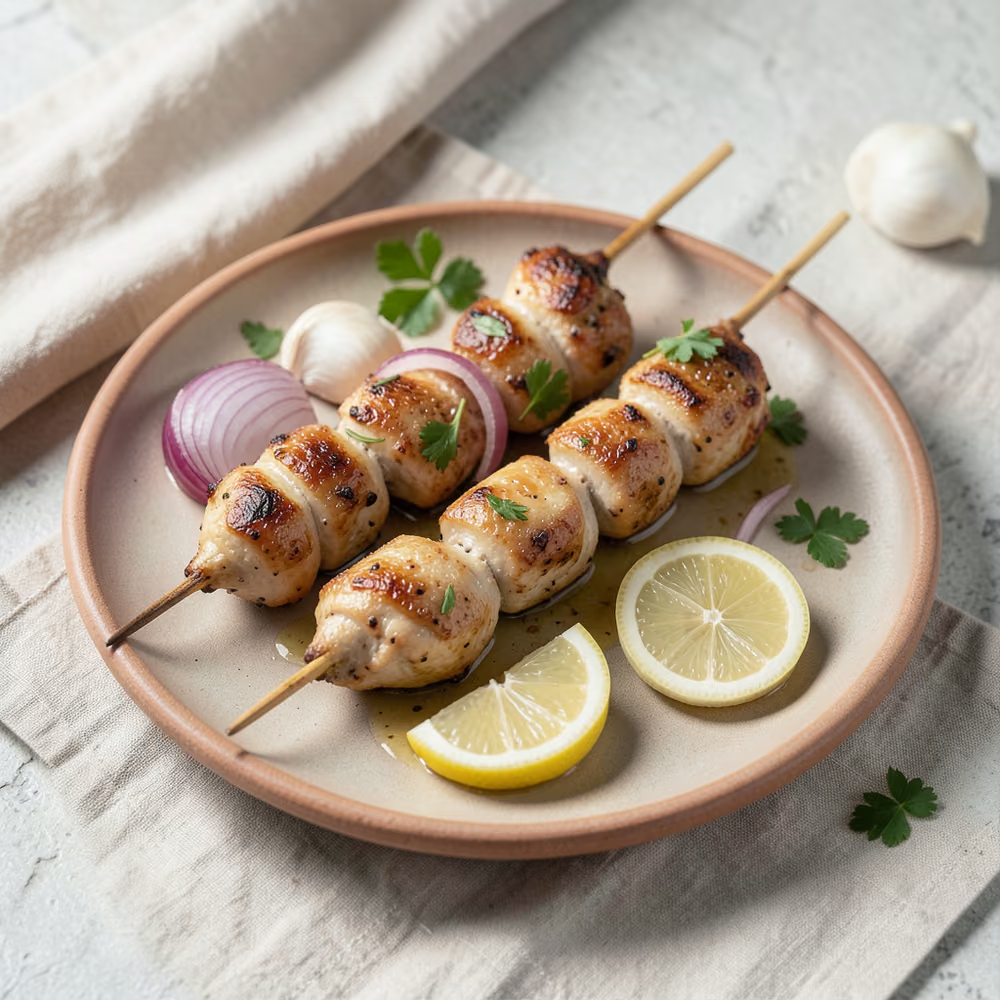
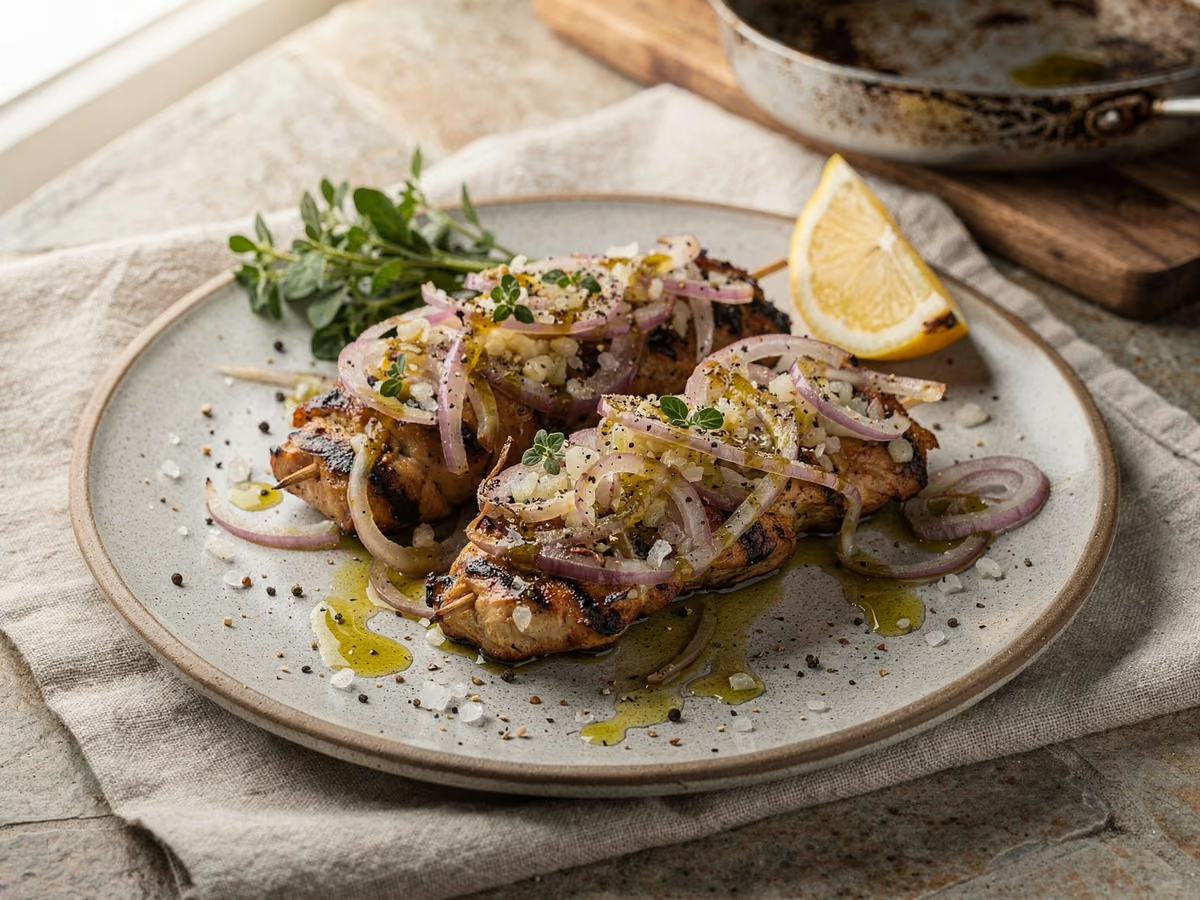
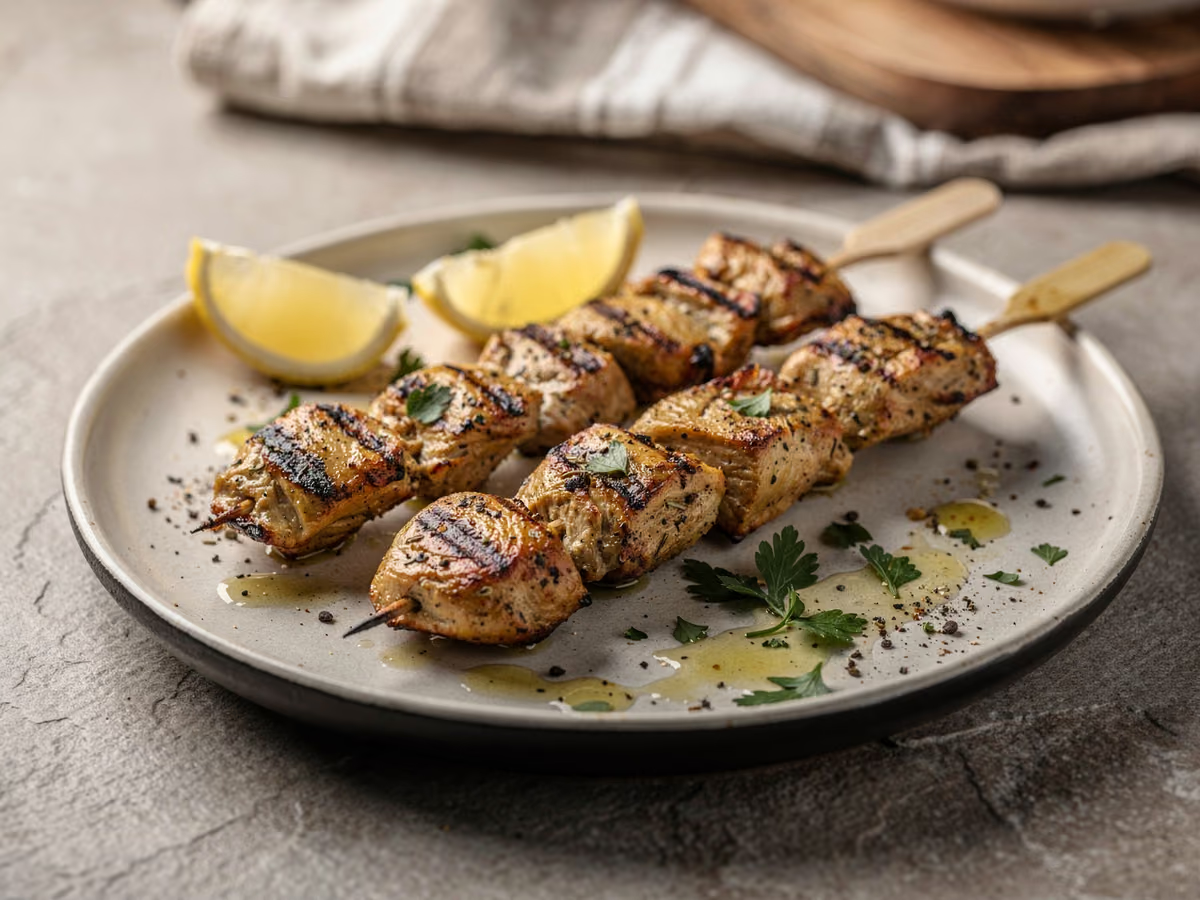
Chicken souvlaki is a hot grill's answer to a weeknight dinner: 800 g of boneless thigh cut into 3 cm chunks, marinated in olive oil, lemon juice, garlic and oregano, then threaded with red onion and bell pepper and grilled until the edges char without the meat drying out. The marinade needs only 30 minutes to register, though 4 hours is better, and the skewers cook in 10 to 15 minutes with a 5 minute rest at the end. Serve them in warm pita with tzatziki and a sharp Greek salad.
- Prep
- 20 min
- Cook
- 15 min
- Total
- 65 min
- Additional time
- 30 min
- Serves
- 4
Ingredients
What you’ll need — tap to tick off as you go
- 800 g
- 4 tbsp
- 3 tbsp
- 4 cloves
- 2 tsp
- 1 tsp
- ½ tsp
Process
Timers built in · swap anything · ask as you cook
Whisk 3 tbsp of the olive oil with the 3 tbsp lemon juice, 4 minced garlic cloves, 2 tsp dried oregano, 1 tsp salt and 0.5 tsp black pepper in a large bowl. Add the 800 g of chicken chunks and toss until every piece is glossy, then cover and refrigerate for 30 minutes to 4 hours; even the minimum seasons the surface, while the full window pushes lemon and garlic deeper.
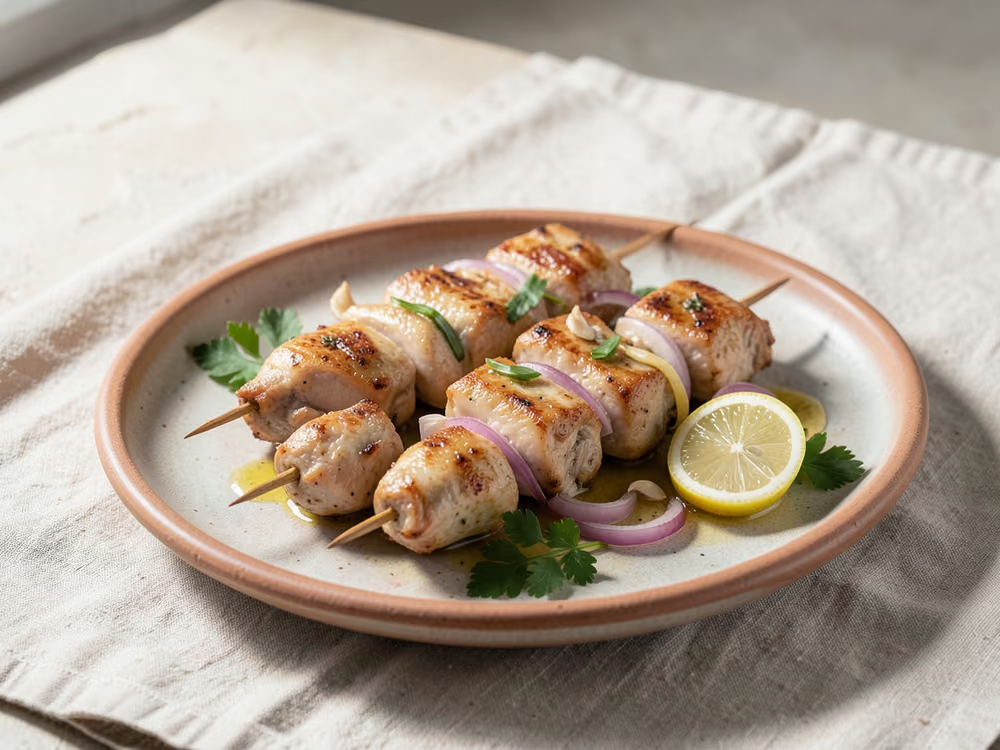
Put the wooden skewers in a tray of water and leave them to soak for 30 minutes, while the chicken marinates. This step is not cosmetic: dry skewers scorch and splinter over a hot fire, and a burnt skewer can snap under the weight of loaded chicken and vegetables.
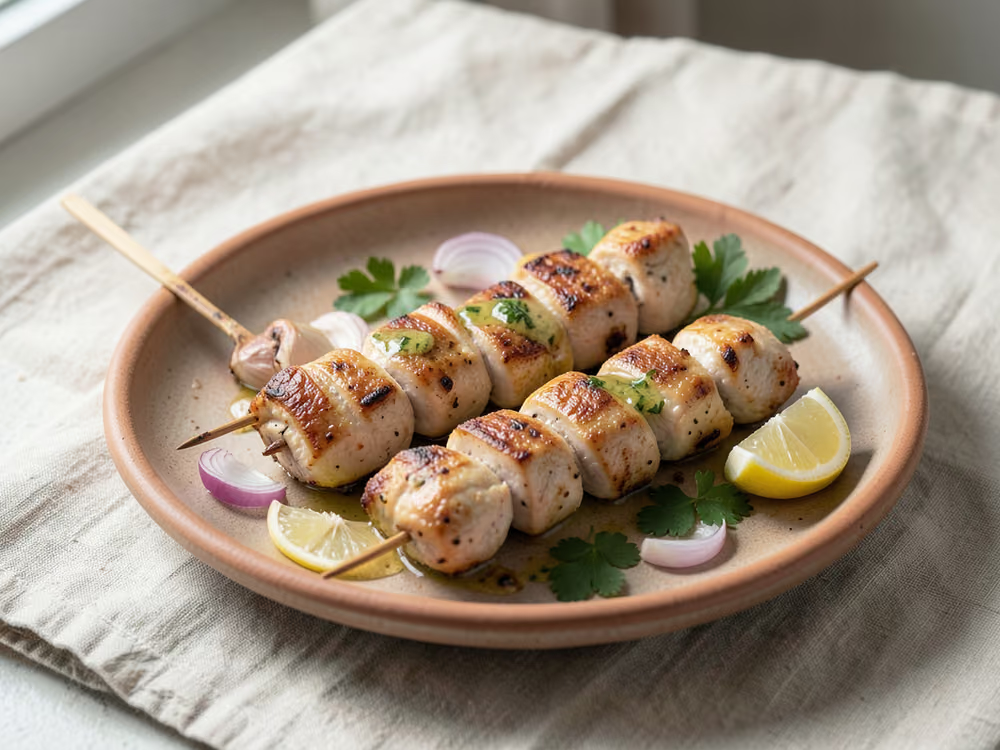
Preheat the grill or grill pan over medium-high heat for at least 5 minutes and brush the grate clean. A properly hot grate sears the marinade on contact instead of letting it drip away, and it releases the chicken cleanly when you turn it; a lukewarm grate does neither.
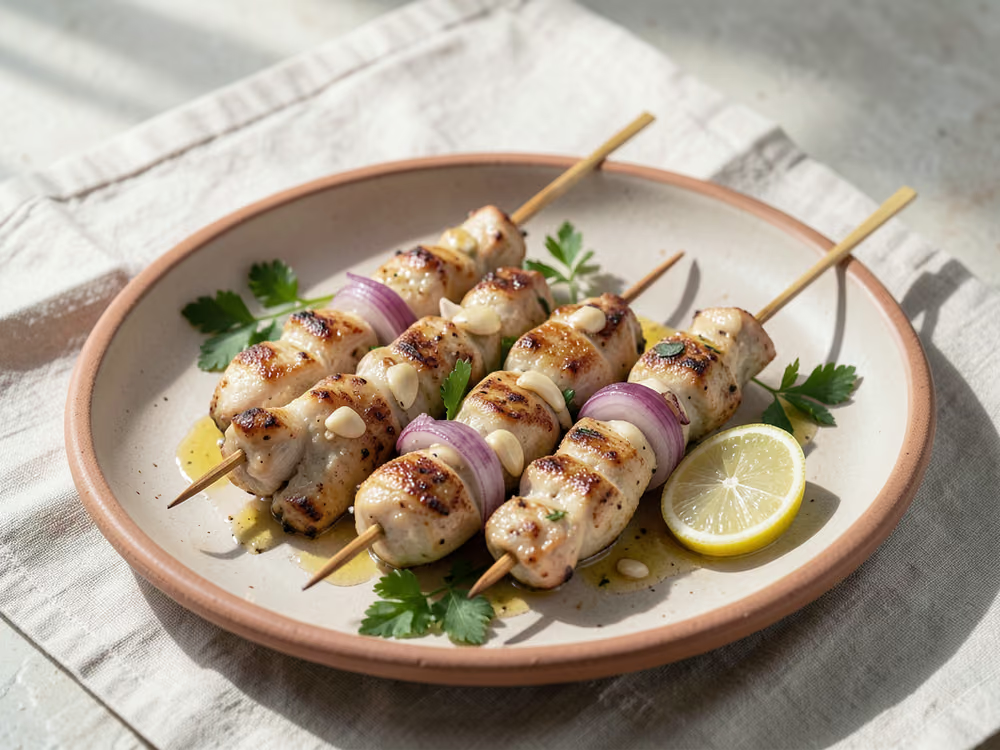
Thread the chicken, the 2 cm pieces of red onion and the 2 cm pieces of bell pepper onto the skewers, alternating them, then brush everything with the remaining 1 tbsp of olive oil. Let the loaded skewers stand at room temperature for 10 minutes before grilling, so the outside chars before the middle finishes the short trip to 74°C.
Grill the skewers for 10 to 15 minutes, turning occasionally, until the chicken is opaque at the centre, the juices run clear and the edges are charred in patches. Leave 2 cm between skewers so they sear rather than steam, and start checking the thickest piece at 10 minutes on an instant-read thermometer.
Move the skewers to a warm plate and let them rest for 5 minutes before serving. Resting gives the juices that were driven to the centre time to redistribute, so they stay in the meat when you bite rather than running out onto the plate; 5 minutes is enough, and the skewers stay hot.
Why this recipe works
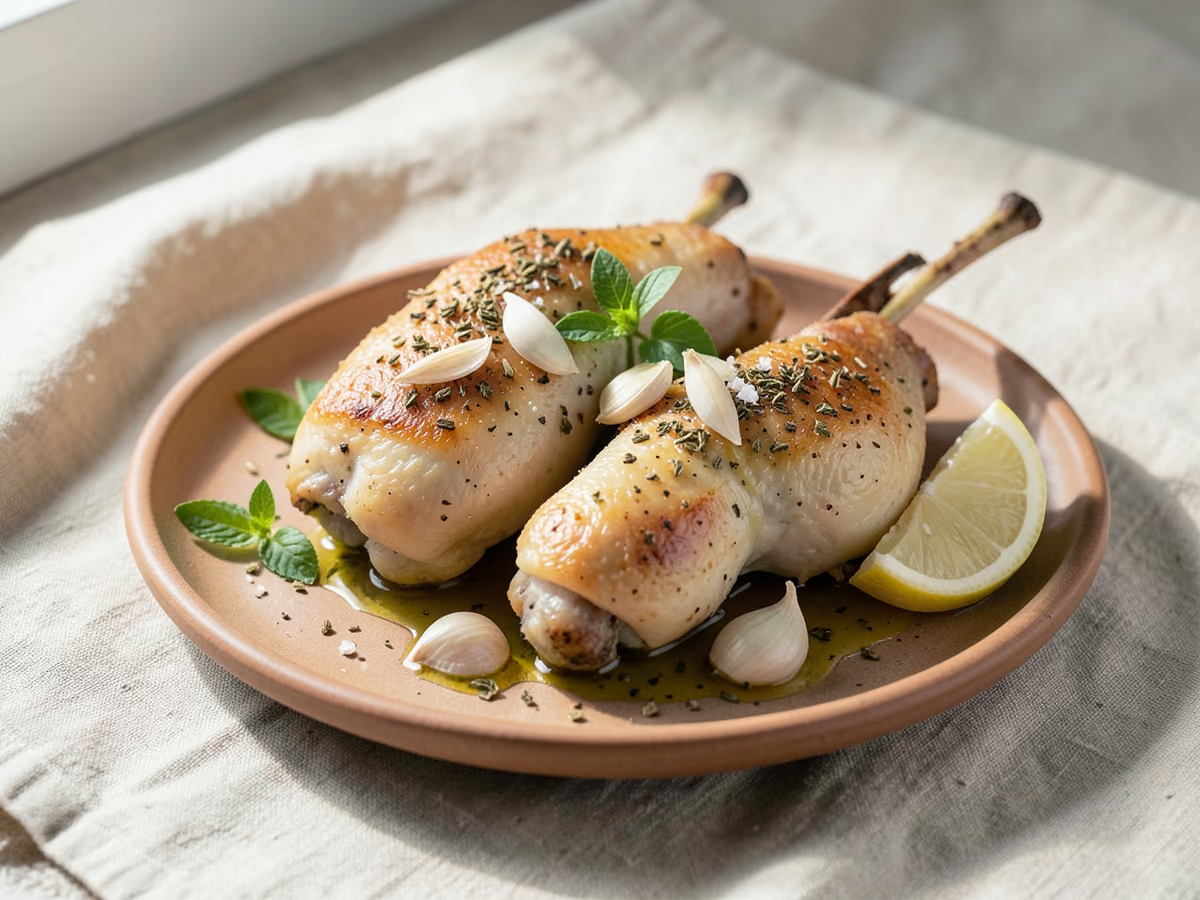
Thigh meat is the right cut for a hot grill: more fat and connective tissue than breast means it stays juicy while the surface chars. The marinade works on two fronts. Lemon juice lightly denatures the surface proteins, which lets the garlic, oregano and salt penetrate rather than sit on top, and the oil carries the fat-soluble oregano through the meat while keeping the lean edges from drying. Salt needs time to move inward, so 30 minutes is the floor, not the goal. Cutting every piece to a uniform 3 cm and leaving 2 cm between skewers is what lets the centre reach 74°C before the outside burns.
Equipment
- Grill, charcoal or gas, or a ridged grill pan for cooking indoors
- Wooden skewers, soaked in water for 30 minutes, or metal skewers used straight from the drawer
- Large mixing bowl or zip-top bag for the marinade
- Chef's knife and cutting board
- Pastry brush for the olive oil
- Instant-read thermometer
- Small spray bottle of water for flare-ups
- Rimmed tray for carrying the loaded skewers to the grill
Kitchen notes
Kitchen notes
- Firm the thighs in the freezer for a few minutes before cutting: cold meat cuts into clean 3 cm cubes, and neat cubes sit on the skewer without spinning or shedding ragged edges that catch and burn.
- Thread heavy skewers through two parallel sticks; onion and pepper pieces can rotate freely on a single skewer and fall apart when you turn them over the fire.
- Respect the middle heat: a steady medium-high fire sets char marks while the inside comes up to 74°C, where a raging fire blackens the marinade before the centre is even close.
- Hold back a few drops of lemon and squeeze them over the hot skewers at the table with an extra pinch of oregano; fresh juice and dry herb land brighter than anything that marinated for hours.
- When the skewers come off, flash the pita bread over the dying heat of the grill: it softens, takes on a little smoke, and turns a plate of grilled chicken into a proper wrap.
Common mistakes
- Dry, stringy chicken: the skewers cooked a minute or two past the 10-minute check, and thigh goes from juicy to dry quickly at that point. Start probing the thickest piece at 10 minutes and pull the skewers the moment it reads 74°C.
- A soft, chalky surface on the meat: the chicken sat in the lemon marinade for more than 4 hours, and the acid kept tenderising until it broke the surface down. Take the chicken out of the marinade at 4 hours even if you are not ready to grill.
- Skewers that flare and blacken: unsoaked wooden skewers, or oily marinade dripping into the fire. Soak the skewers the full 30 minutes, shake the worst of the marinade off before grilling, and keep a spray bottle of water at hand for flare-ups.
- Pale, steamed skewers instead of charred ones: the grill was not preheated, the chicken was still dripping wet from the marinade, or the skewers were crowded together. Heat the grill for 5 minutes, leave 2 cm between skewers and let them sear, not stew.
- Raw centres with scorched edges: the chicken went on straight from the fridge, or the pieces were cut unevenly. Let the skewers stand 10 minutes at room temperature first, and cut every chunk to the same 3 cm so they finish at the same time.
- Rubbery leftovers: reheating in the microwave. The dry grill heat is what gives souvlaki its texture, so revive the skewers in a 180°C oven for 8 to 10 minutes, or in a covered skillet with a splash of water.
Serving suggestions
- Slide the chicken and vegetables off the skewers into warm pita with tzatziki, sliced tomato, red onion and a squeeze of lemon, or serve the skewers whole for eating off the stick; the recipe makes 4 servings.
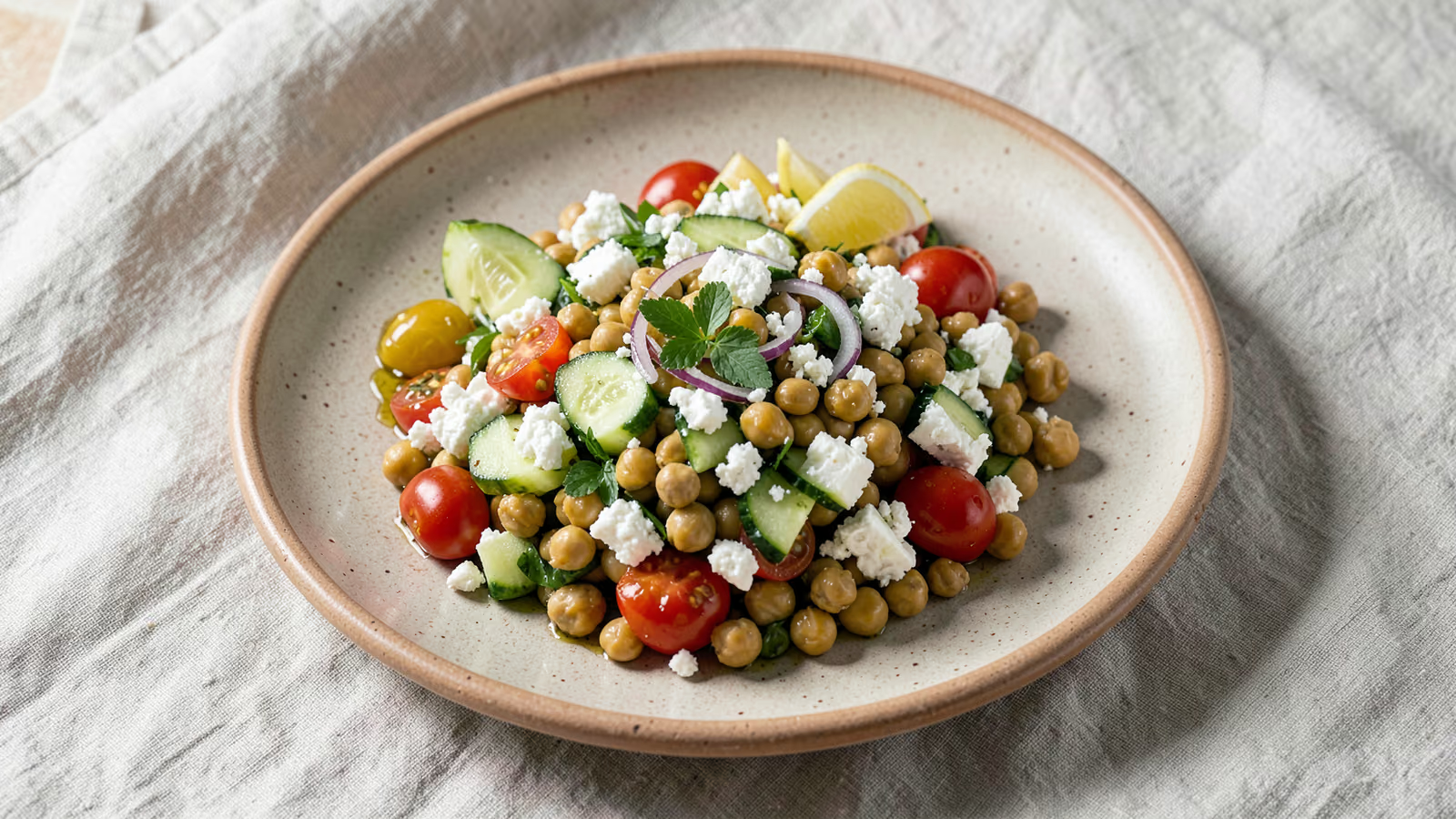
- Plate them with a Greek salad of tomato, cucumber, red onion, olives, feta and oregano; the cool vegetables and salty cheese are exactly the reset a charred skewer wants.
- Pile the skewers over rice or lemon potatoes and spoon the resting juices over the top; add a spoon of yogurt sauce if you are not keeping the plate dairy-free.
- Chilled leftovers are excellent sliced into a salad or tucked into bread the next day; the marinade flavours deepen overnight.
- Serve with chilled sparkling water, iced tea or cold barley tea; something clean and cold works better here than anything sweet.
Variations
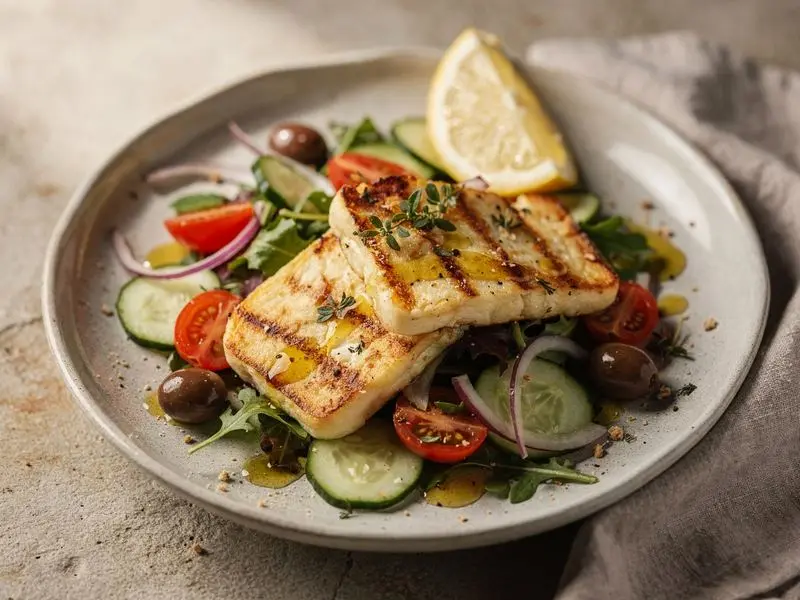
- Veggie skewers, a different dish: swap the chicken for 3 cm cubes of firm tofu or halloumi, marinate the same 30 minutes to 4 hours and grill in the same 10 to 15 minute window, brushing with oil; the tofu drinks the marinade while the halloumi browns and softens fast.
- Beef skewers: use 800 g of sirloin or rump in 3 cm cubes with the same marinade and grill over the same heat, cooking to 63°C in the centre for medium rare with a 3-minute rest, the USDA FSIS minimum for whole cuts of beef.
- Souvlaki bowls, a different presentation: slide the rested chicken over rice or grains with cucumber, tomato and olives, and spoon over a lemony yogurt or tahini sauce; the flavours stay the same while the format turns into a knife-and-fork dinner.
Refrigerator
- RefrigeratorCool the skewers within 2 hours of cooking, then refrigerate them in an airtight container for up to 4 days. USDA FSIS guidance covers refrigerated leftovers for 3 to 4 days, so 4 days is the outer edge; slide the chicken and vegetables off the skewers if they will not fit, and keep any loose vegetables with them.
- ReheatingReheat in a 180°C oven for 8 to 10 minutes, or in a covered skillet over medium heat for 6 to 8 minutes with a splash of water, until the chicken reads 74°C again, the USDA FSIS target for reheated leftovers. Do not microwave the skewers, which turns the chicken rubbery.
- FreezingUp to 3 months; USDA FSIS allows 3 to 4 months for frozen leftovers, so this recipe's 3 months sits comfortably inside it. Slide the cooled chicken and vegetables off the skewers into a freezer bag, press out the air, and thaw overnight in the fridge before reheating.
- Make aheadMarinate for up to 4 hours, then remove the chicken from the marinade if you need to hold it longer. Threaded skewers can be covered and refrigerated up to 24 hours ahead, and grilled skewers reheat well the next day at 180°C for 8 to 10 minutes, so 20 minutes of prep and 15 minutes of grilling from fridge to table is realistic on the day.
Updated:
How this recipe was developed
- BBC Food, chicken souvlaki by Georgina Hayden (olive oil, lemon, garlic and oregano marinade; grilled skewers turned as they cook; served in pita with lemon)
- USDA FSIS safe minimum internal temperature chart (poultry 74°C; whole cuts of beef 63°C with a 3-minute rest; leftovers reheated to 74°C)
- USDA FSIS leftovers and food safety guidance (refrigerate within 2 hours; 3 to 4 days in the fridge; 3 to 4 months in the freezer)
Editorial references are kept internally for verification. This page makes no claim of external certification or professional testing.
Gallery
FAQ
The questions we get asked most
Why did my chicken souvlaki turn out dry and tough?
The usual causes are overcooking lean pieces and cutting the chicken too small. Thigh needs to reach 74°C but not much beyond it, so start checking the thickest piece at 10 minutes and pull the skewers as soon as it reads 74°C. Grilling cold chicken straight from the fridge is the other trap: the outside chars before the inside is done.
Can I marinate the chicken longer than 4 hours?
No, keep it to 4 hours maximum. The lemon juice and garlic are acidic and salty, and past 4 hours the surface of the chicken turns soft and chalky. If you need to prep further ahead, marinate for the full 4 hours, then pull the chicken out of the marinade and refrigerate it plain until grilling.
How do I know when the souvlaki is done?
The thickest piece on the skewer should read 74°C on an instant-read thermometer, with juices that run clear and no pink at the centre; the outside should carry char marks and the meat should feel firm rather than rock hard. Without a thermometer, cut one piece open at the 12-minute mark.
Can I make the skewers ahead of time?
Yes. Thread them up to 24 hours in advance, cover and refrigerate, then brush with the remaining olive oil just before grilling. You can also grill them a day ahead, cool, refrigerate and reheat at 180°C for 8 to 10 minutes, adding a splash of water if you reheat on the stovetop so they do not dry out.
Why are my skewers soggy instead of charred?
Either the grill was not hot enough or the chicken was wet with marinade. Preheat the grill over medium-high heat for at least 5 minutes, shake excess marinade off the pieces, and leave 2 cm between skewers; crowding steams the meat instead of searing it.
Can I use frozen chicken thighs or frozen bell peppers?
Yes, but thaw the chicken completely overnight in the fridge before marinating; frozen-then-marinated chicken releases water that dilutes the marinade. Frozen peppers work but are softer, so pat them dry and add them to the skewers for only the last 5 minutes of grilling.
Can I cook souvlaki without an outdoor grill?
Yes, use a ridged grill pan or a heavy skillet over medium-high heat; preheat it for 5 minutes and cook the skewers for the same 10 to 15 minutes, turning occasionally and leaving 2 cm between them. A grill pan gives the closest thing to real char marks indoors.
Ask KitchenMind about this recipe
Tell it what’s different tonight — it works within the actual recipe.