- Prep
- 10 min
- Cook
- 0 min
- Total
- 10 min
- Serves
- 2
Ingredients
What you’ll need — tap to tick off as you go
- 300 g
- 120 ml
- 1 tbsp
- 10 g
Process
Timers built in · swap anything · ask as you cook
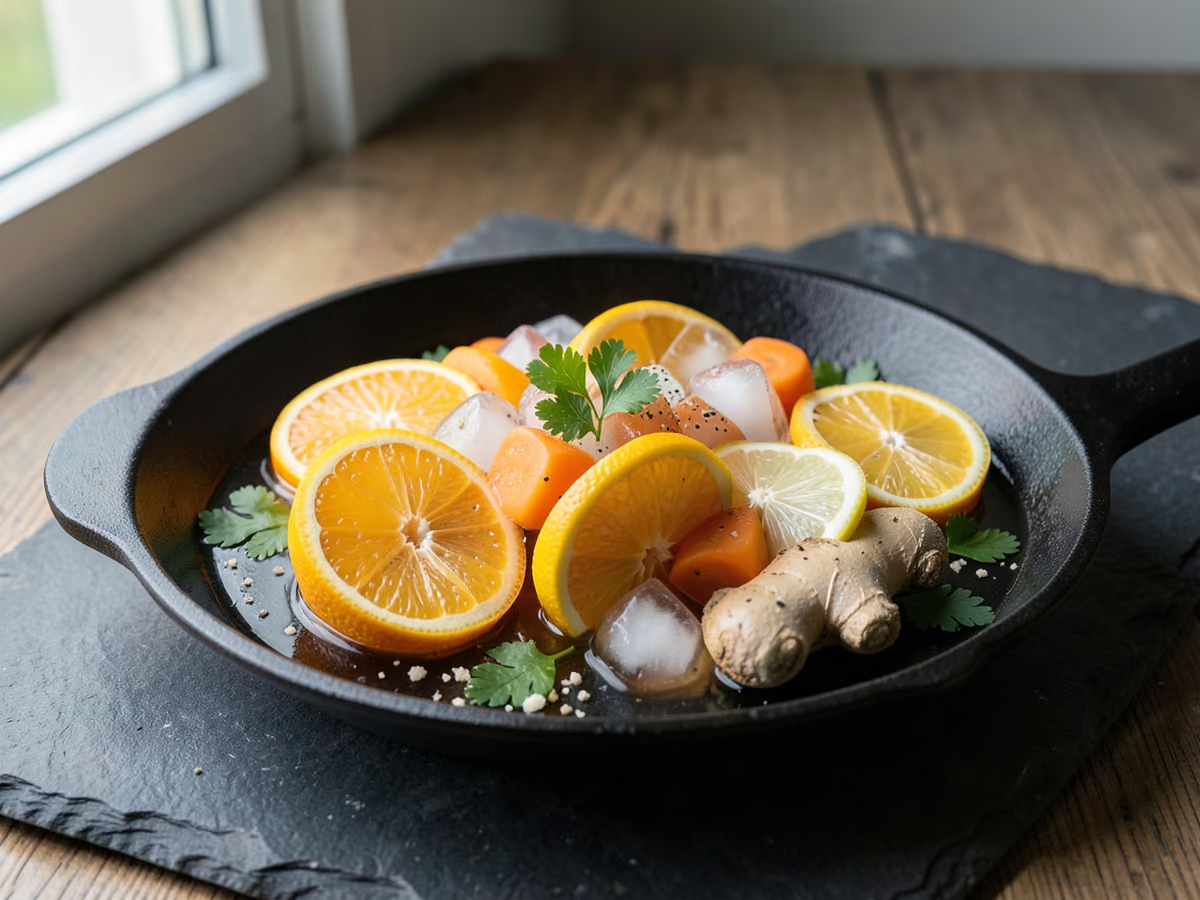
Peel the 4 oranges and pull off as much white pith as comes away easily, then cut the fruit into chunks.
Scrub the 300 g carrots well and cut them into 2 cm pieces; peel only if the skin looks dry or bitter.
Add the orange chunks, carrot pieces, 120 ml cold water and the optional 10 g fresh ginger to a blender.
Blend on high for 60 to 90 seconds, until no carrot pieces remain and the mixture looks uniformly pulpy.
Strain through a fine-mesh sieve or a nut milk bag into a jug, pressing the pulp with a spoon to extract all the juice.
Stir in the optional 1 tbsp lemon juice, then taste and add a splash more water if you prefer a thinner juice.
Pour over the optional 6 ice cubes and serve immediately.
Kitchen notes
Kitchen notes
- The most common mistake is blending carrots alone with too little liquid, which leaves gritty bits; the 120 ml water is what lets the blender turn them fully smooth.
- Do not skip the straining step if you want a juice rather than a smoothie; press the pulp firmly against the sieve because a good amount of juice stays trapped in it.
- The lemon juice is not just for flavor: without it the juice darkens within about an hour, so add it if you plan to hold the juice before serving.
- If your blender is weak, grate the carrots on the coarse side of a box grater first; they break down in half the time.
Substitutions
- oranges→tangerines or mandarins (use 6 to 8 and expect a sweeter, less acidic juice)
- fresh ginger→a pinch of ground ginger or 1/4 tsp ground cinnamon
- lemon juice→lime juice, in the same amount
Storage & reheating
Store in a sealed glass jar or bottle in the fridge for up to 24 hours; the juice separates and dulls in color as it sits, so shake or stir before drinking. For longer storage, freeze in an ice-cube tray for up to 1 month and blend the frozen cubes straight into a smoothie. Do not reheat; this juice is always served cold.
FAQ
The questions we get asked most
Why did my orange carrot juice turn out bitter?
Bitter juice almost always comes from the white pith left on the oranges or from older, woody carrots. Remove as much pith as possible when peeling, and use firm, fresh carrots with no soft spots. A tablespoon of lemon juice also masks mild bitterness.
Can I make this juice without a juicer?
Yes. A standard blender plus a fine-mesh sieve or nut milk bag works just as well. Blend the oranges, carrots and water until smooth, then strain and press the pulp; you will get about the same yield as a juicer, just with a little more hands-on time.
How long does fresh orange carrot juice last in the fridge?
It keeps for about 24 hours in a sealed jar in the fridge, though the flavor and color are best in the first 4 to 6 hours. After a day it separates and starts to taste flat. Stir or shake well before drinking.
Can I freeze orange carrot juice?
Yes, pour it into ice-cube trays or a freezer-safe bottle, leaving 2 cm of headspace, and freeze for up to 1 month. Thaw overnight in the fridge, or drop the frozen cubes directly into a blender for smoothies. Expect a slightly softer texture after thawing.
Do I need to peel the carrots?
Not if you scrub them thoroughly under running water; the skin holds fiber and flavor. Peel only when the skin looks dry, cracked or greenish, or when the carrots are older, since those skins can taste bitter and earthy.
Can I add other fruits or vegetables to this juice?
Yes, apple, pineapple, beet and cucumber all blend well with orange and carrot. Keep the total carrot amount at 300 g or less if you add very watery vegetables, otherwise the juice tastes thin. If you add beet, use no more than 100 g or it will dominate.
Why is my juice separating and what can I do about it?
Separation is normal because fresh juice has no stabilizers; the pulp settles within 20 to 30 minutes. Just stir or shake it before drinking. Straining more thoroughly through a finer sieve slows separation but does not stop it completely.
Ask KitchenMind about this recipe
Tell it what’s different tonight — it works within the actual recipe.