- Prep
- 20 min
- Cook
- 15 min
- Total
- 35 min
- Serves
- 4
Ingredients
What you’ll need — tap to tick off as you go
- 150 g
- 50 g
- 200 ml
- 3 tbsp
- 1 tsp
- 150 g
- 150 g
- 100 g
- 200 g
- 50 g
- 3 tbsp
- 1 tbsp
- 1 tsp
- 1 tsp
- 1 clove
- ½ tsp
Process
Timers built in · swap anything · ask as you cook
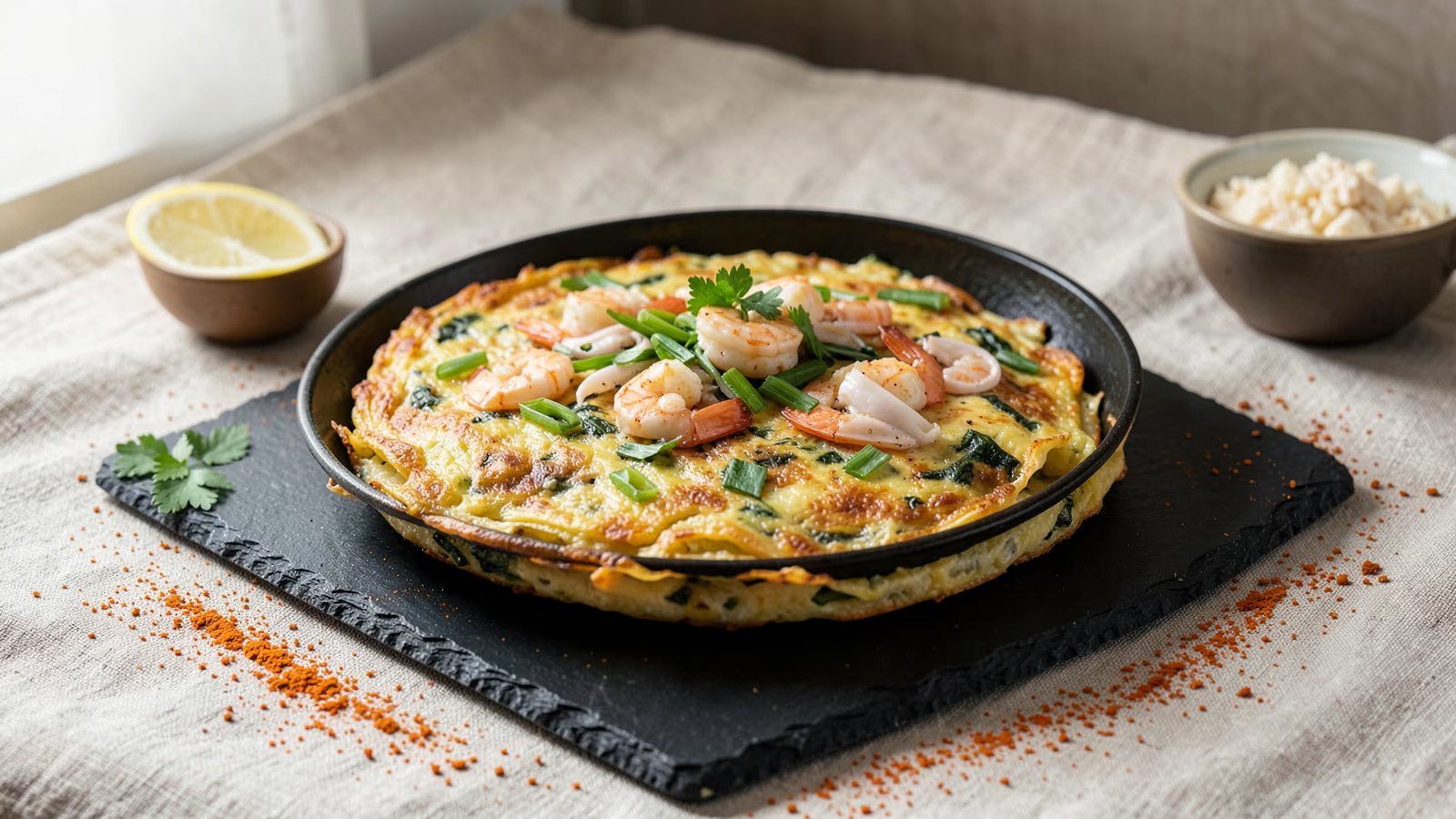
In a large bowl, whisk together 150 g all-purpose flour, 50 g cornstarch, 1 egg, 200 ml ice water, 1 tbsp soy sauce, and 1 tsp toasted sesame oil until smooth. The batter should be thin, like crepe batter. If too thick, add ice water 1 tbsp at a time.
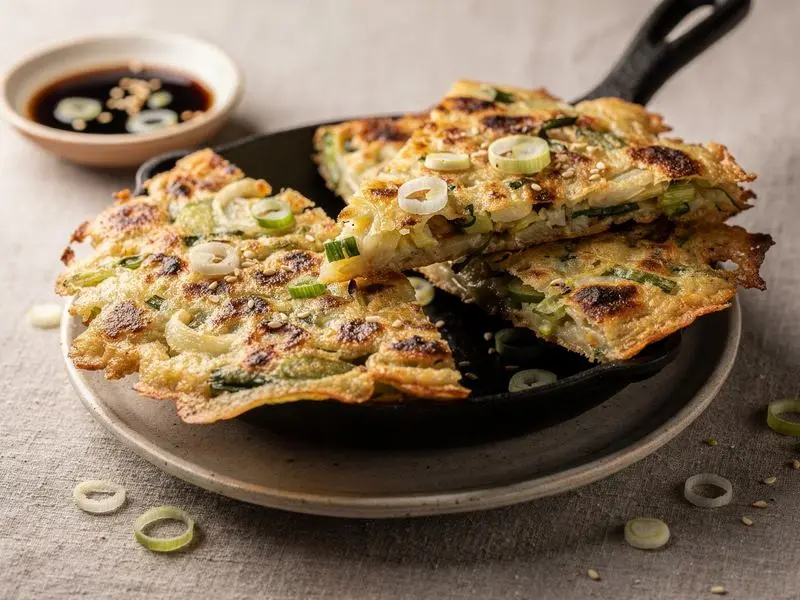
Prepare the dipping sauce: in a small bowl, mix 2 tbsp soy sauce, 1 tbsp rice vinegar, 1 tsp sugar, 1 tsp toasted sesame seeds, and optional 1 minced garlic clove and 0.5 tsp gochugaru. Set aside.
Pat the 150 g chopped shrimp, 150 g squid rings, and 100 g chopped mussels dry with paper towels. This prevents the pancake from becoming soggy.
Heat 1.5 tbsp vegetable oil in a 25 cm non-stick skillet over medium-high heat until shimmering. Swirl to coat the pan evenly.
Arrange half of the 200 g scallions (cut into 5 cm lengths) in a single layer in the pan. Scatter half of the seafood (shrimp, squid, mussels) and half of the 50 g julienned carrot (if using) over the scallions.
Ladle half of the batter (about 200 ml) evenly over the scallions and seafood. Tilt the pan to spread the batter. Cook for 3–4 minutes until the edges are set and the bottom is golden brown.
Flip the pancake carefully using a large spatula or by sliding it onto a plate and inverting back into the pan. Add 0.5 tbsp more vegetable oil if needed. Cook for another 3–4 minutes until the second side is golden and crisp, and the seafood is cooked through (shrimp opaque, squid firm).
Transfer to a cutting board and keep warm. Repeat with remaining ingredients to make a second pancake, adding more oil as needed.
Cut each pancake into wedges and serve immediately with the dipping sauce.
Kitchen notes
Kitchen notes
- The most common mistake is a soggy pancake: use ice-cold water and do not overmix the batter. A thin batter and a very hot pan create steam that puffs the pancake and makes it crispy.
- Pat the seafood completely dry before adding to the pan. Excess moisture steams the pancake instead of frying it.
- Do not crowd the pan. Cook one pancake at a time in a 25 cm skillet; if your skillet is smaller, make three smaller pancakes.
- For extra crispness, add 1 tbsp of rice flour or cornstarch to the batter, and fry in a mix of vegetable oil and a little toasted sesame oil for flavor.
Substitutions
- squid→octopus or additional shrimp
- mussels→clams or oysters
- gochugaru→red pepper flakes or omit
- rice vinegar→apple cider vinegar
Storage & reheating
Store leftover Haemul Pajeon in an airtight container in the refrigerator for up to 2 days. To reheat, place on a baking sheet and warm in a 180°C oven for 5-7 minutes until crisp. Avoid microwaving, as it makes the pancake rubbery. For longer storage, freeze cooked pancakes between sheets of parchment paper in a freezer bag for up to 1 month; reheat directly in a 200°C oven for 8-10 minutes.
FAQ
The questions we get asked most
Why did my Haemul Pajeon turn out soggy?
Sogginess usually comes from wet seafood, too much batter, or a pan that is not hot enough. Pat the seafood dry, use a thin batter, and make sure the oil is shimmering before adding the batter. Also, do not flip too early; wait until the edges are set and the bottom is golden.
Can I make the batter ahead of time?
Yes, you can mix the dry ingredients and wet ingredients separately up to 4 hours ahead. Keep the wet ingredients (ice water, egg, soy sauce, sesame oil) in the refrigerator. Combine just before cooking; the batter should be ice-cold for the crispiest result.
How do I know when the pancake is fully cooked?
The pancake is done when both sides are deep golden brown and crisp, and the seafood is opaque and firm. Shrimp should be pink and curled, squid should be white and firm, and mussels should be heated through. If the pancake browns too quickly but the center is raw, lower the heat and cover for 1-2 minutes.
Can I use frozen seafood for this recipe?
Yes, but thaw it completely and pat it very dry before using. Frozen seafood releases a lot of water, which can make the pancake soggy. Squeeze it gently in paper towels to remove excess moisture.
What can I use instead of squid and mussels?
You can use any combination of seafood you like, such as shrimp, scallops, clams, or even imitation crab. Just keep the total weight around 400 g and chop everything into bite-sized pieces so the pancake cooks evenly.
Is Haemul Pajeon gluten-free?
No, traditional Haemul Pajeon uses all-purpose flour, which contains gluten. For a gluten-free version, substitute the all-purpose flour with a gluten-free flour blend and ensure the soy sauce is gluten-free (tamari).
How do I keep the pancake crispy after frying?
Serve immediately, or keep it warm in a 100°C oven on a wire rack to allow air circulation. Do not stack pancakes or cover them with foil, as trapped steam will soften the crust.
Ask KitchenMind about this recipe
Tell it what’s different tonight — it works within the actual recipe.