Shrimp Fried Rice
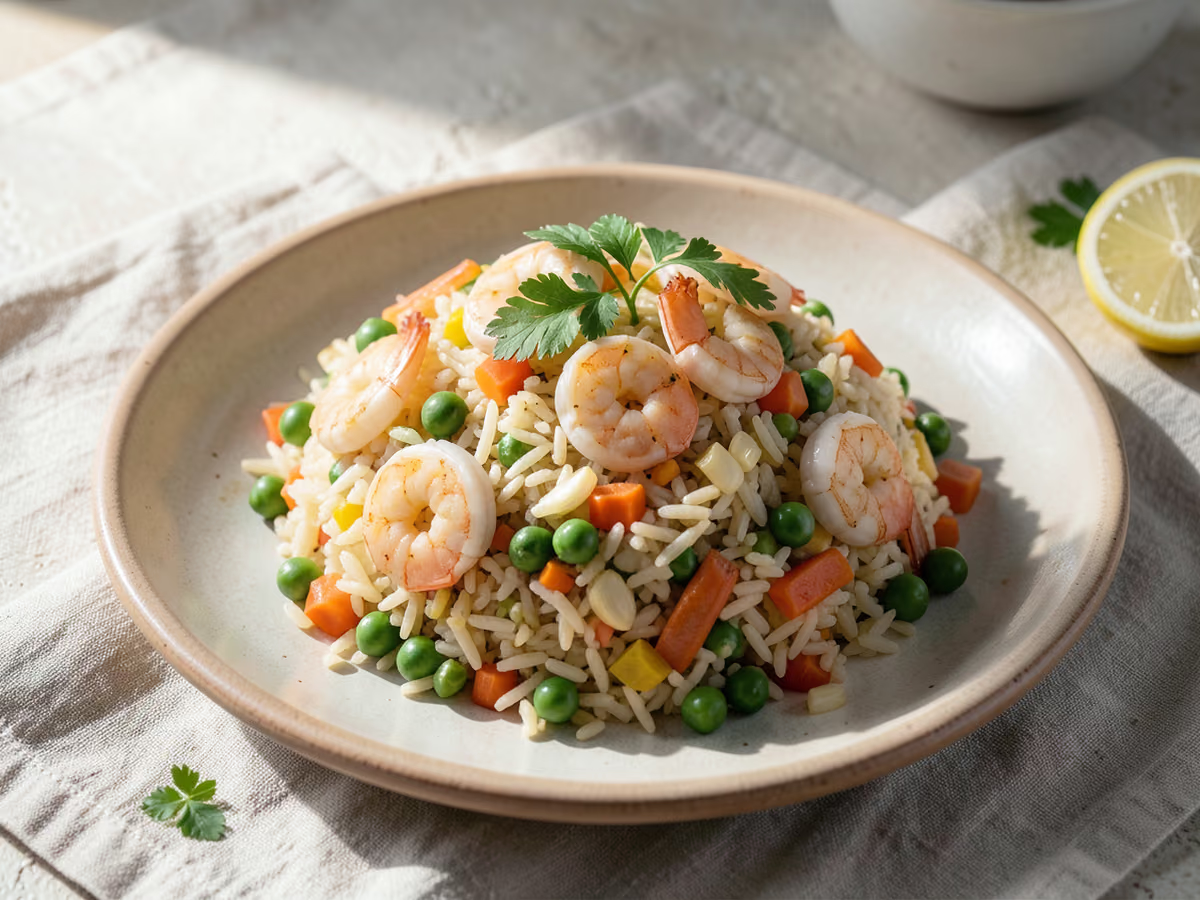
Shrimp fried rice is a fast wok dinner: jasmine rice cooked ahead and chilled, then tossed over high heat with 400 g of shrimp, three eggs, peas and carrots, and a quick soy-sesame finish. Prep runs about 15 minutes and the stir-frying itself just 10, but the one thing you cannot rush is the rice. It has to be cold and dry before it meets the pan, or the grains steam instead of sear. Cook it a day ahead, or spread it on a tray and chill it for at least an hour.
- Prep
- 15 min
- Cook
- 10 min
- Total
- 85 min
- Additional time
- 60 min
- Serves
- 4
Ingredients
What you’ll need — tap to tick off as you go
- 600 g
- 400 g
- 2 tbsp
- 3 cloves
- 150 g
- 2 tbsp
- 1 tsp
- ½ tsp
- ¼ tsp
Process
Timers built in · swap anything · ask as you cook
Spread the 600 g of freshly cooked rice on a rimmed tray and refrigerate it, loosely covered, for at least 1 hour, or use rice cooked the day before. Break up the cold clumps with wet hands so the grains separate before they hit the pan. Dry surface is the point: damp rice steams and clumps, dry rice fries into individual grains.
Pat the 400 g shrimp completely dry with paper towels and season lightly with a pinch of salt. Thaw the 150 g peas and carrots, then pat them dry too. Water on any ingredient lowers the temperature of the pan and steams the rice, so this small step decides whether you get fried rice or a wet pilaf.
Heat 1 tbsp of the vegetable oil in a wok or 30 cm skillet over high heat until it shimmers. Add the shrimp in a single layer and cook for 1 to 2 minutes per side, just until pink and opaque through, then transfer them to a plate. Shrimp tighten and turn rubbery within about a minute of passing that point.
Lower the heat to medium, pour the 3 beaten eggs into the same pan and scramble quickly for about 30 seconds, until they are just set but still soft and glossy. Slide them onto the plate with the shrimp. The eggs finish cooking when they are folded back in at the end, so pulling them early is what keeps them tender.
Raise the heat to high, add the remaining 1 tbsp vegetable oil, then add the 3 minced garlic cloves and the white parts of the green onions. Stir-fry for about 15 seconds, until fragrant but not coloured; garlic taken past pale goes bitter in seconds and taints everything in the pan.
Add the chilled rice and toss constantly for 2 to 3 minutes, pressing and breaking up any clumps with the back of your spatula, until the rice is hot and lightly toasted. If your pan is smaller than 30 cm, fry the rice in two additions instead; a crowded pan steams rather than toasts.
Add the 150 g peas and carrots and stir-fry for 1 minute, keeping everything moving so the vegetables heat through while the rice carries on toasting. The pan should stay loud and dry rather than hissing with steam.
Pour the 2 tbsp soy sauce around the edge of the pan, not directly onto the rice, then toss to coat evenly. On the hot rim the sauce reduces and browns almost at once, which is the smoky note you are after; soy poured over the rice soaks in uncooked and turns the grains wet.
Return the shrimp and eggs to the pan, add the 0.25 tsp white pepper if using, and toss for about 30 seconds until everything is combined and hot. Taste before you reach for salt: with 2 tbsp of soy sauce in the pan, the optional 0.5 tsp kosher salt is often not needed.
Turn off the heat, drizzle the 1 tsp toasted sesame oil over the rice and fold in the green onion greens. The leftover heat wilts the greens without cooking them grey and warms the oil just enough to lift its aroma. Serve immediately, straight from the pan.
Why this recipe works
Chilled rice has dried at the surface, and surface moisture is what drags the pan temperature down and welds grains into clumps; a dry grain fries into a separate, lightly toasted grain instead of steaming into a lump. Pulling the shrimp and eggs out after their short cook keeps both tender while the rice takes the full heat of the pan. Pouring the soy sauce around the hot rim rather than over the rice lets it reduce and brown on contact, which is where part of the smoky wok flavour comes from, instead of soaking in flat and raw-tasting.
Equipment
- Wok or 30 cm (12-inch) skillet; carbon steel or cast iron holds the heat best
- Rimmed baking sheet or wide tray, for chilling the rice
- Wide flat spatula or wok spatula
- Large plate, to park the cooked shrimp and eggs
- Small bowls for the prepped garlic, green onions, peas and carrots; the cooking is fast and everything must be within reach
- Chef's knife and cutting board
- Paper towels, for drying the shrimp and vegetables
- Measuring spoons
Kitchen notes
Kitchen notes
- Rinse the rice before cooking it and keep the cooking water slightly under what the packet says; less surface starch and a drier grain is exactly what fried rice wants.
- No day-old rice? Fresh rice spread on a rimmed tray and left near a fan for about an hour dries enough to fry. It is surface moisture, not age, that decides whether the grains separate.
- Break the cold rice up with wet hands before it goes in; squeezing clumps apart in the pan bruises the grains and leaves patches that never toast.
- Set out the garlic, onion whites and greens, peas and carrots, soy sauce and sesame oil in bowls before the heat goes on; the stir-fry takes about 10 minutes and there is no time to chop mid-way.
- Keep the rice moving up the sides of the pan and let it fall back. On a domestic burner, tossing the rice over the hot metal is how tiny oil droplets flash and give the dish its smoky edge.
Common mistakes
- Mushy, clumped rice: the rice was warm or damp, or the add-ins were still wet from the freezer. Chill the rice until cold and dry, thaw and pat the peas and carrots, and dry the shrimp; surface moisture is the whole problem.
- The rice steams instead of frying: the pan was not hot enough, or it was overloaded. Let the oil shimmer before anything goes in, and if your pan is narrow, give the rice two rounds in a thin layer instead of one deep pile.
- Rubbery shrimp: they went past opaque. Cook 1 to 2 minutes per side until the flesh is just opaque and the curl is a loose C, lift them out straight away, and return them only for the final 30 seconds.
- Heavy, greasy rice: too little heat carrying too much oil, or eggs cooked until dry. Keep the pan properly hot, split the 2 tbsp of oil between the two additions, and pull the eggs while they are still soft and glossy.
- Bitter, acrid garlic or a scorched edge: the garlic browned before the rice went in, or the soy sauce went onto the rice and burned. Keep the garlic pale for its 15 seconds and add the soy only around the hot rim.
Serving suggestions
- Serve immediately: the rice is at its best in the first 10 minutes, and it turns from toasted to soft once it cools.
- A spoonful of chili crisp or chili oil on top, or quick-pickled cucumbers alongside, cuts through the richness of the eggs and shrimp.
- A clear soup such as egg drop soup, or plain steamed greens, turns it into a full dinner; the 600 g of rice makes four generous mains as written.
- Kimchi or a sesame-dressed cucumber salad on the table adds the cooling, tangy contrast this salty, savoury rice wants.
Variations
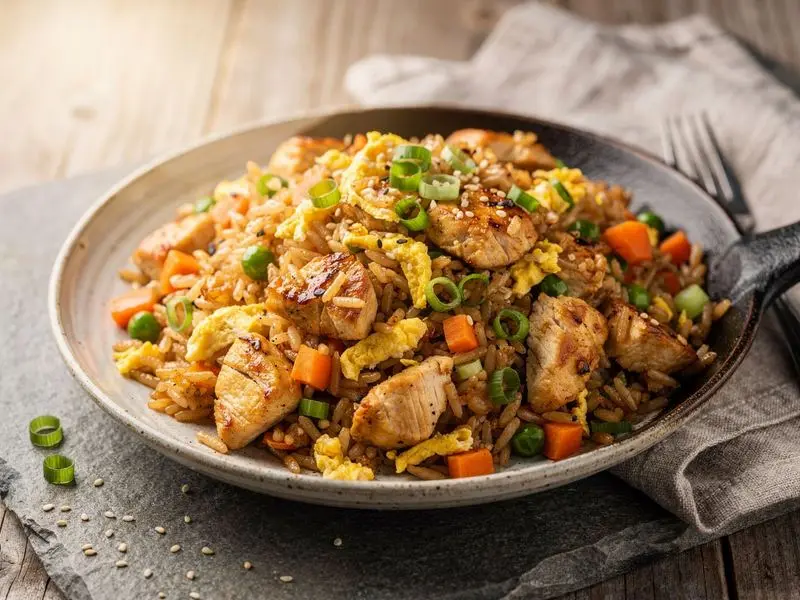
- Chicken or tofu version: swap the 400 g of shrimp for diced chicken breast or firm tofu, keeping the eggs, soy, vegetables and sesame finish as written; only the frying times for the protein change.
- Vegetarian version: leave the shrimp out and add a second round of eggs scrambled the same way, keeping the 2 tbsp soy and the vegetables; use tamari to keep it gluten-free.
- Brown rice version: cook and chill 600 g of brown rice exactly as here. It is drier and chewier, and it benefits from a splash of water when you reheat it.
Refrigerator
- RefrigeratorCool the leftovers within 2 hours of cooking, then store them in a shallow, airtight container in the fridge for up to 3 days. Cooked rice is the classic vehicle for Bacillus cereus, so speed matters: cool it fast, refrigerate it promptly, and discard anything left at room temperature for more than 2 hours.
- ReheatingReheat in a skillet over medium-high heat with a splash of water or a teaspoon of oil for 3 to 4 minutes, or covered in the microwave at 70 percent power for 1 to 2 minutes, until steaming hot throughout. Reheated leftovers should reach 74°C, the USDA minimum for leftovers, so heat beyond merely warm.
- FreezingNot recommended. The grains turn grainy after thawing and the shrimp comes back rubbery. If you must freeze it, do it the day it is made, for up to 1 month, and reheat in a skillet over medium-high heat until hot.
- Make aheadCook the rice and prep the shrimp, vegetables and sauces up to 1 day ahead, storing them separately in the fridge. Fry everything just before serving: the toast on the grains and the snap of the shrimp do not survive a reheat.
Updated:
How this recipe was developed
- J. Kenji López-Alt, Serious Eats — fried rice technique (dry, chilled rice; surface moisture causes clumping; ripping-hot pan and small batches; soy sauce reduced around the rim; cooked rice refrigerated up to 3 days)
- Shawn Matijevich, Institute of Culinary Education, via TODAY — shrimp doneness cues (opaque through and curled into a C at peak doneness; a tight O means overcooked and rubbery)
- USDA FSIS safe minimum internal temperatures and leftovers guidance (fish and shellfish 63°C; leftovers reheated to 74°C; refrigerate within 2 hours; keep 3 to 4 days)
- FoodSafety.gov Bacillus cereus factsheet — cooked rice and leftovers (refrigerate within 2 hours; store in wide shallow containers; reheat thoroughly)
Editorial references are kept internally for verification. This page makes no claim of external certification or professional testing.
FAQ
The questions we get asked most
Why is my shrimp fried rice mushy?
Usually warm or wet rice, or add-ins that were still damp. Cook the rice a day ahead, or chill it for at least an hour until it is cold and dry, pat the shrimp and the thawed peas and carrots dry, and avoid crowding the pan; a full pan traps steam and the grains soften instead of toasting.
Do I really need day-old rice?
Cold, dry rice is what matters, and day-old rice is simply the easy way to get there. Freshly cooked rice works if you spread it on a rimmed tray and let it dry and cool, near a fan if you have one, for about an hour before frying. What does not work is warm rice straight from the pot.
How do I keep the shrimp from turning rubbery?
Treat them as a quick sear rather than a simmer: 1 to 2 minutes per side until pink and opaque, out of the pan while they still curl into a loose C, and back in only for the final 30 seconds to heat through. Holding them past that point tightens them into a firm O and they turn rubbery.
How do I keep the eggs soft instead of rubbery?
Scramble them over medium heat for about 30 seconds, until just set but still glossy, then take them out of the pan. Soft, slightly underdone curds hold up when the eggs go back in at the end; cooked to firm at this stage, they turn dry and rubbery by the time the dish reaches the table.
Can I make shrimp fried rice ahead of time?
Prep ahead, fry at the last minute. Cook the rice, peel and dry the shrimp, thaw the vegetables and mix the sauce components up to 1 day ahead, storing each separately. The assembled dish is best within minutes of leaving the pan; reheating softens the toasted grains and tightens the shrimp.
How long does shrimp fried rice keep in the fridge?
Up to 3 days in an airtight container, and only if it was cooled within 2 hours of cooking and refrigerated promptly. Reheat until steaming hot (leftovers should reach 74°C), and discard anything that sat out longer than 2 hours.
What can I use instead of soy sauce?
Tamari, measure for measure, makes the dish gluten-free; coconut aminos makes it soy-free. Both run less salty than the 2 tbsp of soy sauce, so season in the last moments to taste rather than topping up on spec.
Ask KitchenMind about this recipe
Tell it what’s different tonight — it works within the actual recipe.