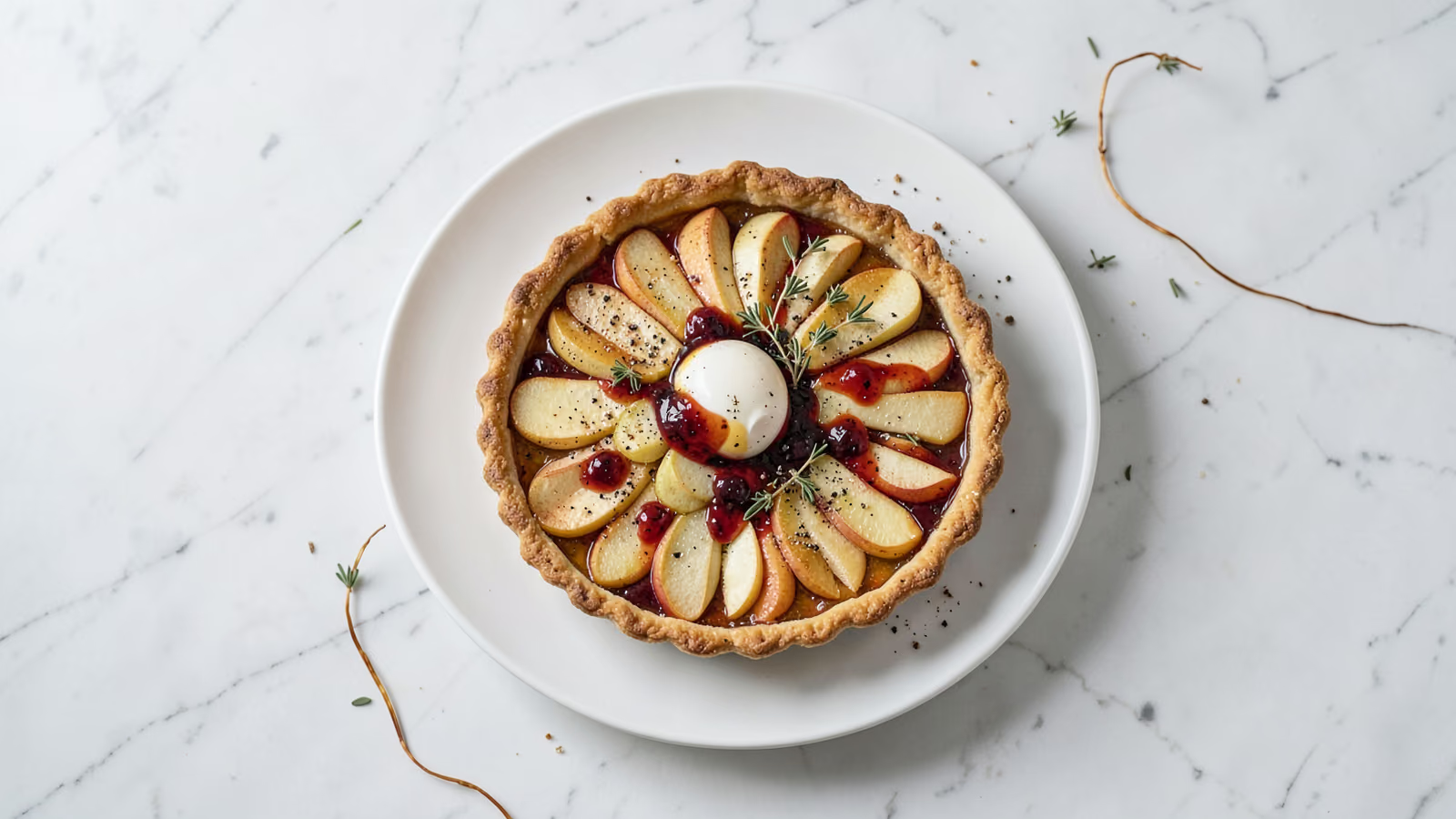
Basque Burnt Cheesecake
Basque burnt cheesecake breaks every rule of the style: no crust, no water bath, no gentle bake. That is the whole point. A loose custard of cream cheese, eggs, sugar and cream goes into a hot oven until the surface caramelizes almost black while the middle stays barely set and trembles. It will look wrong. This version follows the San Sebastián template in a 20 cm pan: about 15 minutes of hands-on work at 230°C, 35 to 40 minutes in the oven, then a long chill. The burnt top and the wobbly center are the feature, not mistakes you made.
- Prep
- 15 min
- Cook
- 40 min
- Total
- 295 min
- Additional time
- 240 min
- Serves
- 8
Ingredients
What you’ll need — tap to tick off as you go
- 900 g
- 200 g
- 300 ml
- 15 g
- 2 tsp
- 1 g
- 10 g
Process
Timers built in · swap anything · ask as you cook
Heat the oven to 230°C with a rack in the middle. Crumple one large sheet of parchment (a crumpled sheet bends to the pan; a flat one fights it), flatten it into a 20 cm round cake pan so the pleated folds stand well above the rim, then brush the paper with the 10 g unsalted butter. Those folds are the only wall. A fully heated oven is what darkens the top before the custard overcooks.
In a large bowl, beat the 900 g cream cheese and 200 g granulated sugar on medium speed for 2 to 3 minutes, until the mixture is glossy and completely smooth and a dab rubbed between your fingers feels creamy, not grainy. Scrape the bowl and beaters, and scrape again: undissolved sugar and cold cheese are what leave lumps that survive the bake.
Add the 5 eggs one at a time, mixing on low speed just until each disappears into the batter before the next goes in, and stop as soon as the last is incorporated. Low speed keeps air out of the custard, and air is what makes the cake puff hard, then crack or fall into a tight sponge.
Pour in the 300 ml heavy cream, then add the 15 g all-purpose flour, the 2 tsp vanilla extract and 1 g fine salt. If the batter looks briefly curdled, it's fine. Keep the mixer on low speed and blend for about 30 seconds, stopping the moment the batter turns uniform and silky, with no streaks of cream left. The hit of flour is insurance for the set, not thickener enough to make this a cake.
Pour the batter through a fine-mesh sieve into the lined pan, letting it drain through in a slow stream, then give the pan a few gentle raps on the counter so trapped bubbles rise and break. The sieve catches any stubborn cream cheese lumps here, before they bake into grainy pockets (a ladle pressed against the mesh hurries the draining).
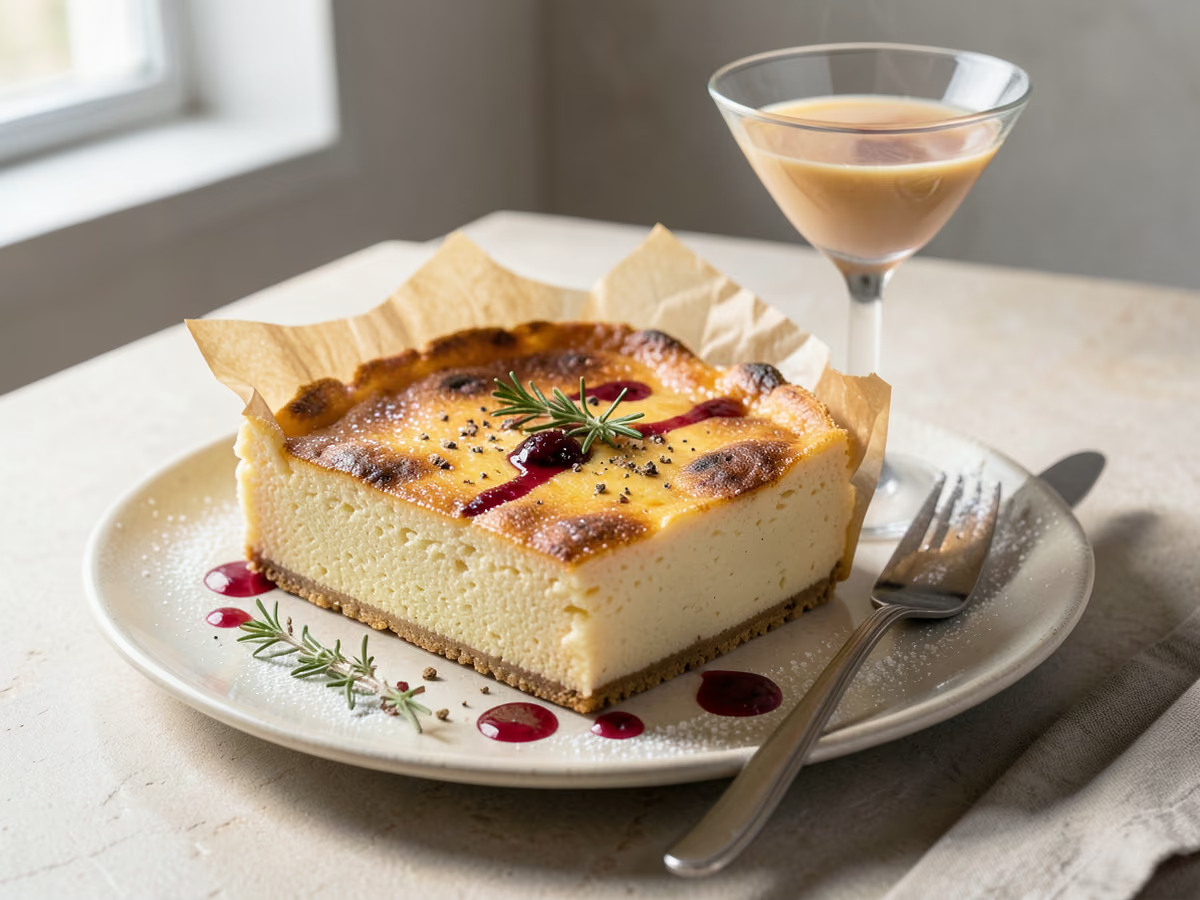
Slide the pan onto the middle rack and bake at 230°C for 35 to 40 minutes: deeply browned on top, near black in spots, the center still wobbling as one loose piece when the pan is nudged. Don't be surprised if it reads looser than a cake should; that jiggle is the goal. The custard finishes setting from residual heat as it cools and in the chill that follows, so pulling it now keeps the middle creamy.
Take the pan out and cool the cheesecake completely in it on a wire rack, about 1 hour. It will deflate and settle into the classic sunken top ringed with cracks; that collapse is the loose custard tightening as it cools, and it is supposed to happen.
Chill the cooled cake for at least 4 hours in the fridge, or overnight if you can wait, before the first slice; that set is what gives clean edges. Lift the cake out by its parchment overhang, peel the paper back, and cut with a hot, dry knife, wiping the blade between slices; cold firms the custard while the center stays soft.
Why this recipe works
Two deliberate choices define this cake. The crustless batter bakes at 230°C, hot enough that the exposed surface of dairy and sugar browns deeply through caramelization and Maillard browning within the first 25 minutes, well before heat can penetrate the custard. That dark top is flavor, not damage, and it becomes the crust the cake otherwise lacks. That is why you pull the batter while the center still wobbles: the egg proteins have only partly coagulated; carryover heat, then the refrigerator, finish the set and leave a dense but creamy middle. Bake until the center stops moving and those same proteins over-tighten into a dry, mealy slab. So why bake it dark on purpose? Because that bitterness is the counterweight the sweet, barely set middle needs.
Equipment
- Deep 20 cm round cake pan
- One large sheet of parchment paper, wide enough to overhang the rim
- Electric hand mixer or stand mixer with a paddle attachment
- Large mixing bowl
- Fine-mesh sieve
- Digital kitchen scale
- Wire cooling rack
- Long, thin-bladed knife for slicing
Kitchen notes
Kitchen notes
- Is your oven honest? Check it once with a thermometer. This bake leans on a true 230°C, and an oven that runs cool gives a pale top over an already set center. The check is worth it.
- Buy block cream cheese, not whipped or spreadable; the tub kind carries extra water and stabilizers, and the center never sets cleanly. For this cake, the block is your best bet.
- Use the cheese-and-sugar stage for thorough beating. Once the eggs are in, your batter can hold air like a foam, so every mix after that should be low and brief: the trick is hard early, gentle late.
- Watch the final minutes through the door glass. The top tips from deep brown to scorched quickly. Do not open the oven; checking through the glass keeps the heat steady.
- An optional flourish: scatter a light dusting of granulated sugar over your batter just before baking; it melts into a darker, glassier top (hold back if your oven already runs dark).
Common mistakes
- Dry, crumbly interior. Baking until the center stops wobbling over-sets the egg proteins; pull the cake while the middle still ripples like loose custard and let carryover heat and the chill finish it.
- Dense puck that puffed and fell. Air whipped in at high speed expands hard in the hot oven, then collapses the crumb; keep the mixer on low after the eggs and stop as soon as your batter is uniform.
- Grainy, lumpy custard. Cold cream cheese or eggs never fully emulsify; start from room-temperature dairy, beat the sugar in until the mixture is smooth, and pass your finished batter through a sieve (the fine mesh catches what the beaters miss).
- Batter leaking into the oven. A springform base or a gap between paper and pan lets the thin custard escape; line your regular 20 cm pan with one generous sheet of crumpled parchment pressed to the rim.
- Ragged, smeared slices. Cutting a warm cake or using a dirty blade causes them; chill at least 4 hours, then slice with a hot, dry knife, wiping it between cuts.
- Top past mahogany into acrid black. That is an oven running hot or a rack too close to the element; keep to the middle rack, check from 35 minutes, and tent any fully black patch loosely with foil while the center finishes.
Serving suggestions
- Cut the 20 cm cake into 8 thin wedges; serve chilled for the cleanest slices, or let them stand 20 to 30 minutes at room temperature for the softest, most molten center.
- A quiet spoonful of barely sweetened whipped cream echoes the custard. Leftover wedges folded through it turn into an instant cheesecake mousse.
- Fresh raspberries or blackberries cut the richness with a little acidity. A quick berry compote works just as well.
- Strong black coffee or espresso alongside mirrors the bittersweet top; cold milk works just as well. Blitzed with that cold milk, day-old slices make a cheesecake shake.
Variations
- Chocolate marble: swirl a little melted dark chocolate through the batter before it goes into the pan; the ribbons track the bittersweet edge of the burnt top.
- Citrus lift: rub the finely grated zest of a lemon or orange into the sugar before you beat it in; the oils perfume the custard and sharpen the caramel notes.
- Mini cheesecakes: divide the batter into parchment-lined muffin cups, which set much faster, so start checking them well before the 35-minute mark.
Refrigerator
- RefrigeratorCool the cake completely, then move it to a sealed container and keep it up to 5 days in the fridge; press a piece of parchment onto cut surfaces to stop them drying out.
- ReheatingSkip the oven and the microwave: serve it cold. Warmth tightens the custard and softens the burnt top with nothing gained. Craving a softer center? Let your slices stand 20 to 30 minutes at room temperature.
- FreezingYou can freeze slices or the whole cake, wrapped tightly in plastic wrap and then foil, for up to 2 months; let them thaw in the fridge overnight and serve cold. The center stays creamy, though the top loses a little crispness.
- Make aheadIf you bake it a day ahead and chill it overnight, the flavor deepens and the texture settles; it keeps comfortably for 2 days within its 5-day fridge life.
Updated:
How this recipe was developed
- Serious Eats, Basque Cheesecake (Sunny Lee): high-temperature crustless bake; doneness judged by wobble and by a center temperature of 65.5-68°C; room-temperature dairy.
- BBC Good Food, Burnt Basque Cheesecake: deep 20 cm tin lined with parchment above the rim; beat until the sugar no longer feels grainy; tap out air bubbles; chill to set.
- USDA FSIS FoodKeeper (v128): cheesecake keeps 5-7 days refrigerated at 4°C or below; freezer best-quality window 3-6 months at -18°C.
- NYT Cooking, Basque Cheesecake (Marti Buckley's adaptation): soufflé-like rise and sink; best the day after baking; a whole sheet of parchment pressed into the pan.
Editorial references are kept internally for verification. This page makes no claim of external certification or professional testing.
FAQ
The questions we get asked most
How jiggly should the center be when Basque cheesecake is done?
It should wobble as one loose unit, like barely set jelly, across a wide middle, roughly the inner 5 cm, while the outer ring looks set and the top is deeply browned. Pull it at that point, 35 to 40 minutes in; carryover heat and the chill firm it fully. If the whole surface feels firm and unyielding when you nudge the pan, it has already baked past the molten stage.
Why did my Basque cheesecake crack or turn out curdled?
A dramatic crack almost always means trapped air: batter whipped at high speed puffs hard in the hot oven, then splits or falls as it cools, so mix on low once the eggs go in and rap the pan before baking. A ring of small fissures around the sunken top is normal and part of the look. A curdled, grainy, wet texture usually means cold cream cheese or eggs that never emulsified, so start from room-temperature dairy and pass your batter through a sieve.
Does the cream cheese really need to be at room temperature?
Yes. Cold block cheese stays lumpy no matter how long you beat it. Cold eggs cause the same problem. Leave both out for at least an hour before you start. The block should dent easily under your finger. In a hurry, cut the cheese into cubes to speed warming, but do not microwave it to the point of melting: warm, separated cheese makes a greasy batter.
Can I freeze Basque burnt cheesecake?
Yes, it freezes better than most custard desserts. Wrap slices tightly in plastic wrap and then foil. Freeze them for up to 2 months, then let them thaw in the fridge overnight. The center stays creamy. The top loses a little crispness, so serve it cold rather than reheating.
Can I bake it in a different pan?
A 20 cm pan gives you the classic tall cake with a wide molten middle. A 23 cm pan works, but the batter is shallower. Start checking at 30 minutes and judge by the wobble. Going smaller and deeper is riskier, because the center can still be liquid when the top is already black. Skip a springform unless you seal it well. The batter is thin and escapes through the base.
Can I make it ahead of time?
This cake rewards planning: baked, cooled and refrigerated overnight, it tastes deeper and eats creamier than one served the same day. It holds for up to 5 days in the fridge, so there's no need to bake it on the day; 2 days ahead is the sweet spot.
Is the burnt top safe to eat, and what should it taste like?
The dark top is caramelized, not charred. Dairy and sugar browning hard at high heat turn bittersweet and toasty, closer to dark caramel than to char. That bitterness balances the sweet, barely set middle. It is safe to eat. Just trim any patch that is fully black and acrid. A top that is merely golden means the oven ran cool, so check the temperature and give it more time. Cut thin wedges, gather everyone at the table, and let the burnt corners go first.
Ask KitchenMind about this recipe
Tell it what’s different tonight — it works within the actual recipe.