- Prep
- 45 min
- Cook
- 55 min
- Total
- 100 min
- Serves
- 8
Ingredients
What you’ll need — tap to tick off as you go
- 250 g
- 170 g
- 110 g
- 2 g
- 30 ml
- 15 ml
- 1 g
- 40 g
- 15 ml
Process
Timers built in · swap anything · ask as you cook
Make the crust: In a large bowl, whisk 250 g all-purpose flour, 50 g granulated sugar, and 2 g fine salt. Add 140 g cold cubed unsalted butter and rub it into the flour with your fingertips until the mixture resembles coarse breadcrumbs.
Add 1 beaten egg and 30 ml ice water. Mix gently with a fork until the dough just comes together. Shape into a disk, wrap in plastic, and refrigerate for at least 30 minutes.
Make the compote: Peel, core, and chop 3 apples. In a medium saucepan over medium heat, combine the chopped apples, 30 g unsalted butter, 60 g granulated sugar, 15 ml lemon juice, and 1 g ground cinnamon (if using). Cook, stirring occasionally, for 15–20 minutes until the apples are very soft and the mixture is thick and jammy. Mash with a fork or blend until smooth. Set aside to cool.
Preheat the oven to 190°C. On a lightly floured surface, roll the chilled dough into a 28 cm circle. Transfer to a 23 cm tart pan with a removable bottom. Press the dough into the corners and up the sides. Trim the excess. Prick the bottom with a fork and chill for 15 minutes.
Line the crust with parchment paper and fill with pie weights or dried beans. Blind bake for 15 minutes. Remove the weights and parchment and bake for another 5 minutes until the crust is pale golden. Let cool slightly.
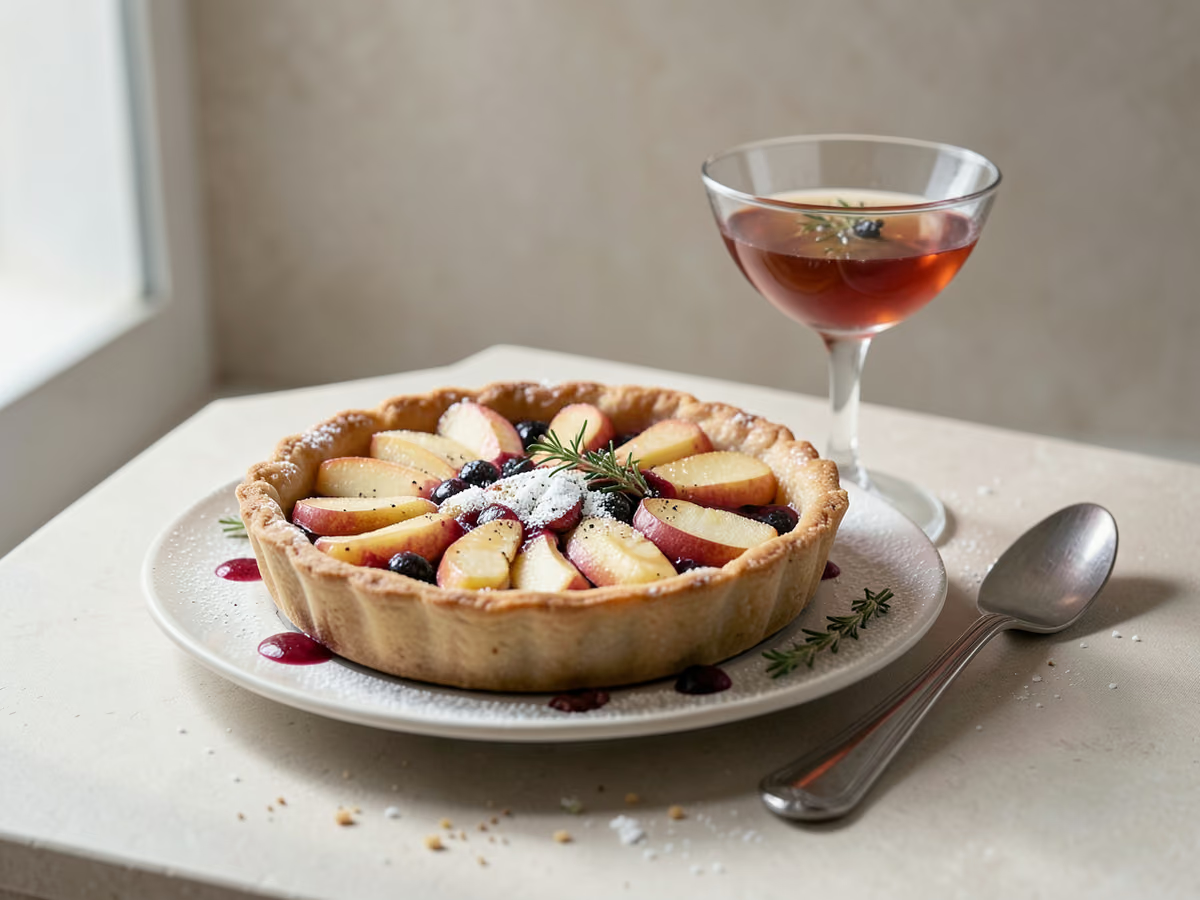
Peel, core, and thinly slice the remaining 3 apples (about 3 mm thick). Spread the cooled compote evenly over the pre-baked crust. Arrange the apple slices in concentric circles, overlapping slightly, starting from the outside edge and working inward.
Bake the tart at 190°C for 30–35 minutes, until the apples are tender and lightly caramelized at the edges and the crust is deep golden. If the edges brown too quickly, cover with foil.
In a small saucepan, warm 40 g apricot jam with 15 ml water until melted and smooth. Strain if desired. Brush the warm glaze over the hot apple slices. Let the tart cool in the pan for 10 minutes, then remove the ring and transfer to a wire rack to cool completely.
Kitchen notes
Kitchen notes
- The most common mistake is undercooking the compote: it must be thick enough to hold its shape, otherwise the crust will become soggy. Cook until a spoon dragged through leaves a clear trail.
- Keep the dough cold at every stage. If it becomes soft while rolling, slide it onto a baking sheet and chill for 10 minutes before continuing.
- Arrange the apple slices tightly and overlap them; they shrink during baking, so gaps will appear if you space them out.
- Blind baking the crust before adding the filling is essential to prevent a soggy bottom. Do not skip this step.
Substitutions
- apricot jam→apple jelly or red currant jelly
- granulated sugar→caster sugar or light brown sugar
- lemon juice→apple cider vinegar (use half the amount)
Storage & reheating
Store the tart covered at room temperature for up to 1 day, or in the refrigerator for up to 3 days. To keep the crust crisp, place it in an airtight container with a piece of parchment between layers. Reheat in a 160°C oven for 8-10 minutes before serving. It can be frozen for up to 1 month: wrap tightly in plastic and foil, then thaw overnight in the refrigerator and reheat as above.
FAQ
The questions we get asked most
Why is my French apple tart soggy?
A soggy bottom usually means the compote was too wet or the crust was not blind baked long enough. Cook the compote until it is very thick and almost dry, and blind bake the crust until it is pale golden before adding the filling. Also, brushing the crust with a little beaten egg before blind baking can create a moisture barrier.
Can I use a different type of apple?
Yes, but choose firm, tart apples that hold their shape when baked, such as Granny Smith, Braeburn, or Pink Lady. Avoid soft varieties like McIntosh or Red Delicious, which turn mushy. A mix of tart and sweet apples gives the best flavor balance.
Can I make this tart ahead of time?
You can prepare the crust and compote up to 2 days in advance and store them separately in the refrigerator. Assemble and bake the tart the day you plan to serve it for the best texture. The fully baked tart can be made up to 1 day ahead and kept at room temperature.
How do I know when the tart is done?
The tart is done when the apple slices are tender and lightly browned at the edges, and the crust is a deep golden brown. The glaze should look glossy and set. If you insert a knife into the center, it should slide through the apples with little resistance.
Can I freeze the baked tart?
Yes, the baked tart freezes well for up to 1 month. Cool it completely, then wrap it tightly in plastic wrap and aluminum foil. Thaw overnight in the refrigerator and reheat in a 160°C oven for 8-10 minutes to crisp the crust. Do not glaze before freezing; add the glaze after reheating.
Why did my apple slices turn brown?
Apple slices oxidize when exposed to air. To prevent browning, toss them with a little lemon juice as soon as they are cut. The apricot glaze also helps seal the surface and slows discoloration. If they brown slightly, it is harmless and the tart will still taste fine.
Can I use store-bought puff pastry instead of making the crust?
Yes, you can use store-bought puff pastry for a quicker version. Roll it out, prick it with a fork, and blind bake for 15 minutes before adding the compote and apples. Reduce the final baking time to 25-30 minutes. The texture will be flakier and less cookie-like than the traditional pâte sablée.
Ask KitchenMind about this recipe
Tell it what’s different tonight — it works within the actual recipe.