Classic Banana Bread
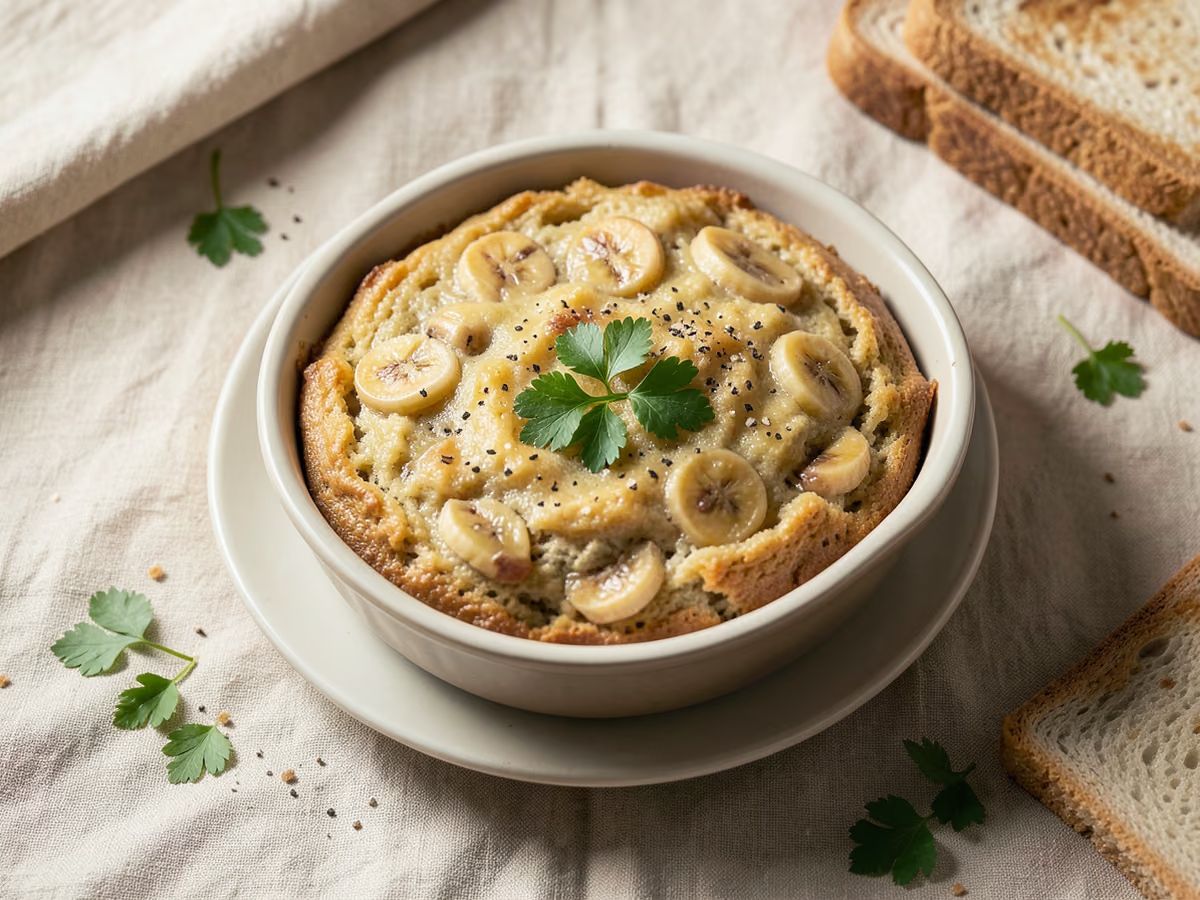
Classic banana bread turns three speckled bananas into a tall, tender loaf with a deep golden crust and a gently domed top. The method is simple but exact: mash, whisk, fold, bake. That is the whole trick. You need about 15 minutes of hands-on work, and then the oven takes over for an hour. Brown sugar and vanilla round out the fruit, cinnamon warms it, and walnuts add crunch. Sliced thick, the loaf stays moist for days without turning heavy or gummy. The smell that fills the kitchen as it bakes — bananas, brown sugar, cinnamon — is half the pleasure.
- Prep
- 15 min
- Cook
- 60 min
- Total
- 135 min
- Additional time
- 60 min
- Serves
- 10
Ingredients
What you’ll need — tap to tick off as you go
- 115 g
- 150 g
- 60 g
- 1 tsp
- 250 g
- 1 tsp
- 1 tsp
- ½ tsp
- 60 g
Process
Timers built in · swap anything · ask as you cook
Heat the oven to 175°C with a rack in the middle. Grease a 23 x 13 cm loaf pan (butter, oil, or cooking spray all work), then cut a piece of baking paper wide enough to cover the base and run up both long sides, with an overhang at each end. The paper becomes a sling you can lift the loaf with, so the crust never has to be pried loose from the pan.
Peel the 3 ripe bananas straight into a large bowl and mash them until mostly smooth (a potato masher gets there faster, though a fork gives you more control), stopping while a few small lumps remain. Those lumps add pockets of fruit to the finished crumb. You should end up with roughly 300 g of mash. Liquid-smooth work here or under-ripe fruit throws off the moisture balance, so keep the mash thick and spoonable.
Whisk the wet ingredients into the banana mash: first the 115 g melted unsalted butter and the 150 g brown sugar, then the 2 eggs, the 60 g plain yogurt, and the 1 tsp vanilla extract. Beat until the mixture is evenly combined and slightly glossy. Room-temperature eggs and slightly cooled butter emulsify cleanly; if cold additions leave the batter looking a little curdled, don't worry — the batter bakes up fine.
In a second bowl, combine the 250 g all-purpose flour, 1 tsp of baking soda, 1 tsp ground cinnamon, and 0.5 tsp salt. Whisk until the soda is spread evenly and you see no pale streaks. Breaking up the soda now is what prevents bitter pockets in the finished loaf. A quick whisk costs nothing.
Tip the dry mixture over the wet ingredients, then fold everything together with a spatula (a flexible one scrapes the bowl cleanest) in a gentle arc until the flour disappears, about 12 to 15 strokes. Stop while you can still see a few dry flecks, then gently stir in the 60 g chopped walnuts, if using. Every extra stroke develops gluten, and developed gluten is what makes a quick bread bake up rubbery rather than tender. Do not push it.
Scrape your batter into the prepared pan, smooth the top, and bake on the middle rack for 55 to 65 minutes. The loaf is done when a skewer inserted into the center comes out with only a few moist crumbs. Never wet batter, never bone dry. Start testing at 55 minutes; banana moisture and oven variation both move the finish line.
If the top is browning faster than the center is setting, tent the pan loosely with foil once 40 minutes have passed, and keep baking. Foil reflects some of the oven's radiant heat off the crust while the middle finishes. Pulled tight, it traps steam and softens the top, so leave the foil arched above the surface. Keep it loose.
Leave the loaf in its pan for 15 minutes, then use the paper overhang to lift it onto a wire rack; you want it cool all the way through, about an hour, before slicing. Tempted to cut into it warm? The crumb is still setting, and the wait is what buys you clean slices. Slicing early tears the crumb and releases steam that turns the interior gummy, so there's no need to rush — patience here is what keeps the texture clean.
Why this recipe works
Banana bread is a quick bread: its lift is chemistry, not yeast. The baking soda reacts with acid from the yogurt and the bananas; that reaction releases carbon dioxide as the batter enters the oven, setting the dome before the structure firms. The brown sugar's molasses and the bananas' own sugars hold onto moisture, so the crumb stays soft for days; melted butter coats the flour proteins and limits gluten development, and folding only until the flour disappears keeps that gluten slack instead of elastic — which is why this loaf bakes for the better part of an hour at a moderate 175°C rather than at a hotter, faster setting. Why does the crust split down the middle? Because the top sets before the center finishes rising.
Equipment
- 23 x 13 cm loaf pan (a standard 9 x 5 inch pan)
- Baking paper strip, long enough to overhang both ends of the pan
- Large mixing bowl and a second medium bowl
- Whisk, fork or potato masher, and a flexible spatula
- Wire cooling rack
- Skewer or thin paring knife for the doneness test
- Digital thermometer (optional, the most precise check)
- Aluminum foil for tenting
Kitchen notes
Kitchen notes
- For the most objective doneness check, plunge your digital thermometer into the center from the top: a quick bread is baked through at close to 93°C, and no part of the loaf should read below that.
- Toast the walnuts in a dry skillet for a few minutes until they smell nutty; the flavor deepens and survives the hour in the oven, which raw nuts do not.
- Weigh the flour if you have a scale. A cup scooped straight from the bag can hold well over the 250 g this loaf expects, and overshot flour is the quietest cause of a dry, crumbly banana bread. Without a scale, feel free to spoon and level instead; close enough bakes just as well.
- Read your finished batter by feel before it bakes: it should be thick enough to mound on the spatula and drop in heavy dollops, not pour like cake batter. A pourable mix bakes up dense and gummy. Dollops, not pours.
- Rest the pan on a wire rack for the first 15 minutes, then cool the loaf on the rack itself. Airflow underneath carries steam away from the base and keeps the bottom crust from softening.
Common mistakes
- Dense, rubbery crumb: each stroke after the flour disappears builds gluten, which is what makes quick bread tough, so fold only until the flour vanishes, about 12 to 15 strokes. Leave a few dry flecks alone.
- Sunken, gummy center: the loaf came out when the timer said so rather than when the middle was actually set, so verify with the skewer test, and when the top browns first, tent with foil and keep baking in 5-minute increments until it passes.
- Flat, pale loaf: skipping the yogurt or using bananas that never ripened starves the baking soda of acid, and there is no backup leavener. Use mottled fruit and the full 60 g of yogurt.
- Dry, crumbly slices: baking to a bone-dry skewer drives out the moisture the bananas worked to add. Pull the loaf while the crumbs are still moist, and cool it fully before you slice.
- Walnuts pooled at the bottom: pieces heavier than the batter keep dropping as the loaf sets. Toss the nuts in a spoonful of the flour mixture and fold them in last.
Serving suggestions
- A thick slice with salted butter. Warm it briefly if you like it soft and steamy.
- Breakfast: a slice alongside plain yogurt and fresh fruit, or toasted with cream cheese and a pinch of flaky salt. Stale slices are the ones you want for French toast — they soak up the custard instead of going soggy.
- Coffee, black tea, or cold milk alongside. The loaf is rich enough without anything sweeter.
- Dessert: warm slices with a scoop of vanilla ice cream or a drizzle of honey. Either way, enjoy it warm with people you like; that is what a loaf like this is for.
Variations
- Chocolate chip: replace the walnuts with 60 g of dark chocolate chips for a dessert-leaning loaf; the chips stay soft and molten in the crumb. Choose dark over milk chocolate; the loaf is already sweet enough.
- Brown butter: cook the 115 g of butter until the milk solids toast and smell nutty, then cool it slightly before mixing. The loaf gains a toffee depth that plays well against the bananas.
- Whole grain: replace up to half of the all-purpose flour with whole-wheat or oat flour; the grains absorb more water, so the batter thickens and the loaf bakes up denser with a fuller flavor.
Refrigerator
- RefrigeratorWrapped tightly, banana bread keeps about 3 days at room temperature or up to 5 days in the refrigerator. There the crumb firms and the flavor dulls, so warm your slices to soften them again. Keep the fridge at or below 4°C, and discard the loaf if any mold appears rather than trimming around it.
- ReheatingSingle slices soften in the microwave in 20 to 30 seconds. Refresh a whole loaf in a 150°C oven for 8 to 10 minutes, or toast slices for a crisper edge. A leftover slice also griddles beautifully in butter — crisp at the edges, soft in the middle.
- FreezingFreeze for up to 3 months. Slice first, wrap each slice or the whole cooled loaf tightly, and thaw at room temperature for about an hour, or warm single slices straight from frozen.
- Make aheadBake the loaf up to 1 day ahead, cool it completely, then store it wrapped. The batter is best baked right away; the baking soda begins reacting as soon as the wet and dry mixtures meet, so holding it costs lift.
Updated:
How this recipe was developed
- Serious Eats banana bread guides (overmixing develops gluten and toughens the crumb; plain yogurt acidulates and thickens the batter for a higher dome; a wrapped loaf keeps about 3 days at room temperature or a week refrigerated)
- King Arthur Baking, How to tell when banana bread is done (quick breads are baked through at 93-96°C in the center; a thin knife or digital thermometer is more reliable than a toothpick in chunky batters)
- ThermoWorks, Baked goods doneness temperatures (quick breads are done at 93-96°C; start testing at the low end of the recipe's time range)
- FDA, Are You Storing Food Safely? (keep the refrigerator at or below 4°C; discard food that is moldy)
Editorial references are kept internally for verification. This page makes no claim of external certification or professional testing.
FAQ
The questions we get asked most
Why did my banana bread come out dense and rubbery?
Almost always overmixing. Once the flour goes in, gluten starts forming, and each extra stroke tightens the crumb, so fold only until the flour disappears, even if a few dry flecks remain. Under-ripe bananas are the second common cause: pale, firm fruit brings less moisture and sugar, so wait until the skins are heavily mottled and your bananas smell sweet. When in doubt, err toward under-mixing — that's your best bet for a tender slice.
How do I know when the loaf is done in the center?
Insert a thin skewer or a paring knife into the deepest point of the center. It should come out with a few moist crumbs, not wet batter and not clean; a dry skewer means the loaf is already overbaked, so judge the center rather than the crust, which browns well before the crumb sets.
Can I make banana bread ahead, and how long does it keep?
Bake it up to a day ahead; fully cooled, it slices cleanest. Wrapped tightly, it holds about 3 days at room temperature or up to 5 days refrigerated, where the crumb firms, and it freezes well for up to 3 months if you wrap slices first.
Can I bake this as muffins instead of a loaf?
Yes. Spoon your batter into 12 lined muffin cups and bake at 175°C, checking between 20 and 24 minutes; they are ready when a skewer comes out with a few moist crumbs. Start testing at 18 minutes, because small portions set much faster than a full loaf.
Why is the top too dark or the edges dry?
The pan matters. A dark-colored pan and a hot-running oven set the crust before the middle catches up, so go with a light-colored metal loaf pan and check your oven against a thermometer, since an oven set to 175°C that actually runs hot will always outpace the loaf.
Can I use frozen bananas?
Yes, and they are often ideal. Thaw them fully in a bowl and mash them with the liquid they release. No need to drain the bowl — that liquid is moisture the loaf needs, and you will want three to get roughly 300 g of mash, the same as fresh.
Can I make this banana bread without eggs?
Yes, with a texture trade. Swap each egg for 60 g of plain yogurt, or for 1 tbsp of ground flaxseed mixed with 3 tbsp of water and rested for 5 minutes. The loaf turns out denser and a bit crumbly, so cool it completely before you slice to keep the slices intact.
Ask KitchenMind about this recipe
Tell it what’s different tonight — it works within the actual recipe.