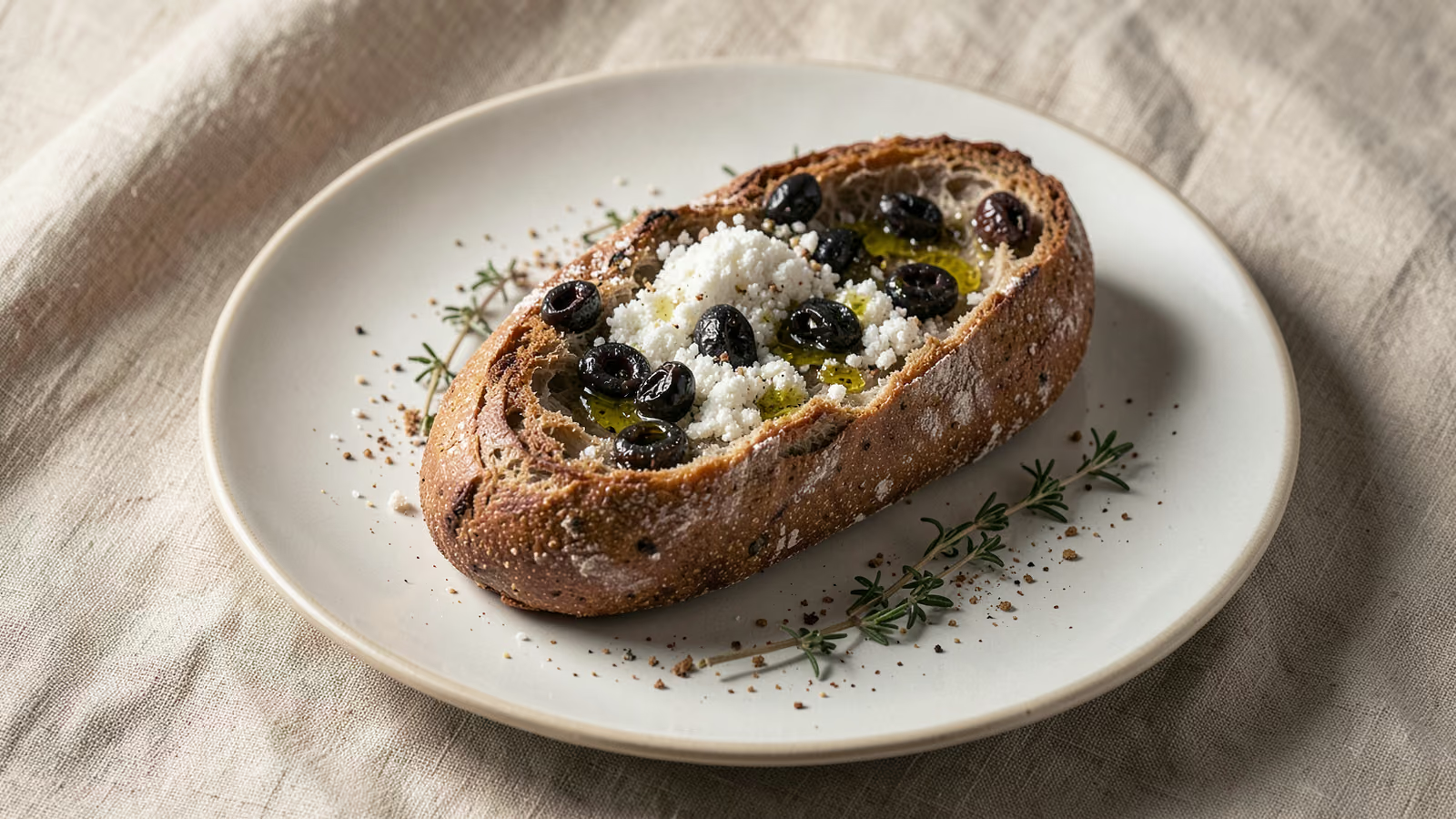
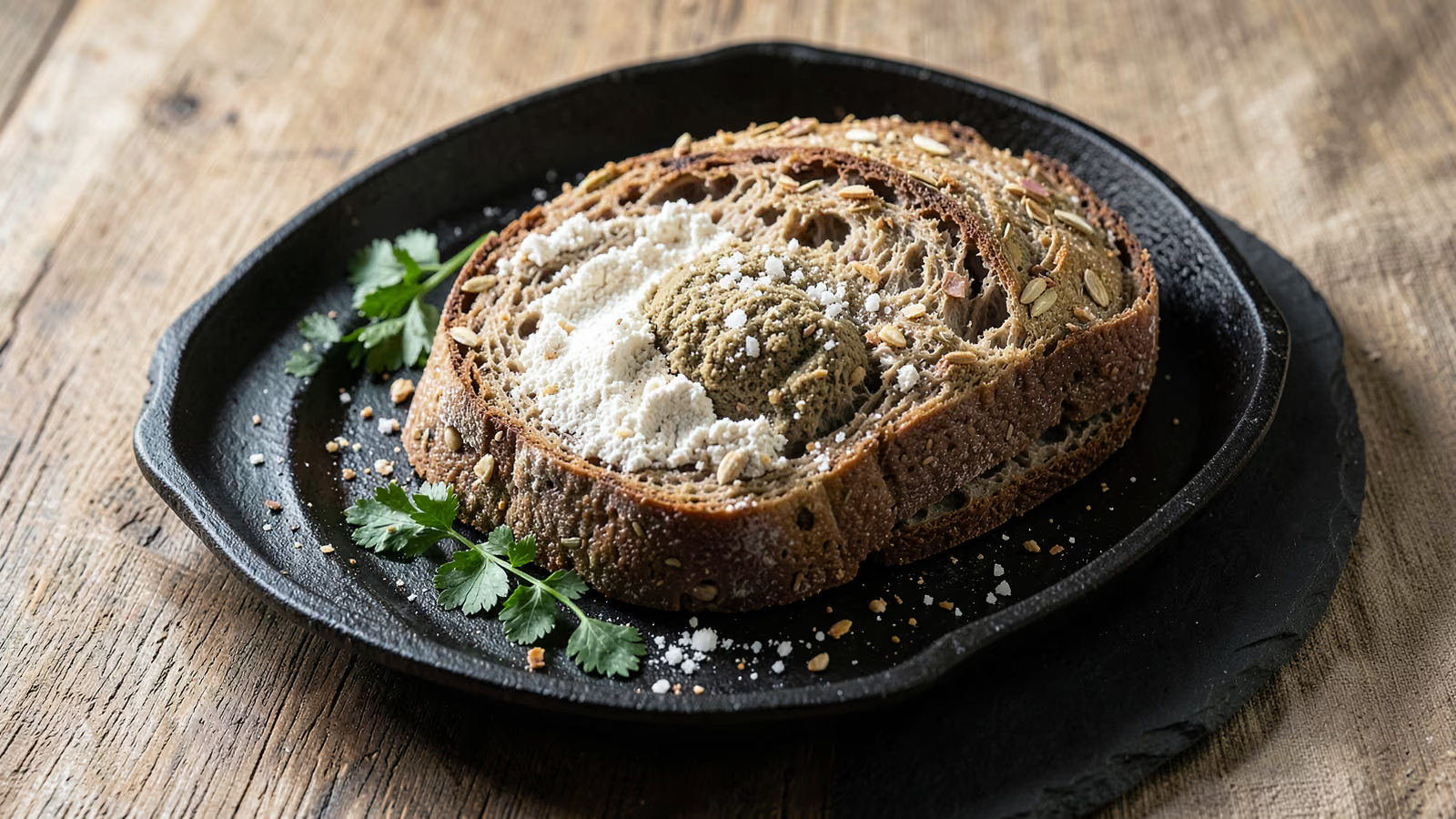
No-Knead Bread Recipe (Crusty Dutch Oven Bread)
A crisp, crackly crust and a soft, open crumb, and you never knead it. Four ingredients, 15 minutes of prep, then the oven and a Dutch oven do the rest for 45 minutes. Makes 8 servings.
- Prep
- 15 min
- Cook
- 45 min
- Total
- 60 min
- Serves
- 8
Ingredients
What you’ll need — tap to tick off as you go
- 400 g
- 1 tsp
- 1 ½ tsp
- 320 ml
- 1 tbsp
Process
Timers built in · swap anything · ask as you cook
In a large bowl, whisk together 400 g bread flour, 1 tsp instant yeast and 1.5 tsp fine sea salt until evenly combined.
Pour in 320 ml lukewarm water and stir with a sturdy spoon or your hand until no dry flour remains. The dough will be wet, sticky and shaggy; do not knead it.
Cover the bowl tightly with plastic wrap or a lid and let it rest at cool room temperature (about 18–21°C) for 12 to 18 hours, until the surface is bubbled and the dough has more than doubled.
Lightly flour a work surface and scrape the dough out onto it. With floured hands, fold the dough over itself 4 times, turning the bowl a quarter turn each time, to form a rough ball.
Place a sheet of parchment paper on the counter, dust it with 1 tbsp cornmeal, and set the dough seam-side down on it. Cover loosely with a clean towel and let it rise for 1 to 2 hours, until puffy and nearly doubled.
About 30 minutes before the dough is ready, place a Dutch oven with its lid on the middle rack of the oven and preheat to 230°C.
Carefully remove the hot Dutch oven from the oven. Lift the dough by the parchment paper and lower it into the pot, parchment and all. If the parchment sticks out, trim it so the lid can seal.
Cover with the lid and bake for 30 minutes. Then remove the lid and bake for another 15 to 20 minutes, until the crust is deep golden brown and the loaf sounds hollow when tapped on the bottom.
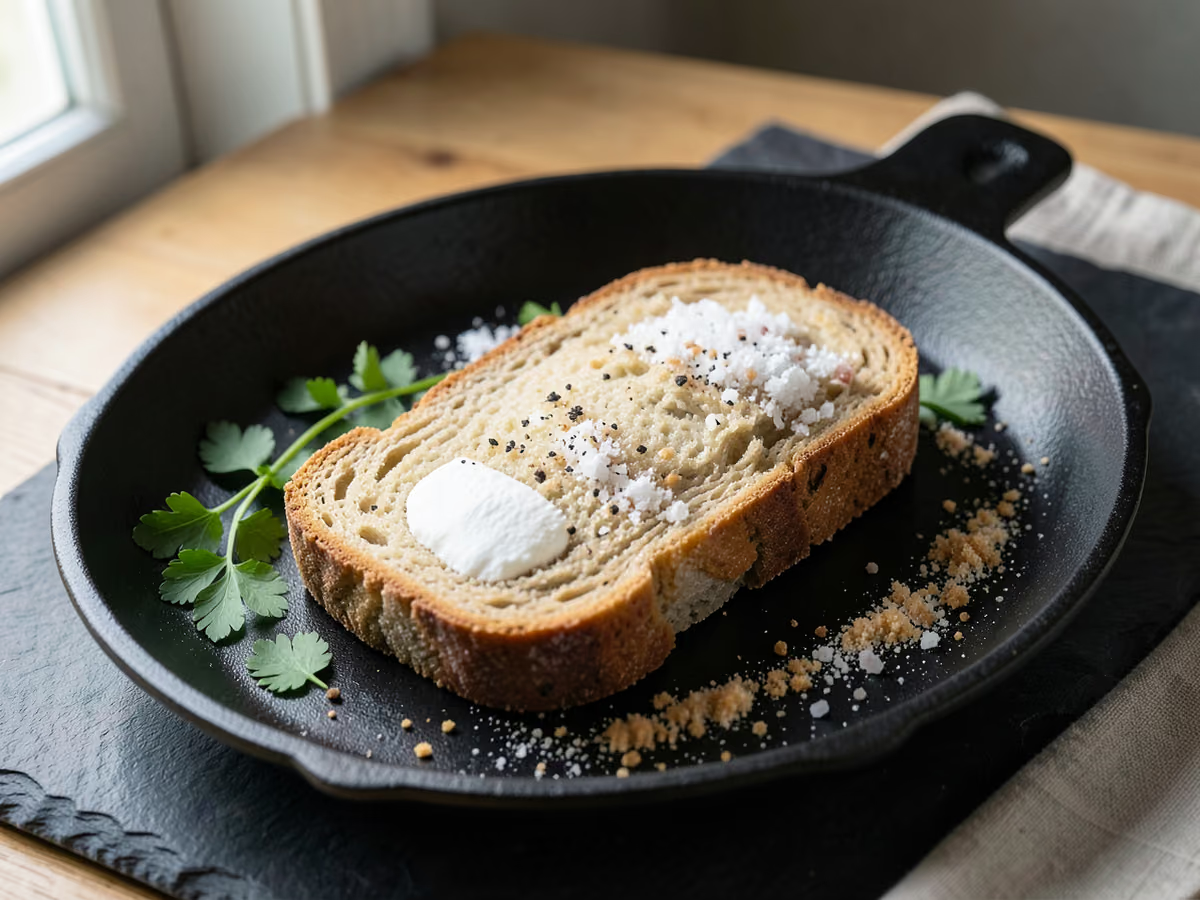
Transfer the bread to a wire rack and cool completely for at least 1 hour before slicing. Cutting early makes the crumb gummy.
Kitchen notes
Kitchen notes
- The most common mistake is using hot water or a warm room for the long rest. Keep the dough at cool room temperature (18-21°C) so it develops flavor slowly instead of over-proofing and collapsing.
- Your Dutch oven must be fully preheated before the dough goes in. The sudden blast of heat is what creates the dramatic oven spring and crackly crust.
- Do not skip the 1-hour cooling. The bread finishes setting as it cools; slicing hot bread smears the crumb and makes it seem underbaked.
- If your kitchen is very warm (above 24°C), shorten the first rise to 8-12 hours and use cold water to slow fermentation.
Substitutions
- bread flour→all-purpose flour (same weight)
- instant yeast→active dry yeast (same amount, no need to proof)
- cornmeal→additional bread flour or semolina
Storage & reheating
Store the cooled loaf cut-side down on a cutting board for 1-2 days, or wrap it tightly in plastic and keep at room temperature for up to 3 days. For longer storage, slice and freeze in a zip-top bag for up to 3 months. To refresh, sprinkle the crust with water and bake at 180°C for 8-10 minutes, or toast individual slices.
FAQ
The questions we get asked most
Why is my no-knead bread dense and gummy?
Dense bread usually means the dough was under-proofed or cut too early. The first rise needs a full 12-18 hours at cool room temperature, and the shaped loaf must rest 1-2 hours until visibly puffy. Always cool the baked loaf for at least 1 hour before slicing; cutting into hot bread compresses the crumb.
Can I use active dry yeast instead of instant yeast?
Yes, use the same amount of active dry yeast. You do not need to proof it first because the long, wet rest will hydrate and activate it. If your yeast is old, proof it in the lukewarm water with a pinch of sugar for 10 minutes before mixing.
Can I make this bread without a Dutch oven?
Yes. Bake the dough on a preheated baking sheet or in a covered oven-safe pot, and place a metal pan with 1 cup of boiling water on the rack below to create steam. The crust will be slightly less dramatic but still good. A heavy cast-iron combo cooker or clay baker also works.
How do I know when the bread is fully baked?
The loaf is done when the crust is deep golden brown and an instant-read thermometer inserted into the center reads 96-99°C. Another reliable test is tapping the bottom of the loaf; it should sound hollow. If it sounds dull, return it to the oven without the lid for 5 more minutes.
Why did my dough not rise during the long rest?
The room was likely too cold, the yeast was expired, or the water was too hot and killed the yeast. Use lukewarm water around 35°C and keep the bowl in a spot that stays between 18-21°C. If your kitchen is below 18°C, extend the rest to 24 hours.
Can I freeze the dough or the baked bread?
You can freeze the baked loaf for up to 3 months, wrapped tightly in plastic and then foil. The raw dough does not freeze well because the long fermentation is interrupted. For best results, freeze slices and reheat them directly in a toaster or oven.
Why did my bread stick to the parchment or pot?
The dough is very wet, so a good dusting of cornmeal or flour on the parchment is essential. If the loaf still sticks, slide a thin spatula under the parchment after baking. Avoid using wax paper, which melts, and never place dough directly into an ungreased pot.
Ask KitchenMind about this recipe
Tell it what’s different tonight — it works within the actual recipe.