- Prep
- 30 min
- Cook
- 25 min
- Total
- 55 min
- Serves
- 12
Ingredients
What you’ll need — tap to tick off as you go
- 255 ml
- 7 g
- 50 g
- 114 g
- 360 g
- 3 g
- 100 g
- 2 tsp
- 60 g
- 60 g
- 1 tsp
Process
Timers built in · swap anything · ask as you cook
Warm 240 ml whole milk to about 43°C (lukewarm, not hot). Sprinkle 7 g active dry yeast and 1 teaspoon of the granulated sugar over the milk. Stir gently and let stand 5–10 minutes until foamy. If it does not foam, the yeast is dead; start over.
In a large bowl, whisk together 360 g all-purpose flour, the remaining granulated sugar (about 40 g), and 3 g salt.
Add the yeast mixture, 57 g melted unsalted butter, and 1 large egg to the dry ingredients. Mix with a wooden spoon until a shaggy dough forms.
Turn dough onto a lightly floured surface and knead 8–10 minutes until smooth and elastic. The dough should spring back when poked. Place in a greased bowl, cover, and let rise in a warm place until doubled, about 1–1.5 hours.
For the filling, mix 57 g softened unsalted butter, 100 g light brown sugar, and 2 teaspoons ground cinnamon in a small bowl until a thick paste forms.
Punch down the risen dough and roll it on a lightly floured surface into a 30x40 cm rectangle, about 6 mm thick. Spread the cinnamon-butter filling evenly over the dough, leaving a 1 cm border.
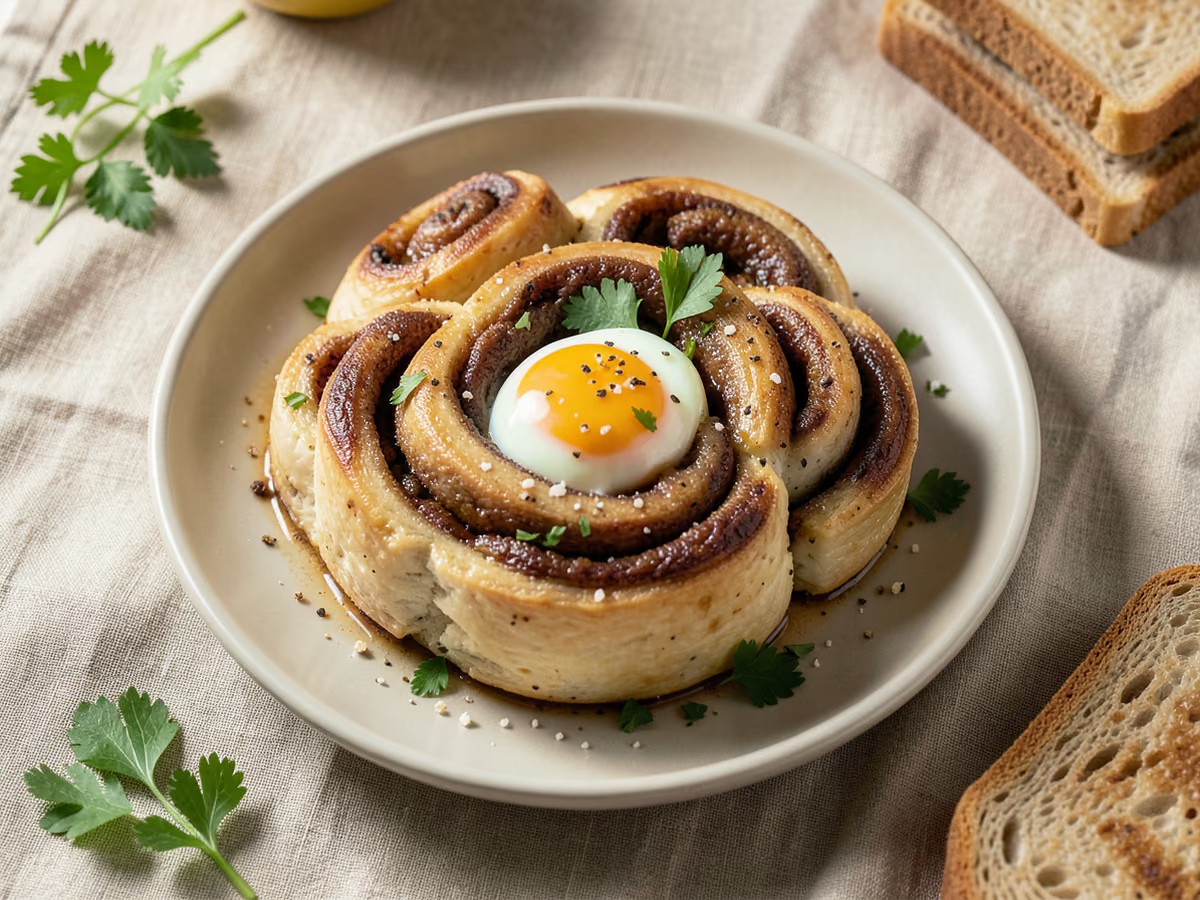
Starting from the long side, roll the dough tightly into a log. Pinch the seam to seal. Cut into 12 equal rolls using a sharp knife or unflavored dental floss.
Arrange rolls cut-side up in a greased 23x33 cm baking dish. Cover and let rise until puffy, about 30–45 minutes. Meanwhile, preheat oven to 180°C.
Bake rolls at 180°C for 22–25 minutes, until golden brown and the center reads 88–90°C on an instant-read thermometer. If browning too fast, tent with foil after 15 minutes.
While rolls bake, beat 60 g cream cheese, 60 g powdered sugar, and 1 teaspoon vanilla extract until smooth. Add up to 15 ml whole milk, a teaspoon at a time, to reach a spreadable consistency.
Let rolls cool in the pan 5 minutes, then spread the cream cheese glaze over the warm rolls. Serve warm.
Kitchen notes
Kitchen notes
- The most common mistake is using milk that is too hot, which kills the yeast. Use a thermometer; the milk should feel barely warm to the touch, around 43°C.
- Do not over-flour the dough. It should be slightly tacky but not sticky. Add flour only a tablespoon at a time while kneading.
- For clean cuts, chill the rolled log for 15 minutes before slicing, or use unflavored dental floss to cut without squishing the rolls.
- The rolls are done when the center reaches 88–90°C. If you do not have a thermometer, the tops should be golden and the center should feel set, not doughy.
Substitutions
- whole milk→oat milk or almond milk for dairy-free
- unsalted butter→coconut oil or vegan butter for dairy-free
- cream cheese→dairy-free cream cheese for dairy-free
- active dry yeast→instant yeast (use same amount, no need to proof)
- light brown sugar→dark brown sugar or coconut sugar
Storage & reheating
Store baked cinnamon rolls in an airtight container at room temperature for up to 2 days, or in the refrigerator for up to 5 days. To reheat, place in a 160°C oven for 8–10 minutes, or microwave individual rolls for 20–30 seconds. For longer storage, freeze unglazed rolls tightly wrapped in foil for up to 2 months; thaw overnight in the refrigerator and reheat before glazing.
FAQ
The questions we get asked most
Why did my cinnamon rolls turn out dry?
Dryness usually comes from overbaking or using too much flour. Bake just until the center reaches 88–90°C; if you do not have a thermometer, check at 22 minutes. Also, measure flour by spooning it into the cup and leveling off, rather than scooping directly from the bag.
Can I make cinnamon rolls ahead of time?
Yes. After shaping the rolls, cover the pan tightly and refrigerate overnight. In the morning, let them sit at room temperature for 30–45 minutes until puffy, then bake as directed. You can also freeze the shaped rolls before the second rise; thaw in the refrigerator overnight, then let rise and bake.
How do I know when cinnamon rolls are fully baked?
The internal temperature should be 88–90°C. Visually, the tops should be golden brown and the center should spring back when gently pressed. If the center looks doughy or wet, bake 2–3 more minutes.
Can I use instant yeast instead of active dry yeast?
Yes. Use the same amount (7 g) and skip the proofing step. Add the instant yeast directly to the dry ingredients, then add the warm milk. The rise time may be slightly faster.
Why did my cinnamon rolls not rise?
The most common reasons are expired yeast or milk that was too hot (above 54°C), which kills the yeast. Always proof active dry yeast in lukewarm milk first; if it does not foam after 10 minutes, start with fresh yeast. Also, ensure your rising environment is warm (24–27°C).
Can I make these cinnamon rolls gluten-free?
Yes, but the texture will differ. Substitute the all-purpose flour with a 1:1 gluten-free flour blend that contains xanthan gum. The dough will be softer and harder to roll; consider rolling it between two sheets of parchment paper. Bake until the internal temperature reaches 90°C.
How should I store leftover cream cheese glaze?
Store any unused glaze in an airtight container in the refrigerator for up to 3 days. Let it come to room temperature and stir before using. Do not freeze the glaze, as it can separate and become grainy.
Ask KitchenMind about this recipe
Tell it what’s different tonight — it works within the actual recipe.