Lentil Vegetable Soup
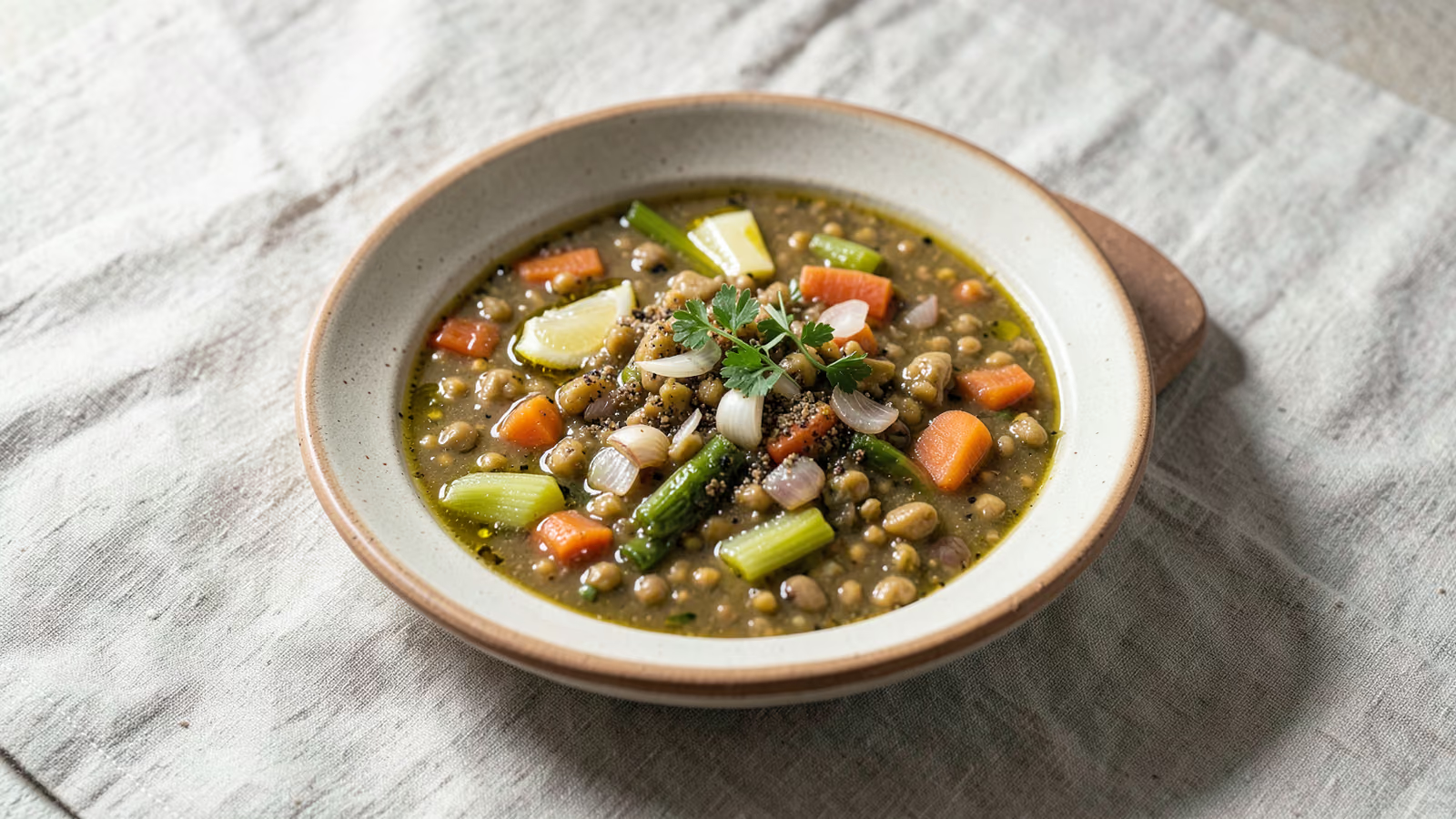
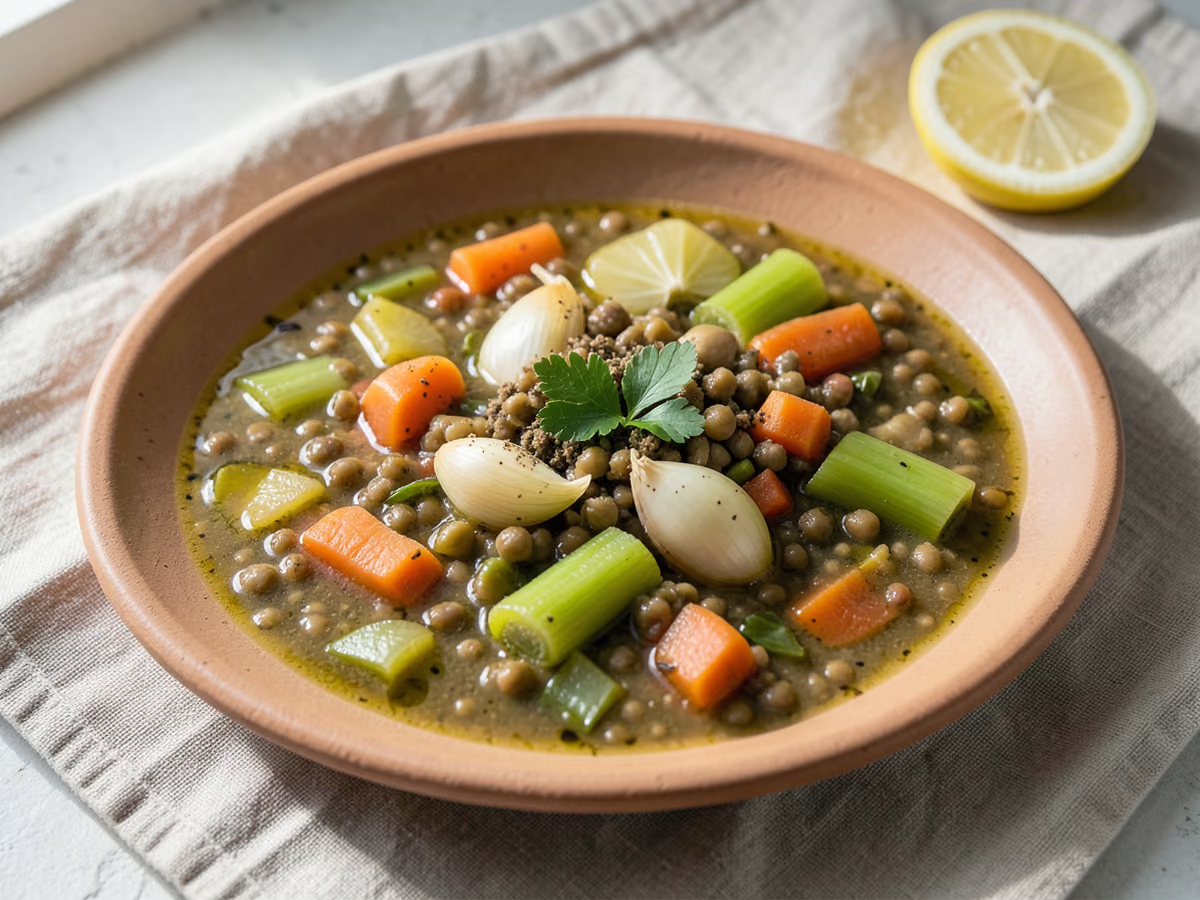
Lentil Vegetable Soup is a hearty Mediterranean bowl built around its vegetables: a generous dice of onion, carrot and celery sweetens the pot, and brown lentils simmer with tomatoes, cumin and smoked paprika until they are tender but still distinct. The full 1.5 litres of broth keep the texture brothy, never porridge-like, so each spoonful still shows vegetables and whole lentils, and the lemon stirred into the finished pot keeps the whole bowl bright. The pot makes six generous servings: about 15 minutes of chopping, then 45 minutes on the stove, most of it a hands-off simmer.
- Prep
- 15 min
- Cook
- 45 min
- Total
- 60 min
- Serves
- 6
Ingredients
What you’ll need — tap to tick off as you go
- 2 tbsp
- 3 cloves
- 1 tsp
- 1 tsp
- 1 tsp
- 200 g
- 400 g
- 1 ½ l
- 1 tsp
- ½ tsp
- 1 tbsp
- 2 tbsp
Process
Timers built in · swap anything · ask as you cook
Set a large pot over medium heat and film the bottom with the 2 tbsp olive oil. Add the diced onion with 2 carrots and 2 celery stalks, then cook for 6–8 minutes, stirring occasionally, until the vegetables soften and pick up light golden edges. This gentle fry, rather than a hard sear, is what draws their sweetness into the oil that will flavour the whole pot.
Stir in the 3 minced garlic cloves along with the 1 tsp smoked paprika, 1 tsp ground cumin and 1 tsp dried thyme. Cook for 1 minute, stirring constantly, until the spices smell toasted and turn a shade darker; the warm oil is what unfolds their flavour now, and garlic left to brown turns the batch bitter.
Add the 200 g rinsed brown lentils, the 400 g can of diced tomatoes with their juices, the 1.5 l vegetable broth and the bay leaf, scraping the base of the pot clean as you stir. Bring to a full boil, then lower the heat, cover, and leave it to simmer gently for 30 minutes. Lentils settle on the base, so stir down to the bottom once or twice while it cooks.
After 30 minutes, test the lentils: they should be soft but still intact, crushing easily against the side of the pot under light spoon pressure. If they are still chalky at the centre, simmer for 5–10 minutes more and test again; the tomatoes' acidity means the pot sometimes needs it. Fish out the bay leaf.
Season with the 1 tsp salt, then the 0.5 tsp black pepper, tasting as you go: the broth is what must read right, because by now the lentils have done their work. For a thicker, heartier pot, press a few ladlefuls of lentils against the pot wall with the back of a spoon, then finish with the 1 tbsp lemon juice if you are using it.
Ladle the soup into six warmed bowls, making sure each one catches its share of vegetables and whole lentils, then divide the 2 tbsp chopped parsley between them. Serve hot, while the vegetables still hold their shape and the parsley is bright.
Why this recipe works
Each stage does a job. Softening the onion, carrots and celery in olive oil dissolves their savoury compounds into the fat, so the flavour ends up in the broth instead of staying inside the vegetables, and the light golden edges add sweetness. A one-minute bloom of cumin, smoked paprika and thyme heats the ground spices in that same oil and pulls their fat-soluble aromatics forward; added straight to the liquid, they taste raw. Brown lentils are the flexible middle of the family: simmered just to tenderness, they hold their shape, yet release enough starch into the broth to give it body without cream. The tomatoes' acid slows softening slightly, which is why the pot is checked at 30 minutes.
Equipment
- Dutch oven or large soup pot, 4-5 l capacity, with its lid
- Chef's knife and cutting board
- Heatproof spatula or wooden spoon
- Colander or fine-mesh sieve
- Can opener
- Measuring jug and measuring spoons
- Ladle
- Potato masher (optional, for a thicker pot)
Kitchen notes
Kitchen notes
- The old warning that a pinch of salt keeps lentils from softening does not survive side-by-side testing: it is the tomatoes' acid, and the age of the lentils, that decide how fast the pot cooks. Season late anyway, for a different reason: the covered simmer concentrates the broth, so the 1 tsp lands on the soup you are actually serving.
- Cut the vegetables to a confident, even dice, about 1 cm, and let them stay visible in the bowl: this soup is meant to eat as vegetables and lentils, not as a uniform puree. If the pieces are even, they finish with the lentils instead of turning to mush or staying raw.
- When the pot tastes flat near the end, reach for the lemon before the salt: the acidity sharpens the earthy lentils and the smoked paprika in a way that extra salt alone cannot. Add the juice off the heat, taste, and only then decide whether the salt needs topping up.
- Err on the early side with the lentils: pull the pot while they still have a whisper of resistance at the centre, because they keep softening in the hot broth as it stands, and that carryover is the difference between distinct lentils and a pot of puree.
- Scatter the parsley at the bowl rather than stirring it through the pot if there will be leftovers: chopped herbs dull and darken in a stored soup, while a fresh pinch on each reheated portion keeps the top tasting green and new.
Common mistakes
- Lentils still hard after 30 minutes: dried lentils over a year old dry out inside and can resist any reasonable simmer, and the tomatoes' acid adds minutes of its own. Buy from a shop with quick turnover, then keep a stubborn batch going in 5-minute increments, testing with a spoon until the lentils press flat.
- Mushy, collapsed lentils: the pot was held at a rolling boil or simmered well past tender. Keep it at a gentle bubble, start testing at 30 minutes, and pull the pot while the lentils crush with a little resistance; the hot broth keeps cooking them as it stands.
- A pot that keeps thickening: the lentils keep drinking liquid as the soup sits and after chilling, so bowls come out dense the second day. Add a splash of hot broth or water when you reheat to loosen it, and taste again before serving.
- Flat, dusty flavour: the cumin and paprika were never really bloomed, the broth was weak to begin with, or the lemon was left out. Give the spices their full minute in warm oil, use a broth with real savour, and finish with the lemon: without that lift the earthy lentils read dull.
- Crunchy vegetables in a soft soup: carrot or celery pieces cut larger than the lentils keep their bite while everything around them goes tender. Dice the vegetables to about 1 cm, keep the pieces even, and they will finish in step with the pot.
- A scorched note underneath everything: lentils settle on the base of the pot and catch during the long simmer. Stir down to the bottom once or twice, especially in the last ten minutes, and keep the heat low enough that the surface trembles rather than races.
Serving suggestions
- Ladle it hot into warmed bowls with crusty bread or warm flatbread for mopping, or a gluten-free loaf so the whole meal stays gluten-free.
- A spoonful of plain yogurt or dairy-free yogurt on top, with a drizzle of olive oil and a dusting of smoked paprika, mirrors the flavours already in the pot.
- A crisp green salad with a lemony vinaigrette, or quickly pickled red onions, cuts the earthy depth between spoonfuls.
- For a fuller dinner, ladle it over cooked rice or quinoa; the soup stretches further and both grains keep the meal gluten-free.
- Something cold and simple to drink alongside: sparkling water with a lemon wedge, iced tea, or a light sparkling apple soda.
Variations
- Extra-vegetable version: fold two big handfuls of spinach or shredded kale into the pot for the final 2-3 minutes, or add diced zucchini and bell pepper with the tomatoes so they get the full simmer. Both keep the vegetable-forward character and stretch the pot without changing its base.
- Red lentil version: swap in red lentils, the same 200 g, and cut the simmer to about 20 minutes. They collapse into a thick, dal-like soup with no distinct kernels left, a different bowl from this chunky one, so check them early rather than at the half-hour mark.
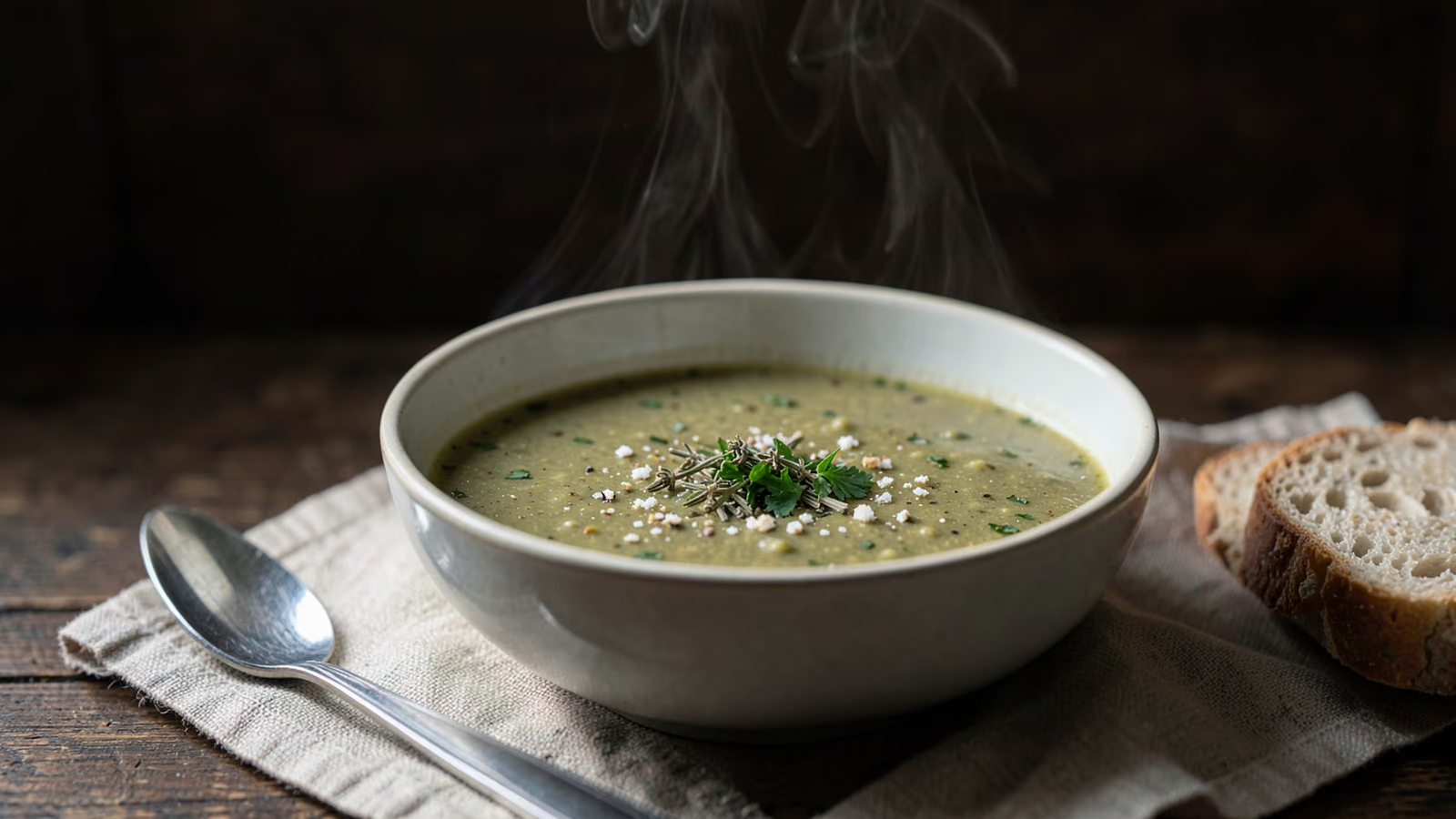
- Half-blended version: run an immersion blender through part of the pot, or blend a ladleful or two and stir it back in. The broth turns creamier and more unified while the rest stays chunky, the middle ground between this soup and a puree.
Refrigerator
- RefrigeratorChill the pot fast: it should be in the fridge within 2 hours of cooking, and it keeps there, covered, for up to 4 days. It thickens as it stands because the lentils keep absorbing broth, so stir in a splash of water or broth when you reheat it.
- ReheatingWarm it through on the stovetop, or in the microwave under a cover, until the soup bubbles hot; 74°C (165°F) is the safe target if you check with a thermometer, and bringing soup to a rolling boil is the simplest test of all. Reheat only the portion you plan to eat, and loosen it with a splash of broth if it has set thick.
- FreezingFreezes well for up to 3 months: let the pot cool completely first, then portion it into freezer-safe containers, leaving a little headspace for expansion. Thaw it overnight in the fridge; the lentils go a little softer on thawing, so give the soup a good stir as it comes back up to heat.
- Make aheadBetter the second day, and a good pot for batch cooking: it can be cooked up to 3 days before you want it, cooled, and refrigerated, or portioned for the freezer. Add the lemon juice once the soup is back up to heat rather than before it goes into the fridge, because its brightness fades fastest in storage.
Updated:
How this recipe was developed
- USDA FSIS Leftovers and Food Safety, with the cold storage chart (refrigerate within 2 hours of cooking; keep 3-4 days refrigerated; frozen soups and stews 2-3 months; reheat to 74°C / 165°F, with soups brought to a rolling boil)
- Serious Eats guides to buying, cooking and swapping lentils (brown lentils become tender but hold their shape at 20-30 minutes; red lentils cook down in 10-15 minutes into a thick puree that gives soups body)
- Serious Eats, J. Kenji López-Alt, bean-salting tests (salt does not prevent legumes softening; sodium replaces the calcium and magnesium ions that stiffen the skins)
- Frontiers in Nutrition (2022), lentil gluten cross-contact study (lentils are naturally gluten-free; sorting and rinsing remove stray wheat and barley grains; choose gluten-free labelled lentils for celiac cooks)
Editorial references are kept internally for verification. This page makes no claim of external certification or professional testing.
FAQ
The questions we get asked most
Why are my lentils still hard after simmering?
The two usual causes are age and acid. Dried lentils past their first year dry out inside and take far longer to soften, and the tomatoes in the pot slow the process further. Simmer on in 5-minute increments until a lentil presses flat against the pot, and buy lentils from a shop with quick stock turnover next time.
Can I use red lentils instead of brown lentils?
Yes, but the bowl changes character: red lentils break down as they cook, so the soup turns thick and dal-like with no distinct kernels left. Use the same 200 g, start checking at about 20 minutes rather than 30, and keep a splash of broth aside to loosen the pot if it sets too thick.
How do I make lentil vegetable soup in a slow cooker?
Sauté the onion, carrots and celery, then bloom the garlic and spices, and scrape everything into the slow cooker with the lentils, tomatoes, broth and bay leaf. Cook on low for 6-8 hours or on high for 3-4 hours, until the lentils are tender but intact; stir in the salt, pepper and lemon at the end, and scatter the parsley per bowl.
Can I add other vegetables, like spinach or zucchini?
Yes, and the soup takes them well. Spinach or chopped kale needs only the last 2-3 minutes in the pot to wilt; zucchini and bell pepper are sturdier and should go in with the tomatoes and broth so they get the full simmer. Keep the pieces a similar size and the pot still reads as lentils with vegetables, not a vegetable stew.
How can I make this soup thicker?
Press a few ladlefuls of the cooked lentils against the wall of the pot with a spoon, which releases their starch into the broth, or blend 1-2 cups of the soup and stir it back in for a creamier body. Simmering uncovered for 10-15 minutes also concentrates it, and remember the pot thickens more as it cools and stores.
Is lentil vegetable soup freezer-friendly?
Yes, it keeps perfectly in the freezer for up to 3 months. Let the pot cool right down, then pack it into containers, leaving room for expansion, and defrost overnight in the fridge. The lentils soften slightly on thawing; stir the soup and loosen it with a splash of broth as it reheats.
Is lentil vegetable soup gluten-free?
As written, yes: lentils, vegetables, tomatoes and herbs contain no gluten. Check the vegetable broth, though, because some brands build flavour with barley or yeast extract. If anyone at the table has celiac disease, choose lentils sold as gluten-free and sort through and rinse them, since lentils can pick up wheat or barley in the field and at the packing plant.
Ask KitchenMind about this recipe
Tell it what’s different tonight — it works within the actual recipe.