- Prep
- 20 min
- Cook
- 75 min
- Total
- 95 min
- Serves
- 4
Ingredients
What you’ll need — tap to tick off as you go
- 800 g
- 60 g
- 1 tsp
- 3 tbsp
- 15 g
- 1 tsp
- 300 g
- 20 g
- 15 g
- 150 g
Process
Timers built in · swap anything · ask as you cook
Halve the 2 onions and slice the 60 g ginger into thick coins. Place them cut-side down in a dry heavy pot over high heat and char for 6–8 minutes until deeply browned and slightly blackened, then set aside.
Toast the 3 star anise, 1 cinnamon stick, 1 tsp coriander seeds and 3 cloves in the same pot over medium heat for 1–2 minutes until fragrant, then tip into a small bowl.
Add the 800 g chicken thighs, the charred onion and ginger, the toasted spices, 1 tsp salt and 2.5 litres of water to the pot. Bring to a gentle simmer over medium heat and skim off the grey foam that rises.
Simmer uncovered on low for 45–50 minutes, skimming occasionally, until the chicken reaches 75°C and pulls apart easily. Do not let it boil hard or the broth turns cloudy.
Lift the chicken out with tongs and set aside to cool slightly. Strain the broth through a fine sieve into a clean pot, discarding the onion, ginger and whole spices.
Stir 3 tbsp fish sauce and 15 g rock sugar into the strained broth and taste. It should be savoury, lightly sweet and aromatic; add a little more fish sauce or salt if it tastes flat. Keep hot over low heat.
Soak the 300 g flat rice noodles in warm water for 15 minutes if the packet says so, then cook in plenty of boiling water for 4–6 minutes until just tender but still springy. Drain and rinse briefly under warm water.
Shred or slice the cooled chicken, discarding the skin and bones if you prefer a leaner bowl.
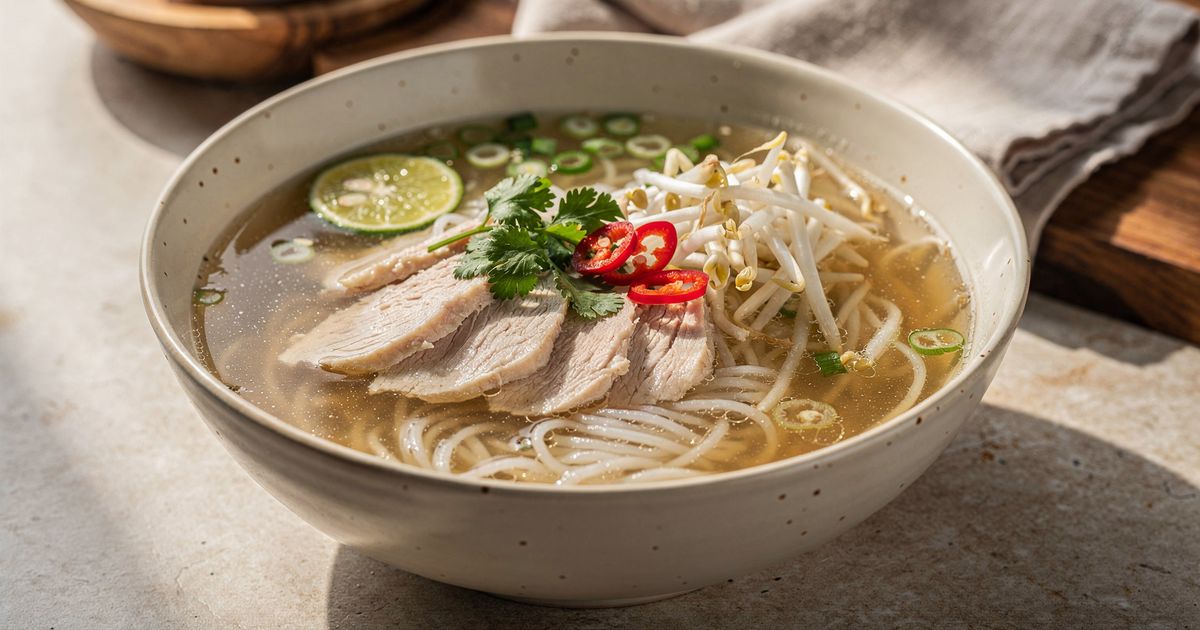
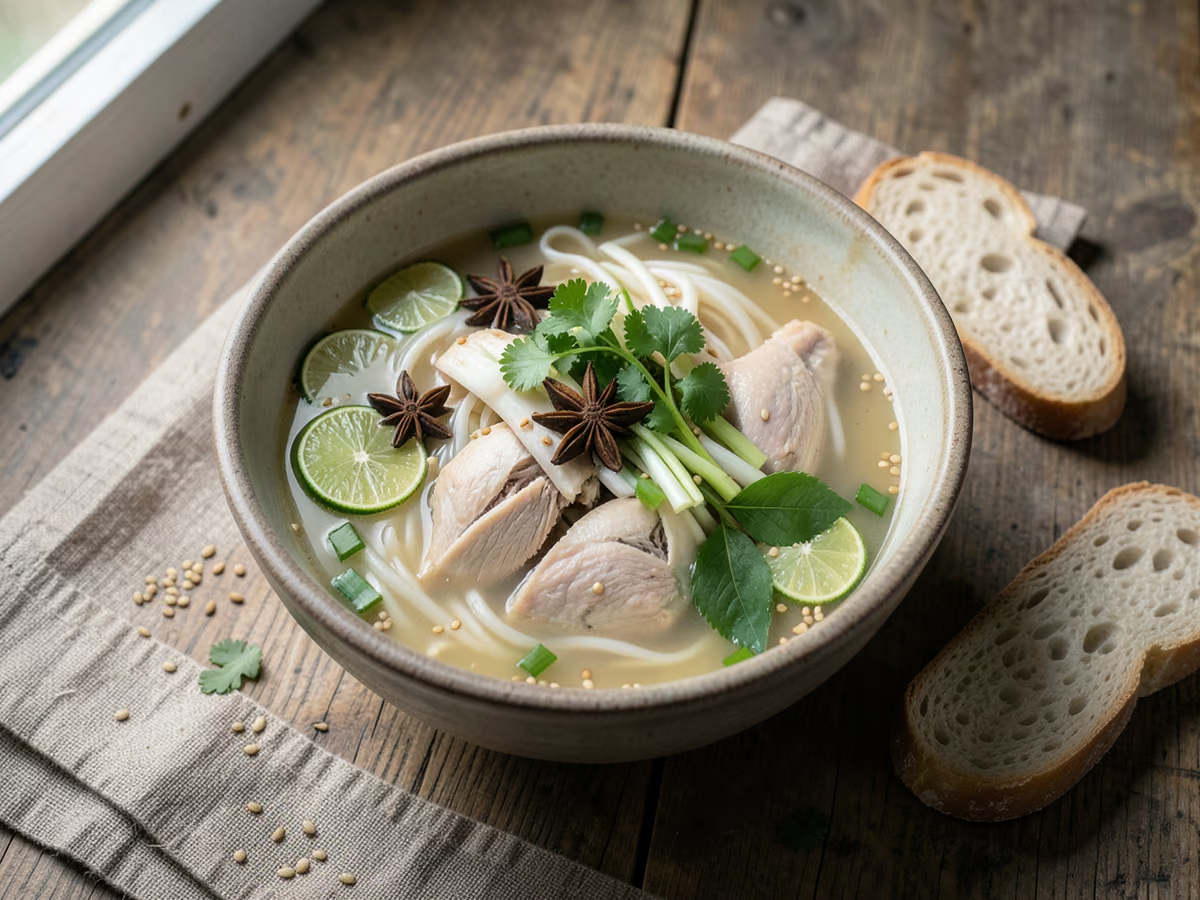
Divide the noodles between 4 deep bowls, top with the chicken, 3 sliced spring onions, 20 g coriander and 15 g Thai basil.
Ladle the boiling-hot broth over each bowl so the herbs wilt slightly. Serve with 2 lime wedges per person, sliced red chilli and 150 g bean sprouts on the side for everyone to add at the table.
Kitchen notes
Kitchen notes
- The single biggest mistake is boiling the broth hard: a rolling boil emulsifies the fat and turns the broth cloudy. Keep it at a bare simmer with small bubbles breaking the surface.
- Charring the onion and ginger is what gives pho its signature depth. Get real dark colour on the cut faces, but do not let them burn to black or the broth turns bitter.
- Taste the broth only after straining, since the spices keep intensifying as they sit. If it tastes weak, simmer it uncovered for another 10 minutes rather than adding more salt straight away.
- Cook the noodles just before serving and never leave them sitting in water, or they turn gluey and break apart in the bowl.
Substitutions
- chicken thighs→a whole small chicken cut into pieces, simmered 10 minutes longer
- rock sugar→1 tbsp palm sugar or light brown sugar
- flat rice noodles→thin rice vermicelli, cooked 2 minutes less
- fish sauce→light soy sauce for a vegetarian-style broth, though the flavour will be less authentic
Storage & reheating
Cool the broth and the chicken separately, then refrigerate in sealed containers for up to 4 days; the broth can also be frozen for up to 3 months. Store cooked noodles separately for up to 2 days, as they soak up liquid and go soft. Reheat the broth in a pot over medium heat until it reaches a rolling simmer, about 5 minutes, and reheat the chicken in the hot broth for 1-2 minutes rather than in the microwave, which toughens it.
FAQ
The questions we get asked most
Why did my pho ga broth turn cloudy?
Almost always because it boiled too hard or was not skimmed. The grey foam that rises in the first 10 minutes is coagulated protein, and if it is stirred back in, the broth stays murky. Keep the pot at a bare simmer and skim patiently with a ladle or fine mesh skimmer.
Can I make pho ga ahead of time?
Yes, and it often tastes better the next day. Make the broth and poach the chicken up to 3 days ahead, cool and refrigerate both separately, then reheat the broth to a rolling simmer and assemble with freshly cooked noodles. Do not cook the noodles in advance.
How do I know when the chicken is done?
The thighs should register 75°C on a thermometer and the meat should pull away from the bone with almost no resistance. If you do not have a thermometer, pierce the thickest part: the juices must run clear, not pink.
Can I use chicken breast instead of thighs?
You can, but breast dries out quickly. If using breast, poach it for only 20-25 minutes, then remove it and keep simmering the broth with the bones and aromatics for the full time to build flavour. Shred it just before serving.
My broth tastes flat, what is missing?
Pho needs the trio of salt, sweetness and aroma. Add fish sauce one teaspoon at a time for saltiness, a little more rock sugar for roundness, and check that your spices were fresh and toasted. A squeeze of lime at the table also lifts a dull broth considerably.
Can I freeze pho ga broth?
Yes, strained broth freezes very well for up to 3 months in airtight containers, leaving 2 cm of headspace. Thaw overnight in the fridge and bring it back to a rolling simmer before pouring over the noodles. Do not freeze the cooked noodles or the fresh herbs.
Are the bean sprouts and herbs supposed to be cooked?
No, they are served raw and added at the table so they stay crisp and fresh against the hot broth. The boiling broth wilts the basil and coriander slightly as it is poured, which is exactly what you want.
Ask KitchenMind about this recipe
Tell it what’s different tonight — it works within the actual recipe.