- Prep
- 40 min
- Cook
- 35 min
- Total
- 75 min
- Serves
- 8
Ingredients
What you’ll need — tap to tick off as you go
- 500 g
- 500 ml
- 100 g
- 40 g
- 30 g
- 60 g
- 50 g
- 1 pinch
Process
Timers built in · swap anything · ask as you cook
Heat the oven to 200°C. Line two baking trays with baking paper.
Cut the puff pastry into three equal rectangles roughly 10 x 25 cm. Place them on the trays, prick all over with a fork, and chill for 15 minutes.
Cover each pastry rectangle with a sheet of baking paper and a second tray on top to stop it puffing unevenly. Bake for 20 minutes, then remove the top tray and paper.
Dust the pastry lightly with half the icing sugar and bake for a further 8–10 minutes until deeply golden and caramelised. Cool completely on a wire rack.
Meanwhile, warm the milk with the vanilla bean and salt in a saucepan over medium heat until just steaming. Do not boil.
Whisk the egg yolks, caster sugar and cornstarch in a bowl until pale and thick.
Slowly pour the warm milk into the egg mixture while whisking constantly, then return everything to the pan.
Cook over medium heat, whisking continuously, for 3–5 minutes until the cream thickens and bubbles gently. Remove the vanilla bean.
Off the heat, whisk in the unsalted butter. Pour the pastry cream into a shallow dish, cover the surface directly with cling film, and chill for at least 2 hours.
Whisk the chilled pastry cream until smooth. Trim the pastry rectangles to neat, equal sizes with a serrated knife.
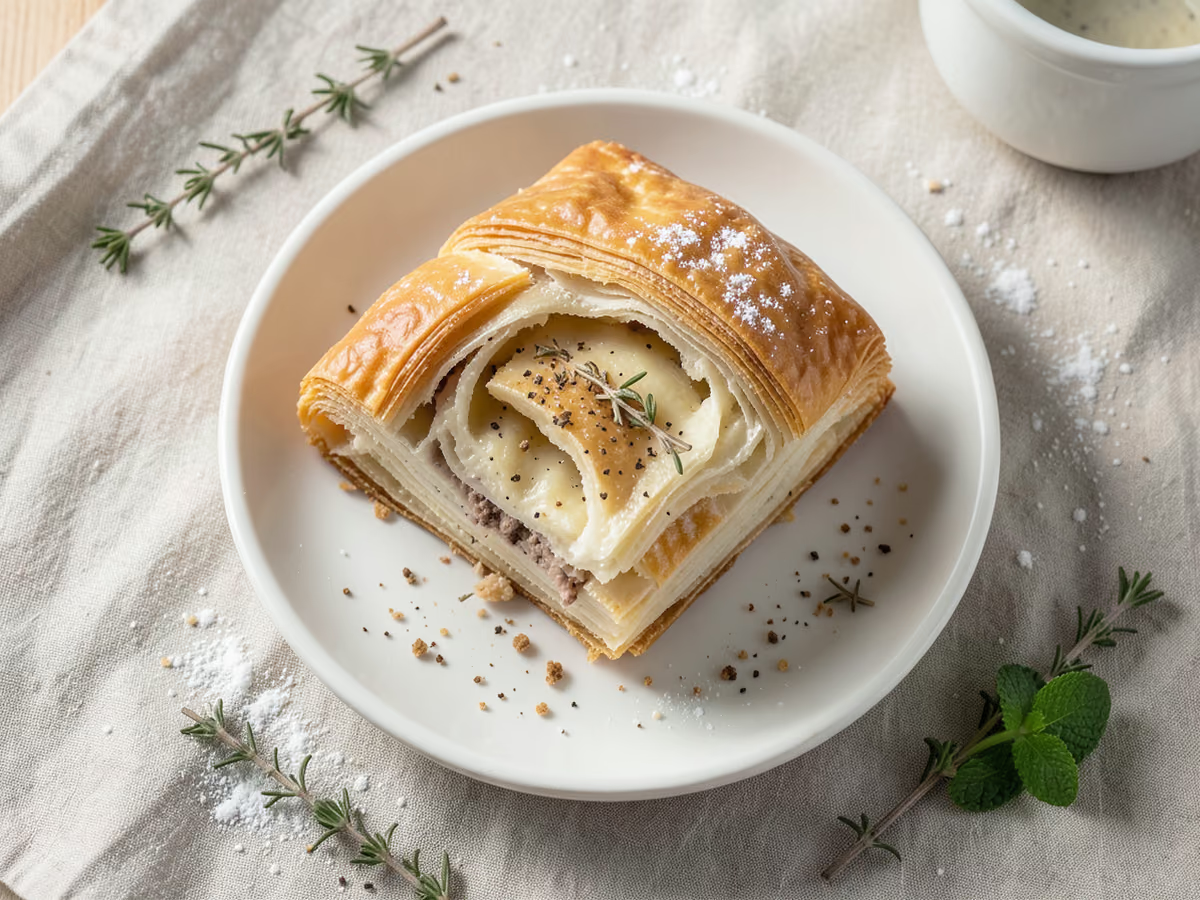
Spread half the pastry cream over the first pastry rectangle, top with a second rectangle, then spread over the remaining cream and finish with the third rectangle, caramelised side up.
Mix the remaining icing sugar with a few drops of water to a thick glaze. Spread thinly over the top. If using dark chocolate, melt it, pipe thin lines across the glaze, and drag a skewer through to feather. Chill for 30 minutes before slicing with a serrated knife.
Kitchen notes
Kitchen notes
- The most common mistake is underbaking the pastry: it must be deeply golden and caramelised, not pale, or it turns soggy the moment the cream touches it.
- Weighing the pastry down with a second tray is the trick that gives flat, even layers instead of a puffed, uneven slab.
- The pastry cream must be cooked until it bubbles for at least 30 seconds, otherwise the cornstarch stays raw and the cream tastes floury and stays loose.
- Assemble the mille-feuille no more than 2-3 hours before serving; the pastry softens once the cream is on it.
Substitutions
- vanilla bean→2 tsp vanilla extract added off the heat
- whole milk→oat milk for a dairy-free version, though the cream will be slightly less rich
- dark chocolate→leave plain or use melted white chocolate for the feather pattern
- caster sugar→granulated sugar blitzed briefly in a blender
Storage & reheating
Store the assembled mille-feuille in an airtight container in the fridge for up to 24 hours, though it is best eaten the same day. The pastry cream alone keeps in a sealed container in the fridge for up to 3 days. Baked pastry rectangles keep in an airtight tin at room temperature for up to 2 days. Do not freeze the assembled dessert; the pastry will go limp. To refresh the pastry before assembling, warm it in a 180°C oven for 5 minutes and cool completely.
FAQ
The questions we get asked most
Why did my mille-feuille go soggy?
The pastry was either underbaked or the dessert sat too long after assembly. The pastry must be deeply golden and caramelised all the way through, and the pastry cream must be fully chilled and thick before it goes on. Assemble no more than 2-3 hours before serving and keep it cold.
Can I make mille-feuille ahead of time?
You can bake the pastry rectangles up to 2 days ahead and store them in an airtight tin, and make the pastry cream up to 3 days ahead. Assemble the layers on the day you plan to serve, ideally within a few hours of eating, so the pastry stays crisp.
Why is my pastry cream lumpy?
Lumps usually mean the milk was added to the eggs too quickly or the pan was too hot. Add the hot milk in a slow, steady stream while whisking, and keep the heat at medium, whisking constantly. If lumps do form, push the cream through a fine sieve while it is still warm.
Can I use shop-bought puff pastry?
Yes, and it works very well. Choose an all-butter puff pastry for the best flavour and rise. Keep it cold until it goes in the oven, prick it well, and bake it weighted down so it stays flat and even.
How do I know when the pastry is baked enough?
It should be a deep golden brown, crisp, and feel light for its size. If it is still pale, it will soften as soon as the cream is added. After the icing sugar dusting, look for a glossy caramelised sheen across the surface.
Can I flavour the pastry cream differently?
Yes. Infuse the milk with a strip of lemon zest, a tablespoon of instant coffee, or 2 teaspoons of ground cinnamon instead of vanilla. Strain the milk before whisking it into the eggs so the cream stays smooth.
Why did my glaze run off the top?
The glaze was too thin or the pastry was still warm. Mix the icing sugar with only a few drops of water at a time until it coats the back of a spoon, and let the pastry cool completely before glazing. A chilled surface helps the glaze set quickly.
Ask KitchenMind about this recipe
Tell it what’s different tonight — it works within the actual recipe.