Plain Frittata
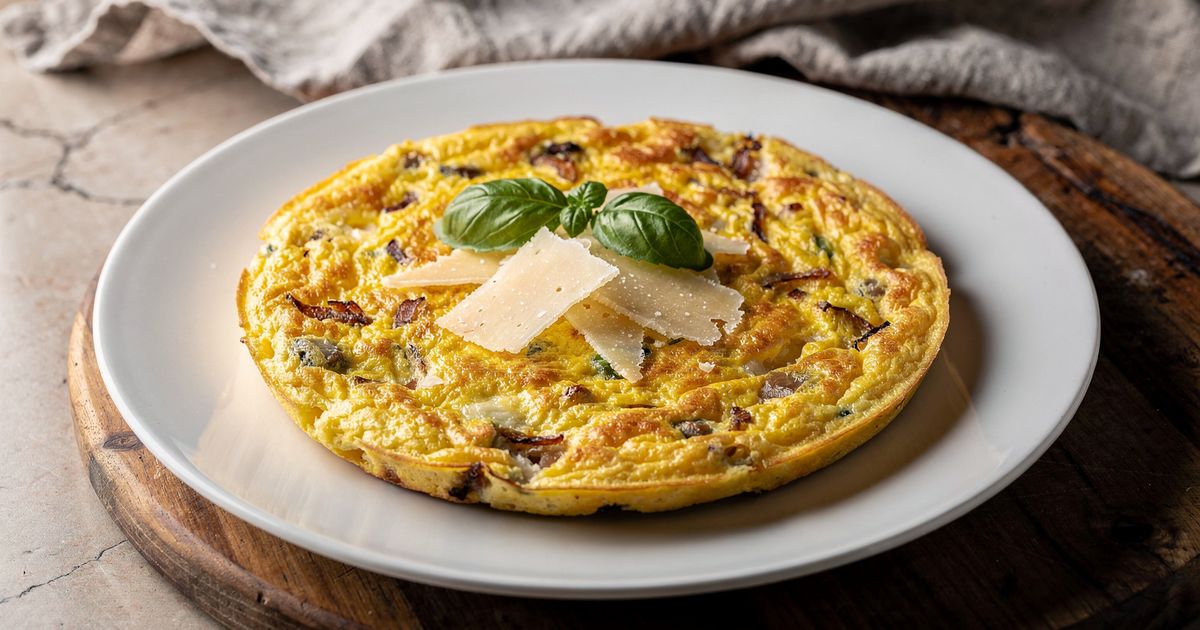
A plain frittata — eggs, a little milk, grated cheese and finely chopped onion — is the most forgiving dish in the Italian repertoire and one of the best. Starting it on the stovetop sets a smooth base; finishing it in a 180°C oven lets the middle stay soft and custardy with no flipping or grill work. Eight eggs fill a 24 cm skillet to just the right thickness for four wedges, and it is equally good warm or at room temperature.
- Prep
- 8 min
- Cook
- 18 min
- Total
- 26 min
- Serves
- 4
Ingredients
What you’ll need — tap to tick off as you go
- 60 ml
- 60 g
- 1 tbsp
- ½ tsp
- ¼ tsp
Process
Timers built in · swap anything · ask as you cook
Preheat the oven to 180°C and finely chop the 1 small onion into a 5 mm dice, small enough to soften completely while the eggs bake. Give the oven a full 10 to 15 minutes: a frittata that goes into a lukewarm oven sets unevenly and never colours properly.
In a mixing bowl, whisk the 8 eggs with the 60 ml milk, 0.5 tsp salt and 0.25 tsp black pepper until the mixture is smooth and slightly frothy, about a minute. Whisk just to blend — heavy aeration puffs the frittata in the oven and leaves it spongy once it deflates.
Stir the 60 g grated cheese and the chopped onion into the eggs with a spatula or whisk, just until they are evenly distributed. The mixture should look evenly suspended, with no clumps of cheese and no bare onion settling at the bottom of the bowl.
Heat the 1 tbsp olive oil in a 24 cm oven-safe non-stick skillet over medium heat until it shimmers and coats the base, then pour in the egg mixture. Cook without stirring for 3 to 4 minutes, until the edges set and turn opaque while the centre is still loose. Shake the pan once to level the surface.
Transfer the skillet to the preheated oven and bake for 12 to 15 minutes, until the frittata is fully set and a knife inserted into the centre comes out clean. A food thermometer in the centre should read 71°C, the safe minimum internal temperature for egg dishes; check the middle, not the surface.
Pull the skillet from the oven and let the frittata rest in the pan for 5 minutes, off the heat. Carryover heat from the pan finishes any softness left in the middle, and the rest is what lets the custard firm enough to slide out and slice without slumping.
Run a flexible spatula around the edge and under the base, then slide the frittata onto a plate or board. Cut it into 4 wedges and serve warm or at room temperature; the flavour and texture hold up just as well either way.
Why this recipe works
Egg proteins set through a narrow window: they thicken gently and turn rubbery once they overshoot, which is why a moderate 180°C oven is kinder than fierce stovetop heat — the centre firms slowly and evenly instead of racing ahead at the base. The 60 ml milk dilutes those proteins just enough to keep the crumb tender, the cheese melts through the mixture, and the finely cut onion softens as the eggs set. The five-minute rest is part of the cooking: carryover heat from the pan finishes the middle so it never has to stay in the oven until dry.
Equipment
- 24 cm oven-safe non-stick skillet
- Mixing bowl
- Whisk or fork
- Flexible heatproof spatula
- Chef's knife and cutting board
- Measuring jug and measuring spoons
- Large plate or board for sliding the frittata out
- Oven mitts (plus foil to wrap the handle if it is not oven-safe)
Kitchen notes
Kitchen notes
- Take the eggs out of the fridge 20 to 30 minutes before you start when you can; room-temperature eggs and milk whisk into a smoother, more even custard, which is exactly why the recipe asks for them.
- Cut the onion to a true 5 mm dice. In this version it goes in raw, so its size decides whether it melts into the eggs or stays crunchy between bites.
- Watch the oil, not the clock, at the stovetop stage: it should shimmer and slide across the pan before the eggs go in. Oil that is not hot enough lets the base set slowly, stick and leak liquid as it bakes.
- For a little colour without overcooking the interior, scatter a spoonful of extra grated cheese over the surface two or three minutes before the end of the bake; it bronzes while the middle quietly finishes.
- Treat the 5-minute rest as unattended cooking: leave the pan on the counter, do not cut in early, and the residual heat finishes the middle without a single extra second in the oven.
Common mistakes
- Rubbery, sponge-like texture: the eggs were baked past the point of setting, or a heavy skillet kept cooking them after it left the oven. Pull the frittata when the centre reads 71°C and a knife comes out clean, and let the 5-minute rest finish it off the heat.
- Stuck to the pan and torn on the way out: the oil was not hot enough to film the base, or the skillet is not genuinely non-stick. Heat the 1 tbsp oil over medium until it shimmers, coat the sides as well as the base, and loosen the edge with a spatula before sliding.
- A soggy, weeping centre: the stovetop stage ended too soon, leaving liquid egg at the base, or watery additions went in raw. Wait for the edge to set before the pan goes into the oven, and keep any extra vegetables cooked and drained.
- A frittata that puffs up and then collapses: too much air was whipped into the eggs. Whisk only until the mixture is uniform, then pour and bake; the finished set should be dense and custardy, not foamy.
- Bland, one-note flavour: the eggs were seasoned on the surface after cooking, or the cheese was left out. Salt and pepper go into the raw mixture where they can season every bite, because a sprinkle over the top never reaches the centre.
Serving suggestions
- Serve the wedges warm from the pan or at room temperature — both are traditional, and this is a dish that does not mind waiting.
- A crisp green salad dressed with lemon and olive oil, plus crusty bread, turns it into a proper lunch or a light dinner.
- Cut into small cubes it becomes a classic Italian aperitivo bite, and cooled wedges travel well in lunchboxes and picnic baskets.
- A little chilli oil or a spoonful of tomato sauce on the side lets everyone season their own wedge without changing the dish.
Variations
- Grill-finished version: skip the oven and slide the pan under a hot grill for 3 to 4 minutes once the edges have set, a common no-oven finish; keep the pan and its handle grill-safe.
- Sweet-onion version: soften the chopped onion in the 1 tbsp oil over medium heat until translucent, let it cool for a few minutes, then stir it into the eggs before pouring — sweeter and softer, with one extra pan step.
- Loaded version: fold in up to 150 g of cooked, well-drained vegetables — sautéed mushrooms, spinach squeezed dry, or roasted peppers — keeping the egg and milk quantities unchanged; wet additions are what make a frittata weep.
Refrigerator
- RefrigeratorCool, then refrigerate covered for up to 3 days, putting it away within 2 hours of baking. The texture is at its best on the first day; wedges firm up and dry slightly as they sit.
- ReheatingMicrowave single wedges for 1 to 2 minutes on medium power, or warm them in a 160°C oven for 8 to 10 minutes, until hot throughout — the USDA reheat target is 74°C. Overheating toughens the eggs, so stop as soon as the centre is hot.
- FreezingFreezes well: cool completely, wrap the wedges tightly, and freeze for up to 2 months. Thaw overnight in the fridge, then reheat as above; the texture softens a little, and thawed wedges should not be refrozen.
- Make aheadEither whisk the raw mixture the night before, refrigerate it covered and bake it fresh in the morning (add 1 to 2 minutes from cold), or bake the frittata a day ahead and serve it cool or reheated — it slices and travels better after chilling.
Updated:
How this recipe was developed
- USDA FSIS Shell Eggs from Farm to Table (cook dishes containing eggs to 71°C/160°F; refrigerate within 2 hours; use within 3 to 4 days)
- FoodSafety.gov (USDA/FDA) safe minimum internal temperatures and cold food storage charts (egg dishes such as frittata: 160°F/71°C; egg casseroles: 3 to 4 days refrigerated, 2 to 3 months frozen)
- GialloZafferano baked frittata (oven-finished frittata with onions and cheese — no flipping needed; served hot, warm, at room temperature or cold)
- Bon Appétit test kitchen, common frittata mistakes (egg-to-dairy ratio; doneness judged at the centre; a golden top signals an overbaked interior; carryover cooking in a hot pan)
Editorial references are kept internally for verification. This page makes no claim of external certification or professional testing.
FAQ
The questions we get asked most
Why did my frittata turn out rubbery?
Overcooking is almost always the cause: an overbaked frittata turns spongy and dry. Pull it when the centre reaches 71°C and a knife comes out clean, about 12 to 15 minutes at 180°C, and remember that the pan keeps cooking it during the 5-minute rest.
How do I know when a frittata is fully cooked?
The reliable test is the centre: a knife inserted there should come out clean and, better still, a food thermometer should read 71°C, the USDA safe minimum for egg dishes. The top tells you little — a deeply golden surface usually means the interior is overbaked, not that it is ready.
Can I make a plain frittata without milk?
Yes. Replace the 60 ml milk with the same volume of water or unsweetened plant milk; the eggs set perfectly well either way. The milk's fat is what makes the crumb a touch more tender and custardy, so expect a slightly leaner result.
Can a frittata be made ahead, and how long does it keep?
It is one of the best make-ahead egg dishes. Baked and cooled, it keeps covered in the fridge for 3 days; the raw mixture can be whisked the night before and baked fresh in the morning, adding 1 to 2 minutes from cold. Freeze wedges for up to 2 months if you need it to last longer.
Why is my frittata sticking to the pan?
Either the skillet is not genuinely non-stick, or the oil never got hot enough to film the base. Heat the 1 tbsp olive oil over medium until it shimmers, coat the sides as well, and run a flexible spatula around the edge before sliding it out; the short rest also helps it release.
Can I add vegetables or meat to this plain frittata?
Yes — up to 150 g of cooked, well-drained additions without changing the eggs. Anything watery, such as mushrooms, courgette or spinach, should be cooked and patted dry first; raw wet vegetables release water into the eggs and leave a weeping centre.
Can I bake it in a different pan size?
Keep the pan oven-safe to 200°C and expect the thickness to change: a smaller pan gives a deeper frittata that needs a few extra minutes, a larger one is thinner and bakes faster. A 24 cm skillet is what this 8-egg mixture is sized around, so stray far from it and check doneness early and often.
Ask KitchenMind about this recipe
Tell it what’s different tonight — it works within the actual recipe.