Chickpea Flour Omelette
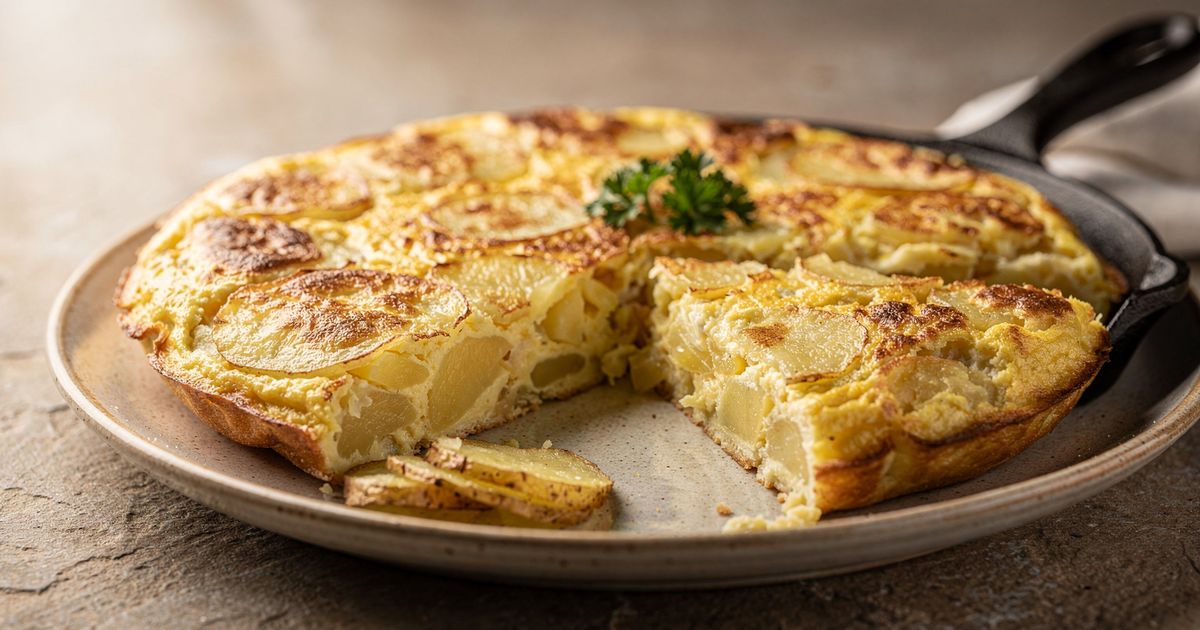
Chickpea flour, water, turmeric and cumin make the batter for this 2-serving omelette. Sauté onion, bell pepper, baby spinach and garlic first, then cook it in the pan for 10 minutes.
- Prep
- 10 min
- Cook
- 10 min
- Total
- 20 min
- Serves
- 2
Ingredients
What you’ll need — tap to tick off as you go
- 120 g
- 180 ml
- 2 tbsp
- 60 g
- 1 clove
- ½ tsp
- ½ tsp
- ½ tsp
- ¼ tsp
- ¼ tsp
Process
Timers built in · swap anything · ask as you cook
Whisk the chickpea flour, water, 1 tbsp olive oil, turmeric, cumin, salt, black pepper and baking soda in a bowl until completely smooth. Rest the batter for 10 minutes while you prepare the vegetables; this hydrates the flour and removes any raw bean taste.
Heat the remaining 1 tbsp olive oil in a 24 cm non-stick frying pan over medium heat. Add the onion and red bell pepper and cook for 4 to 5 minutes until softened and lightly golden.
Stir in the garlic and baby spinach and cook for 1 minute, just until the spinach wilts. Spread the vegetables evenly across the pan.
Give the batter a quick stir, then pour it over the vegetables, tilting the pan so it covers the base in an even layer.
Cook over medium-low heat for 4 to 5 minutes, until the edges look set and dry and the underside is deep golden. Lift an edge with a spatula to check.
Slide a spatula under the omelette and flip it carefully, or invert it onto a plate and slide it back into the pan. Cook for 2 to 3 minutes more until firm in the center and cooked through.
Slide onto a board, cut in half and serve hot with lemon wedges to squeeze over the top.

Kitchen notes
Kitchen notes
- The most common mistake is pouring the batter too soon after mixing. Resting it for 10 minutes hydrates the chickpea flour, so the omelette cooks tender instead of gritty and tastes nutty rather than raw.
- Keep the heat at medium-low. Chickpea flour browns and burns faster than egg, and a hot pan leaves the center raw while the outside darkens.
- The omelette is done when the surface is matte, the edges pull away from the pan and a spatula slides cleanly underneath. If the center still looks wet, cover the pan for 1 minute to steam it through.
- A well-seasoned non-stick pan or a thin film of oil is essential; chickpea batter sticks more than egg batter, especially at the edges.
Substitutions
- baby spinach→chopped kale or Swiss chard, cooked 2 minutes longer
- red bell pepper→diced zucchini or tomato, seeds removed
- olive oil→any neutral cooking oil
- lemon→a spoonful of plain dairy-free yogurt or hot sauce
Storage & reheating
Cool completely, then store in an airtight container in the fridge for up to 3 days. To reheat, warm in a lightly oiled non-stick pan over medium-low heat for 2 to 3 minutes per side, or microwave covered for 60 to 90 seconds until hot; the microwave softens the texture, so the pan method is better. The omelette freezes well for up to 1 month: wrap each half in baking paper and foil, thaw overnight in the fridge, then reheat in the pan.
FAQ
The questions we get asked most
Why does my chickpea flour omelette taste raw or bitter?
The batter was not rested or the omelette was undercooked. Chickpea flour needs 10 minutes in the water to hydrate and lose its raw legume taste. Also cook it fully: the surface should be matte and the center firm, not wet, before you take it off the heat.
Why did my omelette fall apart when I flipped it?
It was flipped too early, before the underside set. Wait until the edges are dry and a spatula slides under the whole omelette without resistance, usually 4 to 5 minutes over medium-low heat. If it still feels fragile, invert it onto a plate and slide it back into the pan instead of flipping in the air.
Can I make the batter ahead of time?
Yes. Whisk the batter, cover and refrigerate for up to 24 hours. It will thicken as it sits, so stir in 1 to 2 tbsp water to return it to a pourable consistency before cooking. The vegetables are best sauteed fresh, but you can chop them the night before and keep them in the fridge.
Can I use canned or frozen vegetables instead of fresh?
Yes. Drain canned peppers or mushrooms well and pat them dry, otherwise the extra water makes the omelette soggy. Frozen spinach works too: thaw it, squeeze out as much liquid as you can, and add it in step 3. Reduce the batter water by 1 tbsp if your vegetables are wet.
How do I know when the omelette is fully cooked?
The top turns matte with no shiny wet patches, the edges look dry and slightly crisp, and the center feels firm when pressed with a spatula. If you are unsure, cover the pan for 1 minute off the direct heat to steam the middle. A toothpick inserted in the center should come out clean.
Can I bake this in the oven instead of frying it?
Yes. Pour the batter and vegetables into an oiled oven-safe pan or quiche dish and bake at 190°C for 20 to 25 minutes, until set and golden at the edges. It puffs slightly and deflates as it cools, which is normal. This method is more forgiving if you struggle with flipping.
Is chickpea flour the same as besan or gram flour?
Yes, they are the same product, ground from dried chickpeas. Do not substitute coconut flour or almond flour, which absorb liquid very differently and will give a crumbly, greasy result. If your chickpea flour is very coarse, sift it before mixing for a smoother batter.
Ask KitchenMind about this recipe
Tell it what’s different tonight — it works within the actual recipe.