Turkish Menemen Eggs
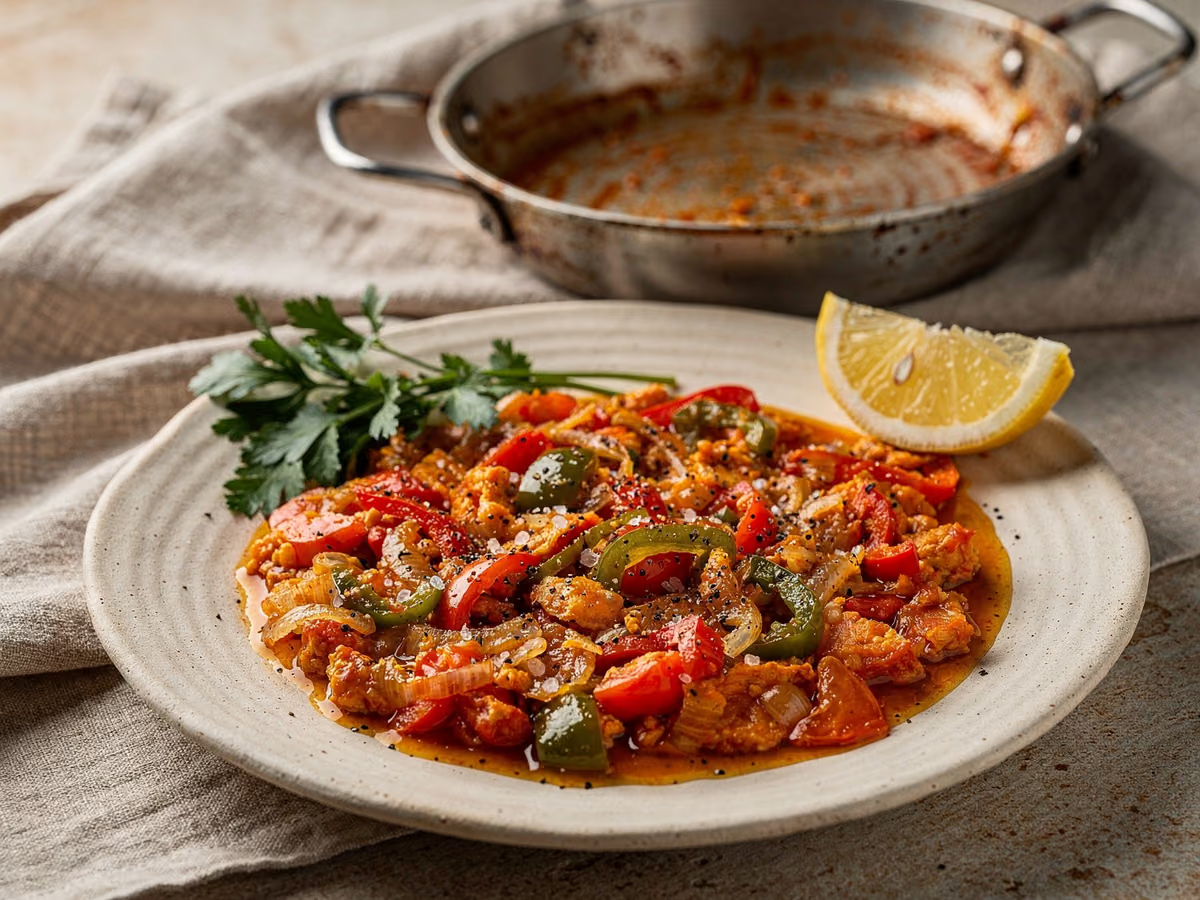
Menemen is the Turkish breakfast skillet: onion and green pepper softened in olive oil, tomatoes and a spoon of paste cooked down until jammy, then 4 eggs stirred in gently and pulled from the heat while they are still soft and glossy. The dish is about 10 minutes of prep and 15 minutes of cooking for 2, and it asks for nothing more than crusty bread and small glasses of tea. What you get for that short effort is a one-pan savoury egg stew: creamy eggs suspended in a sweet-tart tomato base.
- Prep
- 10 min
- Cook
- 15 min
- Total
- 25 min
- Serves
- 2
Ingredients
What you’ll need — tap to tick off as you go
- 2 tbsp
- 1 tbsp
- ½ tsp
- ¼ tsp
- 1 tsp
- 50 g
- 2 tbsp

Process
Timers built in · swap anything · ask as you cook
Heat the 2 tbsp olive oil in a wide skillet over medium heat until it shimmers but does not smoke. A wide pan matters here: the tomatoes need surface area to shed water quickly, and a crowded or deep pan steams the base instead of reducing it.

Add the 1 finely chopped onion and the 1 seeded, finely chopped green bell pepper, and sauté for 4 to 5 minutes, stirring now and then, until both are softened and lightly golden. This stage builds the sweet foundation of the dish; move on while they are still firm and you will taste raw crunch under the eggs.

Stir in the 3 grated tomatoes and the 1 tbsp tomato paste, and cook for 5 to 6 minutes, until the tomatoes collapse and the mixture thickens slightly. Drain watery tomatoes before they go in, and if the pan still looks loose after 6 minutes, give it 2 more; a wet base steams the eggs into soup.
Season with 0.5 tsp salt, 0.25 tsp black pepper and 1 tsp paprika and stir well to combine. Season the base a touch more boldly than you would eat it alone, because the eggs that follow dilute both the salt and the acidity; this is the last easy moment to adjust.
Reduce the heat to low and crack the 4 eggs straight into the skillet. Let them begin to set for about 30 seconds, then fold them gently into the tomato mixture with a spatula, a few slow strokes rather than a whisk, so egg and base stay in distinct soft streaks. Overmixing is what turns menemen into a uniform paste.
Cook for 2 to 3 minutes over low heat, stirring occasionally, until the eggs are just set but still creamy; pull the pan off while they still look glossy, because residual heat finishes them in about 1 minute. For anyone in a higher-risk group, leave their portion on the heat until fully set at 71°C, the USDA FSIS minimum for egg dishes.
Scatter over the crumbled feta, if using, and the chopped parsley, then serve hot straight from the skillet with crusty bread for scooping. The cheese softens against the warm eggs; bring the pan to the table, because menemen tightens as it stands and is at its best immediately.

Why this recipe works
Menemen is really an egg-thickened tomato stew, and the base decides everything. Cooking the peppers, onion and tomatoes for 5 to 6 minutes drives off their water and concentrates the sugars, which is why a loose base ends up soupy while a reduced one holds soft curds in suspension. The eggs go in over low heat and get only a few gentle folds: stirring breaks them into smaller and smaller curds, so the less you work them, the creamier the set. Pulling the pan while they still look glossy leans on residual heat, which finishes the eggs in about a minute without the rubbery edge direct heat leaves.
Equipment
- Wide skillet, 24 to 26 cm across, nonstick or well seasoned
- Chef's knife and cutting board
- Wooden spoon or heatproof spatula
- Box grater, for grating the tomatoes
- Measuring spoons
- Instant-read thermometer, for checking the eggs at 71°C
- Warm serving plates
Kitchen notes
Kitchen notes
- Spoon about half the tomato mixture into a bowl before the eggs go in and stir it back at the end: the cooler base stops the residual heat at exactly the soft, creamy point. It is the most reliable way to serve the eggs soft rather than overcooked at the edges.
- Grate the tomatoes on the coarse side of a box grater straight into a bowl and leave the skins behind: the base cooks faster and stays smooth, with none of the rolled-up bits of skin you get from chopping.
- Have the bread warmed and the plates out before you crack the eggs. Menemen is creamy for about 2 minutes and merely fine after that, and the last stage is no time to be hunting for a bread knife.
- Do not cover the pan while the eggs cook. A lid traps steam that makes the pan watery and dulls the texture; open, gentle heat is what keeps the eggs creamy rather than wet.
- If the finished pan looks looser than you would like, serve it in shallow bowls with plenty of bread rather than cooking it down further. Chasing thickness on the stove is how soft, glossy eggs turn rubbery.
Common mistakes
- A watery, soupy pan: the tomatoes were not cooked down far enough, or went in with all their juice. Cook the base until a spatula leaves a clear trail that fills back slowly, drain juicy tomatoes first, and give the pan 2 extra minutes before the eggs go anywhere near it if it still looks loose.
- Tough, rubbery eggs: the heat was too high, or the pan stayed on the stove after the eggs set. Keep the burner on low, stir only a few times, and pull the pan while the curds still look glossy; they finish in about 1 minute of residual heat.
- Eggs worked into a fine paste: overstirring. Soft streaks of egg and tomato are the goal; constant stirring breaks the curds down until the dish reads as a sauce with crumbs of egg in it.
- A flat, heavy pan of tomato: the base was under-seasoned, or the tomatoes were pale and watery. Season the base properly before the eggs go in (the 1 tbsp of paste helps weak tomatoes), and finish with a good grind of black pepper rather than more salt.
- The base catching and tasting scorched: too high a heat under sweet, concentrated tomatoes. Keep it at a steady medium and stir into the corners of the pan; if anything sticks, add a small splash of water and lower the heat rather than scraping hard.
Serving suggestions
- Serve straight from the skillet, family style, as 2 portions: the eggs are at their best in the first minutes, so bring the pan to the table with the bread already waiting.
- Warm crusty bread, pide or a baguette for scooping; the base is almost a dip, and in a Turkish breakfast the bread is not optional.
- A full Turkish breakfast spread around it: white cheese, cucumber and tomato slices, a handful of olives, and a little honey or jam on the side.
- Small glasses of Turkish tea are the traditional drink; ayran, a cold savoury yogurt drink, or sparkling water works just as well if you want something cold.
Variations
- Bus-station style, a different dish: press 4 wells into the finished base with the back of a spoon, crack an egg into each, cover the pan, and cook until the whites are just set. The eggs stay whole, a recognised older variant closer to eggs poached in tomato sauce than to this stirred version.
- Hotter pan: use 1 tsp of hot paprika in place of sweet, or add 1 chopped fresh green chili with the bell pepper; the heat arrives built into the base rather than scraped on at the table.
- Brighter, paste-free version: leave out the 1 tbsp of tomato paste and add 1 more tomato, cooked down 2 minutes longer; the pan tastes lighter and fresher, at the cost of some depth and colour.
Refrigerator
- RefrigeratorCool the pan within 2 hours of cooking, then refrigerate in an airtight container and eat within 2 days; USDA FSIS allows 3 to 4 days for most leftovers, but the eggs taste best on the first day and the dish thins as it stands.
- ReheatingWarm gently in a covered skillet over low heat for 3 to 4 minutes, or microwave in 30-second bursts at 50 percent power, stopping as soon as it is hot. USDA FSIS advises leftovers reach 74°C, but keep the pan below a boil, because boiling turns the eggs tough and the sauce watery.
- FreezingNot recommended: the eggs turn grainy and watery on thawing. Freeze the tomato-pepper base on its own instead, for up to 2 months, and cook fresh eggs through it when you reheat.
- Make aheadThe base, without the eggs, keeps up to 2 days in the fridge and reheats in minutes, which is the smart way to get ahead. A fully cooked menemen is best eaten the day it is made; reheating costs it the creamy texture that defines the dish.
Updated:
How this recipe was developed
- Serious Eats, Menemen (Turkish-Style Scrambled Eggs With Tomatoes, Onions and Chilies) — onions and peppers cooked slowly in olive oil until very soft, tomatoes cooked down until their juices concentrate, eggs kept barely set, and half the vegetable base reserved to cool the pan so the eggs stop cooking
- The Guardian, 'How to cook the perfect menemen' — menemen as an egg-thickened tomato stew; keep the heat low and take the pan off before the eggs are done so they stay soft and moist, and grate the tomatoes
- Food Network Kitchen, menemen — sweet green pepper softened in about 5 minutes, tomatoes cooked 5 to 8 minutes, eggs just set in about 3 minutes, and the onion-or-not debate in Turkish homes
- USDA FSIS safe minimum internal temperature chart and leftovers guidance (egg dishes 71°C; leftovers refrigerated within 2 hours and reheated to 74°C)
Editorial references are kept internally for verification. This page makes no claim of external certification or professional testing.
Gallery

FAQ
The questions we get asked most
Why did my menemen turn out watery?
The tomatoes were not cooked down before the eggs went in. Give the base its full 5 to 6 minutes, or 2 minutes more if it still looks loose, until a spatula leaves a trail that fills back slowly; drain juicy or canned tomatoes first, and keep the heat at medium so the water has a chance to leave the pan.
Can I make menemen ahead of time?
Prepare the onion, pepper and tomato base up to 2 days ahead and refrigerate it, then reheat it in the skillet and add the eggs fresh, which takes only minutes. A fully cooked menemen keeps up to 2 days in the fridge, but the eggs lose their creamy texture after the first day, so it really is a make-to-order dish.
How do I know when the eggs are done?
They are ready when soft, slightly wet curds have formed and no part still looks translucent, usually 2 to 3 minutes over low heat. Pull the pan while they still look a touch glossy, because they keep cooking in the residual heat. Traditional menemen is served this soft; for anyone in a higher-risk group, cook their portion until fully set and check it reads 71°C (USDA FSIS).
Can I use canned tomatoes instead of fresh?
Yes: about 400 g of well-drained canned chopped tomatoes replaces the 3 fresh ones. Cook the mixture 1 to 2 minutes longer because they carry more liquid, and reduce the tomato paste to 2 tsp if the canned tomatoes taste strongly concentrated.
Why did my menemen become tough and rubbery?
The heat was too high or the eggs cooked too long after setting. Once the eggs go in, keep the burner on low, fold them only a few times, and remove the skillet as soon as soft curds form; carrying the pan off the heat while they still look glossy is the whole trick. Overstirring dries them out too.
Can I add other vegetables or cheese to menemen?
Yes: diced zucchini, mushrooms or a chopped hot pepper can go in with the onion and cook until softened. Add feta or white cheese only at the end as a topping, since stirring it through the hot eggs turns the dish grainy, and keep additions dry so the base does not turn watery.
Does real menemen contain onion?
Turkish cooks argue about this endlessly and both camps claim the classic. This version includes the 1 onion for a sweeter, fuller base, the style most commonly cooked at home; the onion-free version is lighter and more tomato-forward, and if you make it, start the pepper a minute earlier to make up the difference.
Ask KitchenMind about this recipe
Tell it what’s different tonight — it works within the actual recipe.