Shakshuka
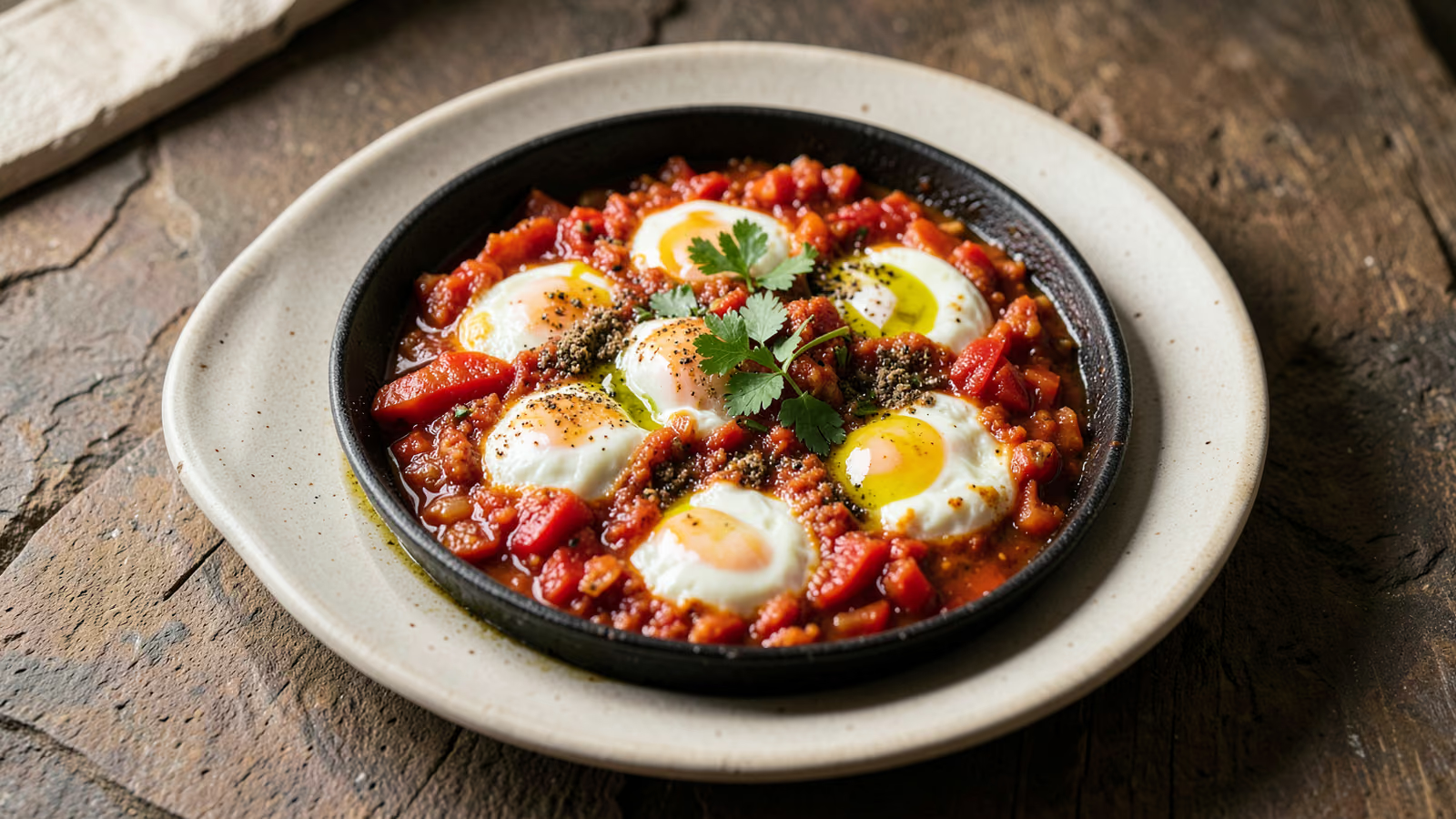
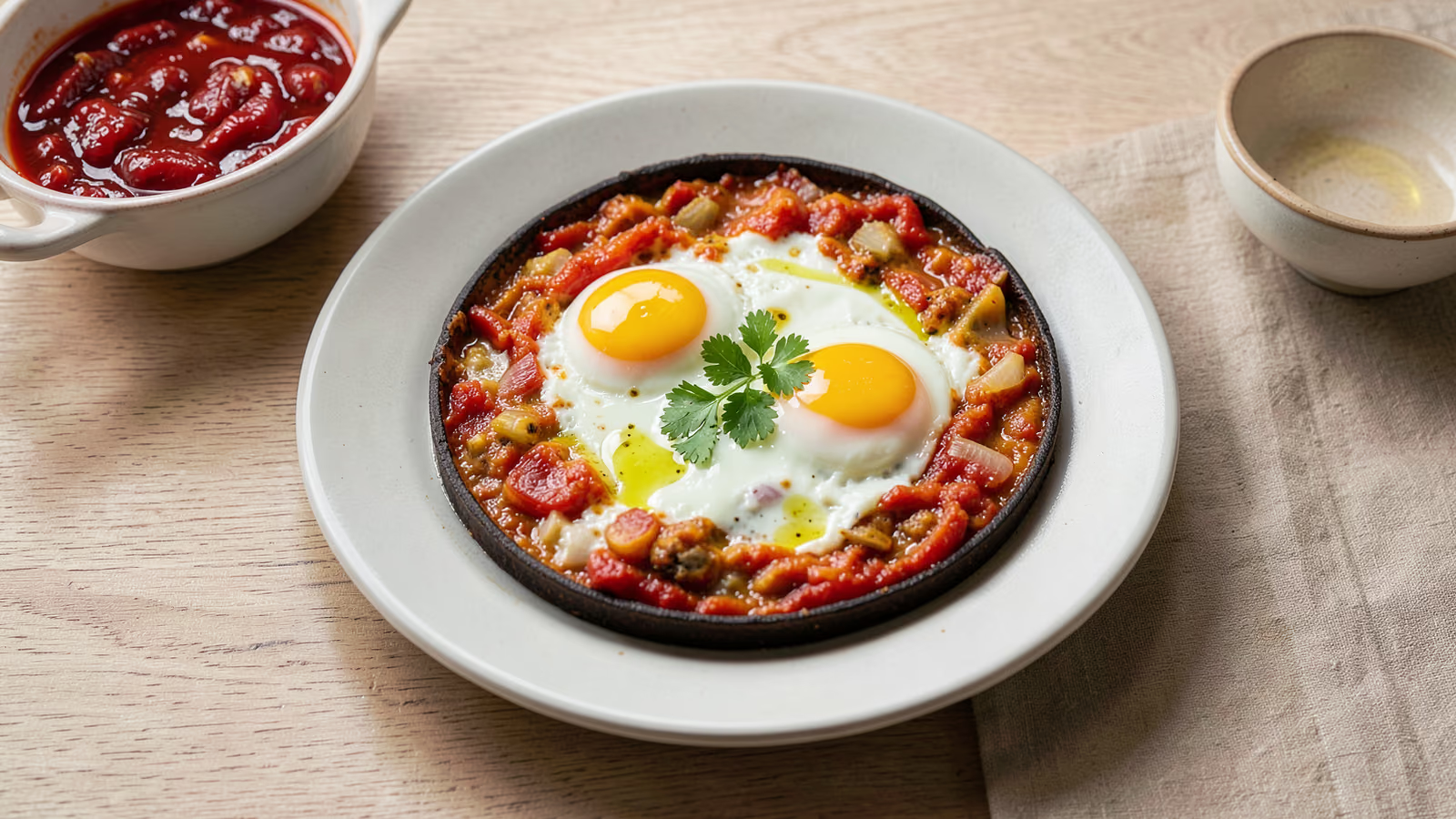
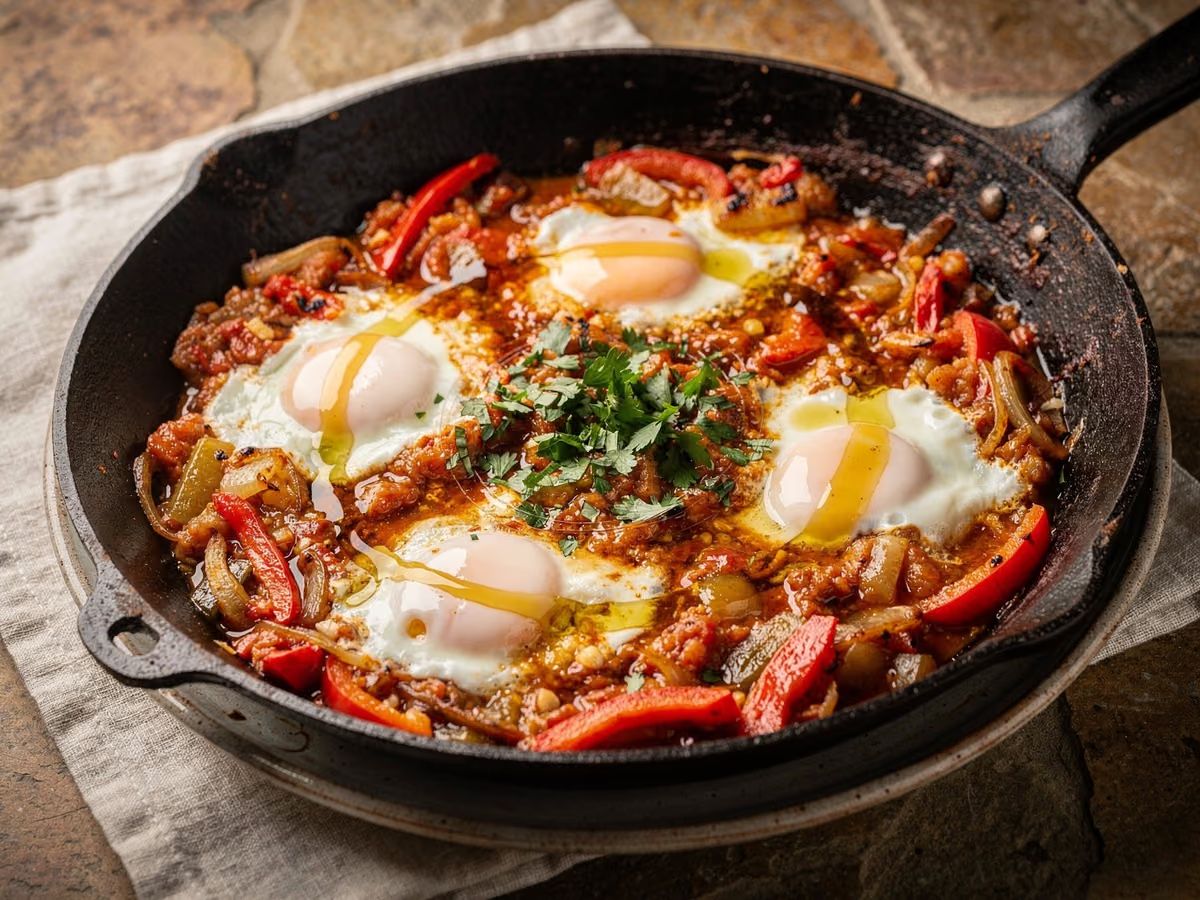
Shakshuka is eggs poached directly in a skillet of spiced tomato and pepper sauce, a one-pan Middle Eastern staple that works as breakfast, brunch or dinner. The sauce builds in stages: onion and red pepper softened in olive oil, garlic, cumin and paprika bloomed for a minute, then 800 g of crushed tomatoes reduced to a thick, jammy base before four eggs go in. Ten minutes of prep and 25 minutes of cooking is realistic, and the sauce does most of the work with the lid off; bring the pan to the table with bread for scooping.
- Prep
- 10 min
- Cook
- 25 min
- Total
- 35 min
- Serves
- 4
Ingredients
Ingredients
- 2 tbsp
- 3 cloves
- 800 g
- 1 tsp
- 1 tsp
- ½ tsp
- ¼ tsp
- 2 tbsp
Process
Seven steps · one pan · ask anything
Heat the 2 tbsp olive oil in a large skillet over medium heat until it shimmers and slides easily. The pan should be wide enough that the finished sauce sits in a shallow layer: a small, deep pot slows evaporation and crowds the eggs when they go in later.
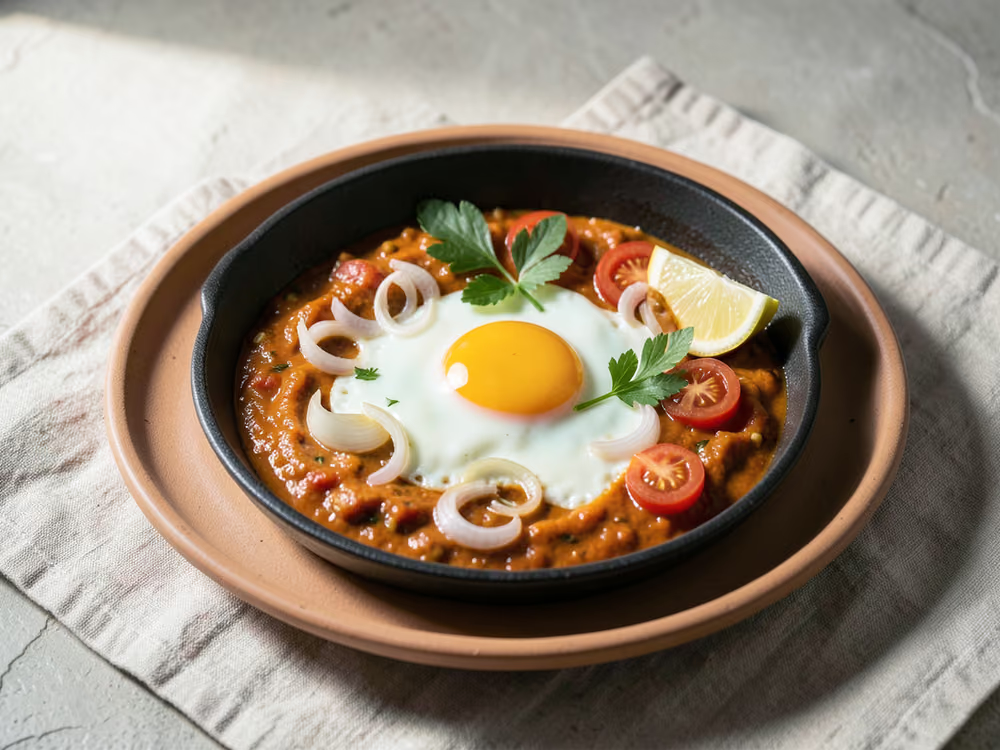
Add the 1 diced onion and 1 sliced red bell pepper and cook for 5 minutes, stirring occasionally, until the onion turns translucent and the pepper grows soft but neither takes on colour. Sweating them gently builds a sweet base, while browning this early leaves a bitter edge in the finished sauce.
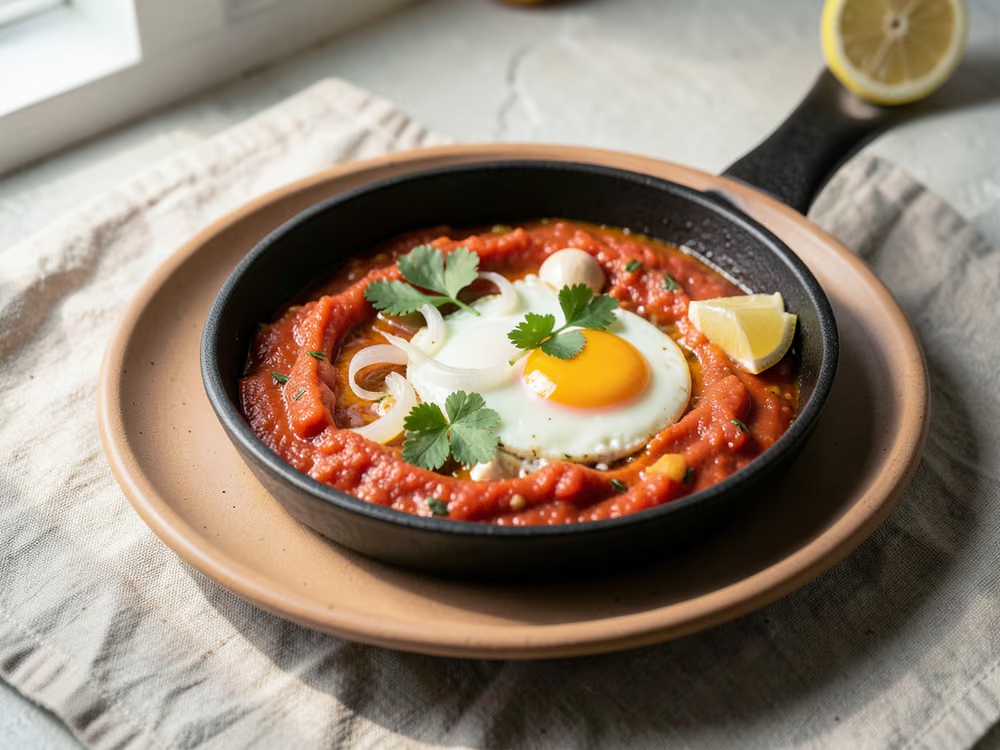
Stir in the 3 minced garlic cloves, 1 tsp cumin and 1 tsp paprika and cook for 1 minute, just until the garlic smells sweet and the spices darken and turn glossy in the oil. Blooming spices in hot fat draws out their flavour; held past a minute, the garlic turns harsh and bitter.
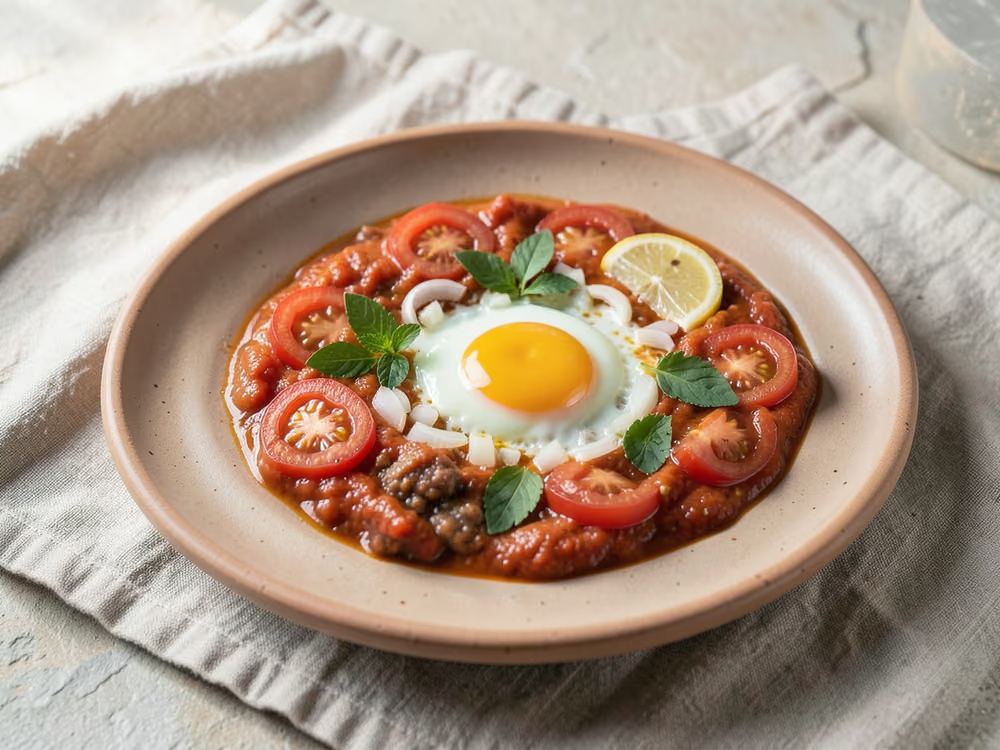
Pour in the 800 g crushed tomatoes, season with half of the 0.5 tsp salt, and simmer uncovered for 10 minutes, stirring now and then, until a spoon dragged through the sauce leaves a clear trail. Leaving the lid off is the point: steam carries off water, and a sauce still loose here stays watery around the eggs.
Use the back of a spoon to press four deep wells into the sauce, right down to the pan, and crack one egg into each, breaking them into small bowls first so shells and broken yolks are caught before they are past saving. Shallow wells let the whites spread out and glue to the pan.
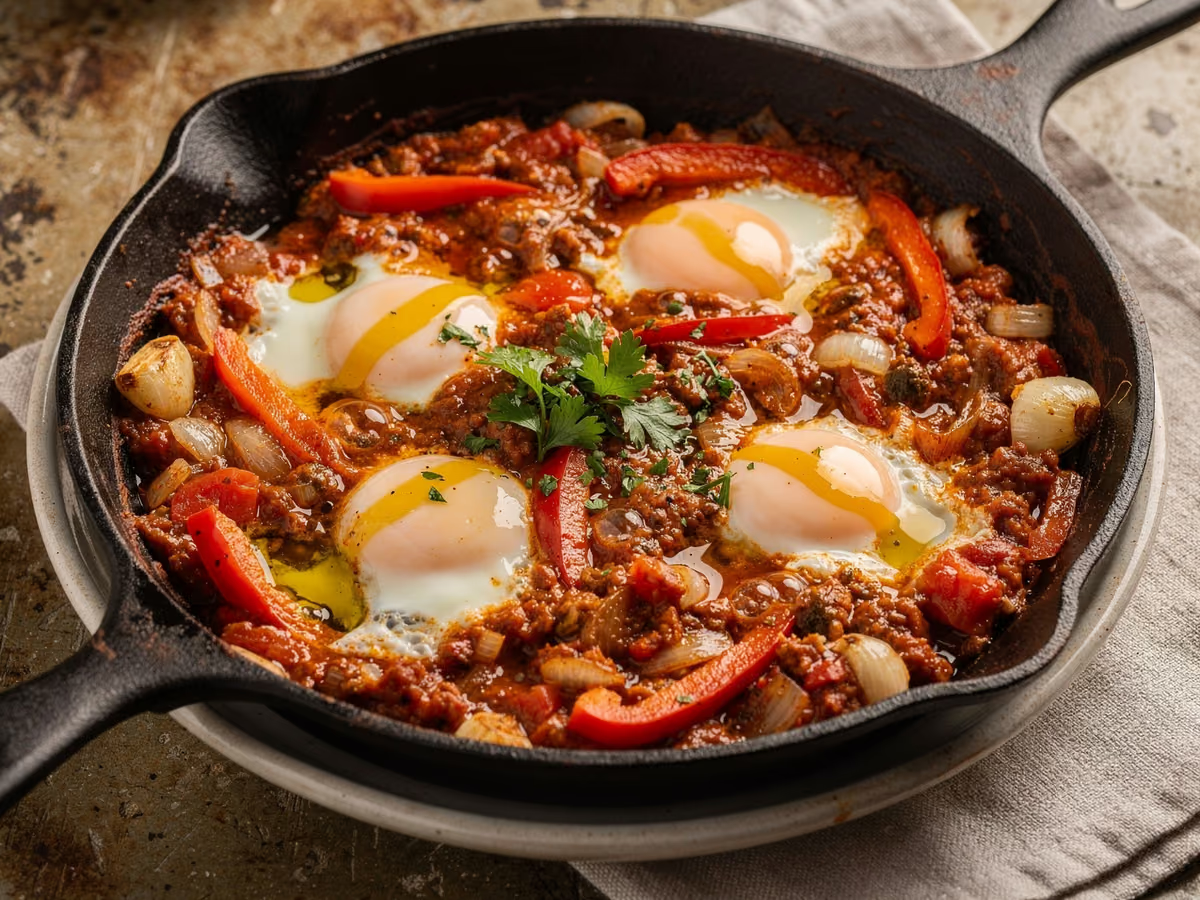
Lower the heat to low, cover the skillet, and cook for 5 to 6 minutes, until the whites are fully opaque and set while the yolks still jiggle when you nudge the pan. The lid traps steam that sets the tops of the whites, and the sauce shields the yolks from the direct heat below.
Lift the lid and check for translucent patches of white; any you find mean another minute of covered cooking. Once the whites are set, season with the remaining 0.25 tsp salt and the 0.25 tsp black pepper, and scatter over the 2 tbsp chopped parsley.
Take the skillet to the table and serve straight away, with crusty bread for scooping and a spoon for lifting out an egg whole. Shakshuka waits badly: the yolks keep firming in the residual heat of the pan, so the moment the lid comes off is the moment to eat.
Why this recipe works
Two things separate a pan that stays loose from one that holds eggs: evaporation and layering. Softening the onion and pepper in oil first builds sweetness without browning, and simmering the tomatoes uncovered for 10 minutes carries off water until the sauce is thick enough to trap each egg instead of letting it spread. Blooming the cumin and paprika in hot oil dissolves their fat-soluble flavour compounds and distributes them through the whole pan; spices added after the tomatoes taste raw and dusty. Covering the skillet traps steam that sets the tops of the whites while the yolks, sitting higher in their wells, stay soft.
Equipment
- Large skillet, about 25 to 28 cm, with a tight-fitting lid
- Wooden spoon or heatproof spatula
- Chef's knife and cutting board
- Can opener
- Small bowls for cracking the eggs one at a time
- Measuring spoons
- Spoon for pressing the wells
Kitchen notes
Kitchen notes
- A lid that leaks undermines the whole timing: if yours sits loosely, cover the skillet with a baking sheet or a double layer of foil, and check earlier than you think you need to. The eggs go from set to solid within a minute.
- Take the chill off the eggs while the sauce simmers: a few minutes in a bowl of warm water means the first and last egg in the pan cook at the same rate.
- Parsley works in two stages if you like the contrast: stir half through the sauce as you add the eggs and keep half for a raw scatter at the table.
- Cooking for more than four? Keep four wells and enlarge two of them to hold two eggs each rather than crowding in extra wells, which slows the cook and muddles the sauce.
- Chile heat belongs to the sauce stage: a pinch of cayenne or a chopped fresh chile added with the garlic lets you taste and adjust while you can still stir. Once the eggs are in the pan, there is no more stirring.
Common mistakes
- Watery sauce that pools around the eggs: the tomatoes were simmered covered, or for less than the full 10 minutes. Cook them uncovered until a spoon dragged through the sauce leaves a clear trail, and give it a few extra minutes if the tomatoes were especially juicy.
- Raw, dusty spice flavour: the cumin and paprika stewed with the tomatoes instead of blooming in the oil. They need a minute against the hot pan right after the garlic, until they smell toasted rather than like a jar.
- A bitter finish no garnish can hide: the garlic was taken past pale or left in the pan while it browned. Keep the heat at medium, add the tomatoes as soon as the garlic smells sweet, and start again if the garlic has already coloured.
- Eggs hard on the bottom before the tops set: the pan sat at too high a heat under the lid, so the sauce bubbled hard while the whites stayed glassy on top. Keep it at low, spoon a little sauce around the whites if they lag, and check from 5 minutes.
- Eggs glued to the pan: wells pressed too shallow, or no oil left under the sauce. Press each well right down to the pan and use a non-stick or well-seasoned skillet for this dish.
- Broken yolks at the table: the eggs were cracked over the pan and went in unevenly. Crack each one into a small bowl first and slide it in; you will also spot stray shell before it lands in the sauce.
Serving suggestions
- Serve at the table straight from the skillet, one egg and a deep pool of sauce per person, with crusty bread, pita or flatbread for scooping. Warm the bread first so it does not cool the sauce.
- Scatter crumbled feta over the pan at the end, or set out plain yogurt for spooning; both temper the spice and add a cool, salty note against the tomatoes.
- A crisp green salad or a cucumber and tomato salad with lemon keeps the plate light; shakshuka is rich enough without another cooked side.
- For brunch, add warm flatbread, a dish of olives and sliced cucumber, and keep the skillet over the lowest heat so second helpings stay warm without firming.
Variations
- With feta or ricotta: crumble feta or spoon ricotta over the sauce just before the eggs go in, as many versions do; the cheese softens into the sauce and adds a salty note.
- Extra vegetables: sliced mushrooms, zucchini or a handful of spinach added with the peppers; mushrooms and zucchini need a few extra minutes to soften before the tomatoes follow.
- Menemen-style, a different dish: the same sauce with the eggs scrambled through it instead of poached whole, the Turkish cousin of shakshuka; it is faster and more rustic, and best eaten with bread rather than a fork.
- Broiled finish: instead of covering the pan, run it under a hot broiler for the last few minutes if the skillet is oven-safe; the tops set without steam, but stay at the oven door, because they firm up quickly.
Refrigerator
- RefrigeratorCool the skillet within 2 hours of cooking, then refrigerate in an airtight container for up to 3 days. USDA FSIS guidance allows 3 to 4 days for leftovers; the eggs firm up as they sit, so the dish is at its best on the day it is made.
- ReheatingWarm in a covered skillet over low heat with a splash of water for 3 to 4 minutes, until hot through; USDA FSIS guidance is to reheat leftovers to 74°C. Avoid the microwave, which sets the whites rubbery long before the sauce is hot.
- FreezingNot recommended for the finished dish: the egg whites turn grainy and the sauce separates when thawed, and there is no way to bring a poached egg back once it has been frozen. The sauce alone freezes well and can be reheated from frozen.
- Make aheadThe sauce alone can be made up to 3 days ahead: cool it, refrigerate it, then reheat in the skillet, press fresh wells and cook the eggs as written. From scratch on the day, 10 minutes of prep and 25 minutes of cooking takes the pan from cold to table, and the finished dish holds off the heat for a few minutes while the table fills.
Updated:
How this recipe was developed
- Serious Eats shakshuka technique, Kenji Lopez-Alt (sauteing peppers and onion first, blooming paprika and cumin in oil, spooning sauce around the egg whites, covering until the whites just set and the yolks stay soft)
- BBC Good Food shakshuka method (uncovered simmer to thicken the sauce before the eggs go in, then cover and cook gently until just set)
- USDA FSIS safe minimum internal temperatures via FoodSafety.gov (egg dishes 71°C; leftovers reheated to 74°C)
- USDA FSIS leftovers guidance (refrigerate within 2 hours; 3 to 4 days in the fridge)
Editorial references are kept internally for verification. This page makes no claim of external certification or professional testing.
Gallery
FAQ
Real questions, straight answers
Why did my shakshuka turn out watery?
The sauce was not reduced enough before the eggs went in. Simmer the tomatoes uncovered for the full 10 minutes and judge by texture, not the clock: a spoon dragged through the sauce should leave a clear trail. Canned tomatoes vary in juiciness, so some tins need a few minutes more.
Can I use canned tomatoes instead of fresh?
Yes, and the recipe works well with them. One 800 g tin of crushed or diced tomatoes does the job; diced ones need a few extra minutes to break down, and if the brand is already salted, hold back some of the 0.5 tsp salt and add it after tasting.
How do I know when the eggs are done?
Shake the pan gently: the whites should be fully opaque and firm while the yolks still wobble. If any white is translucent, cover and cook 1 more minute. For firmer yolks, give them 1 to 2 minutes more, checking often, because the window between set and solid is narrow.
Can I make the sauce ahead of time?
Yes, up to 3 days ahead: refrigerate the cooked sauce, reheat it in the skillet, press fresh wells and crack in the eggs to finish. The sauce also freezes well on its own, though the finished dish with eggs does not.
Why did the eggs stick to the pan?
Usually the sauce was too thin, so the whites spread and found the base of the pan, or the wells were too shallow. Cook the sauce until it is thick, press deep wells right down to the pan, and use a non-stick or well-seasoned skillet.
Is it safe to serve shakshuka with runny yolks?
For most people, yes, and that is how the dish is meant to be eaten. Egg dishes are cooked through at 71°C by USDA FSIS guidance, which is firmer than these yolks; if you are cooking for anyone in a higher-risk group, such as during pregnancy or for young children, older adults or immunocompromised guests, keep the lid on until whites and yolks are fully set, or use pasteurized eggs.
Can I add cheese or other vegetables?
Yes: crumble feta or dollop ricotta over the sauce before the eggs go in, and add mushrooms, zucchini or spinach with the peppers. Mushrooms and zucchini need a few extra minutes to soften, so give them their own head start in the pan.
Ask KitchenMind about this recipe
Adapt it in one sentence — it stays grounded in the recipe.