Akoori Spiced Scrambled Eggs
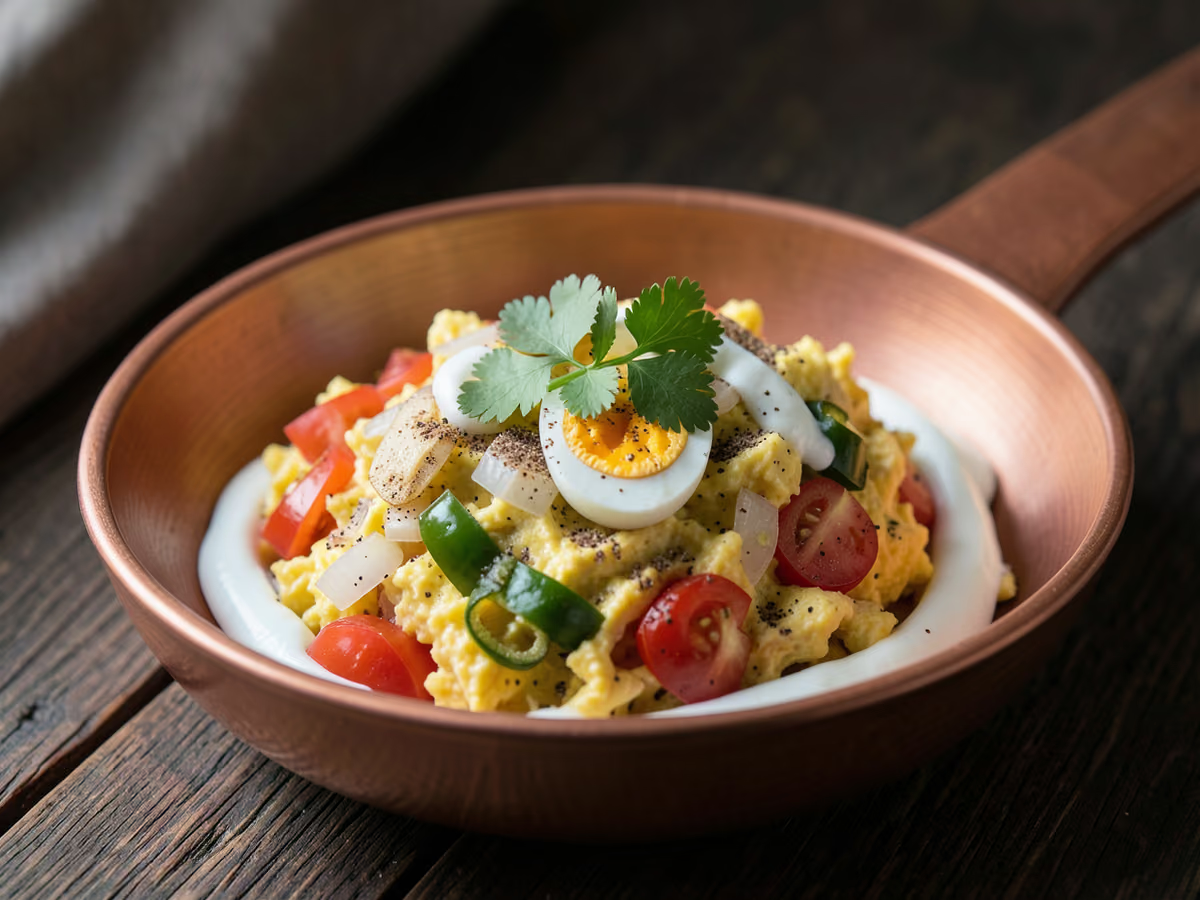
Soft, barely set curds with tomato, warm spice and a bright green chilli edge: that is akoori, the Parsi way with scrambled eggs. It is a weeknight dish, not a slow weekend project. Everything happens in one pan, and the timing is honest: 8 minutes of chopping and 10 minutes at the stove. The onion, tomato, ginger, chilli and ground spices are cooked down first, until the pan is quiet and dry. Only then do the eggs go in. Get that order right and your akoori stays creamy instead of weeping onto the plate.
- Prep
- 8 min
- Cook
- 10 min
- Total
- 18 min
- Serves
- 2
Ingredients
What you’ll need — tap to tick off as you go
- 1 tsp
- ½ tsp
- ¼ tsp
- ½ tsp
- ½ tsp
- ¼ tsp
- 20 g
- 10 g
Process
Timers built in · swap anything · ask as you cook
Beat the 6 eggs in a bowl with 0.5 tsp salt and 0.25 tsp black pepper for about 30 seconds, only until the yolks and whites come together. (A fork pulls in less air than a whisk.) Over-beaten eggs trap air that sets into spongy curds, and salt added now helps the proteins hold their moisture through the cook.
Set a wide non-stick pan over medium heat and melt 10 g of the butter, half the total. Foam, not colour. The fat is ready when it spreads and foams without darkening; pale is what you want. Browned milk solids turn nutty and scorch fast, and that flavour would sit oddly against the cumin.
Add the onion and cook for 3 to 4 minutes, stirring often, until it softens and turns translucent but takes on no colour at all. Pale onion, not gold. Golden edges mean you have the pan too hot, and any browning will read bitter once the turmeric and cumin land.
Stir in 0.5 tsp ground cumin, 0.25 tsp ground turmeric, 0.5 tsp ground coriander, the grated ginger and the chopped green chilli. Give them 30 seconds. The spices are ready when the kitchen smells warm and the butter darkens at the edge of the pan; a minute longer and the cumin turns acrid and the whole pan is lost.
Add the chopped tomato and cook it for 2 minutes, pressing the flesh against the pan with the spatula, until it breaks down into a soft pulp and the raw, acidic edge has cooked away. Dry, not saucy. Here is where your scramble goes wrong most often: raw tomato releases its water into the eggs, and no amount of stirring rescues a wet pan.
Turn the heat down to low, add the remaining 10 g of butter and let it melt without sizzling, then pour in the beaten eggs. Wait 10 seconds. The short pause lets a thin layer set on the base, which gives your first fold something to lift instead of a pan of loose liquid.
Fold the eggs slowly with a silicone spatula for 1 to 2 minutes, sweeping the set edges towards the middle and letting the loose egg run into the gaps. Small curds stay creamier. Stop while the surface still looks glossy and a little wet; it is fine if they seem underdone, because the pan carries on cooking them after the burner goes off.
Take the pan off the heat and fold the chopped coriander leaves through the curds, then squeeze over the juice of half a lime if you want a brighter finish. Taste, and add a pinch more salt if the eggs need it. Serve at once, while the curds are still soft and the coriander is at its greenest.
Why this recipe works
Egg proteins tighten as they heat, and the tighter they bind, the harder they push out their water; that is why a scramble cooked hard turns rubbery and weeps. Akoori avoids this in three ways. The tomato is cooked until its water has evaporated, so nothing dilutes the eggs in the pan. The burner stays low once they arrive, which keeps the proteins from seizing. Salting the raw eggs helps them hold moisture too. Then there is carryover heat. The pan keeps cooking whatever sits in it, so lift it off the heat while your curds still look a little wet.
Equipment
- Non-stick frying pan, 24 to 26 cm
- Silicone spatula
- Mixing bowl
- Fork for beating the eggs
- Measuring spoons
- Chef's knife and cutting board
- Fine grater for the ginger
- Instant-read thermometer (optional, to check the eggs)
Kitchen notes
Kitchen notes
- Stick with a non-stick pan and a silicone spatula for this dish; the flat edge folds the curds instead of scraping them, and scraping breaks a soft scramble into crumbs.
- Chop the chilli small, no bigger than a grain of rice, and grate the ginger straight into the pan. (A fine grater keeps the fibres short.) Big pieces land in hot, uneven bites.
- Want finer curds? Sweep the spatula in wide arcs and keep your pan slightly off the centre of the burner, where the heat is gentler.
- If the tomato still looks wet, don't worry - give it another minute over medium heat. An extra minute at the stove is always better than a watery scramble.
- Warm your plates or bowls before you serve. Warm plates are worth the small effort. Cool ceramic flattens the texture of soft eggs within a minute, and akoori cools fast.
Common mistakes
- Watery curds on the plate: the tomato was still wet or the burner ran too hot, so the egg proteins squeezed out the water they should have held. Cook the tomato a full 2 minutes until it looks dry, then keep the heat low once the eggs arrive.
- Rubbery, tough eggs: the scramble sat on the heat past the soft-curd stage. Seconds count here. The trick is to lift the pan about 30 seconds before they look done and let the residual heat finish the job.
- Flat, pale flavour: salt went in at the end, or the spices never got their 30 seconds in the fat. Season the raw eggs and let the ground spices bloom before the tomato lands.
- A bitter, singed note: ginger, chilli or cumin scorched in a pan that was too hot. Keep them moving for 30 seconds only, and if your pan already smells sharp, wash it and start again.
- Tough leftovers: reheated hard, or reheated twice. Warm your portion gently in a covered pan with a teaspoon of water, and there is no need to chase a high heat; hot all the way through is enough.
Serving suggestions
- Go with soft white rolls, pav or buttered toast, and a cup of strong tea alongside; that is the traditional setting.
- Roti, paratha or a split baguette all work just as well. Tear, scoop, and skip the cutlery.
- A quick salad of sliced onion, cucumber and lime on the side cuts the richness of the butter.
- Cold leftover akoori makes a fine sandwich: press it between buttered bread with a spoonful of chutney, and a warm portion of leftover akoori slides into a soft roll for a fast next-day breakfast.
Variations
- Eggless akoori, a different dish: use 400 g of pressed, crumbled firm tofu in place of the eggs, cook it in the same masala for 4 to 5 minutes, and add 0.25 tsp extra ground turmeric for colour plus a splash of water to keep it moist. Expect a firmer, more crumbly result than egg akoori.
- Want more heat? Keep the chilli seeds in and add a second chopped chilli with the spices, or finish with a pinch of red chilli powder bloomed in the butter.
- Tomato-free, with raw mango: Parsi cooks sometimes swap the tomato for 50 g of finely chopped raw mango, which gives a sharper, fruitier akoori. Cook it a minute longer, so it softens against the eggs.
Refrigerator
- RefrigeratorCool the pan quickly, then refrigerate any leftovers in an airtight container. They are at their best on day one and keep for up to 2 days; food safety guidance allows cooked egg dishes 3 to 4 days in the refrigerator, but the curds lose their creaminess well before that. Refrigerate within 2 hours of cooking.
- ReheatingWarm your portion gently in a covered pan over low heat, adding a teaspoon of water or a small knob of butter, or microwave it covered in 20-second bursts. A thermometer should read 74°C at the centre, the USDA figure for reheated food; hard or long reheating will toughen the eggs.
- FreezingNot recommended at all. The egg proteins turn spongy and watery once frozen and thawed, and no amount of gentle reheating brings the creamy texture back.
- Make aheadChop the onion, tomato, chilli and ginger up to 1 day ahead and keep them covered in the fridge; the ground spices can be measured into a small dish at the same time. The eggs themselves are a cook-to-order dish, so beat them fresh just before they go in.
Updated:
How this recipe was developed
- USDA FSIS Safe Minimum Internal Temperature Chart (egg dishes cooked to 71°C / 160°F; leftovers reheated to 74°C / 165°F)
- FDA, What You Need to Know About Egg Safety (refrigerate cooked egg dishes and use within 3 to 4 days; store eggs at 4°C or below)
- Serious Eats and J. Kenji Lopez-Alt on scrambled-egg technique (pre-salting, gentle heat and frequent stirring for soft curds; pulling the pan early because residual heat finishes the eggs)
- Harold McGee, On Food and Cooking (salt buffers egg proteins so they hold water; heat makes egg proteins bond tightly and squeeze moisture out)
Editorial references are kept internally for verification. This page makes no claim of external certification or professional testing.
FAQ
The questions we get asked most
Why did my akoori turn watery?
Water comes from two places: the tomato and the heat. Soft pulp carries a surprising amount of liquid, so seed the tomato and cook it the full 2 minutes until the pan looks dry. Fast cooking does the rest of the damage, because egg proteins squeeze out their water when they set too quickly. Keep the burner low, and salt your raw eggs so they hold what moisture they have.
How do I know when akoori is done?
Trust the surface, not the clock. The curds are ready when they look soft and glossy with a little wetness still showing; dry and bouncing means you went too far. No thermometer? Judge by the shine on the eggs and pull the pan early, because the residual heat adds the last 30 seconds of cooking. Cooked egg dishes are considered safe at 71°C (160°F), so if you do own a thermometer, that is the number to check as you fold.
Can I make akoori ahead of time?
Chop ahead, cook to order. The onion, tomato, chilli and ginger keep covered in the fridge for up to a day, and the spices can be measured into a small dish at the same time, so your pan comes together in 10 minutes. The scramble itself does not improve with waiting: reheated curds lose the softness that makes akoori worth the effort. If you cook it in advance anyway, take it off the heat while it is still a little underdone, cool it fast and reheat it gently.
Can I add milk or cream to the eggs?
Dairy is optional here. A tablespoon per 6 eggs is the ceiling, and traditional Parsi akoori skips it altogether. Extra liquid softens the set at first, but past a tablespoon it turns the curds loose and weeping in the pan. For a richer plate, stir a small knob of butter through the eggs after the pan leaves the heat; butter adds fat without watering down the set.
How spicy is akoori and can I make it milder?
One green chilli across 6 eggs reads as gentle warmth, even for people who normally avoid heat. Want it milder? Scrape out the seeds and the white pith, or leave the chilli out and lean on black pepper. Want it hotter? Keep the seeds in and add another chilli with the spices, then taste before you commit to more.
Can I use this recipe for an eggless akoori?
The masala works without eggs, but the result is its own dish. Use 400 g of firm tofu, pressed and crumbled, in place of the 6 eggs, and cook it in the same base for 4 to 5 minutes. Add 0.25 tsp extra ground turmeric for colour and a splash of water so the crumble stays moist. Expect a firmer texture than egg akoori. The spicing lands much the same.
What do I serve with akoori?
Soft white rolls, pav or buttered toast with a cup of chai is the classic plate, and roti, paratha or a split baguette work just as well. Akoori is rich enough to want something sharp alongside, like a sliced onion and cucumber salad. Move it from pan to bread while it is still hot. A soft, buttery akoori made for sharing beats any version left waiting on the counter, so carry the pan to the table and serve straight from it.
Ask KitchenMind about this recipe
Tell it what’s different tonight — it works within the actual recipe.