Chocolate Mug Cake
A chocolate mug cake is the five-minute answer to a chocolate craving. Stir 30 g flour, 25 g sugar, 10 g cocoa and 60 ml milk together in the mug you will eat from. Then microwave until the edges set and the middle stays soft. This version presses a square of dark chocolate into the center for a molten core and stakes everything on one habit: stop early. (A fork does the whole job; no mixer, no bowl.) Prep takes about 3 minutes. The microwave does its 2.
- Prep
- 3 min
- Cook
- 2 min
- Total
- 5 min
- Serves
- 1
Ingredients
What you’ll need — tap to tick off as you go
- 30 g
- 25 g
- 10 g
- 2 g
- 1 pinch
- 60 ml
- 15 ml
- 2 ml
- 15 g
Process
Timers built in · swap anything · ask as you cook
In a 350 ml microwave-safe mug, start with 30 g all-purpose flour and 25 g granulated sugar, then add 10 g unsweetened cocoa powder and 2 g baking powder, finishing with a small pinch of salt. Stir with your fork (a whisk just pushes flour up the sides) until the mix is uniform, with no cocoa streaks and no pale flour pockets. Any clump that survives the microwave bakes into a dry, floury lump. Leave no streaks.
Pour in the liquids: 60 ml whole milk with 15 ml neutral oil and 2 ml vanilla extract. Stick with the same fork until the batter is smooth and glossy, digging into the bottom and corners of the mug where dry flour hides. Smooth batter, better crumb. It's fine if a few small lumps survive - they vanish in the microwave; ribbons of unmixed flour do not, and they bake into pale, dry seams.
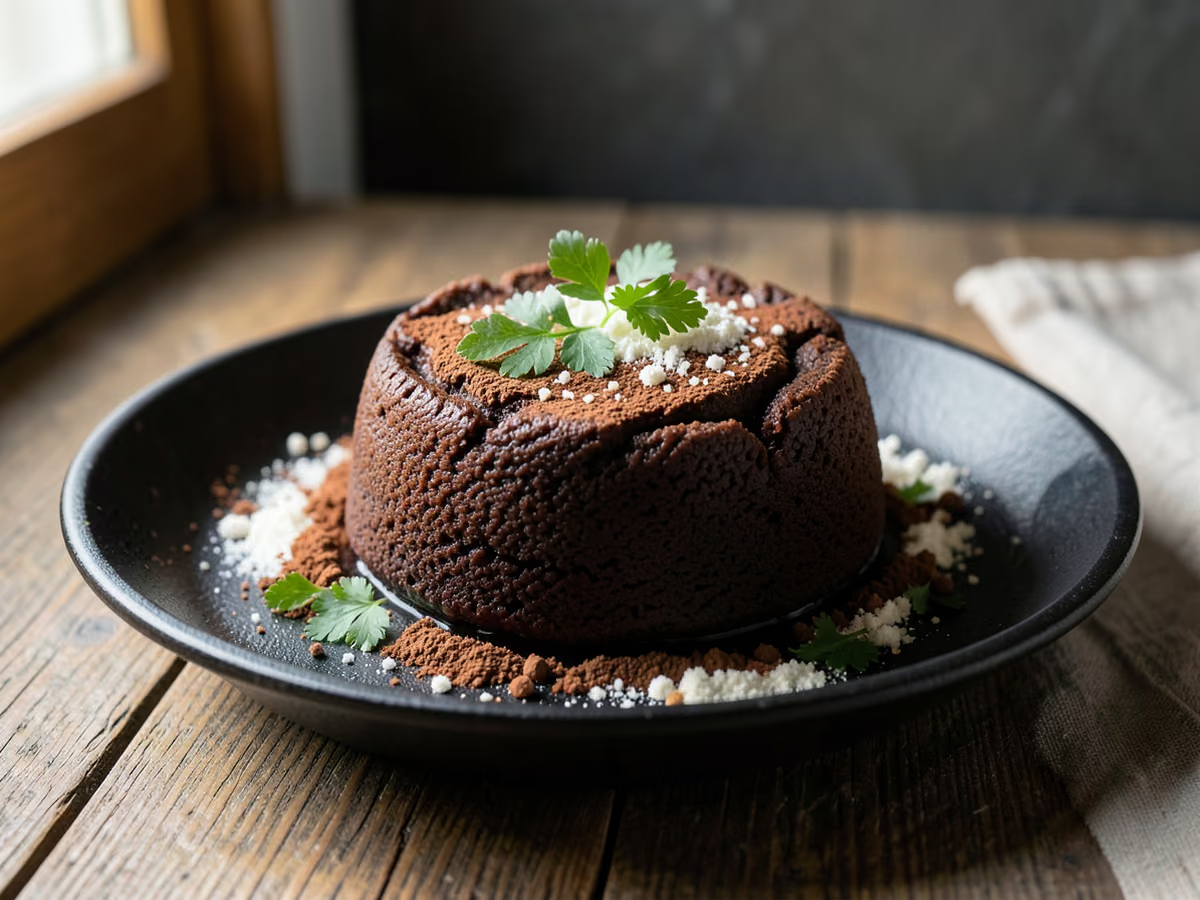
Press 15 g dark chocolate, one square or a few chips, into the middle of the batter until the piece sits just below the surface. Do not stir it through. Left intact, the chocolate melts in place during microwaving and becomes a molten center instead of merely flavoring the crumb. No need to be neat about it - one press, kept whole. Buried, not blended.
Microwave on high for 70 seconds, then look at the surface: the edges should be set and matte while the middle still looks slightly damp and glossy. Still wet in the middle? Continue in 10-second bursts, up to 30 seconds more, checking after each, because a mug cake can cross from molten to rubbery in seconds. Don't worry if the surface still looks underdone when you pull it out - that damp middle is the point. Trust your eyes, not the clock.
Let your mug stand for 1 minute before eating (less time than it takes to rinse the fork). That minute is doing work. The trapped heat finishes setting the center while the chocolate settles back into a soft core. The short wait also keeps your first spoonful from scalding. Eat warm straight from the mug with a spoon.
Why this recipe works
Microwaves heat the water inside the batter instead of the air around the mug. That is why a single serving sets in about two minutes. Why is the margin so narrow? Your microwave is fast, not gentle. There is no ramp, so the gap between set and overdone is measured in seconds. Milk and oil coat the flour proteins and limit gluten development, keeping the crumb soft rather than bready, while baking powder lifts the batter to roughly double its volume. A square of chocolate pressed under the surface stays shielded and melts into the middle. Once the structure sets, extra seconds only drive off moisture and tighten the crumb into rubber.
Equipment
- 350 ml microwave-safe mug, straight-sided ceramic rather than thin glass
- Fork for mixing
- Small kitchen scale, or measuring cups and spoons
- Microwave with a turntable
- Oven mitt or folded towel for the hot mug
- Small sieve, if the cocoa is lumpy
Kitchen notes
Kitchen notes
- If your microwave runs hot, drop to 50 percent power and add the missing time in 10-second bursts (gentler heating lets the rim and the middle finish closer together). Slow beats hot.
- What is your microwave's winning time? Find it once and write it down: a 700 W model can need 90 to 100 seconds where a 1200 W model is done at 60. The wattage on the door label is worth a look. Every oven differs.
- There's no need to heat it - just let your 60 ml of milk lose its fridge chill before mixing. Cold milk drags down the center temperature, and the extra seconds you add to compensate are what dry the outside.
- A single square of bar chocolate melts into a neater molten core than chips, which are engineered to hold their shape. Break off a thumbnail-sized piece rather than scattering chips through your batter.
- Sift the cocoa if it is clumpy before it goes into the mug (or press the lumps out with your fingertips); fine cocoa disperses into the flour in a few strokes, while lumps break open later as dry, bitter pockets.
Common mistakes
- Rubbery, bouncy crumb? The cake was cooked past the setting point, and it crosses from molten to rubbery in only about 15 seconds. Stop while the center still looks slightly damp and let the 1-minute rest finish the middle. Pull it early.
- Dry and heavy even when the timing was right: flour scooped straight from the bag can measure 50 percent heavy; spoon it into the cup and level it, or weigh the 30 g if you have a scale.
- Batter climbing over the rim: a mug smaller than 350 ml, filled past halfway, or more than 2 g of baking powder. The batter roughly doubles as it cooks, so give it room and keep the leavener at 2 g. Mug size matters.
- Set rim, raw middle: the mug sits off the turntable center or your oven heats unevenly. Center the mug, and after the first 70 seconds rotate it and continue in 10-second bursts rather than one long blast. Even heat, even set.
- No molten center: the chocolate was stirred into the batter instead of pressed in. Keep it as one piece just under the surface; stirring it through flavors the crumb evenly but leaves no pocket of melted chocolate.
Serving suggestions
- Eat it warm straight from the mug with a spoon while the center is still molten; the crumb keeps firming as it cools.
- A small scoop of vanilla ice cream on top is the classic contrast to the hot chocolate center; any leftover molten chocolate from the bottom of the mug spooned over it turns into an instant fudge sauce.
- A cold glass of milk alongside, especially for a late-night version.
- Whipped cream and a few raspberries, or a dusting of cocoa powder, if you want it to look like more than a midnight snack. Dig in while it is still warm and gooey; that first molten spoonful is the reward.
Variations
- Oven-baked version: transfer the batter to an oven-safe ramekin and then bake at 180°C for 12 to 15 minutes; pull it when the rim has set but the middle still gives slightly. The top browns more than in the microwave, and the crumb bakes more evenly.
- Drinking-chocolate version: replace the 10 g cocoa and 25 g sugar with 15 g hot chocolate powder and 15 g sugar; the crumb turns lighter and sweeter, closer to a sponge than a brownie.
- Nut or dried-fruit version: stir 1 tbsp of finely chopped nuts or raisins into the dry mix before the milk; they steal moisture, so add 1 tbsp more milk if your batter looks stiff.
- Egg-enriched version: whisking a whole egg into this single-serving batter yields a springier, more sponge-like cake, because one egg is a very large share of so small a mix. If you want that style, follow a recipe built around the egg rather than dropping one into these ratios.
Refrigerator
- RefrigeratorCover your mug with a plate and refrigerate within 2 hours of cooking; eat within 2 days. The crumb firms and turns spongy as it stands.
- ReheatingMicrowave on high in 15-second bursts until warm, about 30 to 45 seconds in total. A splash of milk on top softens the crumb.
- FreezingNot recommended. The crumb turns watery and crumbly after thawing, and the molten center cannot be recovered.
- Make aheadPre-mix the flour, sugar, cocoa, baking powder and salt in a small jar and store for up to 1 month; when a craving hits, tip your blend into a mug, stir in the milk, oil and vanilla, and microwave it on high.
Updated:
How this recipe was developed
- Serious Eats, Molten Chocolate Mug Cake (wattage caveats from a 1,000-watt development kitchen; 50 percent power technique; visual doneness cues; chocolate pressed in for a molten core; rest after baking)
- BBC Good Food, Vanilla Mug Cake and Microwave Mug Cake (developer note: tested in a 750-watt microwave, timings vary with oven power; center the mug; stop when it has stopped rising and is firm to the touch)
- Food Network, Chocolate Cake in a Mug (12-ounce mug; 90 seconds on high; do not overcook or the cake will dry out; rest 2 to 3 minutes)
- USDA FSIS, Leftovers and Food Safety (refrigerate cooked food within 2 hours; reheat leftovers to 74°C; microwave cold spots)
Editorial references are kept internally for verification. This page makes no claim of external certification or professional testing.
FAQ
The questions we get asked most
Why did my mug cake come out rubbery and dry?
Almost always overcooking. The cake keeps setting from its own stored heat after the microwave stops, so pull it out while the center still looks glossy and soft, then let it stand 1 minute. A too-small or overfilled mug also forces longer cooking, which dries the rim while the middle catches up.
How can I tell when a mug cake is done?
Read the surface: matte and set at the edges, still damp and slightly shiny in the middle. A toothpick near the edge should come out clean while one in the center carries a little moist crumb or melted chocolate. If the whole top still looks like wet batter, 10-second bursts are safer than one longer blast. When in doubt, underbake.
Why did the batter spill over the rim of the mug?
The batter roughly doubles as it cooks, so a mug under 350 ml or one filled past the halfway mark will overflow. Never past halfway. More than 2 g of baking powder also makes the batter climb harder and then sink, which is the other common cause.
Can I assemble a dry mix ahead of time?
Yes. Whisk the flour, sugar, cocoa, baking powder and salt together and store the blend in a small jar for up to 1 month; add the milk, oil and vanilla fresh when you cook it. The shortcut keeps prep under a minute.
Can I bake this in a regular oven instead?
Yes, an oven works too. Scrape the batter into an oven-safe ramekin, then bake in a 180°C oven for 12 to 15 minutes, until the edges have set and the middle still gives slightly. What you trade for the microwave's two minutes is a browner top and a more even crumb. Slower, but steadier.
Is the middle supposed to be gooey?
That is up to the chocolate. Pressed into the center and left unstirred, it melts into a soft core while the crumb sets around it; skip the chocolate for an even, tender cake, or stir it through the batter if you prefer an all-over chocolate flavor instead of a molten middle.
Can I double the recipe and cook it as one big mug cake?
No. A double batch in one mug cooks unevenly, leaving a raw middle and dry edges; make two mugs and microwave them one after the other, so each cake gets the full set-check at 70 seconds.
Ask KitchenMind about this recipe
Tell it what’s different tonight — it works within the actual recipe.