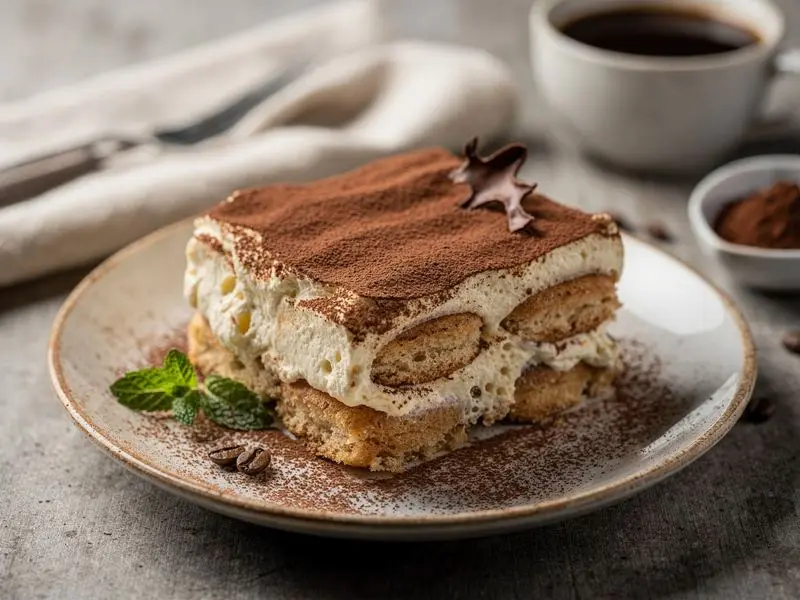
- Prep
- 30 min
- Cook
- 0 min
- Total
- 30 min
- Serves
- 6
Ingredients
What you’ll need — tap to tick off as you go
- 500 g
- 90 g
- 240 ml
- 15 g
- 1 tsp
- 1 pinch
Process
Timers built in · swap anything · ask as you cook
Brew 240 ml of strong espresso and pour it into a shallow dish. Let it cool completely to room temperature, about 20 minutes; warm coffee will dissolve the ladyfingers into mush.
Separate the 3 eggs, putting the yolks in a large bowl and the whites in a clean, grease-free bowl.
Add 60 g of the sugar to the yolks and whisk for 3 to 4 minutes until pale, thick and doubled in volume. Whisk in the 500 g mascarpone and the 1 tsp vanilla extract just until smooth, stopping as soon as it comes together.
Add the pinch of salt to the egg whites and beat to soft peaks, then add the remaining 30 g sugar a spoonful at a time and beat to glossy, stiff peaks that hold their shape when the beaters are lifted.
Fold one third of the egg whites into the mascarpone mixture to loosen it, then fold in the rest in two additions with a spatula, using gentle lifting strokes until no white streaks remain.
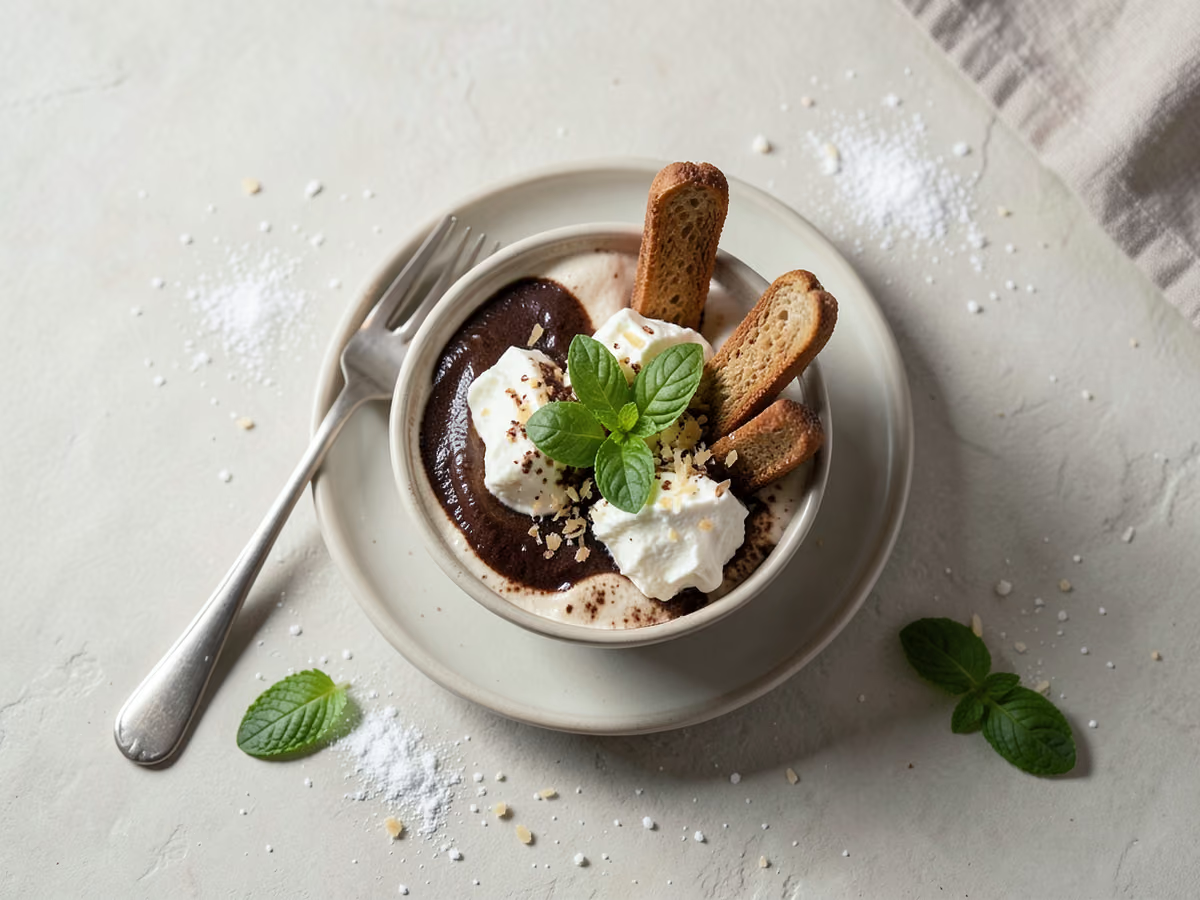
One at a time, dip 12 ladyfingers into the espresso for just 1 second per side, no longer, and place 2 of them in the base of each of 6 serving glasses, breaking them to fit if needed.
Spoon or pipe half of the mascarpone cream over the soaked ladyfingers, dividing it evenly between the 6 glasses and smoothing the tops.
Dip the remaining 12 ladyfingers in the espresso the same way and lay 2 in each glass, then top with the rest of the cream and level the surface with the back of a spoon.
Cover each glass with cling film and refrigerate for at least 4 hours, ideally overnight, so the layers set and the flavours meld.
Just before serving, sift the 15 g cocoa powder generously over the tops through a fine sieve so it dusts evenly rather than clumps.
Kitchen notes
Kitchen notes
- The single biggest mistake is over-soaking the ladyfingers. A 1-second dip per side is enough; they keep absorbing moisture from the cream as the cups chill, so if they feel firm after dipping they are correct.
- Cold mascarpone straight from the fridge folds more stably than warm mascarpone, which can split and turn grainy. If it looks loose, chill the bowl for 10 minutes before folding in the egg whites.
- Fold the egg whites in gently with a spatula, not a whisk. Beating them in deflates the air you just created and gives a dense, flat cream instead of a light, mousse-like one.
- Dust the cocoa only at the very end. Cocoa added before chilling absorbs moisture and turns into a dark, wet paste on top of the cups.
Substitutions
- ladyfingers→sponge cake fingers or plain biscuit fingers
- espresso→strong decaf coffee or 2 tsp instant coffee dissolved in 240 ml hot water
- mascarpone→full-fat cream cheese drained and beaten smooth, though the texture will be denser
- raw eggs→pasteurised eggs for anyone avoiding raw egg
Storage & reheating
Store the cups covered with cling film or a lid in the refrigerator for up to 3 days; the ladyfingers soften further each day, so they are best on day 1 or 2. Do not freeze, as the mascarpone cream separates and weeps on thawing. Serve straight from the fridge, and add a fresh dusting of cocoa just before eating if the top has absorbed into the cream.
FAQ
The questions we get asked most
Why did my tiramisu cups turn out soupy?
Either the ladyfingers were dipped too long in the espresso or the mascarpone cream was under-whipped. Dip each biscuit for only 1 second per side, and make sure the egg whites reach stiff peaks before folding. Chilling for at least 4 hours also lets the cream firm up, so do not skip it.
Can I make these tiramisu cups without raw eggs?
Yes. Use pasteurised eggs, which are safe to eat raw and behave exactly like regular eggs in this recipe. Alternatively, whisk the yolks with the sugar over a pan of simmering water until they reach 70°C, then cool completely before mixing in the mascarpone.
Can I prepare tiramisu cups a day ahead?
They are actually better made the day before, because the layers settle and the coffee flavour spreads through the cream. Cover the glasses and refrigerate for up to 24 hours, then dust with cocoa right before serving so the top stays dry and powdery.
How long do tiramisu cups keep in the fridge?
They keep for up to 3 days covered in the refrigerator, but the ladyfingers keep softening, so the texture is best within the first 48 hours. After that the base can become mushy. Always keep them cold and never leave them at room temperature for more than 2 hours.
Can I freeze tiramisu cups?
Freezing is not recommended. The mascarpone cream separates and releases water when thawed, leaving a grainy, weeping texture. If you must, freeze without the cocoa topping for up to 1 month and thaw overnight in the fridge, but expect a softer result.
What can I use instead of espresso for a kid-friendly version?
Use decaf espresso or dissolve 2 teaspoons of instant coffee in 240 ml of hot water and cool it fully. For a completely caffeine-free version, warm milk with a teaspoon of cocoa powder works well, though the flavour will be milder and more chocolatey than classic tiramisu.
Why is my mascarpone cream grainy or split?
Mascarpone that is too warm or over-beaten turns grainy. Keep it cold until the moment you mix it, and stir it into the yolks with a spatula just until smooth. If it does split, chill the bowl for 15 minutes and fold in a tablespoon of cold cream to bring it back together.
Ask KitchenMind about this recipe
Tell it what’s different tonight — it works within the actual recipe.