Kahk Eid Cookies
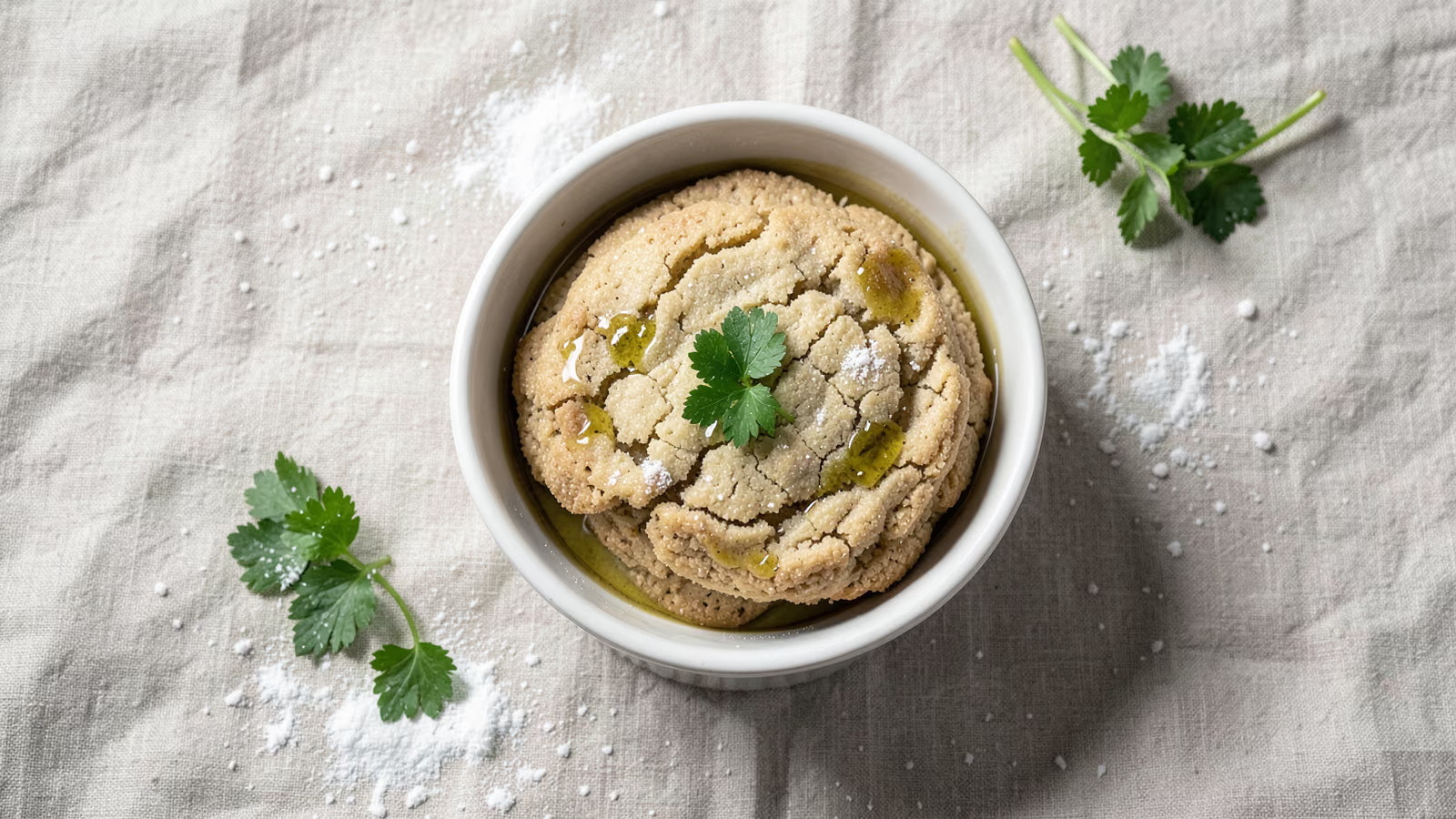
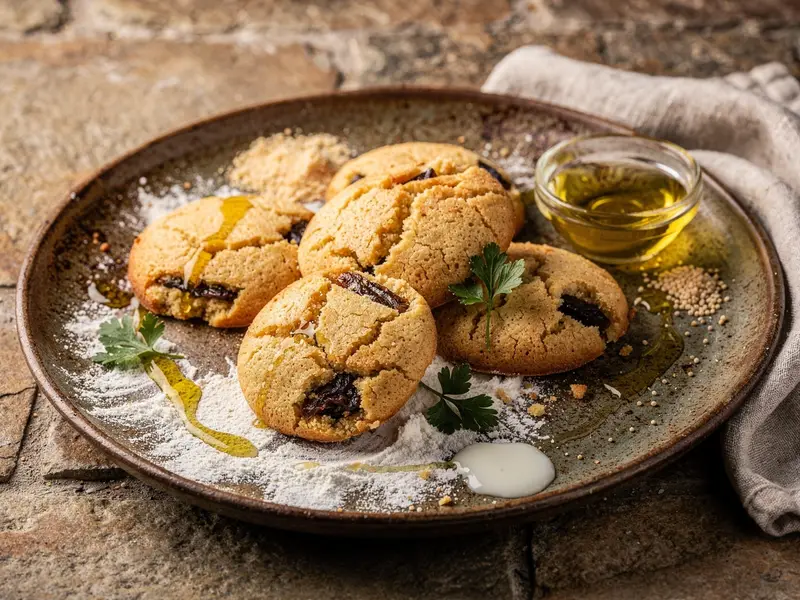
Mastic and rose water give these date-paste-filled kahk their scent. Ten cookies, 45 minutes to prep, 25 to bake, with walnuts and icing for the tops.
- Prep
- 45 min
- Cook
- 25 min
- Total
- 70 min
- Serves
- 10
Ingredients
What you’ll need — tap to tick off as you go
- 300 g
- 200 g
- 250 g
- 80 g
- 7 g
- 5 g
- ½ g
- 15 ml
- 15 ml
- 120 ml
- 250 g
- 100 g
- 60 g
- 1 g
Process
Timers built in · swap anything · ask as you cook
In a large bowl, whisk 300 g all-purpose flour, 200 g fine semolina, 80 g powdered sugar, 7 g instant dry yeast, 5 g baking powder and 1 g salt until evenly combined.
If using mastic gum, crush 0.5 g with a pinch of the powdered sugar and stir it into the dry mix.
Pour in 250 g melted ghee and rub it into the dry ingredients with your fingertips until the mixture looks like damp sand with no dry flour pockets.
Add 15 ml rose water, 15 ml orange blossom water and 120 ml lukewarm whole milk, then knead just until a soft, slightly oily dough forms, about 2 minutes. Do not over-knead.
Cover the bowl and let the dough rest at room temperature for 30 minutes so the semolina hydrates and the dough firms up enough to shape.
Meanwhile, divide 250 g date paste into 20 small balls about 12 g each. If using walnuts, mix 100 g chopped walnuts with 1 tbsp of the date paste to bind, and roll into 10 balls.
Divide the rested dough into 20 equal pieces, about 40 g each, and roll each into a smooth ball.
Flatten a dough ball in your palm into a 7 cm round, place a date or walnut ball in the centre, pull the edges up and pinch firmly to seal, then roll gently into a smooth ball again.
Arrange the filled balls on a lined baking tray, spacing them 3 cm apart, and press each with a kahk mould or the back of a fork to make a decorative pattern.
Heat the oven to 180°C and bake the kahk on the middle rack for 20 to 25 minutes, until the bottoms are golden and the tops are still pale, with no dark browning.
Cool the cookies completely on the tray for 20 minutes, then dust generously with 60 g icing sugar and serve.
Kitchen notes
Kitchen notes
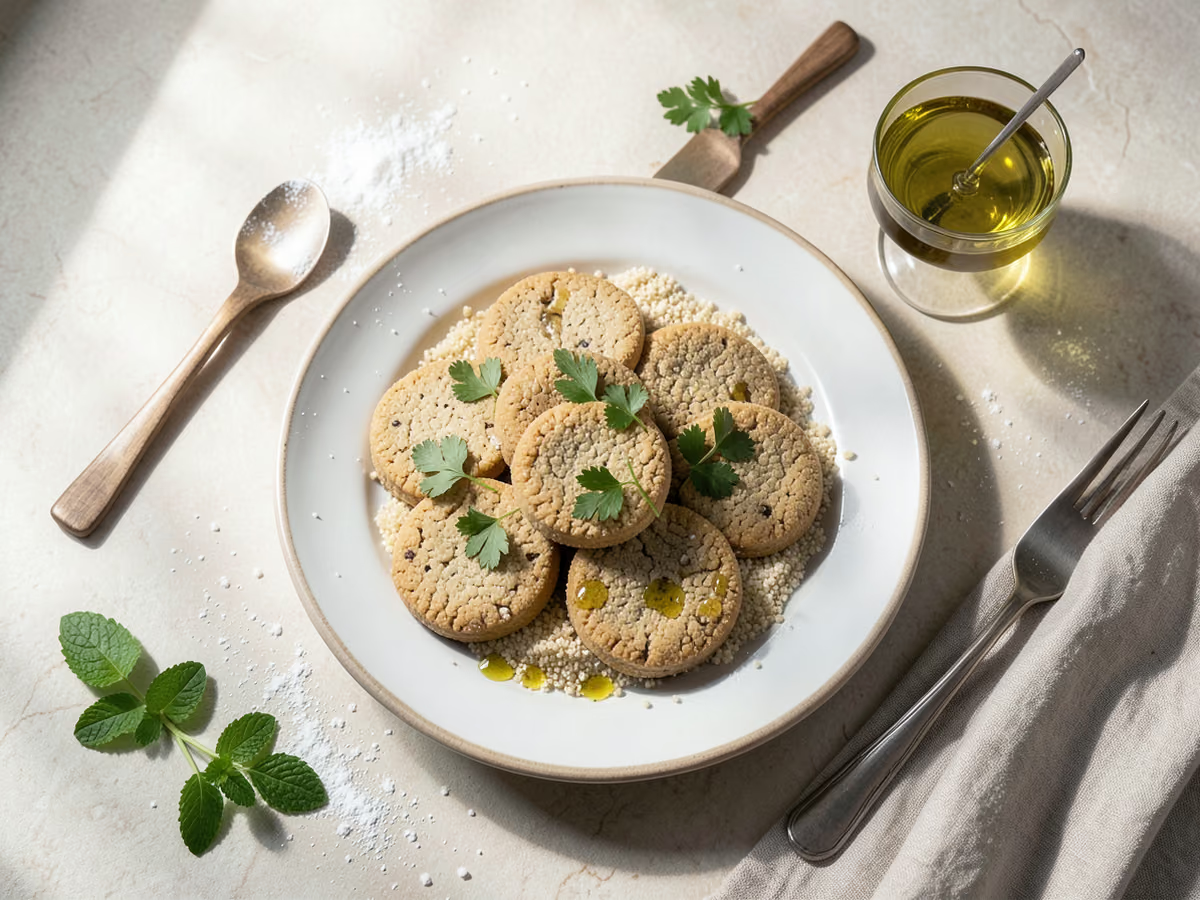
- The most common mistake is overbaking: kahk should stay pale on top and only colour underneath. If the tops brown, the cookies turn hard and dry once cool.
- Resting the dough is not optional. Semolina needs those 30 minutes to absorb the ghee and milk; shaping too early gives crumbly, cracking cookies.
- Seal the filling properly by pinching the dough edges firmly. Any gap lets steam escape and the cookie splits open in the oven.
- If the dough feels too soft to shape, chill it for 10 minutes rather than adding more flour, which would make the kahk tough.
Substitutions
- ghee→clarified butter or a good-quality vegetable shortening for a dairy-free version
- whole milk→lukewarm oat milk or warm water
- date paste→thick apricot jam or a mix of chopped pistachios and sugar
- rose water→1 tsp vanilla extract if you prefer a milder flavour
Storage & reheating
Store cooled kahk in an airtight tin at room temperature for up to 2 weeks; the ghee preserves them well. If you dusted them with icing sugar, add the sugar only just before serving or it will dissolve into the cookies. For longer storage, freeze the baked cookies in a zip-top bag for up to 2 months and thaw at room temperature for 1 hour. To refresh, warm them in a 150°C oven for 5 minutes, then cool and dust with fresh icing sugar.
FAQ
The questions we get asked most
Why did my kahk crack open in the oven?
Cracking almost always means the filling was too wet or the dough seal was incomplete. Use firm date paste rather than loose jam, and pinch the dough edges together firmly before rolling smooth. Also chill the shaped cookies for 10 minutes before baking so the dough sets slightly.
Can I make kahk dough ahead of time?
Yes. The dough can be made, covered and refrigerated for up to 24 hours. Let it sit at room temperature for 20 minutes before shaping, because cold dough cracks when you try to wrap it around the filling. You can also shape and freeze the unbaked cookies for up to 1 month, then bake from frozen, adding 3 to 4 minutes to the baking time.
How do I know when kahk is done?
The tell-tale sign is a pale top with a golden-brown base. Lift one cookie with a spatula after 20 minutes; if the bottom is evenly golden and the top has no colour, it is ready. If the top is browning, take them out immediately, as they will harden as they cool.
Can I use butter instead of ghee?
Butter works but contains water and milk solids, so the cookies brown faster and keep for a shorter time. If using butter, melt it first and skim off the foam, or use clarified butter. Ghee gives the classic sandy texture and long shelf life.
Why is my kahk dry and crumbly?
Dry kahk usually comes from overbaking or from skipping the dough rest. The semolina needs 30 minutes to absorb the ghee and milk; without it, the dough stays thirsty and bakes dry. Also measure the flour by weight, as extra flour makes the dough stiff.
Can I fill kahk with something other than dates?
Yes. A popular alternative is a mixture of chopped walnuts or pistachios bound with a little sugar syrup or date paste. You can also use thick apricot jam or a cinnamon-sugar nut filling. Keep any filling firm and not runny so it does not leak during baking.
How should I store kahk so the sugar does not melt?
Keep the baked, cooled cookies in an airtight tin at room temperature for up to 2 weeks, but leave them undusted. Icing sugar draws moisture from the air and the cookie, so dust each cookie just before serving. If you want to store them dusted, add a paper towel layer to the tin to absorb moisture.
Ask KitchenMind about this recipe
Tell it what’s different tonight — it works within the actual recipe.