Laksa Noodle Soup
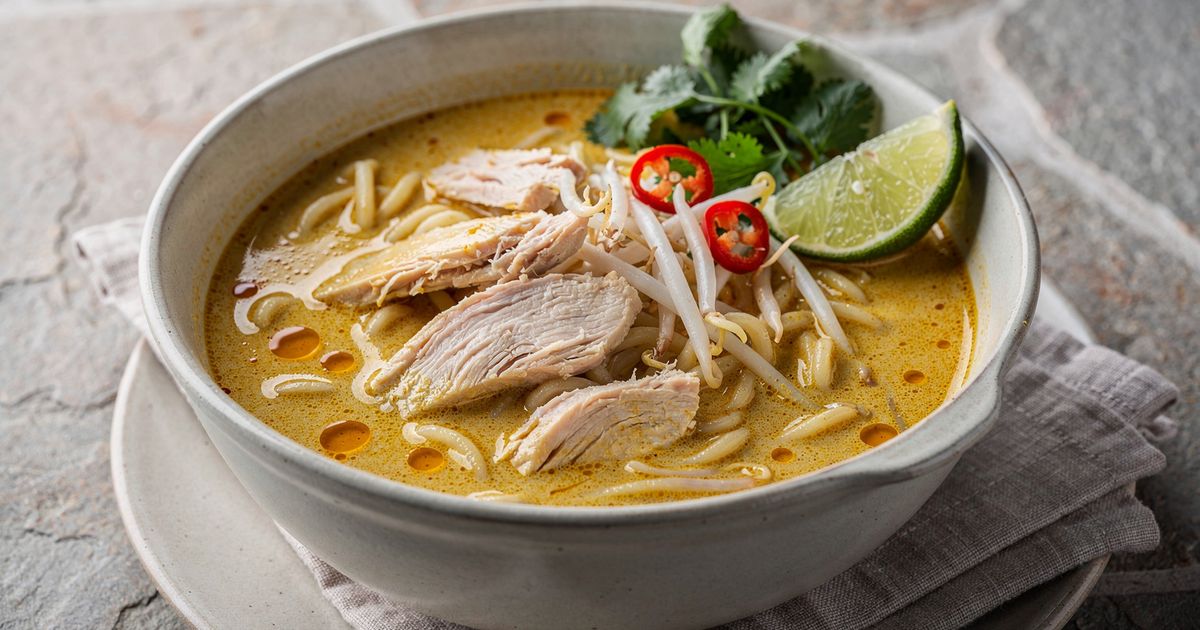
Laksa is Southeast Asia's great coconut-curry noodle soup: rice vermicelli in a broth built from laksa paste bloomed in oil, chicken broth and full-fat coconut milk, with chicken, shrimp and tofu puffs, finished with raw bean sprouts, cilantro and lime. Cooking it at home comes down to two things — frying the paste long enough to lose its raw edge, and keeping the coconut milk at a lazy simmer so it stays silky. From first chop to bowl it takes about 55 minutes, most of it hands-off once the broth is simmering.
- Prep
- 25 min
- Cook
- 30 min
- Total
- 55 min
- Serves
- 4
Ingredients
What you’ll need — tap to tick off as you go
- 200 g
- 4 tbsp
- 400 ml
- 800 ml
- 300 g
- 200 g
- 100 g
- 150 g
- 20 g
- 2 tbsp
- 1 tsp
Process
Timers built in · swap anything · ask as you cook
Soak the 200 g dried rice vermicelli noodles in a bowl of warm water, not boiling, for 10 minutes, until the strands bend without snapping but still feel firm at the core. Drain them well and keep them covered. The hot broth finishes the cooking; noodles soaked to full softness lose their spring and turn to paste in the bowl.
Heat the 2 tbsp vegetable oil in a large pot over medium heat, add the 4 tbsp laksa paste and fry it for 2 to 3 minutes, stirring constantly, until it darkens to a deep brick red and a slick of oil pools at the edge of the paste. This is the step that cooks out the raw edge of the aromatics and carries their flavour into the fat.
Pour in the 800 ml chicken broth and 400 ml coconut milk, scraping the paste off the bottom of the pot, and bring it just to the point where small bubbles break the surface — a gentle 85 to 95°C simmer, never a rolling boil. Simmer for 10 minutes, stirring now and then, to meld the flavours. Boiling here is what makes a coconut broth grainy and oily.
Add the 300 g sliced chicken thighs and the 100 g tofu puffs, if using, and simmer gently for 8 to 10 minutes. The chicken is done when it is opaque through and reads 74°C on an instant-read thermometer, the USDA minimum for poultry, and the puffs have swollen and gone glossy. Thigh meat tolerates this simmer without drying out.
Add the 200 g shrimp and cook for 2 to 3 minutes, just until they turn pink and opaque and curl into a loose C. Taste, then season with the 1 tsp salt as needed. Shrimp pass from tender to rubbery in seconds, which is why they go in at the end and need only to be cooked through.
Divide the drained noodles among four warmed deep bowls and ladle the hot soup over them, making sure each bowl gets chicken, shrimp and tofu puffs. The noodles soften further as they sit in the broth, so work quickly and leave them a little firm; keep the extra broth hot for second helpings.
Top each bowl with the 150 g bean sprouts, the 20 g chopped cilantro and a squeeze of lime from the 2 wedges, then serve immediately with the rest of the lime on the side. The sprouts are added raw for crunch, and the lime goes in at the table because acid added to the pot early can destabilise the coconut milk.
Why this recipe works
Frying the paste in oil boils off its water and dissolves the aromatics' fat-soluble compounds into the fat, and the moment the oil separates and pools at the edge of the paste, the raw edge has cooked out — liquid added before that leaves the broth tasting green. Coconut milk is a fragile oil-in-water emulsion held together by coconut proteins, so the pot is kept at a lazy simmer: a rolling boil unravels those proteins and the fat pools out as oil. Lime goes in off the heat, where its acid cannot do the same, and the noodles soak rather than boil, so they finish cooking in the bowl instead of collapsing.
Equipment
- Large heavy-bottomed pot or Dutch oven, 4 to 5 litres
- Instant-read thermometer
- Wooden spoon or heatproof spatula
- Large heatproof bowl, for soaking the noodles
- Colander or fine-mesh sieve
- Chef's knife and cutting board
- Ladle
- Four deep serving bowls
Kitchen notes
Kitchen notes
- Stir or shake the can of coconut milk before measuring; if the fat has set solid in a cool kitchen, stand the can in warm water for a few minutes. Milk that goes into the pot smooth and even emulsifies without streaks.
- Rinse the serving bowls with hot water and dry them just before the soup is ladled in — a warm bowl keeps the broth at the temperature it was cooked to instead of cooling it on contact.
- Spoon some of the red-orange oil that floats on the finished broth over each bowl; it carries most of the paste's aroma and gives the chilli-oil finish that hawker stalls add at the pass.
- Taste the broth after the 10-minute simmer, not before. The shrimp paste, salt and chilli in the laksa paste need that time to spread through the pot; straight after the liquids go in it tastes flatter than it will.
- Have the sprouts, cilantro and lime cut and waiting before the broth goes on. From the moment the shrimp go into the pot, the soup is two minutes from the table.
Common mistakes
- A split, oily broth: the coconut milk hit a rolling boil, or the lime juice went in while the pot was still hot. Keep it at a lazy simmer, add lime off the heat, and if it does look grainy, pull the pot off the heat and whisk in a splash of warm broth — the texture usually comes back.
- A raw, flat-tasting broth: the laksa paste met the liquid before it had properly fried. Give the full 4 tbsp 2 to 3 minutes in the oil, until the colour deepens to brick red and the oil separates at the edges, before any broth goes in.
- Mushy noodles: the vermicelli soaked past pliable, or they sat in the soup while the bowls waited. Ten minutes in warm water is enough, so drain them well and ladle the broth over at the last moment — they keep cooking in the bowl.
- Rubbery shrimp or dry chicken: everything went into the pot at once. The chicken and tofu puffs need their full 8 to 10 minutes first; shrimp join only for the final 2 to 3, and the chicken comes out moist at 74°C.
- A thin, watery bowl: light coconut milk or extra water in the pot. Use full-fat coconut milk and keep the balance as written, 800 ml broth to 400 ml coconut milk, so the broth stays rich enough to coat the noodles.
Serving suggestions
- Serve it piping hot, within about 10 minutes of the shrimp going in; the broth is silkiest fresh off the simmer and the noodles soften as they stand.
- Put the remaining lime wedges and cilantro on the table so everyone can finish their own bowl — a late squeeze of lime at the table keeps the pot smooth for second helpings.
- A cool, crisp side cuts the richness: thinly sliced cucumber with a pinch of salt, or a light cucumber and tomato salad.
- Something cold and unsweetened alongside — iced barley tea or sparkling water — resets the palate between spoonfuls when the paste is hot.
Variations
- Poached-chicken finish: simmer the whole thigh fillets in the broth until they read 74°C, lift them out, slice, and return them with the shrimp — the broth picks up more chicken flavour and the meat stays extra juicy.
- Fresh rice noodles: swap the dried vermicelli for fresh rice noodles or flat rice sticks, the same 200 g, and give them only a brief dip in hot water before the bowls are built; wider strands hold more broth but soften faster, so serve at once.
- Seafood-forward version: leave the chicken out and use more shrimp, kept to their usual last 2 to 3 minutes so nothing turns rubbery; the broth turns lighter and the lime at the end keeps it bright.
- Vegetarian version, a different bowl rather than the same dish: use vegetable broth, leave out the chicken and shrimp, and lean on extra tofu puffs and mushrooms instead — and check that the laksa paste is free of shrimp paste, because many are built on it.
Refrigerator
- RefrigeratorCool the soup quickly, within 2 hours of cooking, and refrigerate in a sealed container; it keeps for 3 to 4 days, the FSIS window for leftovers, though it is at its best within 2. Store noodles separately if you have extra, or leave them out and cook fresh ones, so they do not swell into the liquid.
- ReheatingReheat gently on the stovetop over low heat, stirring, until steaming and 74°C throughout, the FSIS minimum for reheated leftovers; boiling it hard will split the coconut milk. In the microwave, use 1-minute bursts and stir between them. Cold broth that looks grainy and set is just coconut fat solidifying — gentle heat brings it back smooth.
- FreezingNot recommended, because freezing breaks the coconut milk emulsion and the noodles thaw spongy, and the broth never quite returns to its silky texture. If you want to save some anyway, freeze the broth alone, without noodles or toppings, then thaw it in the fridge and reheat it very gently, whisking it back together.
- Make aheadThe broth can be made a day ahead and refrigerated — it only deepens — leaving just the last 10 minutes of cooking for the night itself. Soak the noodles and cut the sprouts, cilantro and lime while the broth reheats, then cook the chicken and shrimp to order so they stay tender.
Updated:
How this recipe was developed
- USDA FSIS Safe Minimum Internal Temperature Chart (poultry 74°C; fish and shellfish 63°C; reheated leftovers 74°C)
- USDA FSIS Leftovers and Food Safety guidance (refrigerate within 2 hours; keep leftovers 3 to 4 days in the fridge; reheat to 74°C)
- Felicity Cloake, The Guardian — How to cook the perfect laksa (frying the paste before the liquid; coconut milk whisked into the simmering broth; lime and herbs added off the heat)
- Serious Eats — Thai green curry with chicken (frying the paste until the coconut fat splits and separates, then finishing at a gentle simmer with thinner coconut milk)
Editorial references are kept internally for verification. This page makes no claim of external certification or professional testing.
FAQ
The questions we get asked most
Why did my laksa broth split or look grainy?
Coconut milk is a fragile emulsion of fat held in water by coconut proteins, and it gives way when it is boiled hard or when acid arrives before the heat is off. Keep the pot at a gentle simmer once the coconut milk is in, squeeze the lime over the bowls rather than into the pot, and if it does start to look oily, pull it off the heat and whisk in a splash of warm broth — the texture usually comes back before the broth is truly ruined.
How can I tell when the chicken and shrimp are cooked?
The chicken thighs need 74°C at the thickest point, the USDA minimum for poultry, and look opaque all the way through; they go in first and get the full 8 to 10 minutes. Shrimp are far faster, 2 to 3 minutes, until they are pink and opaque and curl into a loose C. Shrimp folded into a tight ring went a minute too far; the USDA minimum for shellfish is 63°C, and they will pass it almost immediately in simmering broth.
Can I make the broth ahead of time?
Yes, and it is better for it — the broth deepens overnight. Fry the paste and simmer the broth and coconut milk as written, cool it quickly, and refrigerate; on the night, reheat it gently and cook the chicken, shrimp and noodles to order so nothing overcooks. It falls inside the same 3 to 4 day fridge window as any soup.
Can I freeze leftover laksa?
Not well. Freezing breaks the coconut milk emulsion and the rice noodles thaw spongy, and the broth never comes back to its silky texture. If you have extra, freeze the broth alone without noodles or toppings, then thaw it in the fridge and reheat it very gently, whisking as it warms.
Can I make this vegetarian?
Yes, as its own version of laksa: use vegetable broth, leave out the chicken and shrimp, and add extra tofu puffs and mushrooms in their place. The trap is the laksa paste itself — many are built on dried shrimp or shrimp paste, so read the label and choose a paste without them.
Why are my noodles soft and starchy?
They soaked past the pliable stage or waited in the soup while the bowls were built. Ten minutes in warm water is enough for vermicelli — they should bend without snapping but still feel firm at the core — and the hot broth finishes the cooking at the table, so drain them well and ladle the soup over at the last moment.
How spicy is laksa, and can I make it milder?
All of the heat lives in the paste, and brands differ widely, so the same 4 tbsp can range from gentle to fiery. Keep the full measure for flavour but soften each bowl with a spoonful of the coconut milk and a late squeeze of lime; for a milder pot next time, buy a milder paste rather than diluting this one with water.
Ask KitchenMind about this recipe
Tell it what’s different tonight — it works within the actual recipe.