Beef Noodle Soup
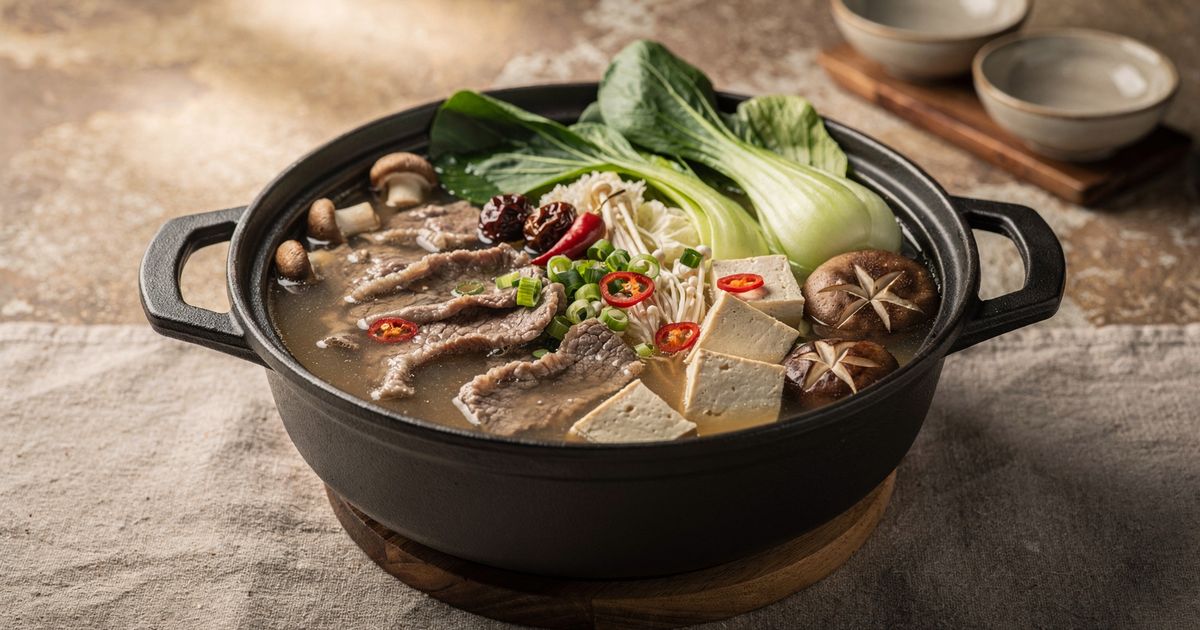
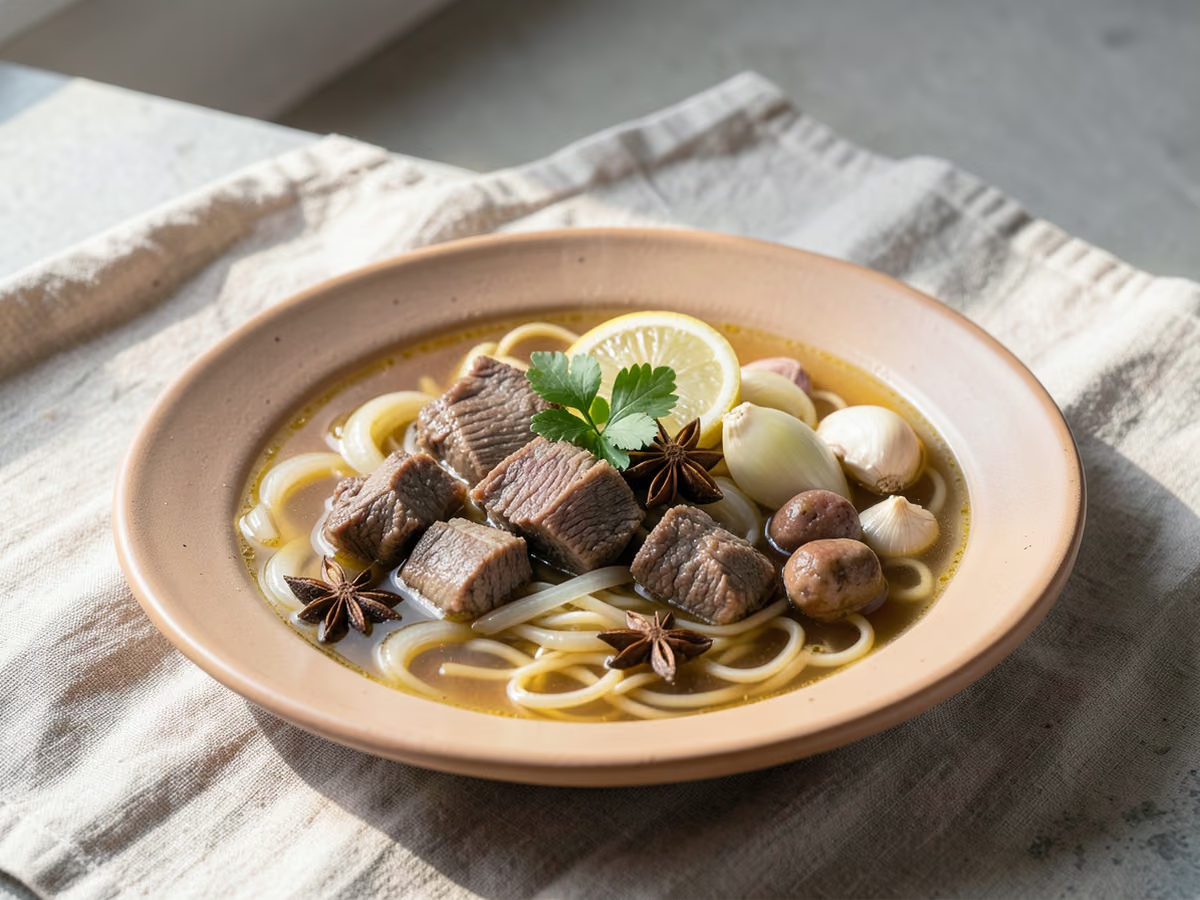
Beef noodle soup is the Chinese bowl worth slowing down for: 800 g of chuck seared until deeply browned, then braised with star anise, cinnamon, ginger and two soy sauces until the meat gives way under a fork and the broth turns dark, glossy and gently spiced. Four servings, about 20 minutes of prep and a lazy two-hour simmer that mostly looks after itself. The noodles cook separately at the end so they stay chewy, with bok choy, green onions and cilantro going in fresh.
- Prep
- 20 min
- Cook
- 120 min
- Total
- 140 min
- Serves
- 4
Ingredients
What you’ll need — tap to tick off as you go
- 800 g
- 2 tbsp
- 5 slices
- 4 cloves
- 80 ml
- 2 tbsp
- 1 tbsp
- 2 l
- 1 tsp
- 400 g
- 1 cup
Process
Timers built in · swap anything · ask as you cook
Pat the 800 g of beef chunks dry with paper towels. Heat the 2 tbsp vegetable oil in a large pot over medium-high heat until it shimmers, then sear the beef in batches, about 5 minutes each, until well browned on all sides. Dry meat in an uncrowded pot browns instead of steaming, and the crust left on the base is the flavour the broth is built on. Transfer each batch to a plate.
In the same pot over medium heat, add the sliced onion, the 5 ginger slices, 4 smashed garlic cloves, 3 star anise and the cinnamon stick. Cook for about 2 minutes, stirring, until the onion softens at the edges and the spices smell warm and toasted rather than raw. Frying them in the oil now is what blooms their aroma through the whole pot.
Return the beef and its juices to the pot with the 80 ml soy sauce, 2 tbsp dark soy sauce, 1 tbsp sugar and 2 l beef broth, scraping up the browned base as it boils. Cover, reduce to a low simmer for 1.5 to 2 hours at 90–95°C: a hard boil tightens the muscle fibres, while gentle heat melts collagen until a fork slides in cleanly and the meat holds its shape.
While the soup simmers, bring a second pot of water to a rolling boil and cook the 400 g noodles per the package until just tender, with a slight chew at the centre; drain and toss with a few drops of oil to stop sticking. In the same water, blanch the 4 halved bok choy for 1 minute, then drain. Cooking them apart keeps the broth clear, and the greens stay vivid and crisp-tender.
Taste the broth and add the 1 tsp salt only if it needs it: the soy sauces have been seasoning the pot for two hours and reduction concentrates them. Fish out the 3 star anise, the cinnamon stick and the ginger slices with a slotted spoon. Whole spices left in the hot broth keep steeping and turn it sharp and licorice-heavy, so lift them out now that the beef is tender.
Divide the drained noodles between 4 bowls and ladle the beef and hot broth over them, so the noodles loosen and heat through. Tuck the bok choy into each bowl, scatter over the 3 sliced green onions and the 1 cup chopped cilantro, and serve straight away: the longer the noodles sit in the broth, the more liquid they drink.
Why this recipe works
Searing is where the flavour starts: dry meat in an uncrowded pot browns instead of steaming, and the dark film on the base dissolves into the broth as it simmers. The whole spices go into the hot fat before any liquid, because star anise and cinnamon are oil-soluble; bloomed that way, they perfume the whole pot instead of tasting dusty. The long, gentle cook just below a boil converts the chuck's collagen into gelatin, which makes the meat fork-tender and gives the broth body; a hard boil would tighten the fibres and leave the beef stringy. Noodles cooked in their own pot keep their starch out of the broth, so it stays dark and clear.
Equipment
- Large heavy pot or Dutch oven, 4-5 l, with a tight-fitting lid
- Second large pot for boiling the noodles and blanching
- Chef's knife and cutting board
- Slotted spoon or spider skimmer for lifting out the beef and whole spices
- Tongs
- Colander
- Measuring jug and measuring spoons
- Fine-mesh sieve, for straining the broth if you want it clearer
Kitchen notes
Kitchen notes
- Dried and fresh wheat noodles both work here, and the 400 g measure is the same. Dried noodles usually take 5 to 7 minutes in boiling water where fresh take 2 to 3; trust the package time, then bite a strand, which should still resist slightly.
- Keep the noodles out of the soup until serving, and store leftovers the same way: broth and beef in one container, noodles in another. Noodles left in the broth keep absorbing liquid, and they are soft by the time the pot is reheated.
- Heat is a dial in this bowl, not a fixed setting: fry dried red chilies or a spoonful of fermented chili bean paste with the aromatics to build warmth into the broth, or keep the pot mild and pass chili oil at the table.
- When there is time, chill the finished pot overnight: the fat sets into a disc you lift off in one piece, the broth looks clearer, and the flavour deepens, so many cooks think day-two soup is the better bowl.
- Watch the pot level in the last hour rather than the clock: if the broth has dropped below the top of the meat, top it up with hot water so the chunks braise evenly and do not dry at the edges.
- A spice bag or large tea infuser makes the end of the simmer easy: star anise, cinnamon and ginger go in together, and retrieval is a single lift with nothing left steeping in the broth.
Common mistakes
- Chewy, rubbery beef: the pot boiled rather than simmered, or the braise was cut short before the collagen finished melting. Hold it at a lazy 90-95°C and give it more time in 15-20 minute increments; a fork should slide in cleanly at 1.5 to 2 hours while the chunk still holds its shape.
- Dry, stringy beef: the opposite failure, cooked hours past tender or held at a boil that wrings out moisture. Stop as soon as a chunk is fork-tender; if the meat is already shredding into strings, serve it in plenty of broth and pull the pot earlier next time.
- Thin, flat broth: the beef steamed instead of browning because the pot was crowded, or the spices never got their 2 minutes in the fat. Sear in batches, let the aromatics soften before the liquid goes in, and finish with a splash more soy sauce rather than salt alone, which seasons without thinning the colour.
- Cloudy or greasy broth: a hard boil emulsifies fat into the liquid, and noodles cooked in the pot add starch. Keep the simmer gentle, boil the noodles separately, and skim the surface, or chill the pot overnight and lift the solid fat off in one piece.
- Mushy noodles: they overcooked, or sat in the broth while the table was being set. Cook them just to tender, add them at serving time, and store any leftovers with the noodles in their own container rather than in the soup.
- Too salty or over-reduced: 2 l of broth concentrates through the long simmer and both soy sauces carry salt. Use low-sodium soy and broth if you can, hold the salt until the end, and loosen a reduced pot with a little hot water.
Serving suggestions
- Serve in warmed bowls with the broth at a full simmer: this soup loses heat quickly once ladled, and lukewarm broth makes the noodles feel heavy.
- Pickled mustard greens are the traditional Taiwanese topping, tangy and crunchy against the rich broth; fry them briefly with a little garlic, or spoon them straight from the jar.
- Something cold and unsweetened alongside cuts the spice and the richness: iced tea, cold barley tea or sparkling water with a wedge of lime.
- A plate of steamed greens or a smashed cucumber salad rounds out the meal; if the noodles are gone before the broth is, ladle what is left over plain rice.
Variations
- Sichuan-leaning version: add dried red chilies and a spoonful of fermented chili bean paste when the aromatics go in, and finish the bowls with chili oil; the broth turns deep red and carries its warmth rather than a raw edge.
- Tomato version: stir a couple of chopped ripe tomatoes in with the broth for the softer, sweeter style some shops serve; the broth turns redder and the acidity rounds off the soy.
- Gluten-free bowl: rice noodles plus wheat-free soy sauce in place of the wheat noodles and both soy sauces make this a different, lighter dish, so cook the rice noodles to their own package time and serve immediately.
Refrigerator
- RefrigeratorCool the pot within 2 hours of cooking, then refrigerate the broth and beef in an airtight container for 3 to 4 days. Keep any leftover noodles in their own container, because they soften quickly in the liquid, and skim or lift the fat from the surface before reheating for a leaner bowl.
- ReheatingBring the broth and beef to a rolling boil, or reheat to 74°C throughout, adding a splash of hot water if the broth has reduced. Reheat noodles separately, about 1 minute in boiling water or 30 seconds in the microwave, and combine just before eating.
- FreezingFreeze the soup without the noodles for up to 3 months: cool it fast, portion into containers with a little headspace, and thaw overnight in the refrigerator. Noodles turn mealy on thawing, so cook fresh ones to go with the reheated broth.
- Make aheadThis is a good make-ahead pot: the broth and beef can be cooked up to 3 days ahead, and many cooks think it tastes better on day two, once the flavours have married and the fat has set for lifting. Cook the noodles fresh and assemble the bowls at serving time.
Updated:
How this recipe was developed
- USDA FSIS safe minimum internal temperatures (whole cuts of beef 63°C with a 3-minute rest; cooked leftovers reheated to 74°C)
- USDA FSIS leftovers and food safety guidance (refrigerate within 2 hours; soups and stews 3-4 days refrigerated and up to 3 months frozen)
- Serious Eats, Taiwanese Beef Noodle Soup (sear the beef in batches until well browned; simmer until tender; cook the noodles separately and serve immediately)
- Red House Spice, Taiwanese Beef Noodle Soup (fry the aromatics before the liquid goes in; simmer 1.5-2 hours until tender; strain the broth; leftovers 3 days refrigerated or 3 months frozen)
Editorial references are kept internally for verification. This page makes no claim of external certification or professional testing.
FAQ
The questions we get asked most
What cut of beef is best for beef noodle soup?
Chuck, the cut used here: it has enough fat and connective tissue to stay moist through a two-hour braise and to give the broth body as its collagen melts. Brisket, boneless short ribs and shank are the other good choices, with shank giving the most gelatinous broth, while lean cuts such as sirloin or tenderloin turn dry and stringy in a long cook.
How do I make the broth more flavorful?
Build it in layers rather than reaching for more salt. Dry and sear the beef properly, in batches and never crowding the pot; give the aromatics their full 2 minutes so the spices bloom in the fat; and let the pot take its full 1.5 to 2 hours. Chilling the finished pot overnight is the biggest single upgrade, because the fat lifts off in one piece and the flavour deepens. A spoonful of fermented chili bean paste fried with the aromatics adds another layer if you want it.
Why is my beef tough after simmering?
In a braise, tough and rubbery almost always means underdone rather than overcooked: the collagen has not finished turning into gelatin. That happens when the pot boils and tightens the fibres, or when it simply has not had enough time. Keep it at a lazy 90-95°C and add time in 15-20 minute increments; at 1.5 to 2 hours a fork should slide in cleanly while the chunk still holds its shape. Dry, stringy shreds are the opposite problem, from a batch that went too far.
Can I make beef noodle soup ahead of time?
Yes, and many consider it better made ahead. Cook the broth and beef up to 3 days in advance, cool and refrigerate; the flavours marry overnight and any fat sets on top for easy lifting. Reheat the soup to a rolling boil, or 74°C throughout, and cook the noodles fresh for each serving rather than storing them in the soup.
How long does beef noodle soup last in the fridge, and can I freeze it?
The soup keeps 3 to 4 days in the refrigerator. Keep leftover noodles in a separate container, since they keep drinking broth and soften fast. For freezing, cool the soup quickly and freeze it without noodles for up to 3 months; thaw overnight in the fridge and reheat to a rolling boil, or 74°C throughout.
Is beef noodle soup gluten-free?
Not as written: wheat noodles and standard soy sauces both contain wheat. For a gluten-free bowl use rice noodles and a wheat-free soy sauce in place of the 80 ml of regular soy and the 2 tbsp of dark soy; the dish becomes lighter, and the rice noodles are best cooked at the last minute and served straight away.
Ask KitchenMind about this recipe
Tell it what’s different tonight — it works within the actual recipe.