- Prep
- 25 min
- Cook
- 20 min
- Total
- 45 min
- Serves
- 4
Ingredients
What you’ll need — tap to tick off as you go
- 200 g
- 250 g
- 4 tbsp
- 2 tbsp
- 1 ½ tbsp
- 3 cloves
- 150 g
- 150 g
- 1 tbsp
- 1 tsp
- ½ tsp
Process
Timers built in · swap anything · ask as you cook
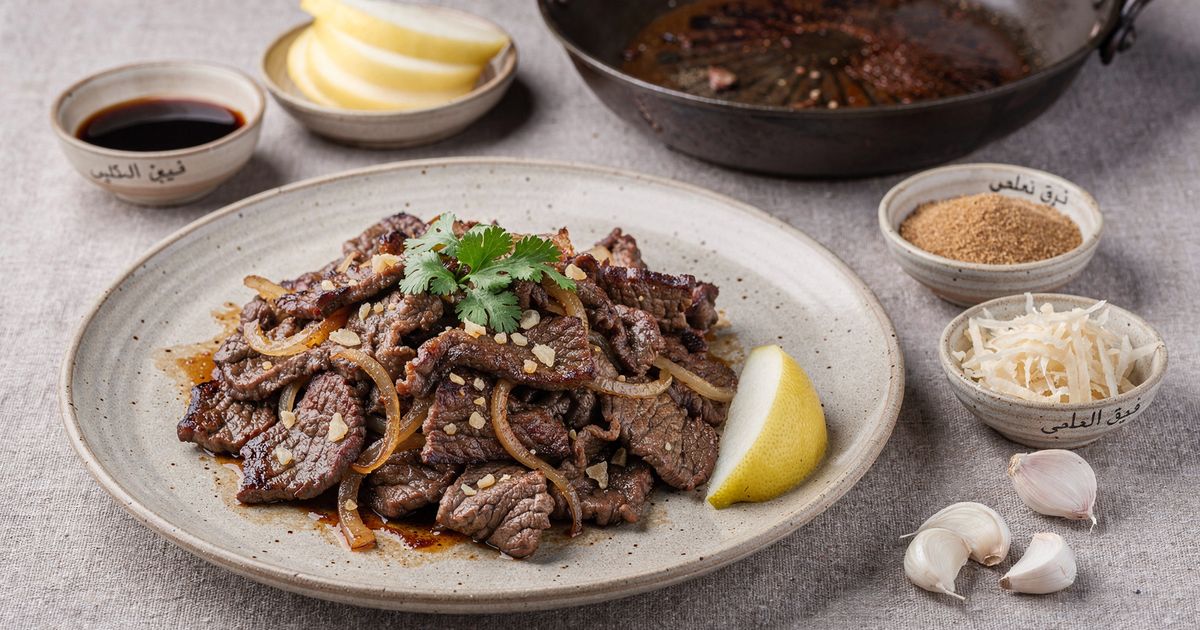
In a small bowl, whisk 2 tbsp soy sauce, 1 tbsp sesame oil, brown sugar, and minced garlic. Add the sliced beef sirloin and toss to coat. Let marinate for 15 minutes while you prepare the vegetables.
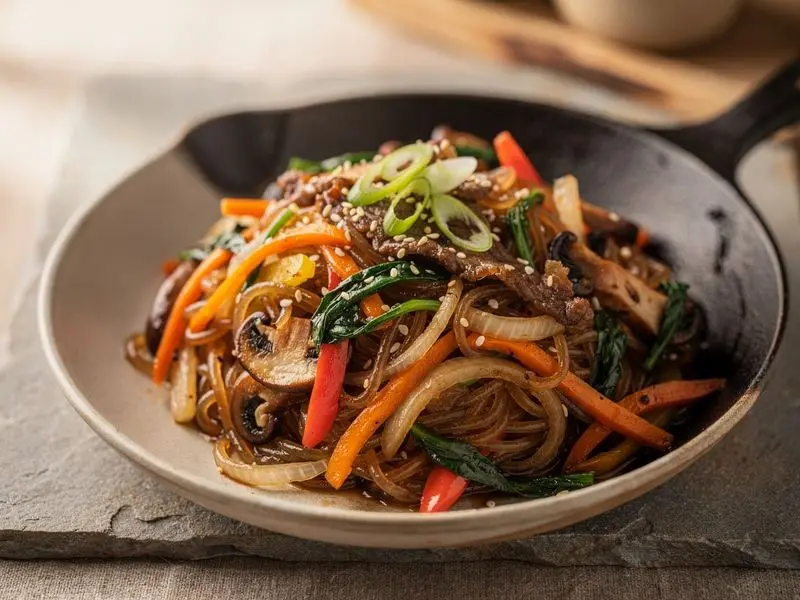
Bring a large pot of water to a boil. Add the sweet potato glass noodles and cook according to package directions, usually 5–6 minutes, until tender and chewy. Drain, rinse briefly under cold water, and cut noodles into shorter lengths with kitchen scissors. Toss with 1 tsp sesame oil to prevent sticking.
While noodles cook, blanch the spinach in boiling water for 30 seconds, then drain and squeeze out excess water. Set aside.
Heat 1 tbsp sesame oil in a large skillet or wok over medium-high heat. Add the marinated beef and stir-fry for 2–3 minutes until just cooked through. Remove beef with a slotted spoon and set aside.
In the same pan, add the sliced onion, julienned carrot, and shiitake mushrooms. Stir-fry for 3–4 minutes until softened but still crisp. Season with a pinch of salt and black pepper.
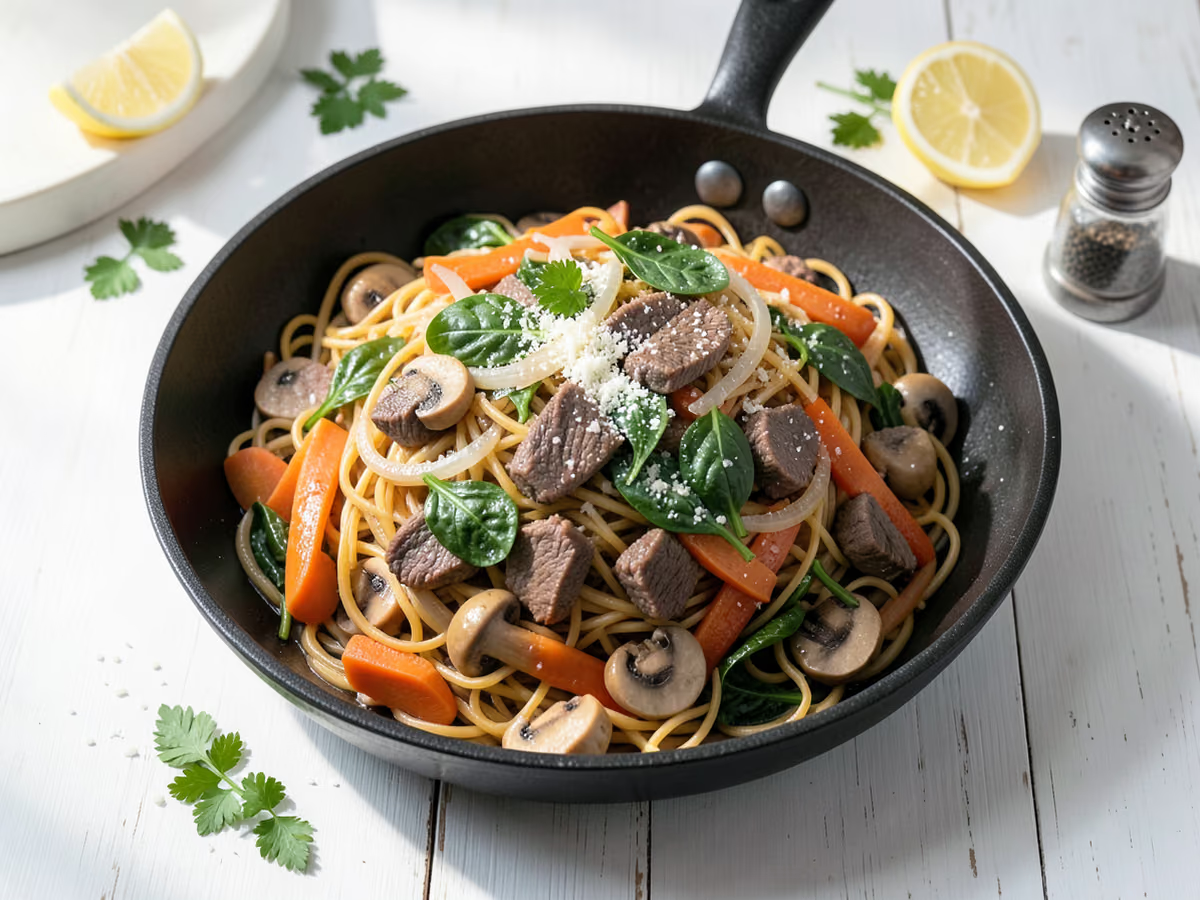
Add the cooked noodles, beef, and blanched spinach to the pan. Drizzle with remaining 2 tbsp soy sauce and 1 tsp sesame oil. Toss everything together over medium heat for 2 minutes until well combined and heated through.
Taste and adjust seasoning with salt if needed. Transfer to a serving platter and sprinkle with toasted sesame seeds. Serve warm or at room temperature.
Kitchen notes
Kitchen notes
- Do not overcook the glass noodles; they should be chewy, not mushy. Rinse with cold water immediately after draining to stop cooking.
- Cut the noodles after cooking to make tossing and eating easier. Kitchen scissors work best.
- Stir-fry the vegetables over medium-high heat to keep them crisp-tender; overcrowding the pan will steam them instead of frying.
- If making ahead, keep the noodles, beef, and vegetables separate and combine just before serving to prevent sogginess.
Substitutions
- beef sirloin→chicken breast or firm tofu
- shiitake mushrooms→cremini or button mushrooms
- brown sugar→honey or maple syrup
Storage & reheating
Store leftovers in an airtight container in the refrigerator for up to 3 days. To reheat, place in a skillet over medium heat with a splash of water or soy sauce, or microwave covered for 1-2 minutes until hot. Do not freeze; the noodles become mushy upon thawing.
FAQ
The questions we get asked most
Why did my japchae noodles turn mushy?
Overcooking or not rinsing the noodles in cold water after boiling causes them to continue cooking and become mushy. Cook them just until tender and chewy, then rinse immediately to stop the cooking process. Also, avoid tossing them with sauce while they are still hot and wet.
Can I make japchae ahead of time?
Yes, you can prepare the components up to a day ahead. Cook the noodles, blanch the spinach, and stir-fry the beef and vegetables separately. Store them in separate containers in the fridge, then combine and reheat in a skillet just before serving to keep the textures fresh.
What can I use instead of sweet potato glass noodles?
Sweet potato glass noodles (dangmyeon) are essential for authentic japchae because of their chewy texture. If unavailable, mung bean threads or cellophane noodles can work, but they are thinner and cook faster. Adjust cooking time accordingly and rinse well.
How do I know when the glass noodles are done?
The noodles should be translucent, pliable, and chewy with no raw bite. They typically take 5-6 minutes in boiling water. Test one noodle: it should be soft but still slightly springy. If it is too firm, cook another minute.
Can I add other vegetables to japchae?
Yes, common additions include bell peppers, zucchini, and wood ear mushrooms. Slice them thinly and stir-fry briefly to maintain crunch. Add them in step 5 along with the other vegetables, adjusting cooking time as needed.
Is japchae gluten-free?
Traditional japchae is not gluten-free because soy sauce contains wheat. To make it gluten-free, use tamari or a gluten-free soy sauce alternative. Also ensure all other ingredients, such as the sesame oil and sugar, are certified gluten-free.
Ask KitchenMind about this recipe
Tell it what’s different tonight — it works within the actual recipe.