Panang Curry
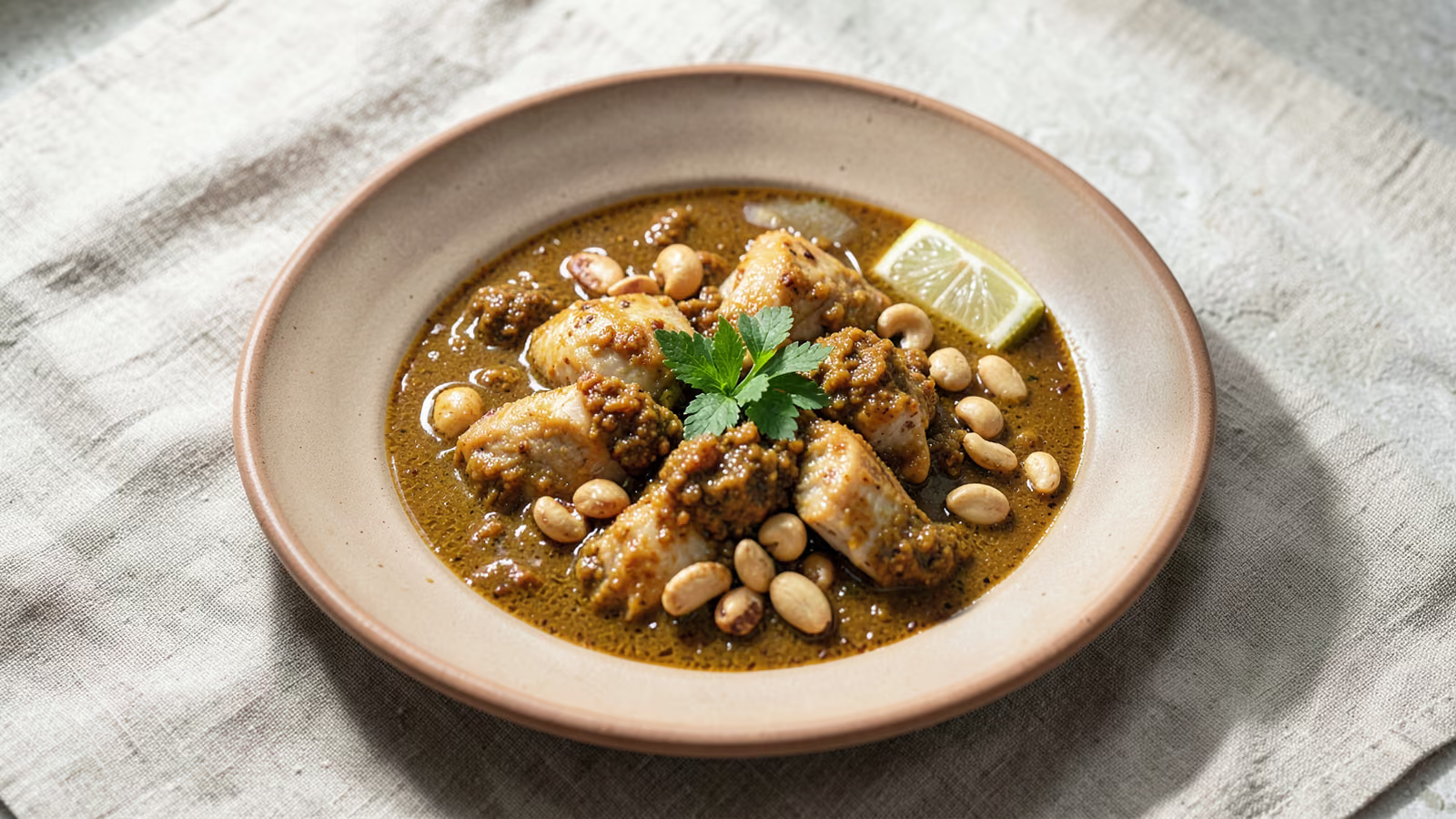
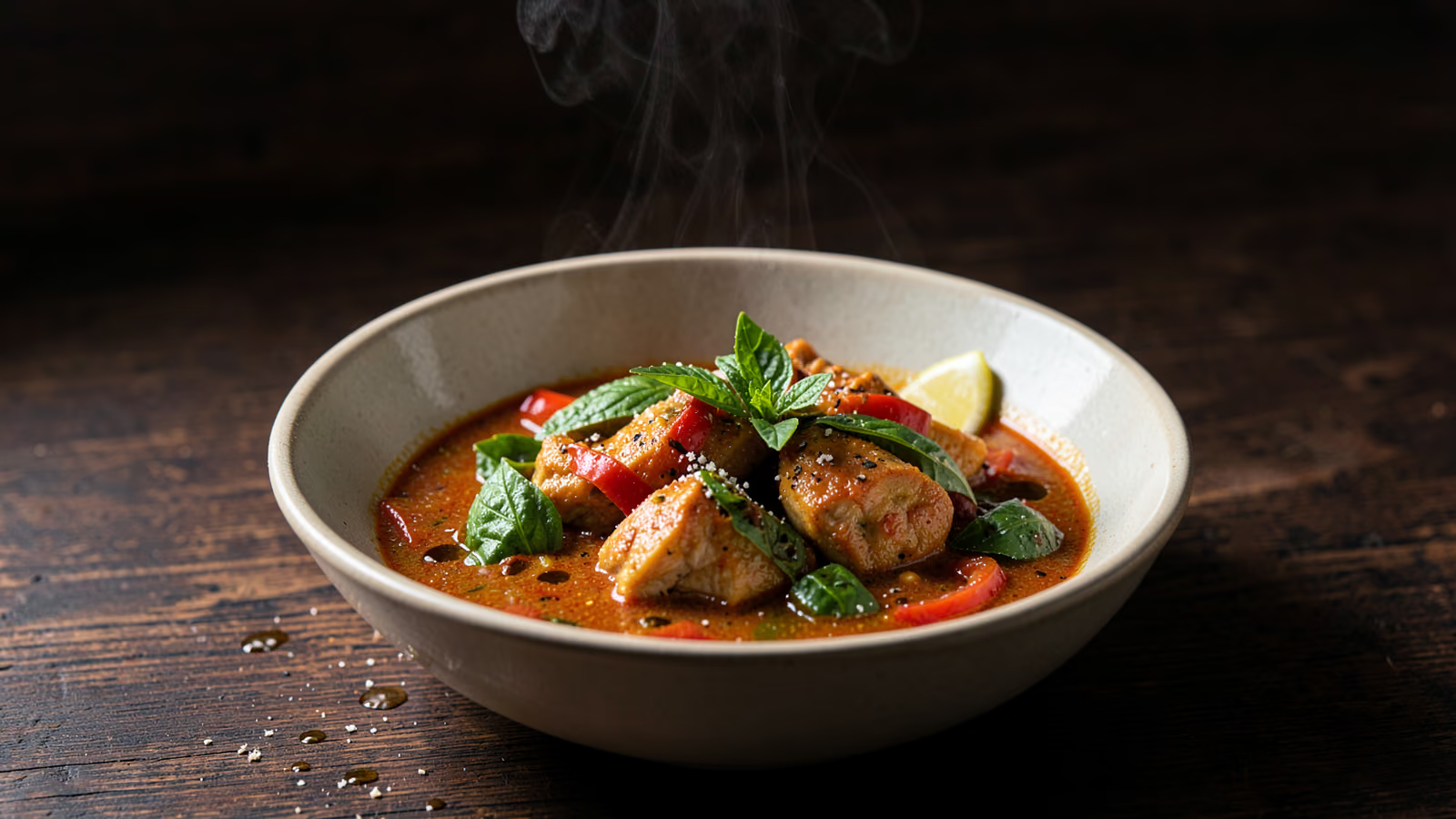
Panang curry — also spelled phanaeng — is one of Thailand's richest curries: chicken thighs simmered in a thick coconut-peanut sauce that clings to the meat instead of pooling like soup. The paste is fried first, coconut milk goes in two stages, and the pot is finished with fish sauce, palm sugar, torn kaffir lime leaves and Thai basil. Prep runs about 15 minutes and the stove about 25, most of it a gentle simmer you can leave alone; it is served over jasmine rice.
- Prep
- 15 min
- Cook
- 25 min
- Total
- 40 min
- Serves
- 4
Ingredients
What you’ll need — tap to tick off as you go
- 600 g
- 400 ml
- 3 tbsp
- 2 tbsp
- 2 tbsp
- 1 ½ tbsp
- 1 cup
- 1 tbsp
- 2 cups
Process
Timers built in · swap anything · ask as you cook
Heat the 1 tbsp vegetable oil in a large skillet or wok over medium heat. Add the 3 tbsp panang curry paste and fry for 1 to 2 minutes, stirring constantly, until it smells fragrant and turns a shade darker. This first fry is what blooms the paste's oil-soluble aromatics; let it sit and it scorches, which turns the whole pot bitter.
Pour in 100 ml of the coconut milk and stir it into the paste. Cook for 2 to 3 minutes, stirring, until the mixture thickens and glossy oil begins to separate at the surface. That split — the Thai cook's sign that the paste has fried properly — is the flavor base the rest of the sauce is built on.
Add the 600 g chicken thighs and cook for 5 minutes, stirring to coat every piece in the curry mixture. The pieces should lose their raw color and take on a red-orange tint; they finish cooking in the sauce later, so they do not need to be done yet.
Stir in the remaining 300 ml coconut milk, the 2 tbsp peanut butter, 2 tbsp fish sauce and 1.5 tbsp palm sugar, then bring to a gentle simmer — small bubbles, not a rolling boil. Keep stirring until the peanut butter dissolves; a hard boil at this stage can leave the sauce greasy.
Add the 4 torn kaffir lime leaves and the sliced red bell pepper. Simmer gently for 10 to 12 minutes, stirring occasionally, until the chicken is cooked through and the sauce has thickened enough to coat the back of a spoon. Check the largest piece for 74°C.
Taste the sauce and adjust: a splash more fish sauce for salt, a pinch more palm sugar for roundness, until it lands rich and salty-sweet. Take the pan off the heat and stir in most of the 1 cup Thai basil, letting residual warmth wilt it without cooking the aroma away.
Spoon the panang curry over 2 cups of hot cooked jasmine rice, dividing the chicken and sauce between four bowls. Scatter the last of the Thai basil on top and serve with lime wedges on the side; a squeeze of juice at the table cuts the richness.
Why this recipe works
Two details build panang's thickness. The paste is fried before much liquid arrives: its chili, lemongrass, galangal and warm-spice notes come from compounds that dissolve in fat, so they bloom in hot oil and lose their raw edge instead of merely simmering in coconut water. Then the first 100 ml of coconut milk cooks with the paste until the emulsion breaks and coconut oil separates out; the paste fries again in that fat, which is where the sauce gets its deep color and flavor. The remaining coconut milk and peanut butter give it body, and a steady gentle simmer keeps the sauce smooth and glossy — a hard boil can turn coconut milk greasy and grainy.
Equipment
- Large skillet or wok, about 28 to 30 cm across, deep enough to hold 400 ml of coconut milk plus 600 g of chicken
- Wooden spoon or heatproof spatula, for stirring the paste constantly at the start
- Chef's knife and cutting board, for the chicken, bell pepper and lime
- Measuring cups and spoons, for the paste, coconut milk, peanut butter, fish sauce and sugar
- Instant-read thermometer (optional), to check the chicken at 74°C
- Pot or rice cooker, for the jasmine rice you serve it over
Kitchen notes
Kitchen notes
- Watch the pan, not the clock, when the first coconut milk goes in: the oil can start to separate after 2 minutes or closer to 4, depending on the brand, and that visual sign — glossy beads at the edges — matters more than any timer.
- Open the tin without shaking it and spoon the first 100 ml from the top, where the cream is thickest; that portion cracks and fries the paste best, while the thinner milk below goes in later as the sauce. If your brand never visibly cracks, look for slow thickening and a glossy surface and carry on.
- Taste the sauce with the rice in mind: jasmine rice dilutes seasoning, so the curry should taste slightly on the strong side on its own. This is also the moment for the last splash of fish sauce or pinch of palm sugar.
- If the sauce needs more body, stir a third tablespoon of peanut butter in off the heat rather than boiling it down; it thickens in seconds and cannot catch on the pan the way a hard reduction can.
- Scatter a spoonful of crushed roasted peanuts over the bowls at the table. Panang is a nutty dish by design, and the crunch gives a dish that is otherwise all soft sauce and tender chicken a second texture.
- Keep the finishing herbs and garnishes for the last moment: Thai basil stirred into a pan that is still on the heat turns dark and loses its perfume, and lime wedges squeezed at the table do more for the dish than juice added in the kitchen.
Common mistakes
- Bitter, harsh sauce: the paste scorched in too-hot oil or fried dry before liquid arrived. Keep the heat at medium, stir constantly through the first 1 to 2 minutes, and have the first 100 ml of coconut milk measured out and ready to pour the moment the paste smells toasted; burnt paste cannot be rescued once its bitterness spreads.
- Thin, soupy sauce: extra liquid beyond the 300 ml in the recipe, or a simmer cut short. The coconut milk is the whole liquid budget — do not add water or stock — and the final simmer needs its full 10 to 12 minutes to reduce the sauce until it coats the back of a spoon.
- Greasy, grainy sauce: a hard boil after the coconut milk went in. Coconut milk is an emulsion, and boiling drives the fat out of it; keep the pan at a steady bare simmer, stir occasionally, and pull the heat down if the bubbles turn vigorous.
- Dry, tight chicken: breast meat, or thigh pieces left to cook well past done. Use the 600 g of thighs the recipe calls for and stop the simmer when the largest piece reaches 74°C in the center; the sauce holds its heat, so the chicken keeps cooking gently off the flame.
- Flat, one-note flavor: the curry was under-seasoned at the end or the aromatics were skipped. Taste after the simmer and adjust fish sauce and palm sugar in small increments, and do not leave out the torn kaffir lime leaves — they are the citrus counterweight that keeps the coconut-peanut base from tasting heavy.
Serving suggestions
- Serve over 2 cups of hot jasmine rice, divided between four bowls, with plenty of sauce spooned over each portion — the rice carries the sauce, it is not just a side.
- Pass lime wedges at the table; a squeeze over the bowl sharpens the coconut and peanut richness, and it is the traditional finish in Thailand.
- A plain cucumber salad, sliced with a little rice vinegar and salt, is a cooling contrast to the rich sauce; keep it simple so it does not compete with the curry.
- For drinks, keep it cold and simple: iced tea or sparkling water with a wedge of lime clears the palate between rich spoonfuls.
Variations
- Beef panang curry, the traditional Thai version: use 600 g of thinly sliced sirloin, or braise a tougher cut like chuck slowly before the sauce comes together. Beef deepens the sauce; a tender cut needs only the final simmer.
- Vegetarian panang curry, as a clearly different adaptation: use 600 g of firm tofu in place of the chicken, swap the fish sauce for soy sauce, and check that the curry paste contains no shrimp paste, since most Thai pastes do. The sauce tastes lighter and less savory, but the coconut-peanut base still carries it.
- Seafood version: replace the chicken with 600 g of raw shrimp, added for just the last 3 to 4 minutes of the simmer. Panang with seafood is common in coastal Thailand and cooks in a fraction of the time.
Refrigerator
- RefrigeratorCool the curry within 2 hours of cooking, then refrigerate it in an airtight container for up to 3 to 4 days. The sauce thickens and the flavors deepen overnight; stir in a spoonful of water when you lift the lid if it looks stiff, and reheat only what you plan to eat.
- ReheatingWarm gently in a saucepan over medium-low heat with a splash of water or coconut milk, stirring until the sauce is loose and steaming — at least 74°C throughout. Keep it below a boil, because a hard boil is what turns the sauce grainy, and treat reheating as a warm-through, not a second cook.
- FreezingPossible, with a texture caveat: freeze cooled portions in airtight containers for up to 3 months. Thaw overnight in the fridge and reheat gently — the sauce can look grainy or split after thawing, and a slow stir over low heat with a splash of water brings it mostly back. Leave the Thai basil out of the freezer and add it fresh.
- Make aheadThe curry is better made a day ahead: cook it fully (minus the Thai basil), cool it quickly, and refrigerate for up to 2 days. The sauce thickens and the flavors settle as it sits; reheat gently, stir the basil in at the end, and cook the rice fresh.
Updated:
How this recipe was developed
- USDA FSIS safe minimum internal temperature guidance (all poultry, including chicken thighs, cooked to 74°C; leftovers reheated to 74°C)
- USDA FSIS, Leftovers and Food Safety (refrigerate cooked food within 2 hours; keep 3 to 4 days in the fridge; freeze up to 3 to 4 months; cool in shallow containers)
- Serious Eats, A Guide to Thai Curries (curry paste sautéed until the coconut-milk emulsion breaks so the paste fries in coconut oil; sauce simmered to infuse; curry seasoned strongly because it is served with rice; delicate herbs stirred in off the heat)
- Wikipedia, Phanaeng (central Thai origin; the dish documented in Thai cookbooks by 1889; name's link to Penang debated — most likely from the Malay word for grilled; richer and less spicy than red curry)
Editorial references are kept internally for verification. This page makes no claim of external certification or professional testing.
FAQ
The questions we get asked most
What is panang curry?
A central Thai curry built on a red-chili paste enriched with peanuts and cooked down in coconut milk until it turns thick and glossy — closer to a gravy than a soup. It tastes rich, salty-sweet and gently nutty, with mild warmth rather than real heat, and it is served over jasmine rice. The name is often linked to Penang in Malaysia, but the dish is Thai: it appears in Thai cookbooks by the late 1800s, and the word most likely comes from a Malay term meaning grilled.
What's the difference between panang curry and red curry?
The two share a chili-based curry paste, but panang curry is thicker, sweeter and less spicy. Red curry stays brothy enough to spoon like a soup, while panang reduces until the sauce clings to the meat, and its paste adds ground peanuts with toasted coriander and cumin for a warm, nutty depth. The peanut butter and the two-stage coconut milk do that thickening work here. Think of panang curry as the richer, milder cousin of red curry rather than a hotter one.
What's the difference between panang curry and massaman curry?
Both are mild, rich curries, but they taste nothing alike. Massaman builds on warm whole spices — cinnamon, cardamom, cloves, star anise — plus potato and whole peanuts, a stew-like dish that came to southern Thailand by way of Persian and Indian cooking. Panang curry keeps its focus on chili, lemongrass, kaffir lime and ground peanuts, holds no potato or onion, and stays thick enough to coat the meat; it is a central Thai curry, not a stew.
Is panang curry spicy?
Usually mild to medium, and much tamer than red or green curry. Dried chilies in the paste bring a gentle warmth, and the coconut milk, peanut butter and palm sugar round it off, which is why panang curry is often recommended to people new to Thai food. The real variable is the paste you buy, because heat differs a lot by brand. Start with 2 tbsp if yours is punchy, taste, and work up toward the 3 tbsp this recipe calls for.
Why did my panang curry turn out bitter?
Almost always a paste that burned: the dried chili and aromatics in panang paste scorch quickly in a dry, too-hot pan, and their bitterness spreads through the whole sauce. Fry it over medium heat with constant stirring for only 1 to 2 minutes, and pour in the first 100 ml of coconut milk the moment it smells toasted. Burnt paste cannot be rescued, so if yours catches, start again rather than trying to mask it with sugar.
Why is my panang curry not thick and creamy?
Panang curry is meant to reduce until it coats the meat, so distrust any version that stays soupy. Use full-fat coconut milk — light versions are diluted and stabilized and never thicken the same way — and give the final simmer its full 10 to 12 minutes so the sauce reduces around the chicken. A rolling boil does not help: it makes coconut milk turn grainy instead of creamy. If it is still loose, a third tablespoon of peanut butter stirred in off the heat will tighten it.
Can I use peanut butter in panang curry?
Yes — this recipe calls for 2 tbsp of smooth, unsweetened peanut butter as a stand-in for the ground roasted peanuts that go into traditional panang paste. It thickens the sauce and adds the nutty note the dish is known for. Use unsweetened, because a sweetened spread makes the curry cloying. For a peanut-free version, cashew or sunflower seed butter works in the same quantity; for a peanut allergy, check that the curry paste itself is peanut-free, since many are not.
Ask KitchenMind about this recipe
Tell it what’s different tonight — it works within the actual recipe.