Avocado Egg Toast
Two things decide whether avocado egg toast works, and the avocado is not one of them. The bread has to be dry enough to carry a wet topping without wilting, and the egg has to land with its white fully set and its yolk still liquid, which is a matter of heat and seconds rather than luck. Ten minutes, start to finish. That is 5 minutes of prep, 5 minutes at the stove and one skillet to wash, for 2 servings.
- Prep
- 5 min
- Cook
- 5 min
- Total
- 10 min
- Serves
- 2
Ingredients
What you’ll need — tap to tick off as you go
- 2 slices
- 1 tbsp
- 1 tsp
- 1 pinch
- 1 pinch
- 1 pinch
- 1 pinch
Process
Timers built in · swap anything · ask as you cook
Toast the 2 slices of sourdough until deep gold and rigid, about 2 minutes per side in a dry skillet over medium heat, or a full toaster cycle, 4 minutes in all. Thick slices do better in the skillet, where a toaster steams the middle. Lift one: it should feel light and sound dry under your finger. That dryness keeps the avocado from turning the bread to paste.
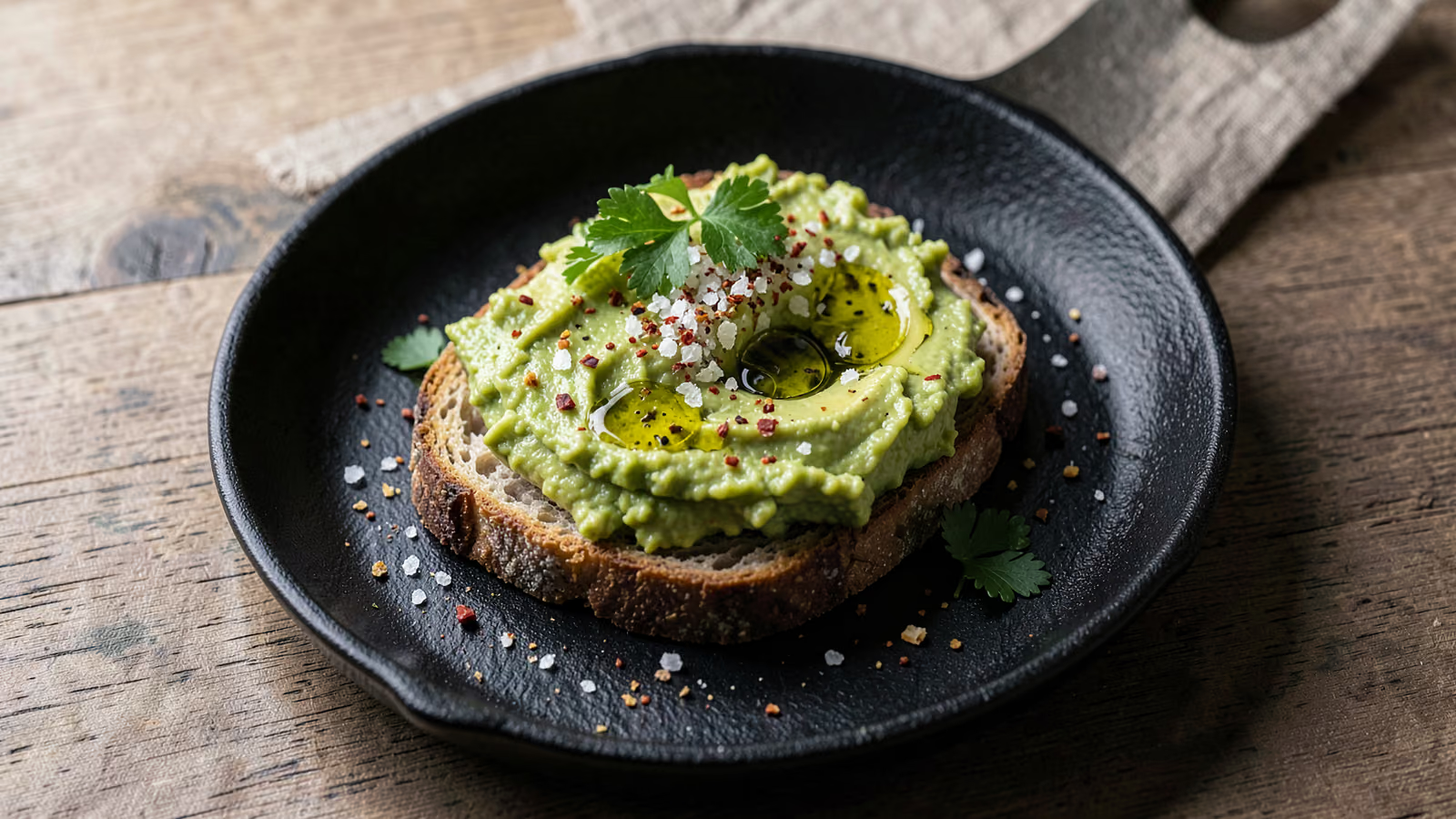
Split the avocado around its pit, lever it out with the heel of the knife, and scrape the flesh, about 200 g, into a bowl. Stir in 1 tsp lemon juice with a pinch each of salt and pepper. Mash with a fork, pressing and turning, until the mixture is mostly smooth with a few soft lumps left. Stop there. Overworked avocado turns gluey and slides off the toast.
Warm the 1 tbsp olive oil in a non-stick pan wide enough for 2 eggs over medium heat, until it shimmers, not smokes. Crack the 2 large eggs in, spaced apart, and let them sit for 2 to 3 minutes, until the white turns opaque and firm while the yolk stays domed and glossy. There is no need to flip them. Want a firmer yolk? Cover the pan for 1 minute, no longer.
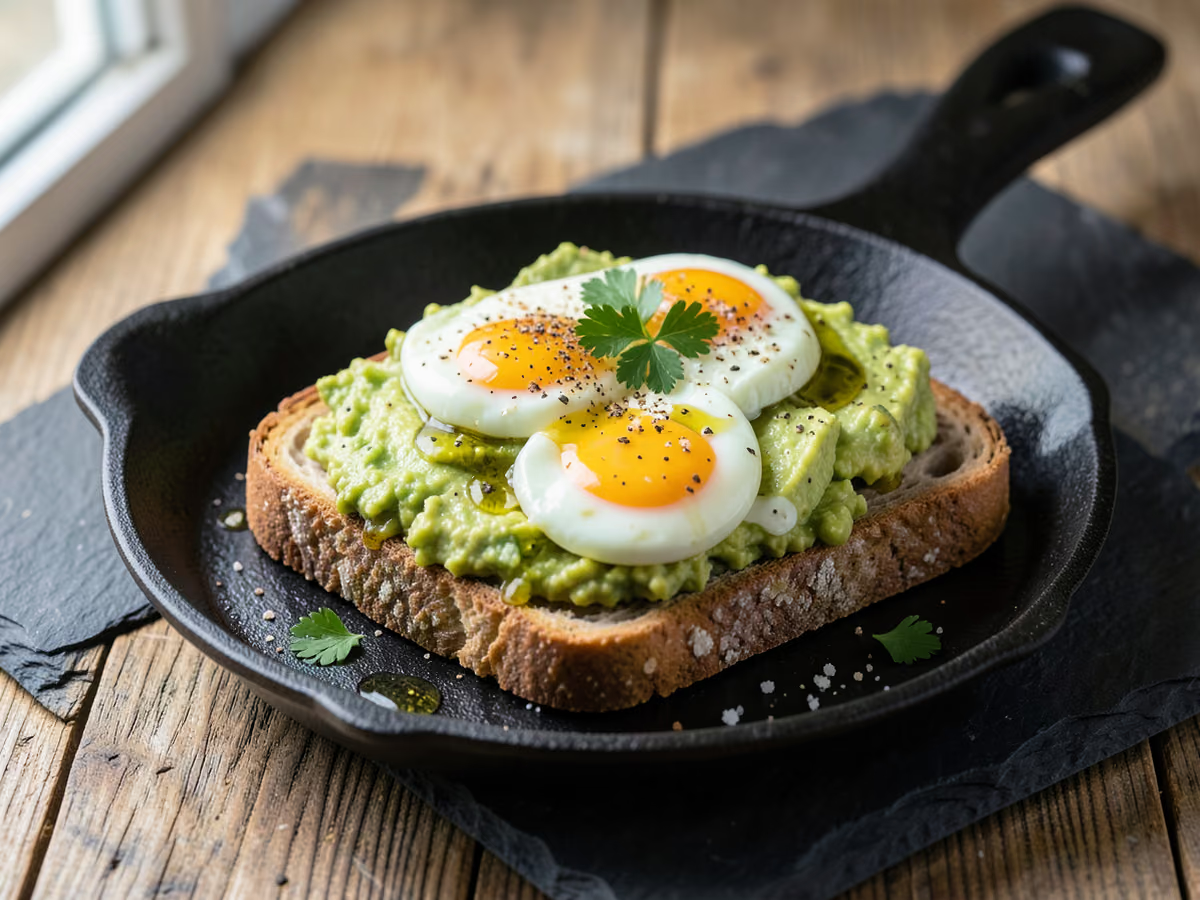
Spread the avocado over the 2 toasts while they are still warm, edge to edge, leaving a slight ridge in the middle to cradle the egg. An even layer matters: bare patches let egg white soak in, and a thick centre pushes the yolk off at the first bite. Use the back of a spoon. It follows your crust better than a knife, and the slight pressure spreads the avocado without compacting it.
Slide one egg onto each toast with the thin spatula, resting it on the ridge, then scatter a pinch of red chili flakes and a pinch of flaky sea salt over the top, if you are using them, and eat at once. The egg keeps cooking off the heat. Every minute on the plate costs you a runny yolk.
Why this recipe works
Why does the white set before the yolk? They are different proteins with different setting points, and that gap is the whole game: white proteins firm up first, at a lower temperature, while the yolk needs more heat before it thickens. Medium heat is the better choice here. A still pan and one covered minute let the white catch up without pushing the yolk past liquid, and toast is half the structure. Heat drives water out of the surface starch, so the crust becomes a dry barrier instead of a sponge, and the lemon's acid slows the enzyme that browns avocado flesh, because that enzyme works badly in acid.
Equipment
- Toaster, or a dry skillet for the bread
- Non-stick frying pan, 24 cm, with a lid
- Small bowl and a fork for the avocado
- Thin flexible spatula or fish slice
- Chef's knife and cutting board
- Measuring spoons
- Two small cups or ramekins for cracking the eggs
Kitchen notes
Kitchen notes
- Crack each egg into a small cup first. One broken yolk spoils a whole pan, and a cup lets you slide the egg in gently instead of dropping it from height.
- Brush the bread with a little of the olive oil and toast it cut side down in the skillet, pressing lightly: fat browns the surface faster than dry heat and gives you a crust that crackles. Worth the washing up.
- Keep the pan lid within reach. If a patch of white stays clear, don't worry: 30 seconds of trapped steam sets it without touching the yolk, so the trick is steam, not more heat.
- Choose a fork over a processor. A blade whips air into the flesh and leaves it pale and loose, while a fork keeps enough texture for the mash to grip the toast. (A potato masher is too much tool here.)
- Skip the extra fat. Olive oil holds medium heat without scorching, and the toast already carries enough from the avocado.
- Taste the mash twice, once before the lemon and once after. Acid mutes salt, so a mash that tasted right before the juice will taste flat by the time it reaches the bread.
Common mistakes
- Soggy middle: the bread was barely coloured, or the avocado went on while the toast was still steaming. Toast to a deep gold. Let the slices stand for a moment so the steam escapes before you spread.
- A yolk set by the time you sit down: the pan ran too hot, or the egg waited in it while you fussed with the avocado, so cook the eggs last and slide them straight onto the toast.
- Bland, watery mash: an underripe avocado, or one mashed without salt. A ripe fruit gives at the stem end. Season the mash and taste it before it meets the bread.
- Clear patches in the white: cold eggs dropped into a pan that was not quite hot enough, so the white set unevenly. Let the eggs sit out for 10 minutes and wait for the oil to shimmer.
- Brown avocado before the first bite: the mash sat uncovered, or the lemon was left out. Acid and plastic pressed flat on the surface are the two things that slow it.
Serving suggestions
- Eat it at the counter, standing up, no plate required, coffee in the other hand.
- A sharp side helps: sliced tomato with salt, or a handful of dressed leaves, cuts the fat of the avocado.
- Yesterday's bread, toasted hard, beats a fresh loaf here, and leftover mash loosens with vinegar and a spoonful of oil into a dressing for tomorrow's tomatoes.
- Eat it while the yolk still moves; that is the version worth repeating.
Variations
- Crisp-edged eggs: raise the heat to medium-high for the last 30 seconds and spoon the hot oil over the whites, leaving the yolks alone. Want crackly edges and a liquid centre in yours? That is how.
- Sliced instead of mashed: with a firm-ripe avocado, lay thin slices over the toast and fan them, then salt. The result is lighter and the avocado keeps its shape.
- Poached instead of fried: slip the 2 eggs into barely simmering water for 3 minutes, drain them on paper, and set them on the toast; the white is softer and the yolk runs faster.
Refrigerator
- RefrigeratorKeep the parts apart. Pressed into a small container with plastic wrap flat on the surface, the mash holds for up to 1 day; fried eggs keep covered for up to 2 days. Refrigerate within 2 hours of cooking, the FDA rule for egg dishes, and toast your bread fresh; the agency allows 3 to 4 days for cooked egg dishes, though the texture is long gone by then. (A tight lid alone will not stop the browning.)
- ReheatingSet the eggs in a skillet filmed with oil over medium heat for 1 to 2 minutes, or give them 20 to 30 seconds in the microwave, then build the toast. Reheat to 74°C, the USDA figure for leftovers. It is fine if the yolk firms up; a reheated egg will never run again.
- FreezingNot recommended. Avocado flesh turns watery and grey once frozen and thawed, and the egg white goes rubbery; only the bread survives, which is not much of a breakfast.
- Make aheadMash the avocado up to 1 day ahead and fry the eggs up to 2 days ahead, then reheat and assemble on fresh toast, and for a faster morning, toast the bread while the eggs warm and leave it at room temperature until the last second.
Updated:
How this recipe was developed
- USDA FoodSafety.gov, Safe Minimum Internal Temperature Chart (egg dishes 71°C / 160°F; leftovers reheated to 74°C / 165°F)
- FDA, What You Need to Know About Egg Safety (cook eggs until yolks are firm; refrigerate cooked egg dishes and use within 3 to 4 days; reheat to 165°F; higher-risk groups)
- Serious Eats, Sunny-Side Up Fried Eggs (medium heat with a covered pan for set whites and a runny yolk; non-stick or cast iron)
- Harold McGee, On Food and Cooking (egg white and yolk proteins set at different temperatures; dry toast as a moisture barrier; enzymatic browning in avocado)
Editorial references are kept internally for verification. This page makes no claim of external certification or professional testing.
FAQ
The questions we get asked most
Why did my avocado turn brown so quickly?
Cut avocado browns because an enzyme reacts with oxygen once the cells are broken. Lemon juice slows that reaction by lowering the pH, and plastic pressed flat against the surface keeps oxygen away. Browned flesh is safe to eat, though it may taste slightly bitter, so use the mash within 1 day.
How do I keep the egg yolk runny?
Cook over medium heat and do not flip. The white sets in 2 to 3 minutes while the yolk stays liquid, and if a patch of white remains clear, don't worry: cover the pan for 30 seconds. A fridge-cold egg sets unevenly, so give it 10 minutes on the counter before it goes in.
Is a runny yolk safe to eat?
USDA and FDA both advise cooking eggs until white and yolk are firm, and put egg dishes at 71°C (160°F). A runny yolk is a choice rather than a guarantee. If you are pregnant, cooking for a young child or an older adult, or your immune system is weakened, cook the yolk through or use pasteurized eggs, because the risk lands hardest on those groups. For everyone else, fresh uncracked eggs kept at 4°C and a prompt breakfast are the practical safeguards.
Can I make avocado egg toast ahead of time?
In parts, yes. Mash the avocado up to 1 day ahead with its lemon and plastic on the surface, and cook the eggs up to 2 days ahead. Warm them gently and toast the bread at the last minute, because assembled toast softens within minutes and nothing reverses that.
Why is my avocado toast soggy?
Two causes, usually together: bread that was only lightly toasted, and avocado that was too ripe or spread too thick. Toast it a full 2 minutes per side until the slice is rigid, use a ripe but firm fruit, and keep the layer thin enough that you can still see the texture of the bread beneath it.
How do I choose a ripe avocado?
Cup it in your palm and press gently near the stem end; it should give slightly and spring back. Flick the small stem cap off: green underneath means ready, brown means past it. A rock-hard fruit will ripen in a paper bag on the counter in 2 to 4 days, never in the fridge.
Can I freeze avocado egg toast?
No, not usefully. Avocado flesh collapses into water and fibre when frozen, and a fried egg white turns spongy on thawing. Eat it fresh, and if you have surplus mash, loosen it into a dressing instead.
Ask KitchenMind about this recipe
Tell it what’s different tonight — it works within the actual recipe.