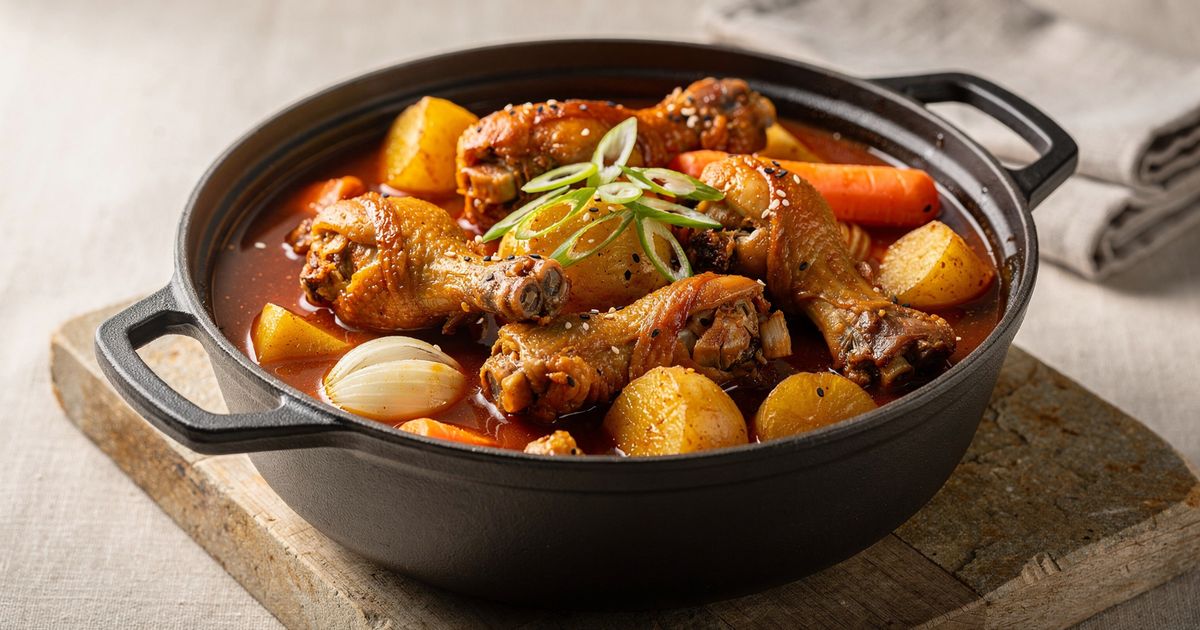
Soondubu Jjigae (Korean Soft Tofu Stew)
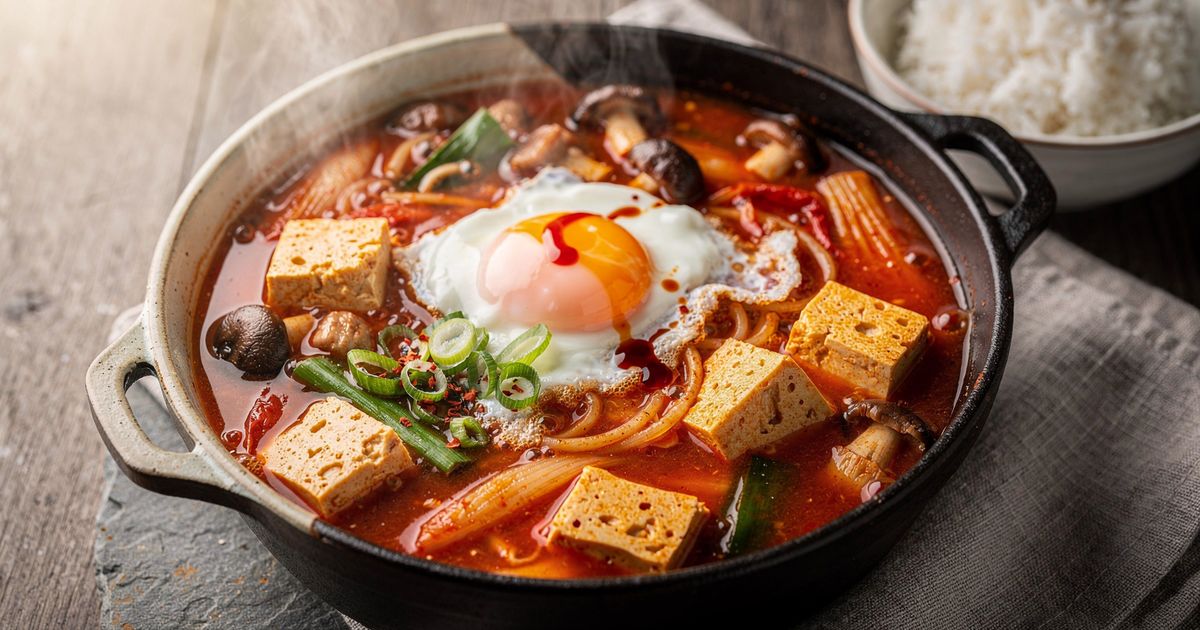
Soondubu jjigae is Korea's bubbling soft tofu stew: custardy tofu spooned into a red gochugaru broth with kimchi, shiitake mushrooms and an egg cracked in to finish. It stays weeknight-quick — 10 minutes of prep, about 20 at the stove — and the details are what make the pot taste right: kimchi and mushrooms fry in toasted sesame oil first, the chili flakes bloom into a fragrant red oil, and the tofu goes in as large, barely stirred clouds. Serve it still bubbling with steamed rice, a warming dinner for two that is dairy-free as written.
- Prep
- 10 min
- Cook
- 20 min
- Total
- 30 min
- Serves
- 2
Ingredients
What you’ll need — tap to tick off as you go
- 600 g
- 150 g
- 100 g
- 2 tbsp
- 1 tbsp
- 1 tbsp
- 1 tbsp
- 2 cloves
- 1 tsp
- 500 ml
- 1 tsp
- 1 pinch
Process
Timers built in · swap anything · ask as you cook
Heat the 1 tbsp toasted sesame oil in a small heavy pot over medium heat, then add the 150 g chopped kimchi and the 100 g sliced shiitake mushrooms. Fry for 3 to 4 minutes, stirring now and then, until the mushrooms soften, the kimchi smells sweet and the oil turns red. Frying first drives off their water, which is what keeps the finished stew thick instead of watery.
Stir in the 2 minced garlic cloves, the 1 tsp grated ginger, the 2 tbsp gochugaru and the 1 tbsp gochujang, if using, and cook for 30 seconds, stirring constantly. The flakes should deepen to a glossy dark red and smell toasty, never brown or black. This half-minute in hot oil is where the stew's color and heat are built, and burnt flakes turn the whole pot bitter.
Pour in the 500 ml vegetable broth, the 1 tbsp soy sauce and the 2 tbsp kimchi juice. Bring to a gentle simmer over medium heat and cook for 5 minutes, until the broth bubbles steadily at the edges and has reduced a little. This simmer marries the chili oil to the liquid; taste now and it should be a touch bold, because the mild tofu is still to come.
Spoon the 600 g drained soft tofu into the pot in large, irregular chunks and do not stir it in. Nudge the pieces just below the surface with the back of the spoon and simmer for 5 minutes, shaking the pot once or twice instead of stirring. The tofu is ready when it looks puffed, glossy and heated through, with the curds still whole.
Taste the broth and add the pinch of salt only if it tastes flat — the kimchi, soy sauce and gochujang all bring salt. Crack the 2 eggs directly into the stew, one per side, cover the pot and cook over medium heat for 2 to 3 minutes, until the whites are opaque and just set while the yolks still wobble.
Scatter the 2 sliced scallions and the 1 tsp toasted sesame seeds over the top and take the pot to the table while it is still bubbling. Serve with steamed short-grain rice, letting each person spoon tofu, egg and broth over their bowl. The stew keeps cooking off the heat, so eat promptly while the yolks are soft.
Why this recipe works
Order of operations is what makes this broth taste seasoned, not watery. Frying the kimchi and mushrooms first drives off their surface water so they brown rather than steam, concentrating the fermented tang and the mushrooms' glutamates into the oil. Gochugaru's color and heat are fat-soluble, so thirty seconds in that hot oil blooms them into a fragrant red base that carries flavor through the pot; past that they scorch and turn acrid. Soft tofu is a water-rich custard: spooned in large and left mostly alone, it heats through in about five minutes, absorbing the seasoned broth without collapsing. Covered, the eggs finish by steam, setting the whites around yolks that stay soft.
Equipment
- Small earthenware stew pot (ttukbaegi), about 1 litre, or a heavy 1.5-litre saucepan with a lid
- Wooden spoon or silicone spatula, for folding rather than stirring
- Chef's knife and cutting board
- Kitchen scale and measuring spoons
- 500 ml measuring jug
- Fine-mesh sieve, for draining very wet kimchi
- Ladle and two deep serving bowls
- Small lidded pot or rice cooker for steamed short-grain rice
Kitchen notes
Kitchen notes
- Use the sourest kimchi in the jar: fermentation is the stew's engine, and aged kimchi melts into the broth with a funky depth that fresh, crisp kimchi cannot match. If yours is young, do not skimp on the 2 tbsp of juice, and expect a milder pot.
- Craving the restaurant version? Simmer 6 to 8 dried anchovies and a 10 cm square of dried kelp in the 500 ml of water for 15 minutes, strain, and use that as your broth; the savory backbone separates restaurant soondubu jjigae from tofu in chili water.
- Toast the sesame seeds yourself: a dry pan over medium heat for about a minute, shaking, until they smell nutty and start to pop. Jarred seeds taste dusty by comparison, and this is a garnish you actually notice.
- Tofu from a tube behaves differently from block tofu: slit the tube, slide the custard out whole, and break off chunks with a spoon as they go in. Block soft tofu can simply be scooped; either way, drain briefly and never press.
- Lower the eggs in gently: crack each one against the pot rim and slide it in from just above the surface, or rest it in a small ladle first. Dropped from height, the yolk bursts and clouds the broth instead of holding a soft, spoonable center.
Common mistakes
- Watery, thin stew: the kimchi and mushrooms were not fried long enough, or extra broth crept in. Fry them for the full 3 to 4 minutes, drain dripping kimchi, and keep to 500 ml of broth for two servings; the finished stew should coat a spoon, not slide off it.
- A bitter, scorched taste: the gochugaru or garlic burned during the 30-second bloom. Keep the heat at medium, stir without pausing, and pull the pot off the burner the moment the flakes smell toasty; once they blacken, no amount of broth can undo the acrid edge.
- Tofu scattered into cloudy crumbs: the pot was stirred after the tofu went in, or it boiled hard. Add the tofu in large chunks, shake the pot rather than stir, and hold a gentle simmer for just the 5 minutes it needs to heat through.
- Flat, muddy broth: a weak stock or missed seasoning. Start with a broth worth drinking, use the 2 tbsp of kimchi juice, and taste after the tofu goes in; the broth should be savory enough that plain rice tastes sweet beside it.
- Rubbery, overcooked eggs: they stayed on the heat too long. Cover and cook for 2 to 3 minutes only, then serve straight away; the stew's residual heat finishes the eggs, and 4 minutes is already a firm yolk.
- A scorched or boiling-over pot: an earthenware pot pushed too hot. Warm it gradually over medium heat, keep the simmer lazy, and remember the stew keeps bubbling long after the burner goes off.
Serving suggestions
- Bring the pot to the table still bubbling — earthenware holds heat for a long time, so the stew stays sizzling right through the meal.
- Steamed short-grain rice is the partner this stew expects: keep a bowl per person and spoon stew over a little rice at a time, or dip rice into the broth between bites.
- Set out cool banchan to balance the heat — cucumber kimchi, seasoned spinach or quick-pickled radish all work — so each mouthful alternates hot and fresh.
- Keep drinks plain and cold: barley tea, iced tea or sparkling water resets the palate between spoonfuls of chili.
- Ladle gently so the tofu stays in clouds — slide a wide spoon or ladle under each piece and pour the broth over it in the bowl, one egg per person.
Variations
- Hearty meat or seafood version: add 100 g thinly sliced beef or 100 g clams right after the kimchi and mushrooms take on color, and cook until the meat is no longer pink or the clams open before adding the broth. Shrimp or oysters join later, with the tofu, needing only until opaque.
- Vegan version: skip the eggs, choose kimchi made without fish sauce or shrimp, and swap in a mushroom broth for the vegetable broth, the same 500 ml. The stew keeps its fiery, red character and turns fully plant-based.
- Tableside finish: bring the pot to the table on a portable burner and crack the eggs in once it is bubbling in front of everyone — the Korean restaurant move, and they set in about the same 2 to 3 minutes.
Refrigerator
- RefrigeratorCool the stew within 2 hours of cooking, then refrigerate it in an airtight container for up to 2 days. The tofu softens further as it sits and drinks in the broth; the flavor deepens, but the texture is no longer at its best.
- ReheatingReheat gently in a pot, covered, over medium-low heat until bubbling at the edges — around 74°C — adding a splash of water or broth if it has thickened. Never microwave on high, which puffs and shatters the tofu; short bursts at medium power are the most a microwave should do.
- FreezingNot recommended. Freezing turns the tofu spongy and makes the egg separate into grainy white flecks, so the custard-soft texture at the heart of the dish is gone for good.
- Make aheadMake the kimchi-mushroom base and the seasoned broth up to 2 days ahead and refrigerate them, then finish with fresh tofu and eggs at serving time. Chopping everything in advance shrinks the final cook to just the frying, simmering and egg stages.
Updated:
How this recipe was developed
- Maangchi — Kimchi soft tofu stew (traditional anchovy-kelp stock built over about 30 minutes; hot pepper flakes worked with sesame oil; tofu squeezed in and broken into chunks; egg cracked on top and bubbled about 1 minute; served with rice and side dishes)
- The Woks of Life — Soondubu Jigae, Korean Soft Tofu Stew (earthenware pot or small stockpot; anchovy stock simmered 25 minutes; tofu broken lightly into large chunks; egg cracked over the top and cooked about 1 minute; served with white rice and kimchi)
- Eat Healthy 365 — Authentic Soondubu Jjigae (gochugaru bloomed in oil 30-60 seconds over medium-low heat to build the chili oil; tofu simmered 5-7 minutes and never aggressively stirred; aged sour kimchi preferred; leftovers kept up to 2 days and reheated gently)
- USDA FSIS — Leftovers and Food Safety and egg-safety guidance (refrigerate cooked food within 2 hours; reheat leftovers to 165°F / 74°C; egg dishes cooked to 160°F / 71°C; undercooked eggs not recommended for higher-risk diners)
Editorial references are kept internally for verification. This page makes no claim of external certification or professional testing.
FAQ
The questions we get asked most
Why did my soondubu jjigae turn out watery?
It is almost always the base and the ratio. Kimchi and mushrooms that skip the frying stage leave their water in the pot, and every extra splash of broth dilutes what little body the chili oil has built. Drain dripping kimchi, fry it with the mushrooms the full 3 to 4 minutes until they soften and sweeten, and stay at 500 ml of broth for two servings. The finished stew should coat a spoon; if it still looks thin, simmer it uncovered for a few minutes.
Can I make soondubu jjigae without gochugaru?
Yes, with a flavor trade-off. Use 1 tbsp paprika plus 1 tsp cayenne in its place: the paprika keeps the broth red and the cayenne supplies heat, but you lose gochugaru's fruity, faintly smoky character. A second option is to thin the 1 tbsp gochujang with a little broth and let that carry the heat, which makes the stew stickier and sweeter rather than cleanly spicy.
How do I keep the tofu from breaking apart?
Treat the tofu like a custard and it holds. Drain it gently, spoon it in as large, irregular chunks, and after that never stir — shake the pot or nudge the pieces with a spoon. Keep the heat at a gentle simmer for just the 5 minutes it needs, and lift servings out with a ladle. A few soft edges are inevitable and good; a pot full of cloudy crumbs means it was stirred or boiled too hard.
Can I add meat or seafood to soondubu jjigae?
Yes, and the stew takes well to it. Add 100 g thinly sliced beef or 100 g clams right after the kimchi and mushrooms are fried, and wait until the meat loses its pink color or the clams open before pouring in the broth. Shrimp or oysters go in later with the tofu and need only 3 to 4 minutes. Without any additions the stew is still savory and complete.
How do I know when the egg is done?
Read the whites: after 2 to 3 minutes covered over medium heat they turn fully opaque and just set, while the yolks still wobble when the pot is nudged. That is the classic soft-yolk finish. If you prefer a firmer yolk, give it 4 minutes, and if anyone at the table is pregnant, elderly or otherwise at higher risk, cook both white and yolk firm, as food-safety guidance for egg dishes is 71°C. Serve at once either way; the stew keeps cooking the eggs off the heat.
Can I make soondubu jjigae ahead of time?
Use a two-stage approach. Make the kimchi-mushroom base and the seasoned broth up to 2 days ahead and refrigerate; when you want to eat, bring them back to a simmer and add the tofu and eggs fresh, which takes minutes. A fully cooked pot also keeps up to 2 days in the fridge, but the tofu softens and the egg gives up its soft yolk, so the fresh finish is worth it.
What do I serve with soondubu jjigae?
Steamed short-grain rice first of all — the stew is designed to be eaten over it or alongside it. Around the bowls, add banchan for contrast: cucumber kimchi, seasoned spinach, pickled radish or a simple lettuce salad. Keep the pot bubbling at the table and let each person build their own spoonfuls; plain cold drinks between bites keep the heat in check.
Ask KitchenMind about this recipe
Tell it what’s different tonight — it works within the actual recipe.