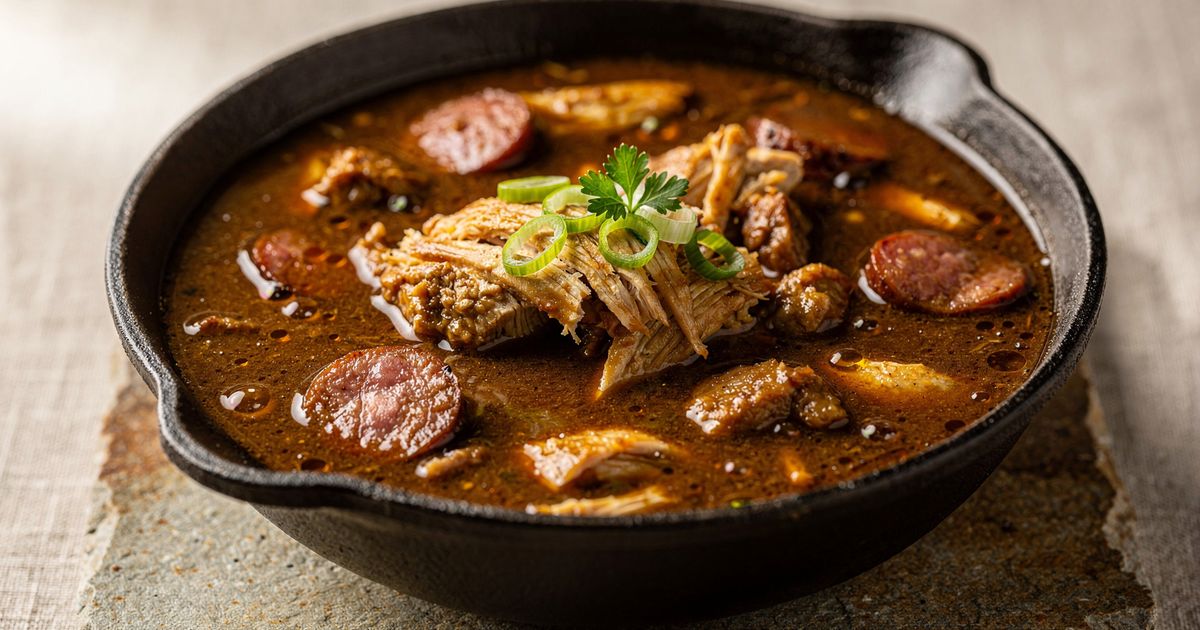
Chicken and Shrimp Jambalaya
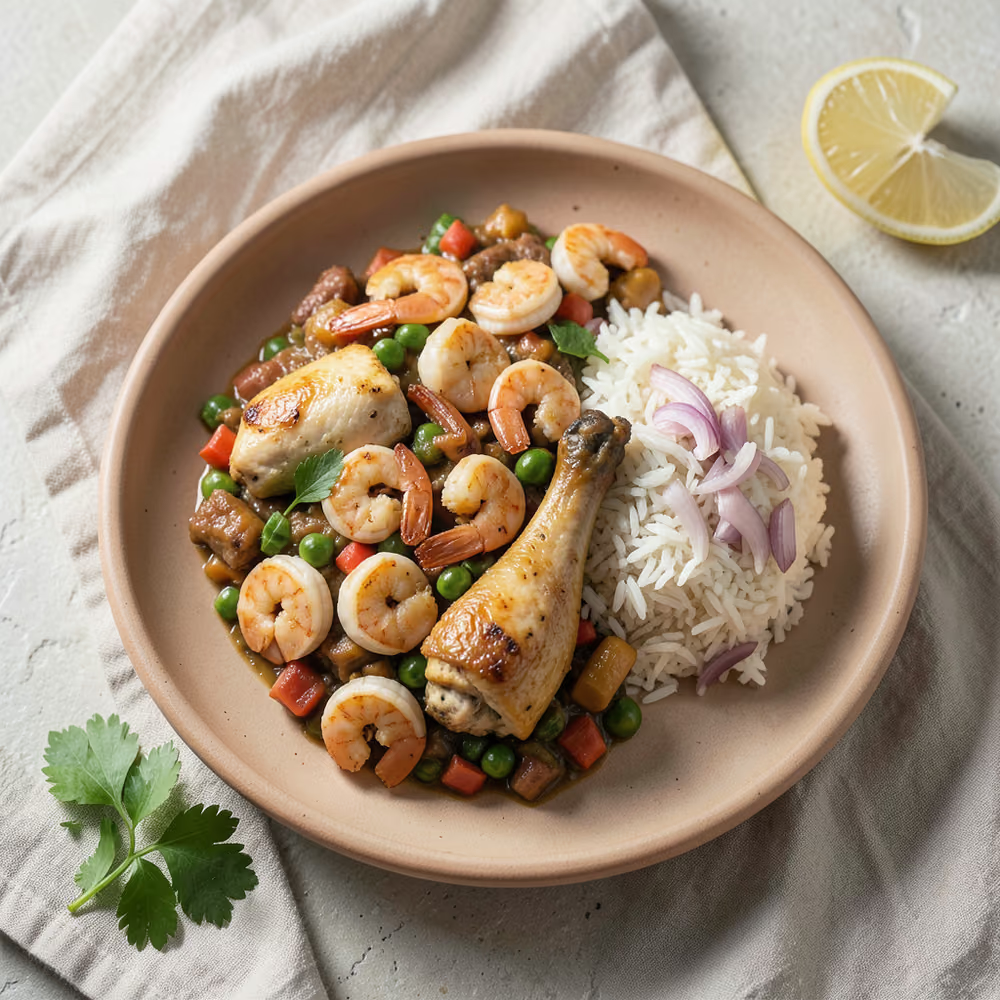
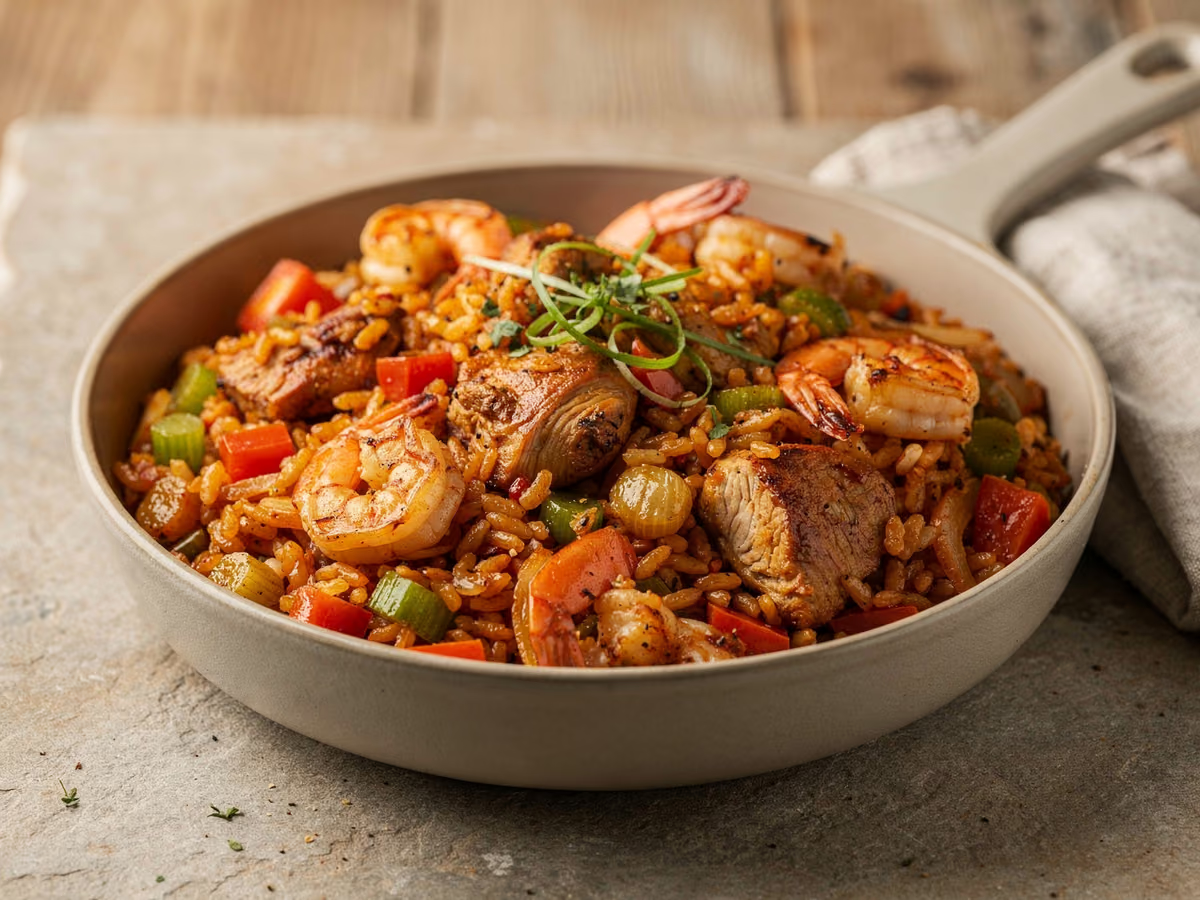
Jambalaya is Louisiana's one-pot rice dish, Creole-style here: chicken thighs and shrimp cooked down with the holy trinity of onion, green bell pepper and celery over a smoked-paprika tomato base, with 300 g of long-grain rice steamed in the same pot. It takes 20 minutes of prep and 45 minutes of cooking, and most of that is hands-off — after one stir the lid goes on and the rice cooks in the seasoned liquid. One pot, six generous portions.
- Prep
- 20 min
- Cook
- 45 min
- Total
- 65 min
- Serves
- 6
Ingredients
What you’ll need — tap to tick off as you go
- 500 g
- 300 g
- 300 g
- 3 cloves
- 400 g
- 500 ml
- 2 tbsp
- 2 tbsp
- 2 tsp
- 1 tsp
- ½ tsp
- ¼ tsp
- 1 tsp
- ½ tsp
Process
Timers built in · swap anything · ask as you cook
Heat 1 tbsp of the olive oil in a wide heavy pot or Dutch oven over medium-high until it shimmers. Add the 500 g chicken thighs in a single layer and cook for about 5 minutes, turning, until golden on all sides, then lift them out with a slotted spoon. A hard sear leaves flavour on the base of the pot that the vegetables will dissolve later.
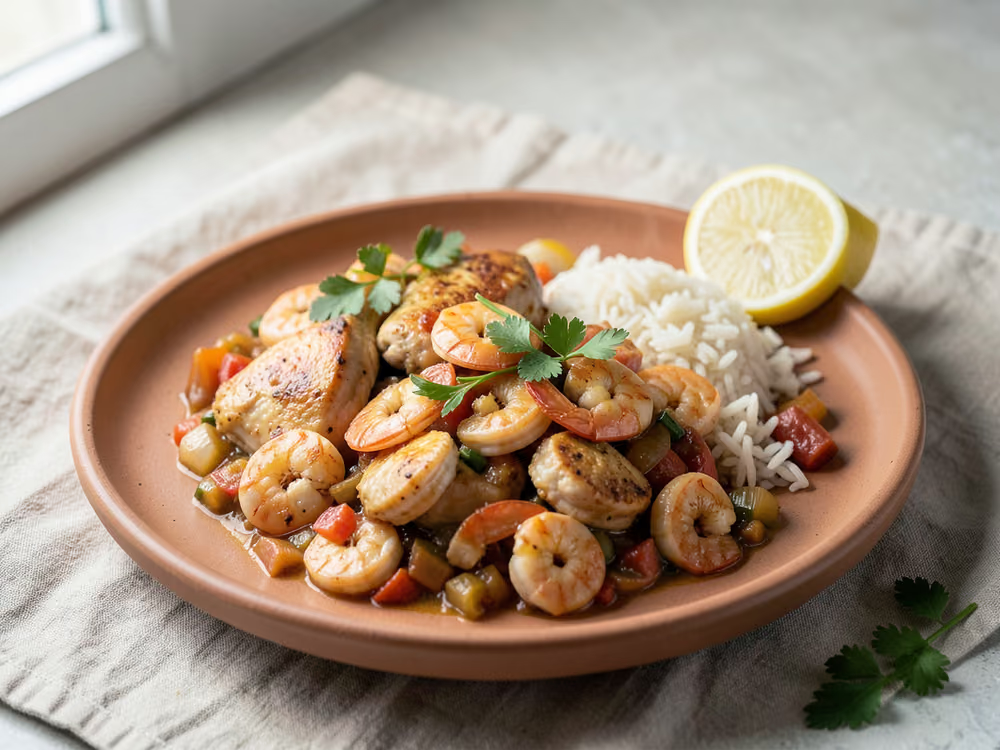
Add the remaining 1 tbsp olive oil, then the diced onion, 1 diced green bell pepper and 2 diced celery stalks. Cook for about 5 minutes, stirring occasionally and scraping up the browned bits as the vegetables release their moisture, until they soften and turn glossy. This is the holy trinity, and it is the sweet, savoury base the whole dish sits on.
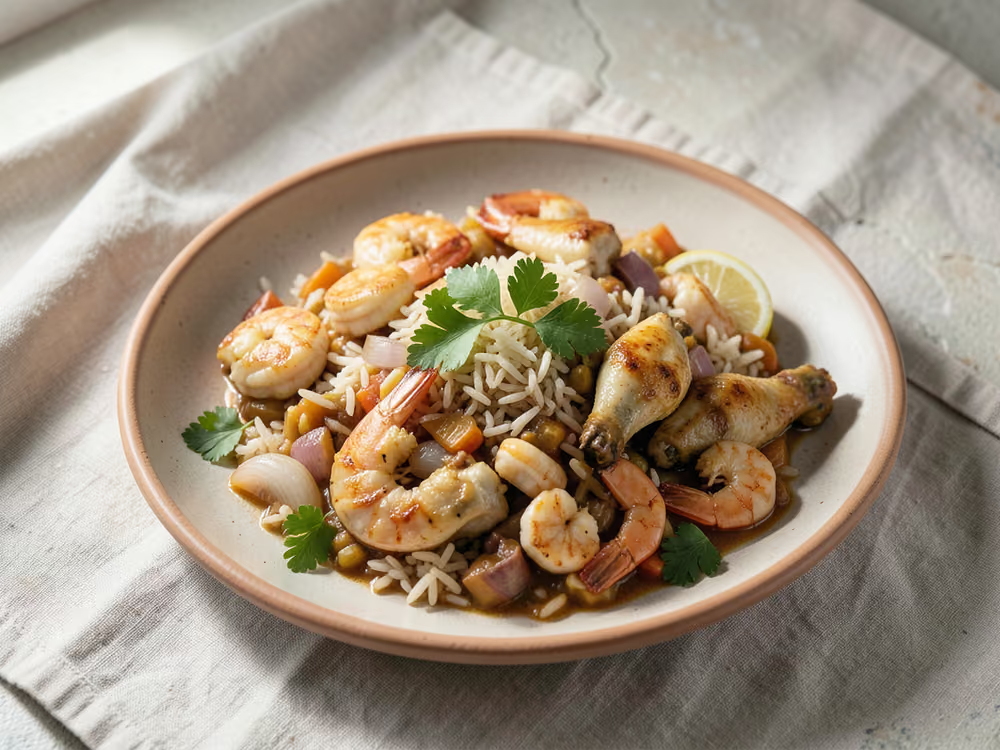
Stir in the 3 minced garlic cloves and cook for 1 minute, until the smell turns sweet and nutty. Garlic goes from fragrant to burnt in under a minute at this heat, and a burnt note would survive the whole 20-minute rice simmer.
Add 2 tbsp tomato paste, 2 tsp smoked paprika, 1 tsp dried oregano, 0.5 tsp dried thyme, 0.25 tsp cayenne, 1 tsp salt and 0.5 tsp black pepper. Stir into the vegetables and oil for a full minute, until the paste darkens to brick red and the spices smell toasted. Toasting them here is what turns raw powder into a rounded, smoky base.
Add the 400 g diced tomatoes with their juices, the 500 ml chicken broth and the bay leaf, scraping the bottom clean as the liquid comes to a simmer. Let it bubble lazily for 3 to 4 minutes; this is the liquid the rice will absorb, so taste it now and adjust before the rice goes in.
Return the browned chicken and any resting juices, then stir in the 300 g rinsed rice once, just to spread it into an even layer. Reduce the heat to low, cover and simmer gently for 20 minutes without stirring — each stir releases starch and turns the pot gluey, while the trapped steam is what cooks the grains.
Fold in the 300 g shrimp in one gentle pass, cover again and cook for 5 to 7 minutes, until the shrimp are pink, opaque and curled into a loose C. Shrimp need only these few minutes; a tight O means overcooked. Check the thickest one reads 63°C, the USDA FSIS minimum for shellfish.
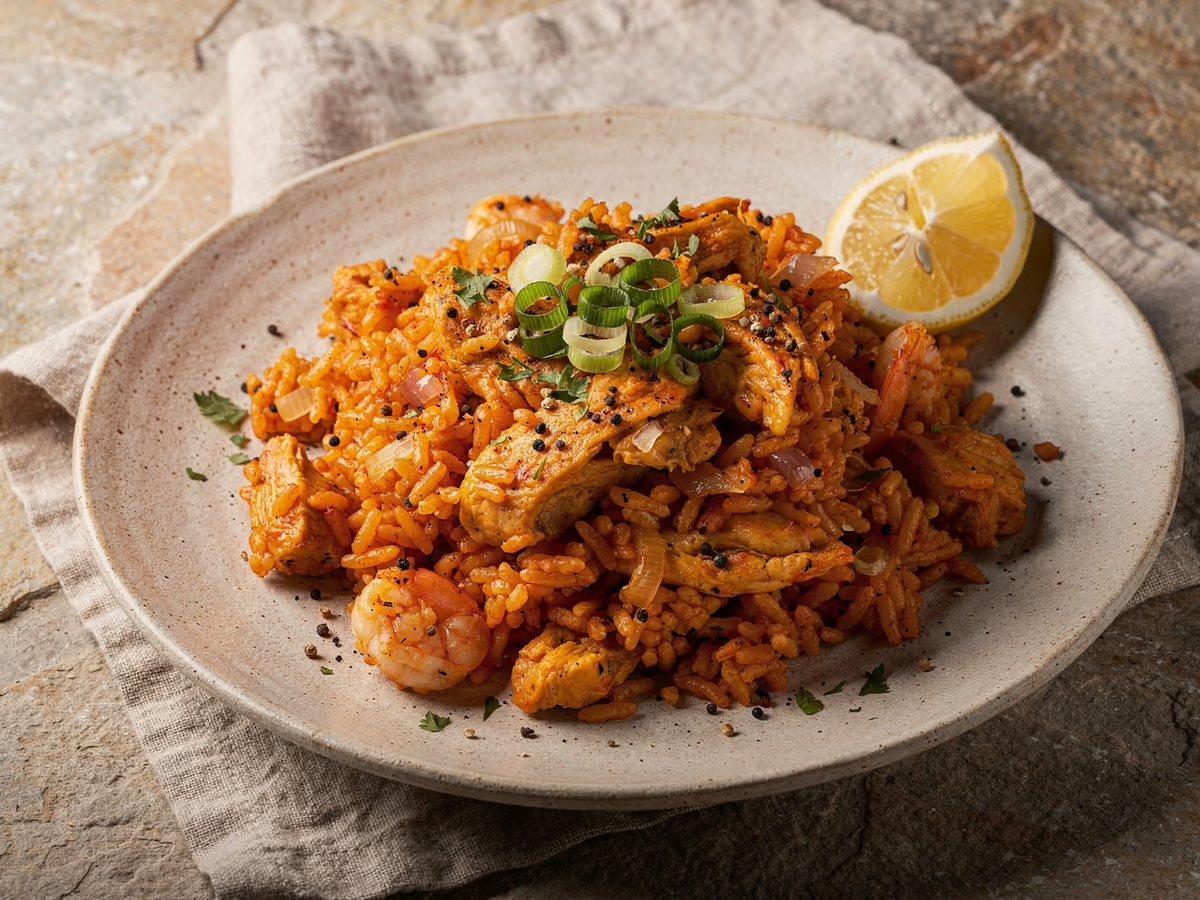
Take the pot off the heat, discard the bay leaf, and let it stand covered for 5 minutes so the last of the liquid absorbs into the rice. Fluff with a fork, check the chicken reads 74°C — the USDA FSIS minimum for poultry — then scatter over the sliced green onions and serve.
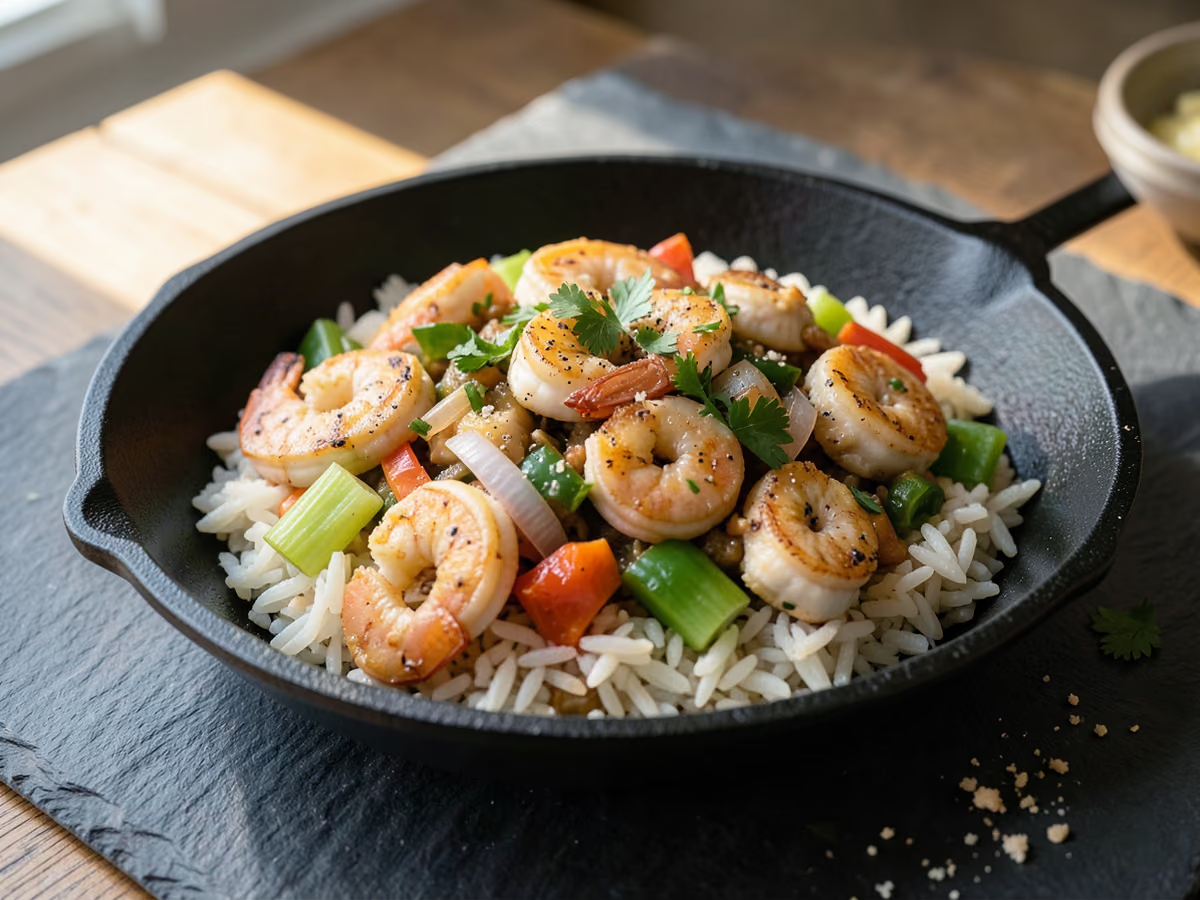
Why this recipe works
Jambalaya's texture comes from geometry as much as ingredients: the rice steams in an even layer under a lid rather than boiling in a deep bath, and it is stirred only once, so the grains stay separate instead of releasing starch and turning gluey. Browning the chicken first leaves a savoury layer on the pot that the vegetables lift as they sweat, and toasting the spices with the tomato paste dissolves their fat-soluble flavour into the sauce. The shrimp go in only for the final minutes because their proteins set fast; five to seven minutes keeps them springy, twenty makes them rubber.
Equipment
- Heavy Dutch oven or wide heavy-bottomed pot, 4 to 5 litres, with a tight lid
- Wooden spoon or heatproof spatula
- Chef's knife and cutting board
- Slotted spoon for lifting the chicken
- Measuring jug for the 500 ml broth
- Can opener for the tomatoes
- Instant-read thermometer
Kitchen notes
Kitchen notes
- Do not lift the lid during the 20-minute rice simmer: every peek releases the steam that is actually doing the cooking, and the grains at the top stay hard when it escapes.
- Dice the onion, pepper and celery to a uniform 1 cm: even pieces melt into the rice together, so every spoonful carries all three flavours instead of landing on a chunk of one.
- Scale the recipe in a wider pot, not a taller one, because rice steams evenly only in a shallow layer; doubling the batch needs more surface area, not a deeper heap.
- A heavy pot is half the recipe. If yours is thin, slide a heat diffuser underneath, because the rice's 20 minutes on low need steady bottom heat to cook through without scorching.
- If the finished pot looks wetter than you like, rest it with the lid slightly ajar for 2 minutes; the escaping steam takes surface moisture with it and leaves the grains below alone.
- Use the 5-minute rest to warm the bowls and slice the green onions, so the jambalaya reaches the table hot and the garnish stays crisp.
Common mistakes
- Mushy rice: the pot was stirred during the covered simmer, or there was more liquid than the 500 ml of broth and the tomato juices. Stir once when the rice goes in, then leave the lid on; extra tomatoes or broth are absorbed by the rice and break the grains down.
- Rice still chalky at 20 minutes, with liquid pooling on top: adding shrimp then would push the pot from tender to soupy. Simmer it uncovered for 2 to 3 minutes to drive some liquid off, then fold the shrimp in.
- Shrimp turned rubbery: they went in with the rice instead of after it. They need only 5 to 7 minutes, so fold them in once the rice has had its full 20, and pull the pot when they curl into a loose C.
- A burnt layer on the bottom: the heat was above a true low simmer, or the pot was thin. Keep the lowest setting that holds a gentle bubble, and if it does scorch, do not stir it in — spoon the jambalaya from the top and leave the burnt layer alone.
- Flat, dusty flavour: the spices went in after the liquid, or the paprika is old. Toast them with the tomato paste for a full minute in the oil, and check that the paprika still smells sweet before you rely on it.
- Dry pot, firm rice: the lid did not seal and steam escaped before the rice was tender. Use a tight-fitting lid, and if the grains are still chalky at 20 minutes, add 60 ml hot broth, re-cover and cook 5 minutes more without stirring.
Serving suggestions
- Serve hot in warmed bowls — this makes 6 generous portions — and keep the pot on low heat for anyone who wants seconds.
- A crisp green salad or a plate of stewed greens is the classic side; the rice is already the starch, so skip the bread and potatoes.
- Set out lime wedges, extra sliced green onions and hot sauce so each bowl can be sharpened or cooled to taste.
- Leftovers reheat beautifully and taste deeper the next day; spoon a reheated portion into a bowl and top it with a fried egg for breakfast.
Variations
- Oven-baked, hands-off: once the rice is in, cover the pot and bake at 160°C for about 40 minutes, then stir in the shrimp for a final 5 minutes. The oven's gentler heat makes scorching almost impossible and you never have to stir.
- Smoked turkey sausage version, a heartier pot: brown a sliced link or two of smoked turkey sausage with the vegetables before the garlic goes in, and hold back some of the salt until you taste the broth, since smoked sausage seasons everything it touches.
- Hotter or milder: the cayenne as written is gentle warmth. For real heat, add a minced jalapeño with the garlic or a few dashes of hot sauce at the table; for a family pot, halve the cayenne or leave it out altogether.
Refrigerator
- RefrigeratorCool the pot within 1 hour of cooking, spreading it in a shallow container to speed this up — USDA FSIS allows no more than 2 hours at room temperature — then refrigerate in an airtight container for up to 3 days. Shrimp-heavy portions are best within 2 days, while the rice is still separate rather than clumped.
- ReheatingReheat in a covered saucepan over low heat with 2 to 3 tablespoons of water or broth per portion, stirring gently, until steaming hot throughout and reading 74°C, the USDA FSIS reheat temperature. Microwave covered in 1 minute bursts instead if you prefer; break up any clumps of rice first so it heats evenly.
- FreezingUp to 2 months. Pack single portions in freezer bags, press flat and freeze, then thaw overnight in the fridge and reheat as above with a splash of broth. The rice softens slightly on thawing, which is expected; a little broth brings the texture back.
- Make aheadThe chicken and the vegetable-spice base can be cooked up to 1 day ahead and refrigerated; bring it back to a simmer on the day, add the 500 ml broth and the 300 g rice, and continue from step 6. Do not cook the rice ahead — it firms and dries in the fridge.
Updated:
How this recipe was developed
- Serious Eats, Creole-style red jambalaya method (brown the chicken in batches for depth; roughly 2 parts liquid to 1 part rice by volume; bake covered rather than on the stovetop so the rice cannot scorch and needs no stirring; add shrimp only in the final minutes; rest the pot off heat before serving)
- Chowhound interview with New Orleans chef Eric Cook on jambalaya rice (keep the lid on and leave the pot alone while the rice steams instead of opening it to check)
- USDA FSIS safe minimum internal temperatures (poultry 74°C; fish and shellfish 63°C; leftovers reheated to 74°C)
- USDA FSIS leftovers and food safety guidance (refrigerate within 2 hours; 3 to 4 days in the fridge; frozen leftovers 2 to 3 months)
Editorial references are kept internally for verification. This page makes no claim of external certification or professional testing.
Gallery
FAQ
The questions we get asked most
Why did my jambalaya turn out mushy?
It is almost always stirring during the covered simmer, or too much liquid. Stir only once after the rice goes in, keep the lid on, and use the 500 ml of broth for the 300 g of rice as written — extra tomatoes or broth are absorbed by the rice and break it down.
Can I use cooked shrimp instead of raw?
Yes, but add them at the very end: after the rice has had its 20 minutes, turn off the heat, fold the cooked shrimp through, and let the pot stand covered for 5 minutes so they warm through without toughening.
How do I know when the rice and shrimp are done?
The rice is done when it is tender with no chalky centre and the liquid is absorbed, about 20 minutes covered on low. The shrimp are done when they curl into a loose C and are pink and opaque, usually after 5 to 7 minutes; check the thickest reads 63°C, the USDA FSIS minimum for shellfish, and pull them before they close into a tight O.
Why is my jambalaya dry or sticking to the pot?
The heat was too high or the pot too thin, so the liquid evaporated before the rice finished. Keep the burner on low, use a heavy pot, and if the rice is still firm at 20 minutes, add 60 ml hot broth, re-cover and cook 5 minutes more without stirring.
Can I make jambalaya ahead of time?
Partly: the chicken and the vegetable-spice base can be cooked up to 1 day ahead and refrigerated. On the day, bring the base back to a simmer, add the 500 ml broth and the 300 g rice, and continue from step 6. Do not pre-cook the rice — it firms and dries in the fridge.
Can I freeze jambalaya?
Yes, for up to 2 months. Pack single portions flat in freezer bags, press out the air, and thaw overnight in the fridge; reheat gently with a splash of broth. The rice softens slightly on thawing, so reheat only what you will eat and keep the rest frozen.
Can I use canned diced tomatoes or frozen shrimp?
Both work as written. The 400 g of canned diced tomatoes go in with their juices, so drain nothing; frozen shrimp are fine if fully thawed and patted dry first, added at the same point and cooked 5 to 7 minutes.
Ask KitchenMind about this recipe
Tell it what’s different tonight — it works within the actual recipe.