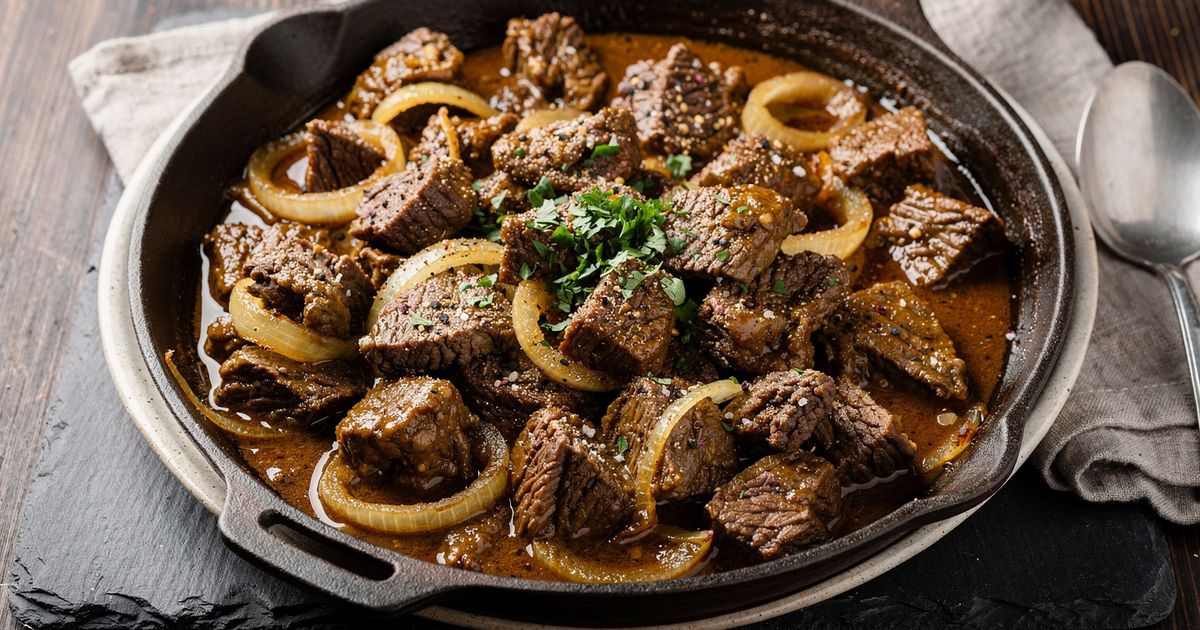
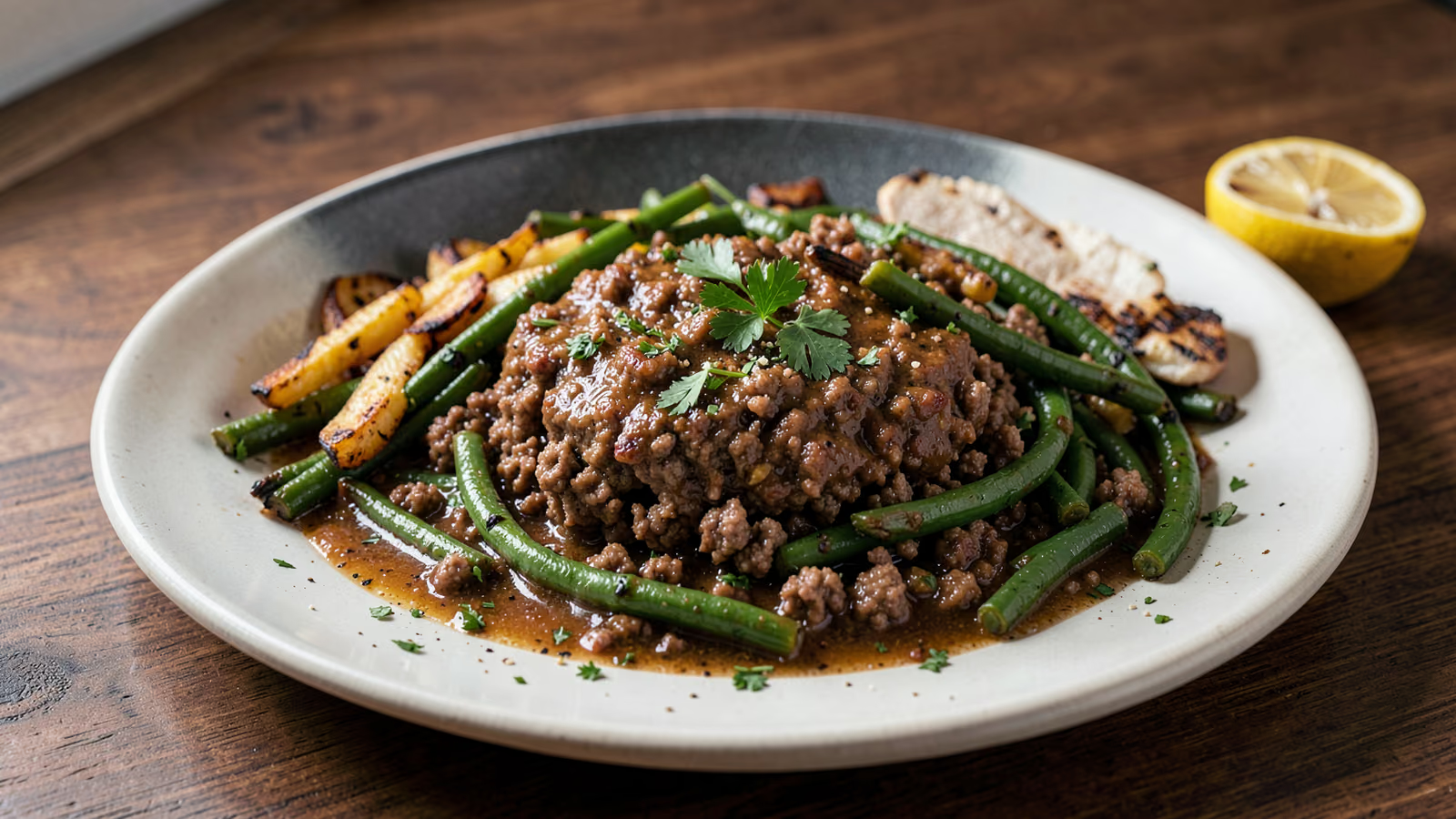
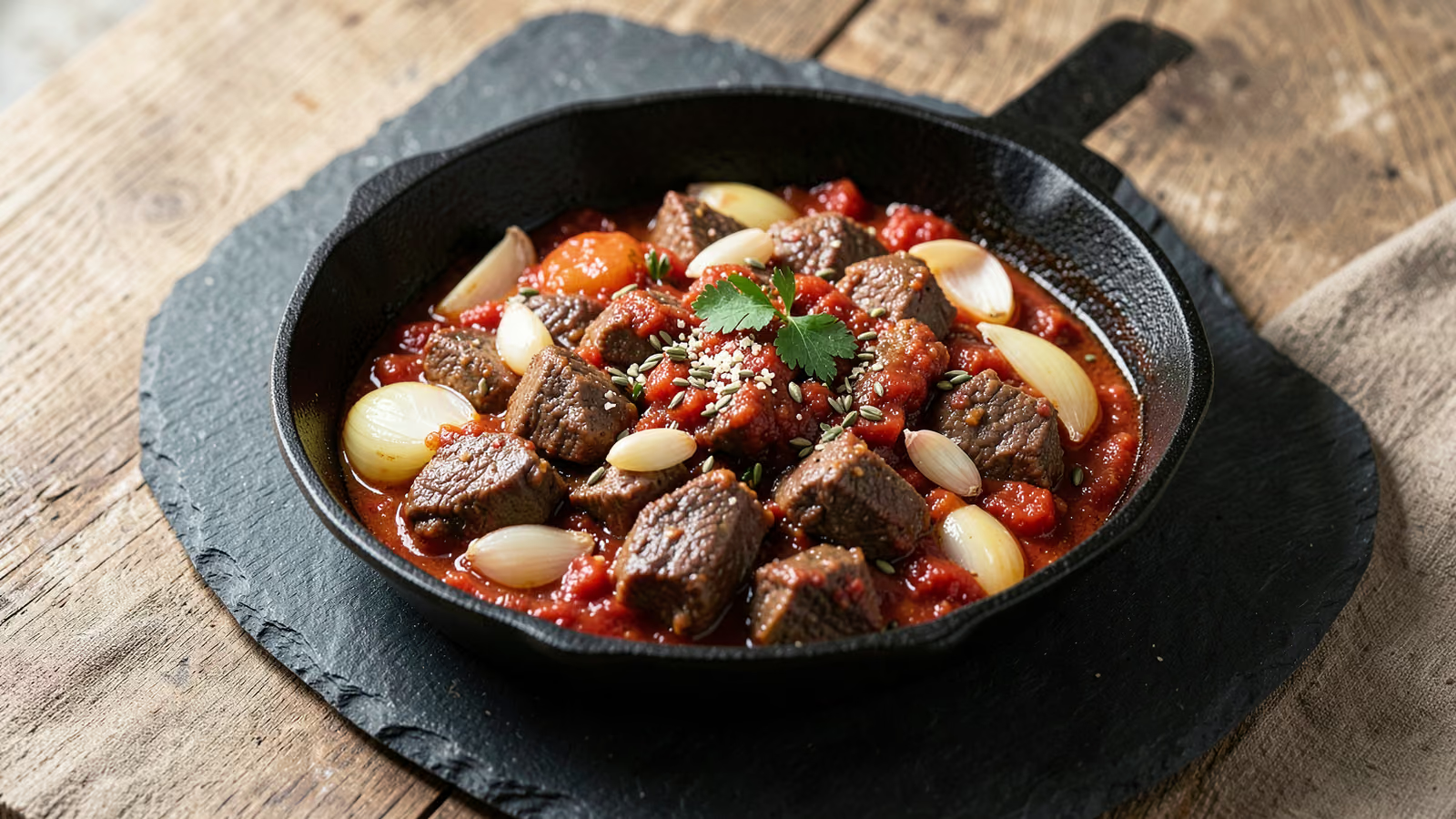
Slow-Cooked Beef Brisket
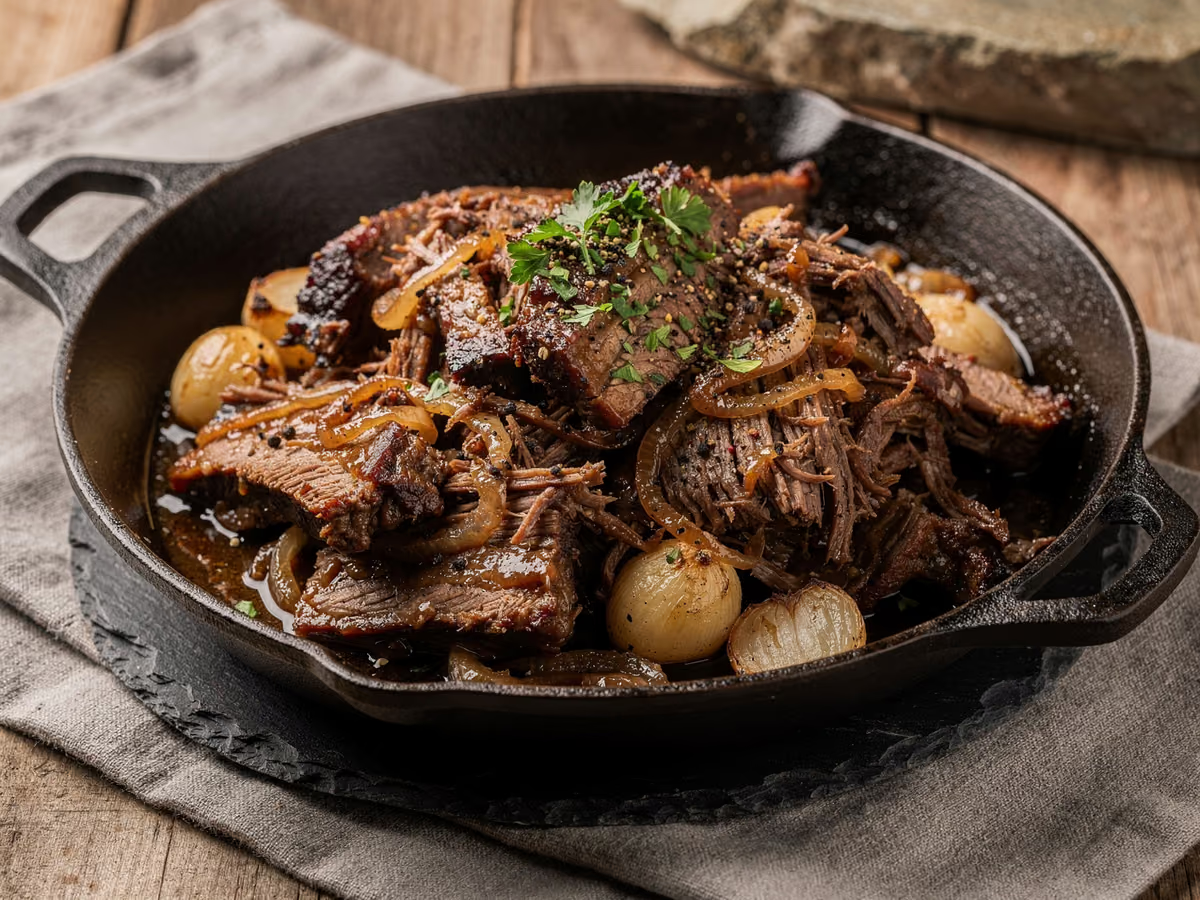
Slow-Cooked Beef Brisket turns one of the toughest cuts on the steer into fork-tender slices: 2 kg of flat-cut brisket, seared to a dark crust, then braised at 160°C with onions, garlic, tomato paste, soy sauce, apple cider vinegar, brown sugar, bay and thyme until it shreds under a fork. The oven does the work — about 20 minutes of active cooking up front, then 3.5 to 4 hands-off hours, a 20-minute rest, and enough rich sauce to feed eight people without last-minute fuss.
- Prep
- 20 min
- Cook
- 240 min
- Total
- 280 min
- Additional time
- 20 min
- Serves
- 8
Ingredients
What you’ll need — tap to tick off as you go
- 2 kg
- 2 tbsp
- 1 tbsp
- 2 tbsp
- 6 cloves
- 500 ml
- 60 ml
- 2 tbsp
- 2 tbsp
- 2 tbsp
- 1 tsp
Process
Timers built in · swap anything · ask as you cook
Preheat the oven to 160°C and pat the 2 kg brisket dry all over with paper towels, including the fat cap. Dry meat browns in the next step; wet meat steams. Season all sides generously with the 2 tbsp salt and 1 tbsp black pepper, pressing the seasoning in so it clings.
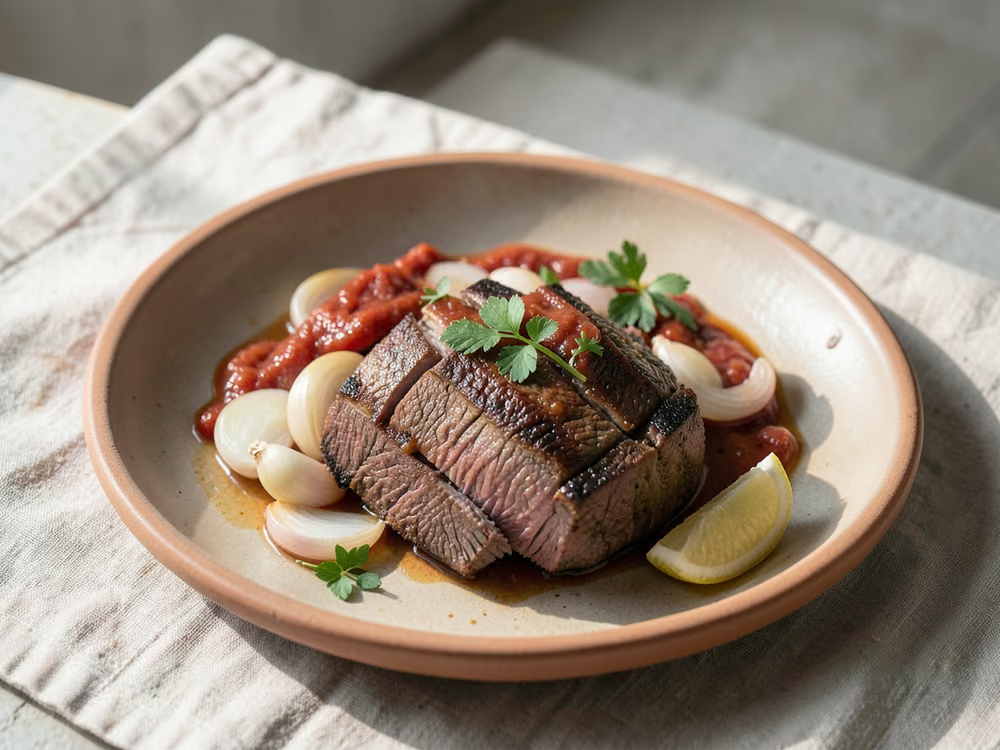
Heat the 2 tbsp vegetable oil in a Dutch oven or similar heavy pot over high heat until it shimmers. Sear the brisket 4 to 5 minutes per side, turning only when each face releases easily with a deep mahogany crust, fat cap and narrow edges included. Nothing browns again once the lid goes on, so this crust is the flavor base of the whole braise. Move the meat to a plate.
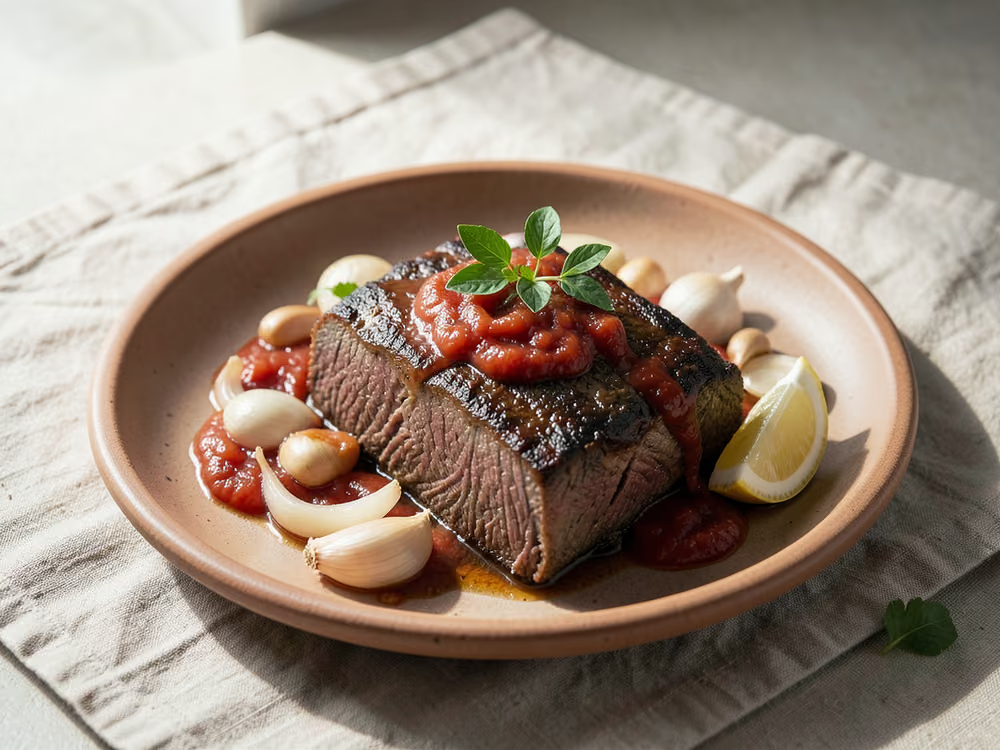
Reduce the heat to medium, add the 3 sliced onions and 6 smashed garlic cloves, and cook for about 5 minutes, scraping the browned bits off the bottom as the onions release their moisture. The onions should soften and turn golden as that fond dissolves back into them, which is the sweet base of the sauce. Keep the garlic moving and never let it pass pale gold, or the whole pot turns bitter.
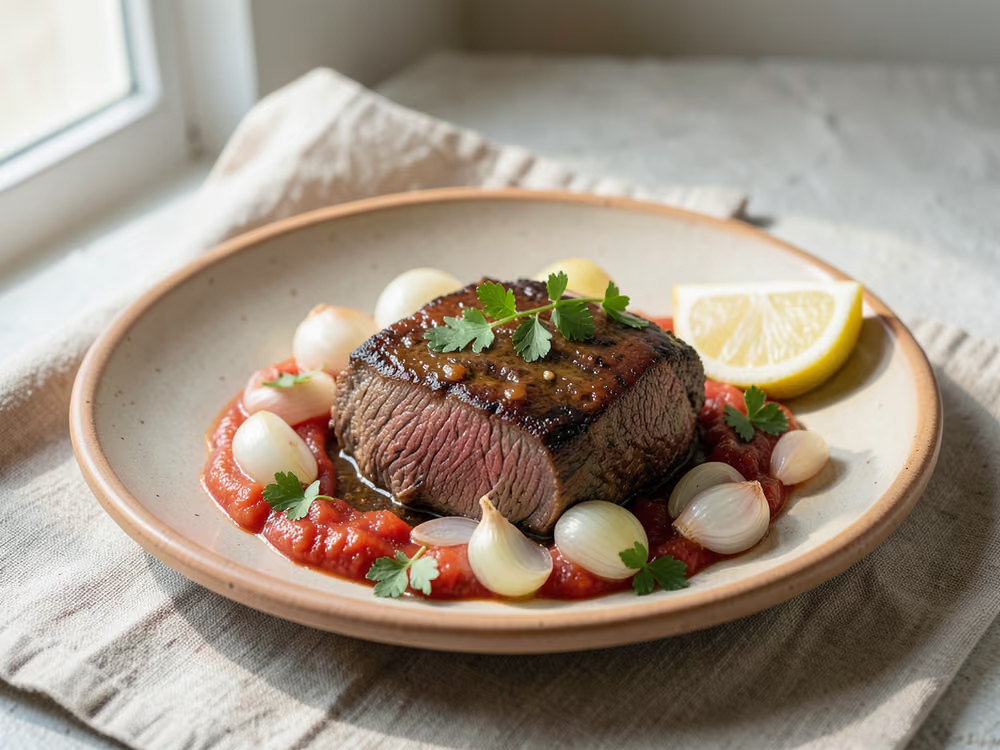
Stir in the 2 tbsp tomato paste and cook it for 1 minute, until it darkens a shade and coats the onions; frying it here loses the raw, tinned edge. Add the 500 ml beef broth, 60 ml soy sauce, 2 tbsp brown sugar, 2 tbsp apple cider vinegar, 2 bay leaves and 1 tsp dried thyme, scraping the pot as it comes to a gentle simmer.
Nestle the brisket back in fat side up so the melting cap keeps basting the meat from above, and add the 3 carrots in 2 cm chunks if using. The liquid should reach about the halfway mark on the meat, never over it. Too much and you are stewing rather than braising, and the sauce ends up thin; top up with a splash of water only if half the meat is not covered.
Cover the pot tightly with its lid or a double layer of foil and slide it into the 160°C oven. Give it 3.5 to 4 hours, undisturbed, because every peek lets the steam out; if your flat is on the thin side, start testing at the 3-hour mark. The brisket is done when a fork or thin knife slides into the thickest part with no resistance and a twist shreds the meat along its grain.
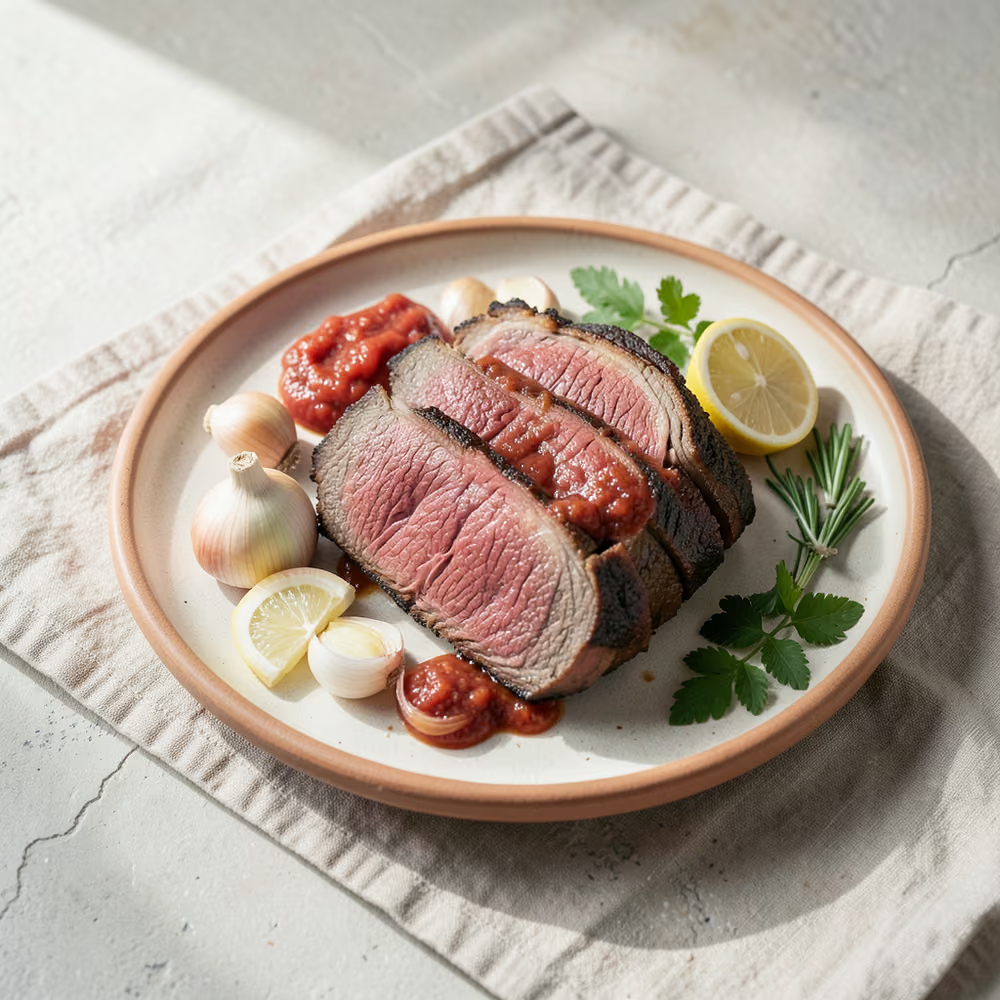
Let the covered pot stand off the heat for 20 minutes; resting lets the fibers relax and reabsorb juices, so the slices stay moist instead of draining onto the board. Lift the brisket out, cut across the visible grain, or shred it with two forks. Spoon the clear fat off the sauce, taste for salt, and return the meat to the pot to serve.
Why this recipe works
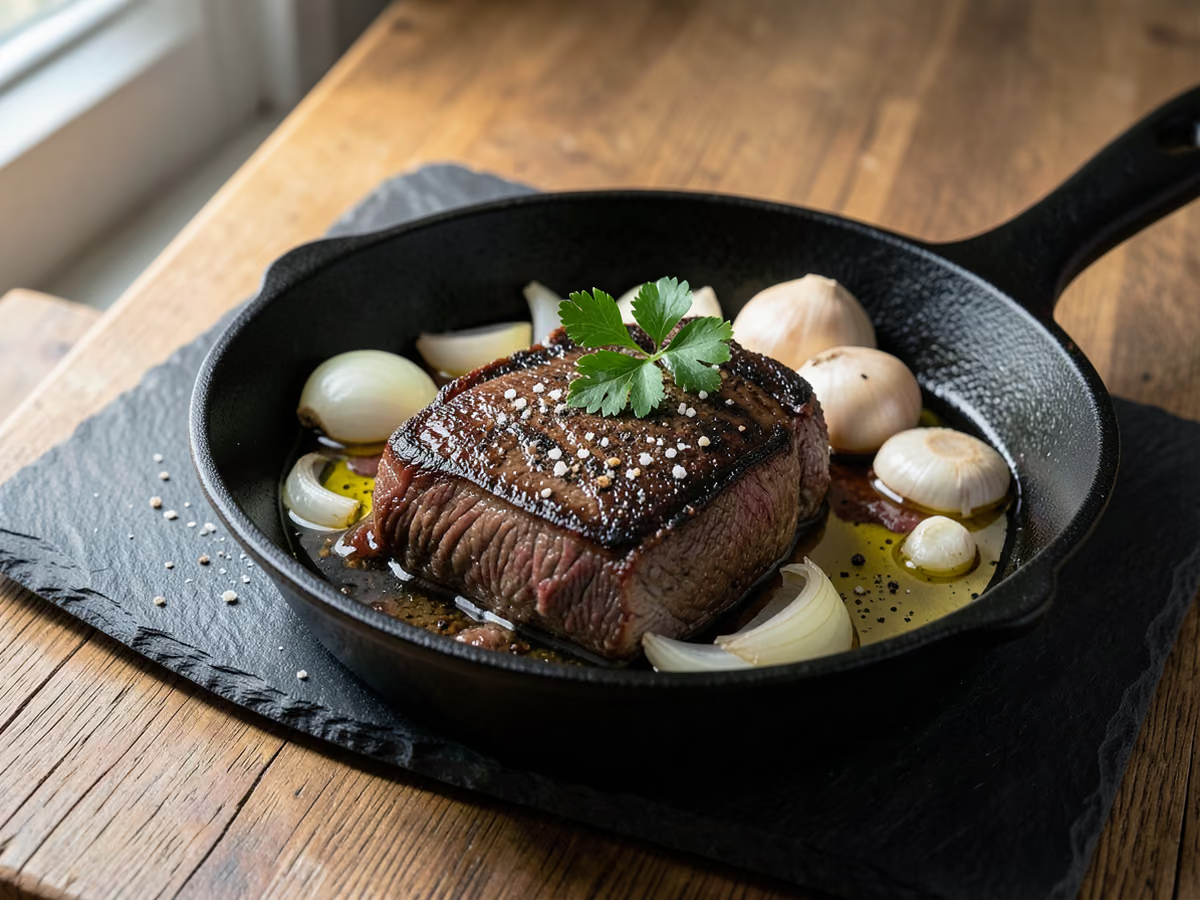
Two forces make this cut work. The sear is one: hard, dry, hot contact builds the deep brown crust through browning reactions, and because the lid then goes on, no further browning can happen, so the flavor has to be banked on the surface first. The braise is the other: at a steady 160°C, moisture and gentle heat slowly soften the brisket's dense collagen and relax the muscle fibers, which is what fork-tenderness actually is. Sealed tight and filled only halfway, the pot keeps the lean flat moist, and the fatty cap left facing up bastes the meat as it renders.
Equipment
- Large Dutch oven with a tight-fitting lid, 5-6 l (or a heavy roasting pan)
- Instant-read thermometer
- Tongs and a carving fork
- Sharp carving knife and a grooved cutting board
- Large plate or tray for the seared brisket
- Wooden spoon or heatproof spatula
- Aluminium foil, in case the lid does not seal tightly
- Measuring jug and measuring spoons
Kitchen notes
Kitchen notes
- Salt the brisket the night before if you can: leave it uncovered on a rack in the fridge, and the long dry brine seasons the thick cut to the middle while the surface dries for a better sear.
- Ask the butcher for a flat with an even thickness and a full 1 cm fat cap. A tapered piece overcooks at the thin end while the middle firms up slowly, and the cap is the brisket's built-in baster.
- Moving a 2 kg slab in a hot pot is awkward: slide a wide spatula or a strip of folded foil underneath when the brisket goes back in, and it lifts cleanly without tearing the crust.
- Do as the delis do before serving: slice the rested brisket, return the slices to the warm defatted sauce, and let them soak for 20 to 30 minutes. The exposed surfaces drink in sauce, and every slice comes out juicier.
- Treat the sauce as a second dish: once the fat is off, simmer it down for 5 to 10 minutes until it coats a spoon, then sharpen it with a few drops more vinegar if it tastes flat. Spoon it over the meat at the table.
Common mistakes
- Tough, chewy slices: the collagen has not finished softening, which is almost always undercooking rather than a bad cut. Put the covered pot back in the 160°C oven in 30-minute increments and test again; turning up the heat only dries the meat.
- Dry brisket: steam escaped around a loose lid, the liquid dipped below the halfway mark, or the meat stayed in past tender. Keep the seal tight, glance at the liquid level when you check doneness, and pull the brisket as soon as the fork test passes.
- Thin, watery sauce: too much liquid went in, or the pot was opened often enough to boil off the body. Pour broth only to the halfway point, resist lifting the lid, and reduce the defatted sauce on the stovetop if you want it glossy.
- Pale, stewed meat instead of a browned crust: the brisket was still wet when it hit the pan, or the sear was rushed. Dry it thoroughly, let the oil shimmer, and give every side the full 4 to 5 minutes; behind a closed lid nothing browns later.
- Slices that string apart under the knife: the meat was cut along the grain, or carved while still hot. Let it rest the full 20 minutes and cut across the fibers you can see running along the surface.
Serving suggestions
- Serve the slices or shreds hot, in their defatted sauce, with mashed potatoes, buttered egg noodles or soft polenta underneath to catch the gravy.
- A sharp cabbage slaw or quick-pickled onions cuts the richness; steamed green beans or braised greens do the same job with less crunch.
- Pile thin slices onto soft rolls or sturdy bread with a spoonful of warm sauce for brisket sandwiches; the leftovers were made for this.
- Keep the drinks cold and simple: sparkling water with lime, iced tea or sparkling apple soda reset the palate between bites of rich beef.
- The full 2 kg serves 8; carve only what will be eaten and leave the rest whole in its sauce so the meat stays moist for seconds and for tomorrow.
Variations
- Slow-cooker version: sear the brisket and build the sauce on the stovetop exactly as written, then transfer it all to a slow cooker. Cook on low for 8 to 10 hours, or 4 to 5 hours on high, until fork-tender. The meat comes out a little softer and the sauce stays thinner.
- Shredded-style: skip the knife and pull the warm brisket into strands with two forks, then toss them through the sauce. The texture suits sandwiches and tacos, and because every fiber is coated, it tastes juicier; slicing direction stops mattering.
- Gluten-free variation: use tamari in place of the soy sauce at the same 60 ml, and check that your beef broth is gluten-free. The sauce lands a shade deeper and less sharp-tasting, and the rest of the dish is unchanged.
Refrigerator
- RefrigeratorCool the brisket within 2 hours of cooking, then refrigerate it in an airtight container, covered in its sauce, for up to 4 days (the USDA FSIS guidance for leftovers is 3 to 4 days). The fat sets on top and lifts off in one piece before reheating.
- ReheatingReheat gently, covered, in a 160°C oven for 15 to 20 minutes, or on the stovetop over low heat in its sauce, until hot all the way through: 74°C, the USDA FSIS reheat temperature. Hard, fast reheating tightens the meat, so keep it low and keep it covered.
- FreezingFreeze the meat in its skimmed sauce in a freezer-safe container for up to 3 months (USDA FSIS puts frozen leftovers at 3 to 4 months). Thaw overnight in the fridge and reheat as above; texture softens slightly, so shreds and slices fare better than a whole slab.
- Make aheadThe whole braise can be made up to 3 days ahead: cook it, cool it quickly, and refrigerate it in its sauce, then reheat gently, covered, before serving. It genuinely improves overnight, once the flavors settle and the fat is easy to remove.
Updated:
How this recipe was developed
- USDA FSIS / FoodSafety.gov Safe Minimum Internal Temperature Chart (whole-cut beef 63°C with a 3-minute rest; leftovers reheated to 74°C)
- USDA FSIS Leftovers and Food Safety (refrigerate within 2 hours; keep 3-4 days; freeze 3-4 months; reheat to 74°C)
- America's Test Kitchen, 'The Science Behind Perfect Braised Brisket' (collagen softens fastest at 82-93°C internal; sealed pot and halfway liquid keep the lean cut moist; fork-tenderness test)
- Serious Eats braised-brisket guides by Daniel Gritzer and Leah Colins (sealed vessel retains moisture; rest, slice thinly across the grain, and soak slices in the warm braising liquid)
Editorial references are kept internally for verification. This page makes no claim of external certification or professional testing.
Gallery
FAQ
The questions we get asked most
How long does beef brisket take to cook in the oven?
At 160°C in a covered pot, a 2 kg flat-cut brisket takes 3.5 to 4 hours, plus a 20-minute rest and about 20 minutes of prep and searing before it goes in. The window shifts with thickness: a thin flat can be ready near 3 hours, a thick one takes the full 4, so start checking at 3 hours and trust the fork test.
What temperature should I cook beef brisket at?
Keep the oven at 160°C for the whole braise, low enough that the pot barely simmers; a hard boil tightens the meat. The temperature that matters most is inside the beef: aim for roughly 95°C, where the collagen gives way and the meat turns fork-tender. That is well above the 63°C plus 3-minute rest that USDA sets as the safe minimum for whole cuts of beef, and it is about texture, not safety.
Why is my brisket tough?
Almost always because it needs more time, not more heat. The collagen in a brisket softens only after hours of gentle cooking, so return the covered pot to the 160°C oven and re-test every 30 minutes until a fork twists in the thickest part with no resistance. A lid that leaks steam, or carving with the grain instead of across it, will also leave meat that chews tough.
Should I cover the brisket while it cooks?
Yes, covered and sealed for the entire 3.5 to 4 hours. The flat cut is lean, and an open pot lets moisture escape and the surface dry out; a tight lid or foil holds the steam in so the meat braises gently and stays juicy. You trade away extra surface browning for that moisture, which is the right call here: the sear already built the flavor.
How do I slice brisket against the grain?
Let it rest 20 minutes, then look at the surface: the grain is the direction of the long muscle fibers. Set your knife across that direction, at a right angle to the fibers, and cut thin slices; shorter fibers chew far more tender. If you cannot read the grain, or the slices start tearing, shredding with two forks is a perfectly good finish.
Can I make brisket ahead of time or freeze it?
Both work. The braise can be made up to 3 days ahead, cooled, and refrigerated in its sauce, then reheated gently; many cooks think it is better the second day. For the freezer, portion the meat with its skimmed sauce, freeze for up to 3 months, thaw overnight in the fridge, and reheat covered until hot through, about 74°C (the USDA FSIS reheat temperature).
What do you serve with beef brisket?
Serve it hot in its sauce over mashed potatoes, egg noodles or polenta, with something sharp on the side such as cabbage slaw, pickled onions or mustard. Cold drinks that reset the palate, like sparkling water, iced tea or a sparkling apple soda, suit it better than anything sweet. The next day, thin slices make excellent sandwiches on soft rolls with a spoonful of warmed sauce.
Ask KitchenMind about this recipe
Tell it what’s different tonight — it works within the actual recipe.