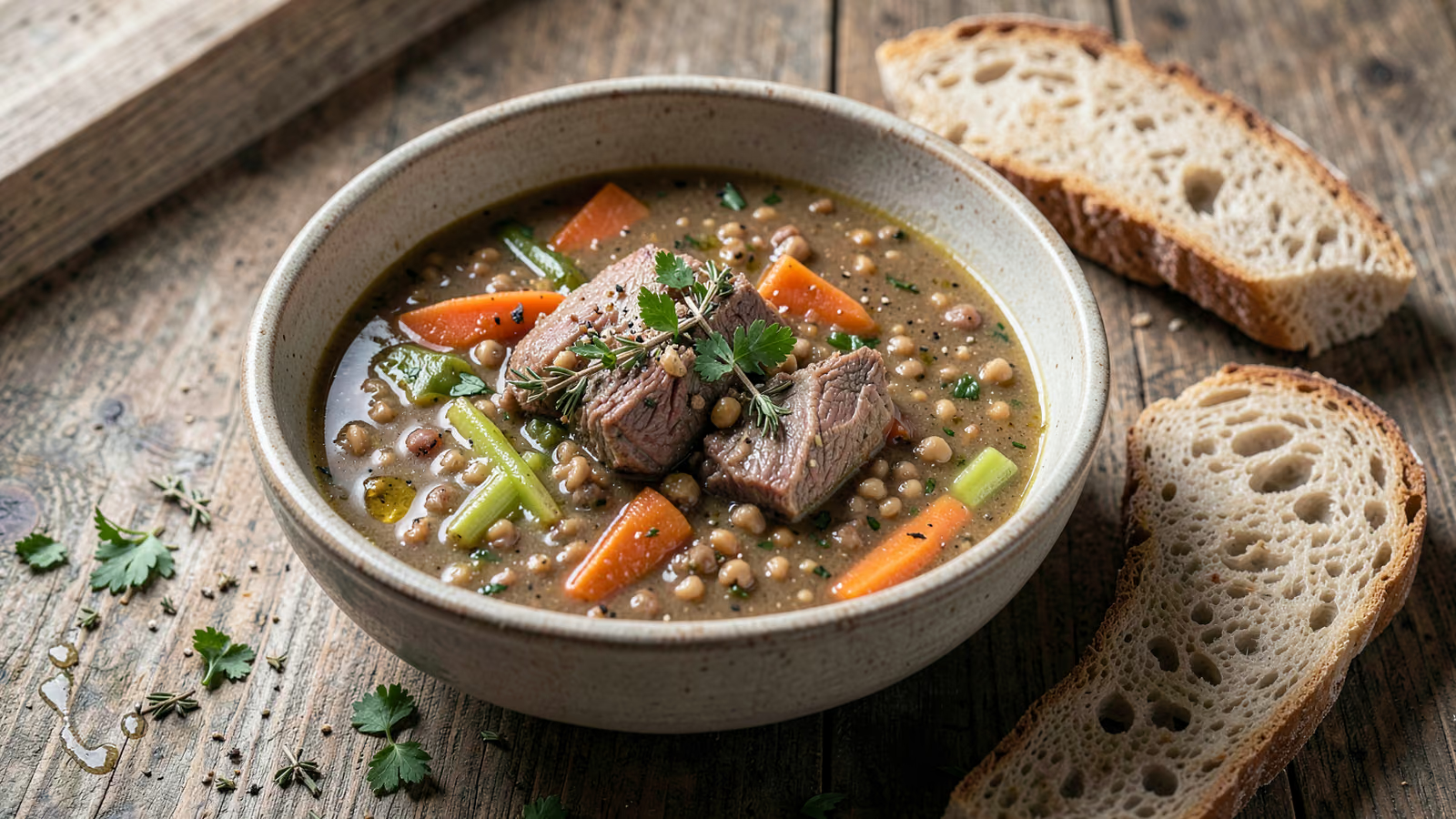
Hearty Beef Barley Soup
Hearty Beef Barley Soup is a one-pot dinner of browned chuck, pearl barley, and root vegetables in a savoury beef broth. The beef gets a proper sear before any liquid goes in, the barley simmers until tender, and the broth thickens to a spoon-coating body as it cooks. The pot stays at a gentle simmer for 60 to 70 minutes, so most of the cook time is hands-off; about 20 minutes of prep yields six generous bowls.
- Prep
- 20 min
- Cook
- 90 min
- Total
- 110 min
- Serves
- 6
Ingredients
What you’ll need — tap to tick off as you go
- 700 g
- 150 g
- 3 cloves
- 2 tbsp
- 1 ½ l
- 1 tsp
- 1 tsp
- ½ tsp
- 2 tbsp
- 2 tbsp
Process
Timers built in · swap anything · ask as you cook
Pat the 700 g beef chuck cubes dry with paper towels and season them with 1 tsp salt and 0.5 tsp black pepper. Dry surfaces are the point: any moisture on the meat has to boil off before browning can begin, so the cubes should look matte, not glossy, before they touch the pot.
Heat the 2 tbsp olive oil in a large pot or Dutch oven over medium-high until it shimmers and easily coats the base, around 190°C. Sear the beef in two or three batches in a single layer, about 4 to 5 minutes each, until browned on all sides, then move it to a plate. Crowding the pot drops the temperature and steams the meat grey instead of browning it.
Reduce the heat to medium, add the diced onion, the 3 peeled carrots sliced into 1 cm rounds, and the 3 celery stalks cut into 1 cm pieces, and cook for 5 to 7 minutes, stirring and scraping the browned bits off the pot floor as the vegetables soften. That layer is concentrated flavour, and the moisture the vegetables release is what lifts it into the broth.
Stir in the 3 minced garlic cloves and the 2 tbsp tomato paste and cook for about 1 minute, until the paste darkens to brick red and smells sweet rather than raw. Garlic scorches in seconds once the pot is hot, so keep everything moving and pull the pot off the heat early if it starts to catch.
Return the beef and its juices, then add the 1.5 litres beef broth, the 150 g pearl barley, 1 tsp dried thyme, and 2 bay leaves. Bring to a boil, then drop to low, cover, and simmer for 60 to 70 minutes with small bubbles just breaking at the surface; a hard boil toughens the meat and clouds the broth. At 50 minutes, check the barley — it should be tender with a slight chew.
Fish out the 2 bay leaves, then taste the broth and adjust the salt and black pepper; the barley has absorbed seasoning as it cooked, so most pots need a little more than you think. If the soup is thicker than you want, stir in a splash of broth or water and let it loosen over low heat.
Ladle the soup into warmed deep bowls, making sure each portion gets beef, barley, and vegetables, and scatter the optional 2 tbsp chopped parsley over the top. The parsley goes on at the last moment so it stays green and bright against the savoury broth.
Why this recipe works
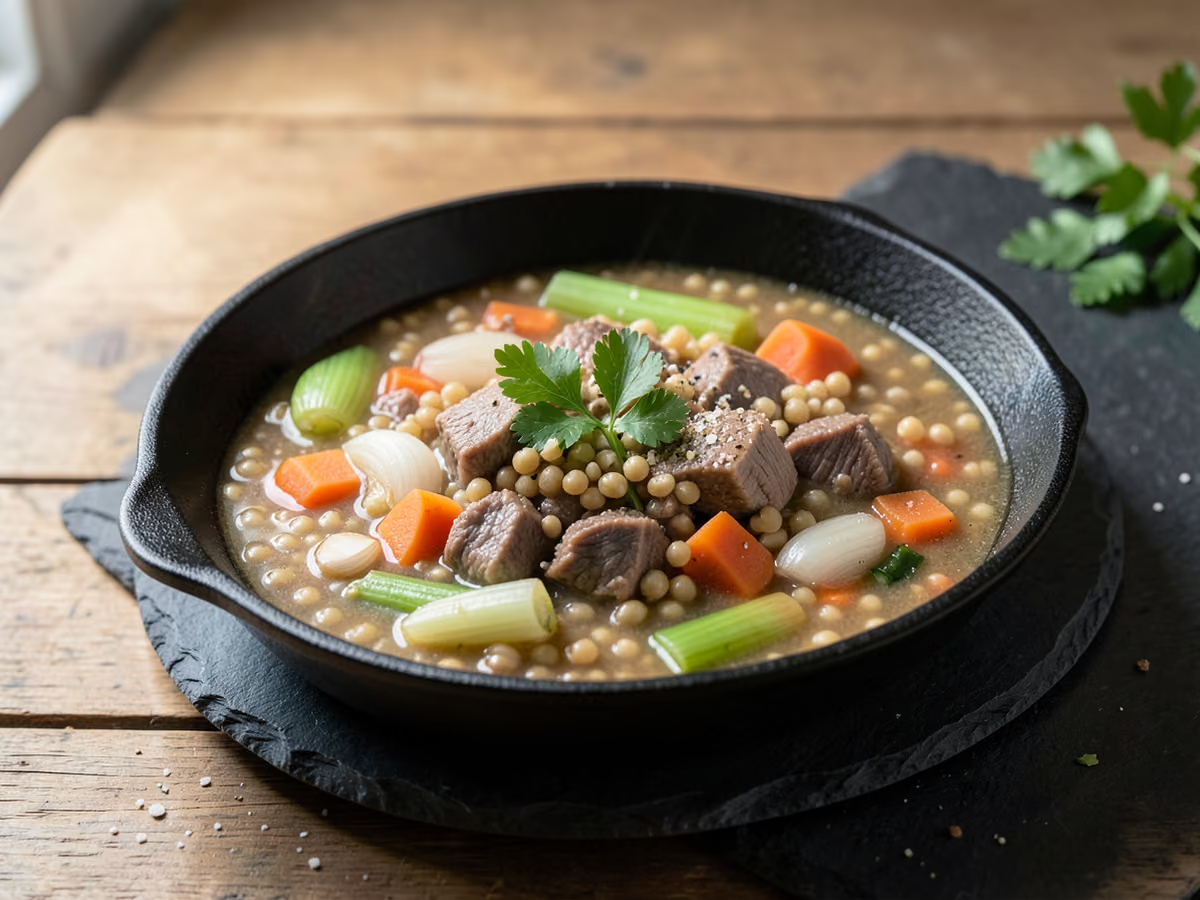
The sear builds the broth's backbone: drying the cubes first lets their surface climb past 150°C, where browning reactions fire, and searing in batches keeps the pot from steaming in the moisture the meat releases. Those browned bits left on the pot floor are lifted by the vegetables as they soften, and that layer is where most of the depth comes from. The long, gentle simmer finishes the job: collagen in the chuck breaks down into gelatin, and the barley sheds starch into the broth, so both thicken it naturally. Boiling hard would instead make the meat stringy and cloud the liquid.
Equipment
- Large heavy-bottomed pot or Dutch oven, 4 to 5 litres
- Chef's knife and cutting board
- Wooden spoon or stiff spatula for scraping the fond
- Measuring cups and spoons
- Plate or tray for the browned beef
- Ladle and deep bowls for serving
- Instant-read thermometer (optional, for checking reheated leftovers)
Kitchen notes
Kitchen notes
- The first cube should hiss hard when it meets the oil. If it only crackles quietly, the pot is not hot enough yet — give it another minute, because beef that goes in early steams in its own moisture instead of browning.
- Spoon off the fat that pools on the surface before you ladle. The chuck renders more than you expect, and lifting the fat lets the beef flavour lead; chilled overnight, it sets into a layer that comes away cleanly.
- Keep a jug of hot broth by the stove for the last half hour. The barley and the evaporation both pull liquid from the pot, and topping it up hot rather than cold keeps the simmer from stalling.
- Trim the cubes from a whole chuck roast rather than buying pre-cut stew meat: shop-cut cubes are uneven, and a piece twice the size of its neighbours is still chewy when the rest of the pot is done.
- Look at the colour of the barley before you buy. Tan grains are lightly pearled and hold their shape better; chalk-white grains are heavily polished and shed more starch, so the broth turns cloudy sooner.
Common mistakes
- Chewy, dry beef: the pot boiled instead of simmered, or the cubes were cut bigger than 2 cm so their centres never tenderized. Keep the liquid at a bare simmer, with small bubbles rather than a rolling boil, and cut the chuck to a uniform 2 cm.
- Grey, steamed meat instead of a sear: the cubes still held surface moisture, or the pot was crowded. Pat the beef dry, sear it in two or three single-layer batches, and give each batch 4 to 5 minutes before turning.
- Mushy barley: the pot boiled hard, or the grains stayed in well past tender. Check at 50 minutes, pull the pot while the barley still has a slight chew, and remember it keeps softening off the heat and again when the soup is reheated.
- Thin, one-note broth: the browned bits stayed stuck to the pot floor, or the soup was seasoned only at the start. Scrape the vegetables through the fond as they soften, and taste again after the bay leaves come out — the barley absorbs salt as it cooks.
- Porridge-thick soup the next day: barley keeps drinking broth as the pot cools and in the fridge. Loosen it with hot broth when you reheat; if you expect slow eaters, cook the barley separately and spoon it into the bowls.
Serving suggestions
- Serve in warmed deep bowls with crusty bread or a hunk of baguette to mop the broth; a plain green salad with a sharp vinaigrette cuts the richness.
- Six generous main-course bowls, or eight smaller ones as a first course before a lighter main.
- Finish each bowl with the chopped parsley and a crack of black pepper, and pass a small drizzle of olive oil at the table for a glossier surface.
- It pairs best with crisp, tangy sides — a vinegary slaw or pickled vegetables — rather than anything soft and starchy.
Variations
- Slow-cooker version: sear the beef and soften the vegetables on the stove first, then transfer everything with the broth, barley, and seasonings and cook on low for 6 to 8 hours or on high for 3 to 4.
- Vegetable and chickpea version: leave the beef out, use vegetable broth, and stir in a drained can of chickpeas for the last 10 minutes. It is a different, lighter soup — label it as such rather than a straight swap.
- Quick-cooking barley: add the same 150 g in the last 15 minutes — it turns tender in 10 to 15, though the broth finishes lighter because there is less time for starch to build.
- Mushroom version: brown sliced mushrooms with the onion before the liquid goes in for a deeper, earthier broth, and top up with a little extra broth since they absorb some.
Refrigerator
- RefrigeratorCool it fast — divide the soup into shallow containers or stand the pot in a sink of cold water — and refrigerate within 2 hours. Sealed, it keeps for 3 to 4 days. The barley keeps drinking broth as it sits, so the soup tightens a little each day.
- ReheatingWarm gently on the stovetop over medium-low with a splash of broth or water, and bring it to a boil, stirring, until it is steaming hot all the way through; food-safety guidance for reheated leftovers starts at 74°C, which a simmering pot passes easily. Reheat only what you will eat — every trip to the heat softens the barley further.
- FreezingUp to 3 months. Cool it completely, then pack it flat in freezer bags or containers, leaving a little headroom for expansion. The barley softens on thawing but holds up far better than rice or pasta; thaw overnight in the fridge and reheat as above.
- Make aheadThis soup is built for planning ahead: cook it fully up to 3 days before you plan to serve it, cool it fast, and refrigerate — the flavour deepens as it rests, so loosen it with broth when you reheat. Cooked and chilled overnight, it is also easy to defat: the rendered fat sets on top and lifts off in one piece.
Updated:
How this recipe was developed
- USDA FSIS, Leftovers and Food Safety (refrigerate within 2 hours; leftovers 3 to 4 days refrigerated, 3 to 4 months frozen; reheat to 74°C (165°F), bringing soups to a rolling boil)
- Serious Eats, Stew Science: What's the Best Way to Brown Beef? (browning needs dry surfaces and 150°C-plus heat; batch-browning cubed beef in a single layer prevents steaming)
- Whole Grains Council, Types of Barley and A-Z Guide to Cooking Whole Grains (pearl barley is polished and cooks faster; hulled whole-grain barley simmers 45 to 60 minutes)
- Harold McGee, On Food and Cooking — collagen conversion to gelatin in slow-simmered meat, and gelatinised starch thickening liquids
Editorial references are kept internally for verification. This page makes no claim of external certification or professional testing.
FAQ
The questions we get asked most
Why did my beef turn out tough?
Almost always because the pot boiled instead of simmered, or the cubes were larger than the 2 cm the recipe calls for. A hard boil tightens muscle fibres and squeezes out moisture before the collagen has time to melt into gelatin. Keep the liquid at a bare simmer, cut even cubes, and give it the full 60 to 70 minutes — the meat should yield when you press it with a spoon.
Can I use hulled barley instead of pearl barley?
Yes, but treat it as a different grain: hulled barley keeps its bran, so it needs roughly 20 to 30 minutes more simmering and extra broth to reach a chewy, nutty tenderness. Add it about 20 minutes before you would the pearl barley. Quick-cooking barley is the opposite case — it goes in for the last 15 minutes only.
How do I keep the barley from going mushy?
Three things: simmer gently rather than boil, check the grains at 50 minutes, and stop while they still have a slight chew. Barley keeps softening off the heat and once more when the soup is reheated, so if you know there will be leftovers, pull the pot a little early and let the carryover finish the work.
Why is the soup so thick the next day?
The barley keeps absorbing broth as the pot cools and again in the fridge — it is a starch, and starches keep swelling. Thin it with hot broth or water when you reheat, a splash at a time. If you want the thickness on purpose, mash a spoonful of barley against the side of the pot, or stir in 1 tbsp of cornstarch mixed with 2 tbsp cold water and simmer for 2 minutes.
Can I make this soup in a slow cooker?
Yes. Sear the beef and soften the vegetables on the stove first — that browning is most of the flavour — then move everything to the slow cooker with the broth, barley, and seasonings. Cook on low for 6 to 8 hours or on high for 3 to 4, until the beef shreds easily and the barley is tender.
Is beef barley soup gluten-free?
No — barley is a wheat-family grain and contains gluten, so as written the soup is not suitable for a gluten-free diet. Swapping the barley for rice or quinoa and using certified gluten-free broth makes a different soup: lighter and less thick, since barley is also what gives this pot its body.
Ask KitchenMind about this recipe
Tell it what’s different tonight — it works within the actual recipe.