Classic Meatloaf
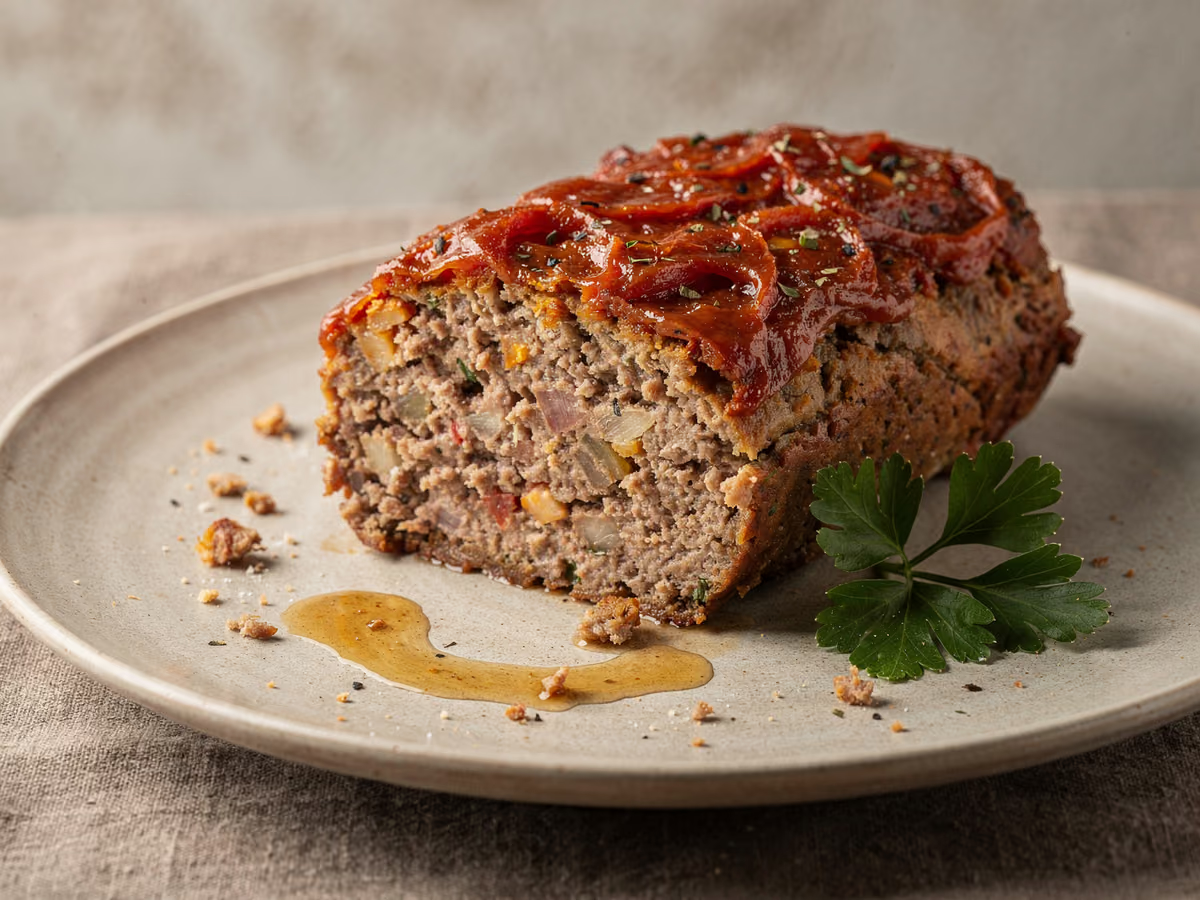
Classic Meatloaf is the American dinner staple done right: 900 g of ground beef bound with breadcrumbs, milk, and egg, baked under a ketchup, brown sugar, and cider vinegar glaze. This version uses the 80/20 beef the recipe calls for, applies the glaze in two stages so it caramelizes instead of scorching, and bakes to the USDA-safe 71°C rather than to a timer. The loaf slices cleanly and holds together on the plate.
- Prep
- 15 min
- Cook
- 60 min
- Total
- 75 min
- Serves
- 6
Ingredients
What you’ll need — tap to tick off as you go
- 900 g
- 2 cloves
- 1 cup
- 120 ml
- 120 ml
- 1 tbsp
- 1 ½ tsp
- ½ tsp
- 2 tbsp
- 1 tbsp
Process
Timers built in · swap anything · ask as you cook
Preheat the oven to 175°C with a rack in the middle, and lightly grease a 9x5-inch (23 x 13 cm) loaf pan. Starting the loaf in a fully heated oven keeps the bake time predictable, and the greased pan lets the glazed loaf release without tearing.
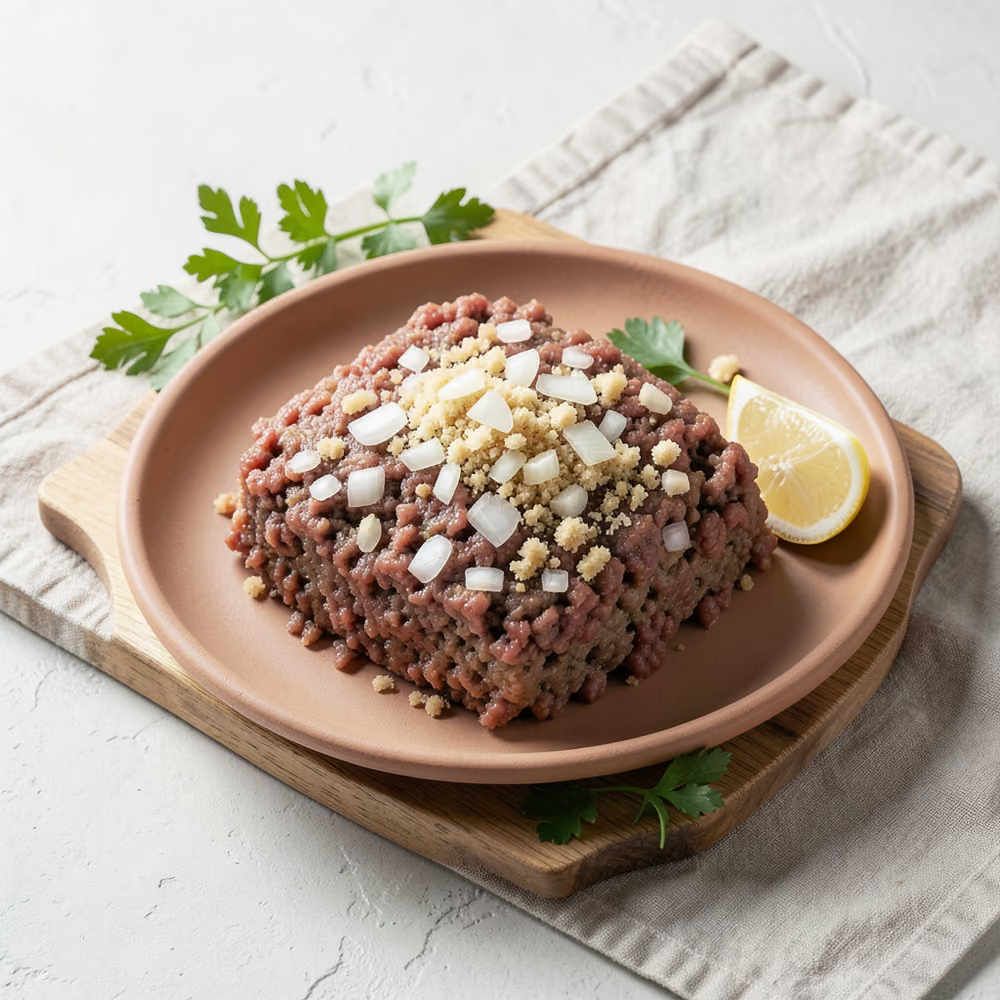
In a large bowl, combine 900 g ground beef, 1 finely chopped onion, 2 minced garlic cloves, 1 cup plain breadcrumbs, 120 ml milk, 2 lightly beaten eggs, 60 ml ketchup, 1 tbsp Worcestershire sauce, 1.5 tsp salt, and 0.5 tsp black pepper. Mix gently with your hands until the mixture just holds together and no dry breadcrumb patches remain, then stop.
Transfer the mixture to the prepared loaf pan and shape it into an even loaf, pressing firmly enough to work out air pockets without compacting the meat. Smooth the top so the glaze will sit level.
In a small bowl, whisk the remaining 60 ml ketchup with 2 tbsp packed brown sugar and 1 tbsp apple cider vinegar until the sugar dissolves. Spread half of the glaze evenly over the top of the loaf and set the rest aside.
Bake at 175°C for 45 minutes. Remove the loaf, spread the remaining glaze over the top, and return it to the oven for 15 minutes more, until an instant-read thermometer inserted into the center reads 71°C (the USDA minimum for ground beef). If the glaze darkens before the center is done, tent the top loosely with foil.
Let the meatloaf rest in the pan for 10 minutes before slicing. Resting gives the juices time to redistribute through the loaf, so the slices hold together and stay moist instead of running out onto the cutting board.
Why this recipe works
The 120 ml milk soaked into 1 cup breadcrumbs forms a panade that coats the meat proteins and limits how tightly they bind, which is what keeps the loaf tender rather than rubbery. Gentle mixing serves the same purpose: overworked ground beef develops sticky protein strands and bakes up dense. Applying the glaze in two stages lets the sugar caramelize during the final 15 minutes instead of sitting on the surface for the full 60 and burning, and the 10-minute rest redistributes juices so the slices hold their shape.
Equipment
- Large mixing bowl
- 9x5-inch (23 x 13 cm) loaf pan
- Instant-read thermometer
- Small bowl and whisk
- Measuring cups and spoons
- Chef's knife and cutting board
- Rimmed baking sheet lined with parchment (optional, for a freer-form loaf)
Kitchen notes
Kitchen notes
- Soak the breadcrumbs in the 120 ml milk for a few minutes before they meet the meat; a fully hydrated panade is what keeps the loaf tender.
- Grate the onion on the coarse side of a box grater rather than chopping it; the pulp blends into the mixture and releases juice, leaving no crunchy bits.
- Check the temperature in the center, slightly above the pan floor; a probe touching the hot pan wall or the glaze reads high and convinces you the loaf is done early.
- For a browner, firmer crust and less fat pooling, shape the loaf on a parchment-lined baking sheet instead of in a loaf pan.
- Slice with a long, thin blade in one firm draw rather than sawing; a serrated knife tears the crumb and the slices look ragged.
Common mistakes
- Dry, crumbly slices — a lean grind or baking past 71°C drives off moisture — use the 80/20 ground beef listed and pull the loaf as soon as the center reaches 71°C.
- Dense, rubbery texture — overmixing extracts sticky proteins that set like sausage — mix just until the ingredients hold together, then stop.
- The loaf falls apart when sliced — too little binder, or cutting while hot — keep the full 1 cup breadcrumbs, 120 ml milk, and 2 eggs, and rest the loaf 10 minutes before slicing.
- The glaze scorches — spreading all of it before baking exposes the sugar to the full 60 minutes of heat — glaze in two stages, half before baking and half at the 45-minute mark.
- Grease pools and the bottom goes soggy — a loaf pan traps the rendered fat — either spoon off the fat before the second glaze or bake the loaf freestanding on a parchment-lined sheet so it can drain.
Serving suggestions
- Mashed potatoes or buttered egg noodles to catch the glaze.
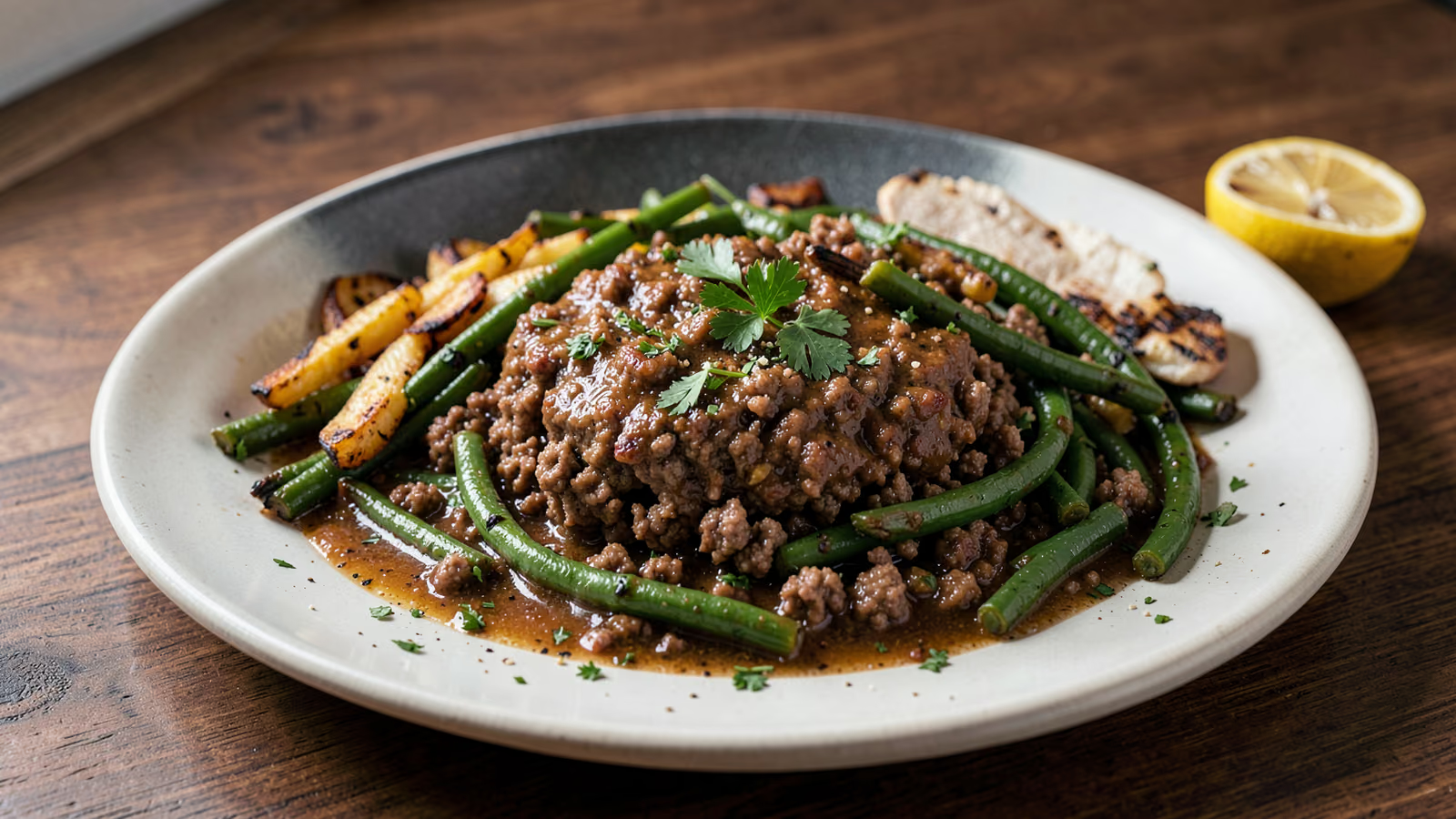
- Steamed green beans, roasted carrots, or a vinegary cabbage slaw to cut the richness.
- A sturdy dinner roll or a slice of sourdough alongside.
- Cold leftovers between two slices of bread for a meatloaf sandwich, with a little extra ketchup.
Variations
- Free-form loaf: shape the mixture on a parchment-lined baking sheet for a firmer crust and fat that drains away instead of pooling.
- Poultry version: swap the beef for ground turkey or ground chicken, keeping the same binder and glaze.
- Mini loaves: bake the mixture in a muffin tin; the smaller portions cook faster, so start checking the internal temperature early.
- Mushroom-onion version: fold finely chopped sautéed mushrooms in with the onion for a deeper, earthier loaf; drain them well so the mixture does not turn wet.
Refrigerator
- RefrigeratorCool the loaf, then refrigerate in an airtight container for up to 4 days.
- ReheatingReheat slices in a 160°C oven for 10-15 minutes, or in the microwave on medium power until hot throughout; leftovers should reach 74°C (USDA reheat guidance). Add a spoonful of ketchup or broth to keep the slices from drying.
- FreezingWrap cooled slices or the whole loaf tightly in plastic wrap and foil, then freeze for up to 3 months. Thaw overnight in the refrigerator.
- Make aheadAssemble the loaf up to 24 hours ahead, cover, and refrigerate; add 5-10 minutes to the bake since it starts cold.
Updated:
How this recipe was developed
- USDA FSIS Safe Minimum Internal Temperature Chart (ground meats cooked to 71°C; leftovers reheated to 74°C)
- USDA FSIS, Ground Beef and Food Safety (cook ground beef to a safe minimum internal temperature of 71°C; refrigerate within 2 hours)
- USDA FSIS, Leftovers and Food Safety (refrigerate leftovers within 2 hours; keep refrigerated 3 to 4 days; freeze 3 to 4 months; reheat to 74°C)
- Harold McGee, On Food and Cooking (breadcrumb-and-milk panade in ground-meat mixtures, and how mixing affects protein binding and texture)
Editorial references are kept internally for verification. This page makes no claim of external certification or professional testing.
Gallery
FAQ
The questions we get asked most
Why is my meatloaf dry and crumbly?
Dryness usually comes from extra-lean meat, overbaking, or too little binder. Use the 80/20 beef, measure the 1 cup breadcrumbs and 120 ml milk accurately, and pull the loaf when the center reads 71°C. The 10-minute rest also keeps moisture in the slices.
How do I know when meatloaf is done?
The reliable test is an instant-read thermometer in the center: 71°C is the USDA minimum for ground beef. Without a thermometer, judge by a glaze that is set and bubbling and a center that feels firm to the touch; clear juices are a weaker signal than temperature.
Can I make meatloaf ahead of time?
Yes. Assemble it, cover, and refrigerate up to 24 hours; add 5-10 minutes to the bake because the loaf starts cold. You can also bake it fully, cool it, and reheat the slices later.
Can I freeze meatloaf?
Yes. Wrap cooled slices or the whole loaf tightly in plastic wrap and foil and freeze up to 3 months. Thaw overnight in the refrigerator, then reheat in a 160°C oven or the microwave until hot.
Why did my meatloaf fall apart?
Usually too little binder or overmixing. Keep the full 1 cup breadcrumbs, 120 ml milk, and 2 eggs, mix only until the mixture holds together, and rest the baked loaf 10 minutes before slicing.
Can I use oatmeal instead of breadcrumbs?
Yes. Rolled oats work as a binder at the same 1 cup; pulse them in a food processor for a finer texture and add a splash more milk if the mixture feels stiff. The loaf will be slightly denser.
How long do you bake meatloaf?
At 175°C this loaf needs 60 minutes total: 45 minutes with the first half of the glaze, then 15 minutes more once the second half goes on. A freestanding loaf on a sheet pan can finish a few minutes sooner, while a chilled make-ahead loaf takes 5-10 minutes longer, so trust the thermometer (71°C in the center) rather than the clock.
Ask KitchenMind about this recipe
Tell it what’s different tonight — it works within the actual recipe.