- Prep
- 20 min
- Cook
- 15 min
- Total
- 35 min
- Serves
- 8
Ingredients
What you’ll need — tap to tick off as you go
- 500 ml
- 250 ml
- 130 g
- 1 tsp
- 1 pinch
Process
Timers built in · swap anything · ask as you cook
Pour the whole milk and heavy cream into a medium saucepan. Split the vanilla bean lengthwise, scrape the seeds into the pan, and drop in the empty pod too. Warm over medium heat until small bubbles ring the edge, about 4 to 5 minutes. Do not let it boil.
While the milk heats, whisk the egg yolks, granulated sugar, and fine salt in a heatproof bowl for 2 minutes until pale, thick, and slightly glossy.
Remove the vanilla pod from the hot milk and set it aside. Slowly pour about 120 ml of the hot milk into the yolk mixture in a thin stream, whisking constantly, to temper the eggs.
Pour the tempered egg mixture back into the saucepan with the remaining milk. Cook over low heat, stirring constantly with a spatula, for 5 to 8 minutes until the custard thickens to 82°C and coats the spatula; draw a finger through it and the line should hold.
Immediately strain the custard through a fine-mesh sieve into a clean bowl. Rinse the reserved vanilla pod, split it again, and add it back to the custard. Stir in the vanilla extract if using.
Cool the custard quickly by setting the bowl in an ice bath, stirring for 10 minutes. Then cover and refrigerate for at least 4 hours, ideally overnight, until it is completely cold, around 4°C.
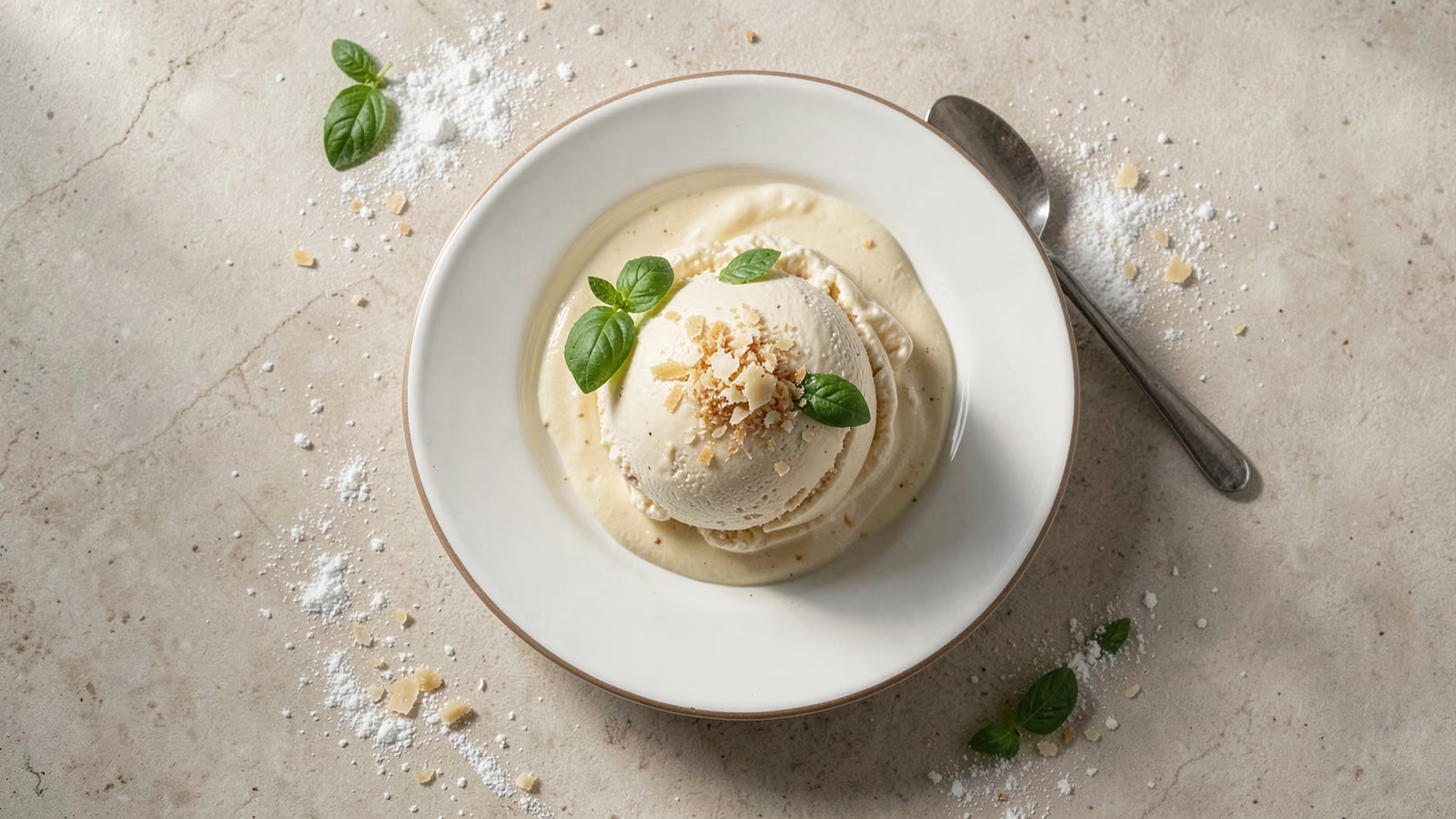
Remove the vanilla pod. Churn the custard in an ice cream machine according to the manufacturer instructions, usually 25 to 30 minutes, until it looks like soft-serve and holds a ribbon.
Transfer the gelato to a shallow freezer container, press a piece of parchment directly onto the surface, and freeze for at least 2 hours to firm up before scooping.
Kitchen notes
Kitchen notes
- The single most common mistake is undercooking the custard: if it tastes floury or the base is thin, it will freeze icy. Cook until it reaches 82°C and clearly coats the spatula.
- Never let the custard boil after the yolks go in, or the eggs will scramble. Keep the heat low and stir without stopping, scraping the bottom corners of the pan.
- Chill the base completely before churning. A warm base churns into butterfat specks and never gains volume; overnight chilling also deepens the vanilla flavour.
- Gelato is served about 8 to 10°C warmer than American ice cream, so let it sit on the counter for 5 minutes before scooping for that soft, elastic texture.
Substitutions
- vanilla bean→2 tsp vanilla bean paste or 2 tsp vanilla extract
- heavy cream→equal volume of whole milk for a lighter gelato, though it will be less creamy
- granulated sugar→same weight of caster sugar or superfine sugar
Storage & reheating
Keep the gelato in a shallow airtight container with parchment pressed onto the surface, in the coldest part of the freezer, for up to 2 weeks. For longer storage, wrap the container in a layer of plastic wrap to block freezer burn. To serve, let it stand at room temperature for 5 to 10 minutes until it softens enough to scoop; do not microwave it, as that melts the edges unevenly.
FAQ
The questions we get asked most
Why did my vanilla gelato turn out icy and hard?
Icy gelato almost always means the custard was undercooked or the base was not cold enough before churning. Cook the base until it reaches 82°C and coats a spatula, then chill it completely, ideally overnight. Churning a warm base also adds too much air and creates large ice crystals.
Can I make vanilla gelato without an ice cream machine?
Yes, but the texture will be denser. Pour the chilled custard into a shallow metal pan, freeze for 45 minutes, then beat it vigorously with a fork or electric mixer. Repeat every 30 minutes for 3 to 4 hours until it is smooth and scoopable. This breaks up ice crystals as they form.
How do I know when the custard is thick enough?
Dip a spatula or wooden spoon into the custard and draw your finger across the back; if the line stays clean and the custard does not run into it, it is ready. On a thermometer it should read 82°C. If you are unsure, err on the side of slightly thicker, as thin custard freezes into ice.
Can I use vanilla extract instead of a vanilla bean?
Yes. Use 2 teaspoons of good-quality vanilla extract or vanilla bean paste, stirred in after the custard is cooked and strained. Extract is more concentrated and volatile, so adding it off the heat preserves its aroma better than cooking it in the milk.
Why does my gelato taste eggy?
An eggy taste comes from overcooking the yolks or using too many of them. Keep the heat low and pull the custard off at 82°C, never letting it boil. If you are sensitive to the flavour, reduce the yolks to 4 and add an extra 30 ml of cream for richness.
How long does homemade vanilla gelato keep in the freezer?
It keeps well for up to 2 weeks in an airtight container with parchment pressed onto the surface. After that it slowly absorbs freezer odours and develops ice crystals. For the best flavour and texture, eat it within the first week.
Can I freeze the custard base before churning?
You can refrigerate it for up to 3 days, but do not freeze the liquid base. Freezing separates the emulsion and the custard will turn grainy when thawed. If you must store it longer, keep it in the fridge and churn within 3 days.
Ask KitchenMind about this recipe
Tell it what’s different tonight — it works within the actual recipe.