Aji de Gallina Creamy Chicken
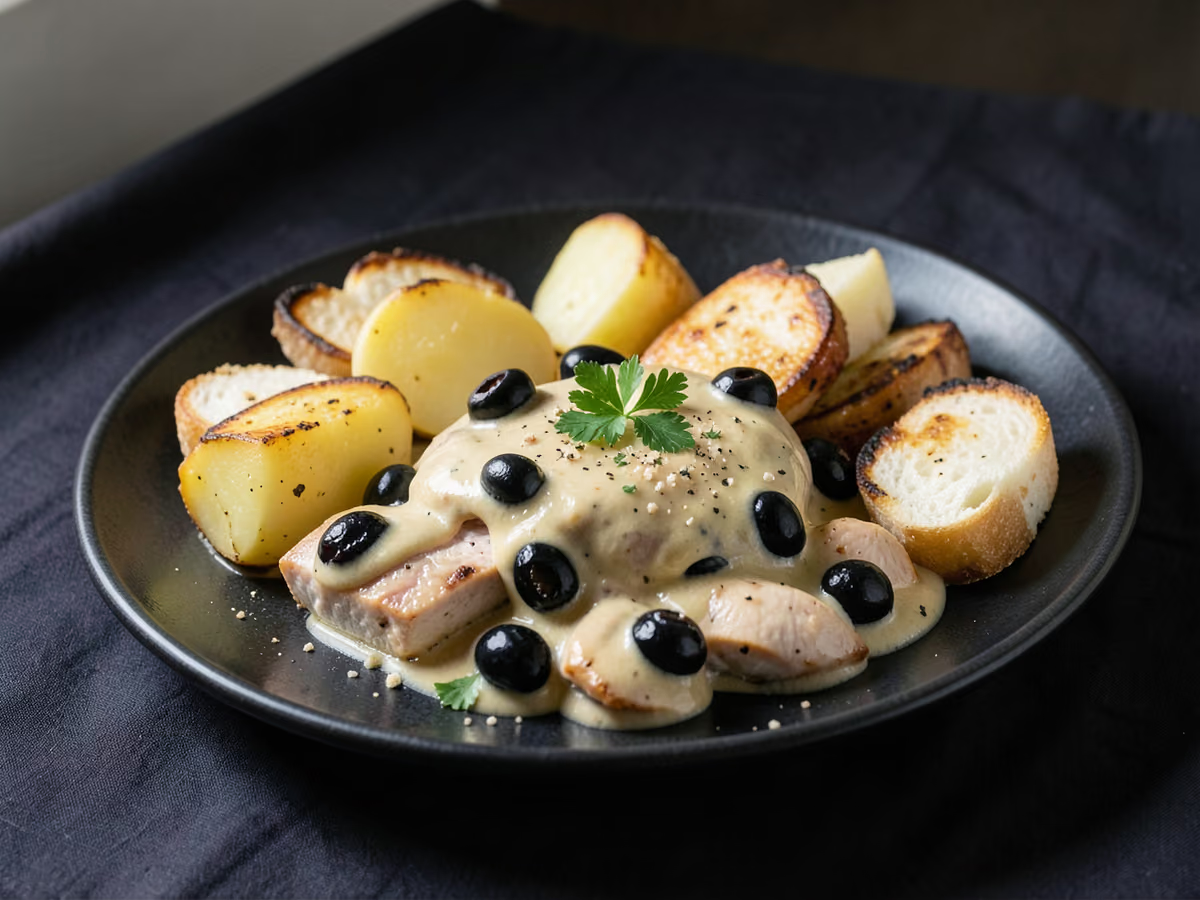
A pale gold sauce, not a red one - that is the first surprise of aji de gallina. The name sounds like a dare. The plate arrives gentle: 900 g of poached chicken breast shredded into a sauce built from soaked bread, ground walnuts, Parmesan, and 120 g of aji amarillo paste, spooned over white rice and sliced boiled potato. That sauce is not a gravy. It is closer to a Peruvian béchamel, thick enough to hold its shape on a plate. Your part is easy. Prep runs about 25 minutes. The pot does the rest in roughly 40, with plenty of slack for boiling potatoes and eggs.
- Prep
- 25 min
- Cook
- 40 min
- Total
- 65 min
- Serves
- 6
Ingredients
What you’ll need — tap to tick off as you go
- 900 g
- 120 g
- 4 slices
- 350 ml
- 500 ml
- 80 g
- 3 cloves
- 2 tbsp
- 1 tsp
- ½ tsp
- ½ tsp
- 50 g
- 300 g
- 60 g
Process
Timers built in · swap anything · ask as you cook
Put the 900 g of chicken breast in a large pot, cover with cold water, and bring it slowly to a bare simmer. Poach for 15 to 20 minutes, until the thickest piece reads 74°C on a thermometer (the USDA minimum for poultry). Lift it out, strain and keep 500 ml of the poaching liquid, then shred the meat with two forks once it is cool enough to handle. Keep the pot gentle. A bare simmer relaxes the fibers; a rolling boil leaves chicken dry and stringy.
While your chicken cools, tear the 4 slices of bread (crusts off) into a bowl. Pour over 150 ml of the evaporated milk and let them soak for 5 minutes. Then blend or mash to a completely smooth paste, scraping down the sides once. Wet bread turns silky. Dry patches stay grainy and surface later in the sauce, which is the one texture you cannot fix in the pot.
Set a dry skillet over medium heat and toast the 80 g of walnuts for 2 to 3 minutes, swirling the pan until they smell like warm bread. Tip them onto a cold plate to stop the cooking (the pan keeps working otherwise), then grind them in short pulses to fine sand, since walnuts release oil fast and an overworked paste makes the sauce heavy. Toasting is worth the extra pan. It rounds off the raw, bitter note and lets the nuts thicken your sauce as well as flavor it.
Warm 2 tbsp of vegetable oil in a broad saucepan set over medium heat. Add the chopped onion and cook it for 5 minutes, stirring now and then, until it turns soft and translucent. Stir in the 3 minced garlic cloves and cook for 1 minute more, just until the sharp smell fades. Keep the heat at medium and the spoon moving through the pan, because garlic goes from sweet to acrid in seconds and that bitterness carries straight into your finished sauce.
Stir in the 120 g of aji amarillo paste, the 0.5 tsp cumin, 1 tsp of salt, and 0.5 tsp of black pepper. Cook for 3 to 4 minutes, stirring constantly, until the paste darkens a shade and the oil at the edge of the pan turns orange. This step decides your sauce. Aji amarillo is fat-soluble, so hot oil is what coaxes out its color and fruit. Do not walk away from the pan here.
Add the bread paste and the remaining 200 ml of evaporated milk, stir well, then pour in the 500 ml of reserved broth and bring the pot back to a gentle simmer. Cook for 10 minutes, stirring often, until it coats the back of a spoon. Simmering lets the bread starch swell and give your sauce its body. Stop short and the dish tastes pasty, not creamy. If it looks loose now, don't worry; it thickens as it stands.
Fold in the shredded chicken and the ground walnuts, and simmer for 5 minutes so everything heats through and the nuts melt into the sauce. Take the pot off the heat, then stir in the 50 g of grated Parmesan. Taste and adjust the salt. If the sauce has tightened past a slow pour, loosen it with a splash of extra broth. Cheese added off the boil stays smooth instead of turning stringy.
Spoon the chicken and sauce over the 300 g of cooked white rice, with the sliced boiled potato alongside or underneath. Garnish with the 60 g of black olives and the quartered hard-boiled eggs, and serve straight away while the sauce is still glossy. The plate is starch-heavy on purpose. Rice and potato both catch sauce, and they hold the heat while everyone eats.
Why this recipe works
Why does bread thicken a sauce this well? Soaked bread is mostly starch, and heat swells those granules until they trap liquid and set into a soft gel, the body of this sauce. No flour and no cream. The ground walnuts do a second job. Their fat and fine particles blend into the milk and keep the sauce glossy, not chalky. Fry the chili paste into your sofrito, not into the liquid; hot oil pulls out its color and fruit, and a few minutes over medium heat cooks off the raw edge. Add the cheese off a hard boil, so it melts smoothly instead of seizing into strings. Gentle poaching matters too, because a hard boil tightens the breast and leaves dry, stringy meat that no sauce rescues.
Equipment
- Large heavy pot, wide enough to hold the 900 g of chicken in a single layer (about 4 litres)
- Blender or food processor, for the bread paste and the walnuts
- Dry skillet for toasting the walnuts
- Instant-read thermometer
- Fine-mesh sieve, for smoothing the sauce if your blender leaves flecks
- Chef's knife, cutting board, and a wooden spoon
- Measuring jug and measuring spoons
Kitchen notes
Kitchen notes
- Taste the fried chili paste before any liquid goes in; that is your one easy chance to set the heat. Is yours too fierce? Stir 50 ml more evaporated milk in with the broth.
- Cook the rice in the strained poaching liquid, topped up with water, and salt it at the end, so the grains take on the chicken flavor and the plate tastes more connected. Fluff the rice with a fork. Keep it covered until serving, because bare rice dries out fast on a warm plate.
- Potatoes boiled a day ahead and chilled slice cleaner and hold their shape under the sauce, so warm them in the covered pot for a few minutes before you serve.
- Holding the dish for later? Park the pot over the lowest heat with the lid on. The sauce thickens as it stands. Once cold it tightens further, so stir in a spoonful of milk before you serve.
- A sieve fixes texture quietly. Push the blended bread paste through it (it takes a minute) and your sauce turns velvety without more dairy.
- Keep the walnuts, the cheese, and the paste within reach before the onions go in. This sauce moves fast from that point. Burnt chili is the one mistake you cannot undo.
Common mistakes
- Grainy sauce: the bread never soaked through, or the walnuts were ground coarse. Soak the bread for the full 5 minutes. Grind the nuts to fine sand, until no firm pieces remain. Push the sauce through a fine sieve if it still feels gritty, and do that before the chicken goes in, because the chicken hides nothing.
- Dry, stringy chicken: the pot boiled instead of simmered, or the meat stayed past 74°C. Keep the surface barely trembling. Pull the pieces the moment a thermometer reads 74°C, because the meat keeps cooking in the covered pot for a few minutes after the heat goes off, and that carry-over is enough to push it past juicy.
- Flat, raw chili flavor: the aji amarillo paste went in with the liquid instead of frying first. It needs the full 3 to 4 minutes in oil for that raw edge to cook off. The color only deepens, too, once the paste has met the hot fat directly rather than being diluted by broth.
- Bitter aftertaste: the paste scorched on heat that ran too high. Keep the heat at medium. Constant stirring and a splash of broth stop the frying at once if the pan starts to smoke.
- Thin, soupy sauce: the broth went in too early, before the bread base had thickened. One splash too many does the same. Simmer the base for the full 10 minutes, and thin only after the chicken is in.
- Cheese that clumps: the Parmesan hit a rolling boil. Take the pot off the heat first. Then scatter and stir, so it melts into the sauce instead of gathering into strings.
Serving suggestions
- Serve it over rice with the potato slices tucked in and the garnishes scattered on top. Warm plates keep the sauce glossy to the last spoonful.
- Sparkling water with lime, or a glass of iced tea, cuts the richness. Keep the glasses simple and cold.
- A crisp lettuce and red onion salad on the side balances the creaminess. Keep the dressing light. Add it at the table, so nothing wilts.
- Leftover sauce, loosened with a splash of milk, makes a rich filling for an omelet, and it can be tossed through noodles or spooned over thick toast for a second, faster dinner. Put the pot in the middle of the table and gather everyone around it. This is a dish made for sharing.
Variations
- Heat-dial version: keep the 120 g of paste for the gentle, fruity warmth the dish is known for, or drop to 80 g with an extra 50 ml of evaporated milk. Your pot, your call on heat.
- Rotisserie shortcut: shred about 700 g of rotisserie chicken, skip the poaching, and use bought broth. The chicken goes in at the end. The plate loses some of the depth that homemade broth brings.
- Empanada filling: chill the finished sauce until it holds its shape. Spoon it onto pastry rounds and bake. Peruvians fill empanadas this way, and the thick consistency is what makes it work.
Refrigerator
- RefrigeratorCool the pot quickly. Refrigerate the sauce and chicken in a sealed container within 2 hours of cooking, for up to 3 days. Keep the boiled potatoes and eggs separate. They soften and crumble in the sauce.
- ReheatingWarm it slowly in a covered saucepan over low heat, loosening with a splash of broth or milk, until it is steaming and hot through. Reheated leftovers should reach 74°C (the USDA target). Reheat a large batch in a wide pan rather than a deep one, since a shallow layer comes back to temperature quickly and gives the starch less time to tighten as it warms.
- FreezingFreeze the sauce and chicken for up to 2 months in an airtight container, without the potatoes or the eggs. Thaw overnight in the refrigerator, then reheat gently and stir, because a cold block of sauce will scorch at the bottom of the pan if you rush it. The sauce looks looser after thawing, so give it a few minutes of simmering if it needs body back.
- Make aheadCook the chicken and build the sauce up to 2 days ahead, cool them separately, and refrigerate. Reheat the sauce, add the shredded chicken, and simmer for 5 minutes before serving. That warms the chicken through without pushing it past doneness, which matters because the meat is already cooked and only needs to come back to temperature.
Updated:
How this recipe was developed
- USDA FSIS and FoodSafety.gov Safe Minimum Internal Temperature Chart (poultry cooked to a safe minimum of 74°C; leftovers reheated to 74°C)
- FoodSafety.gov Cold Food Storage Chart (cooked meat and poultry leftovers kept 3 to 4 days refrigerated; freezer quality 2 to 6 months)
- Eat Peru, Aji de Gallina: Creamy Chicken Stew From Peru (poaching and shredding the chicken, soaking bread in the stock, serving with rice, boiled potato, hard-boiled egg, and olives)
- Casa Capon, Aji de Gallina recipe (sofrito built on aji amarillo cooked until the raw edge goes and the oil separates, bread folded in to thicken, loosened with evaporated milk, finished with nuts and parmesan)
Editorial references are kept internally for verification. This page makes no claim of external certification or professional testing.
FAQ
The questions we get asked most
Why did my aji de gallina turn out grainy?
Grainy sauce is nearly always a texture problem, not a flavor one. Why does it happen? Bread that never fully soaked, walnuts left coarse, or a blender stopped too early. Blend for longer than feels necessary at the start, because a gritty paste never smooths out in the pot, no matter how long you simmer it. Don't worry if a few flecks of nut survive the blender, because a fine sieve pressed over the pot rescues the texture before the chicken goes in.
How do I know when the chicken is cooked through?
Use an instant-read thermometer in the thickest part; 74°C is the USDA minimum for poultry. No thermometer? Cut into the center instead. The meat should be opaque with no pink, and it should shred into strands under a fork. Pink juice or a spongy texture means a few more minutes at a bare simmer, and it costs you nothing to check the thickest piece twice.
Why is my sauce thicker than it was in the pot?
Bread-thickened sauces tighten as they cool. The rice and potato keep pulling moisture out of the pot while the plate sits. Keep your sauce a little looser than you want it at the end, and loosen leftovers with a splash of broth or milk over low heat. A hard boil will not thin it. Use hot broth when you loosen it, because cold liquid makes the starch seize and the sauce can turn lumpy.
Can I make aji de gallina ahead of time?
Yes, and the sauce improves overnight. Cook the chicken and build the sauce up to 2 days ahead, cool them separately, and refrigerate. On the day, reheat your sauce gently, fold in the shredded chicken, and simmer for 5 minutes. Boil the potatoes and eggs fresh, since they lose their texture in the sauce overnight.
Can I freeze aji de gallina?
Freeze the sauce and chicken for up to 2 months, without the potatoes or the eggs. Thaw it overnight in the refrigerator, never on the counter, then reheat over low heat with a splash of broth. Portion it in containers you can reheat straight through, because a large frozen block thaws unevenly and the outside of the sauce gets hot long before the middle is warm.
Is aji de gallina very spicy?
Not at all, despite the name. Aji amarillo is fruity and moderately warm, and 120 g in this much sauce reads as gentle heat. For a milder plate, drop the paste to 80 g and add 50 ml more evaporated milk, or mash a boiled potato into the sauce to soften it further.
What can I use instead of evaporated milk?
Go with whole milk or oat milk, one for one at 350 ml. Half-and-half gives a richer sauce. The one to avoid is skim milk, which can separate under heat. Fresh milk is less stable than evaporated, so once it is in, keep your pot at a bare simmer and stir often.
Ask KitchenMind about this recipe
Tell it what’s different tonight — it works within the actual recipe.