- Prep
- 30 min
- Cook
- 20 min
- Total
- 50 min
- kcal
- 621.5
- protein
- 37.7 g
- Serves
- 4
Ingredients
What you’ll need — tap to tick off as you go
- 300 g
- 300 g
- 2 tbsp
- 2 tbsp
- 1 tsp
- 2 cloves
- 200 g
- 100 g
- 2 tbsp
- 1 tbsp
- 1 tsp
Process
Timers built in · swap anything · ask as you cook
Rinse the short-grain rice under cold water until the water runs clear, then cook it according to your rice cooker or package instructions.
In a bowl, combine the thinly sliced beef sirloin with soy sauce, 1 tbsp sesame oil, sugar and minced garlic. Mix well and let it marinate for 15 minutes.
While the beef marinates, blanch the spinach in boiling water for 30 seconds, then drain and squeeze out excess water. Season with a pinch of salt and a few drops of sesame oil.
Heat a large skillet over medium-high heat. Add the julienned carrot and zucchini with a pinch of salt and saute for 2–3 minutes until just tender. Remove and set aside.
In the same skillet, saute the sliced shiitake mushrooms for 2–3 minutes until softened. Remove and set aside.
Increase the heat to high, add the marinated beef to the skillet and cook for 2–3 minutes until browned and cooked through. Remove and set aside.
In a small bowl, mix the gochujang with 1 tsp sesame oil and 1 tsp water to make a sauce.
Wipe the skillet, add a little oil and fry the eggs sunny-side up over medium heat until the whites are set but the yolks are still runny.
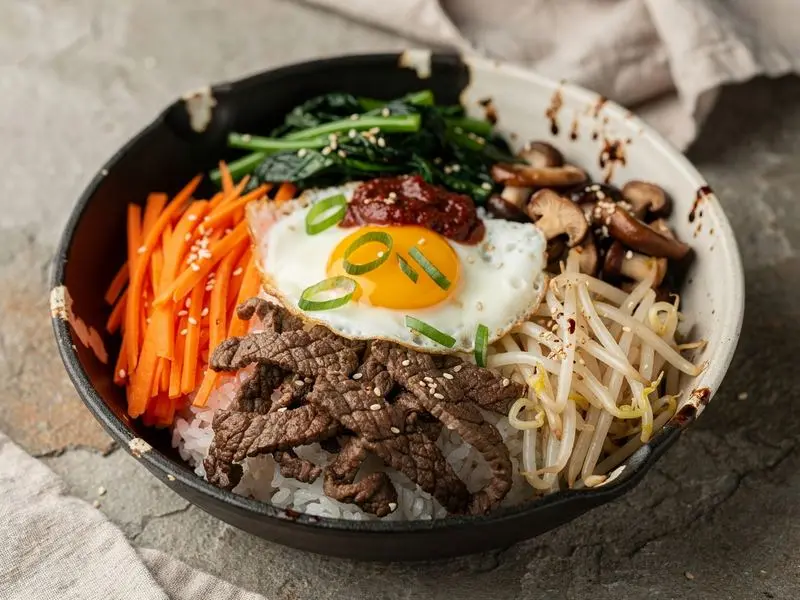
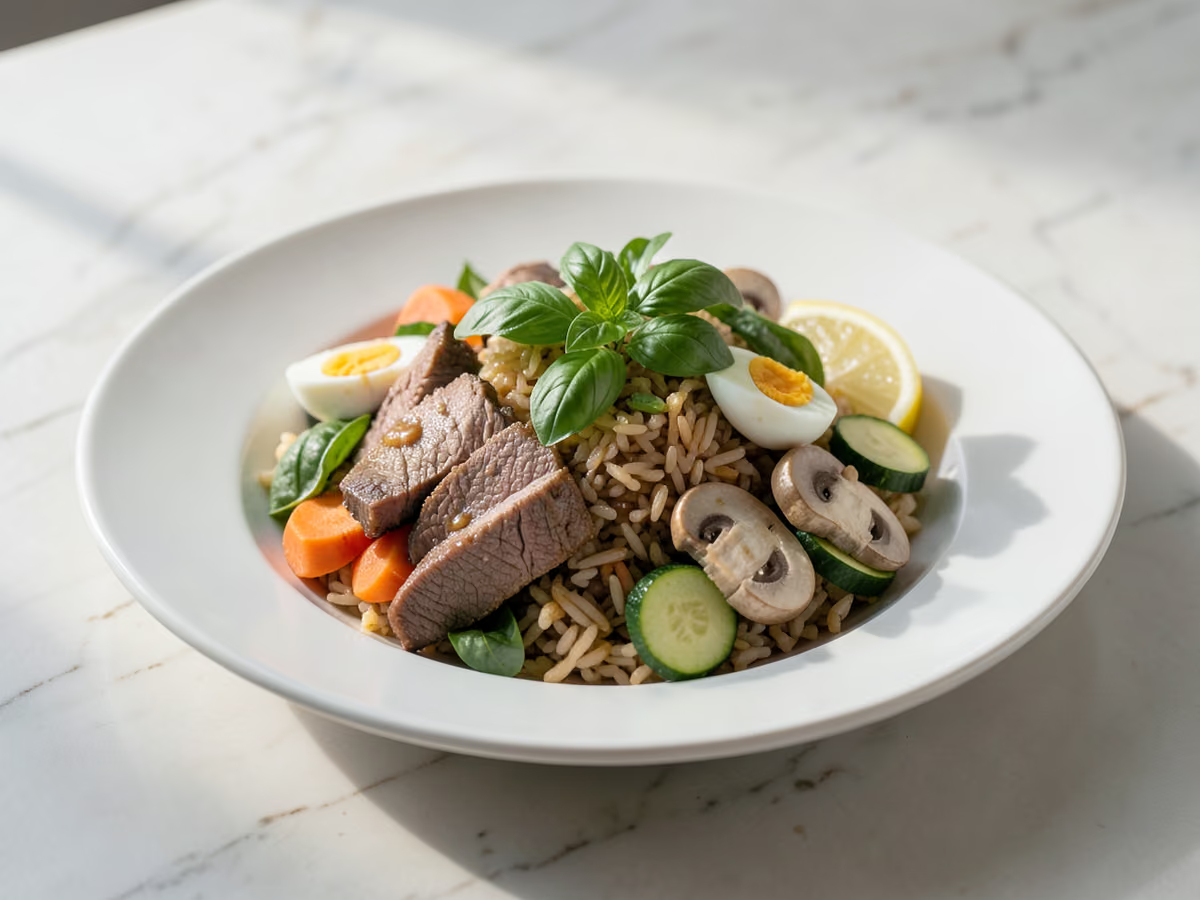
To assemble, divide the cooked rice among four bowls. Arrange the beef, spinach, carrot, zucchini, mushrooms and a fried egg on top of each bowl.
Drizzle the gochujang sauce over each bowl and sprinkle with toasted sesame seeds. Mix everything together before eating.
Kitchen notes
Kitchen notes
- The most common mistake is overcrowding the pan when cooking the vegetables and beef. Cook them in batches over high heat so they brown instead of steam.
- Squeeze the blanched spinach very dry; excess water will make the bibimbap soggy.
- For a crispy rice layer, heat the assembled bowls in a hot stone bowl or skillet for 2-3 minutes before serving.
- Adjust the gochujang sauce to your spice preference by adding more or less water.
Substitutions
- beef sirloin→chicken breast or firm tofu
- gochujang→sriracha mixed with a little sugar
- shiitake mushrooms→button mushrooms
Storage & reheating
Store leftovers in an airtight container in the refrigerator for up to 3 days. Keep the rice, toppings and sauce separate if possible. Reheat in a skillet over medium heat or in the microwave until steaming hot. Do not freeze the fried eggs; they do not thaw well.
| Nutrient | Per serving |
|---|---|
| Calories | 621.5 kcal |
| Protein | 37.7 g |
| Carbohydrates | 74.2 g |
| Fat | 18.8 g |
| Saturated fat | 4.9 g |
| Fiber | 4.4 g |
| Sugar | 6.6 g |
| Sodium | 1516 mg |
| Cholesterol | 253 mg |
FAQ
The questions we get asked most
Can I make bibimbap ahead of time?
Yes, you can prepare the components up to 2 days in advance. Cook the rice, saute the vegetables, and marinate and cook the beef, then store them separately in the refrigerator. Assemble and fry the eggs just before serving.
Why is my bibimbap soggy?
Sogginess usually comes from not draining the vegetables well or using too much sauce. Squeeze the blanched spinach dry, saute the vegetables until any released water evaporates, and add the gochujang sauce sparingly at the table.
Can I use a different protein instead of beef?
Yes, sliced chicken thigh, pork (if you eat it), shrimp, or firm tofu all work well. Adjust the cooking time accordingly: chicken needs about 4-5 minutes, shrimp 2 minutes, and tofu 3-4 minutes per side.
How do I make it vegetarian or vegan?
Omit the beef and eggs, and use tofu or extra mushrooms instead. Make sure the gochujang and soy sauce are vegan-friendly, and use a plant-based egg substitute if desired.
What is the best rice for bibimbap?
Short-grain or medium-grain rice, such as Japanese sushi rice or Korean short-grain, is ideal because it is sticky and clumps slightly, making it easy to mix with the toppings. Jasmine rice can be used but will be less cohesive.
Can I use frozen vegetables?
Yes, frozen spinach, carrots, and zucchini can be used. Thaw and squeeze out excess moisture before sauteing to prevent the dish from becoming watery.
How do I get crispy rice at the bottom?
Heat a heavy skillet or stone bowl with a little sesame oil over medium-high heat. Press the cooked rice into the bowl and let it sizzle for 2-3 minutes without stirring until a golden crust forms. Then add the toppings.
Ask KitchenMind about this recipe
Tell it what’s different tonight — it works within the actual recipe.