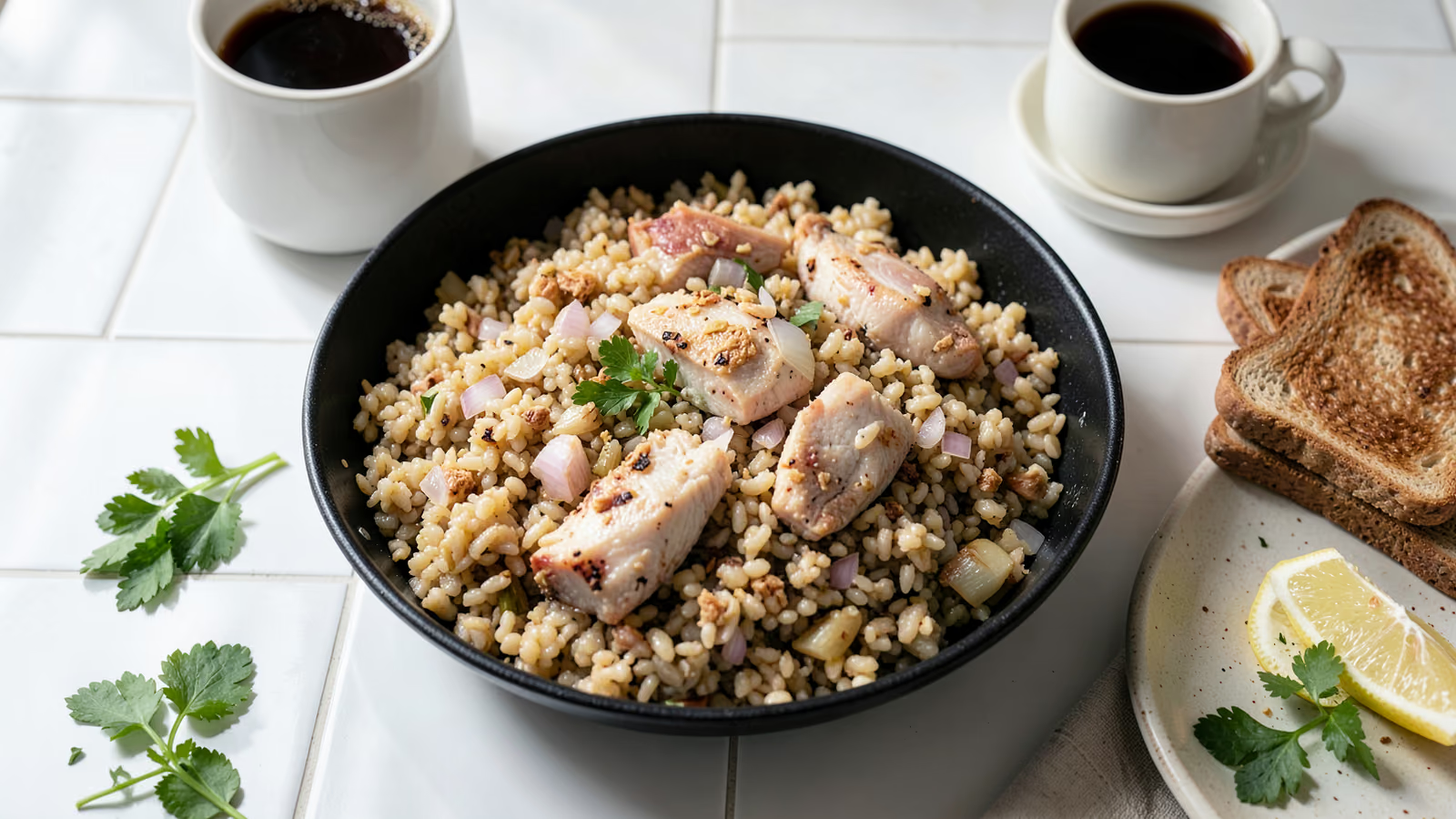
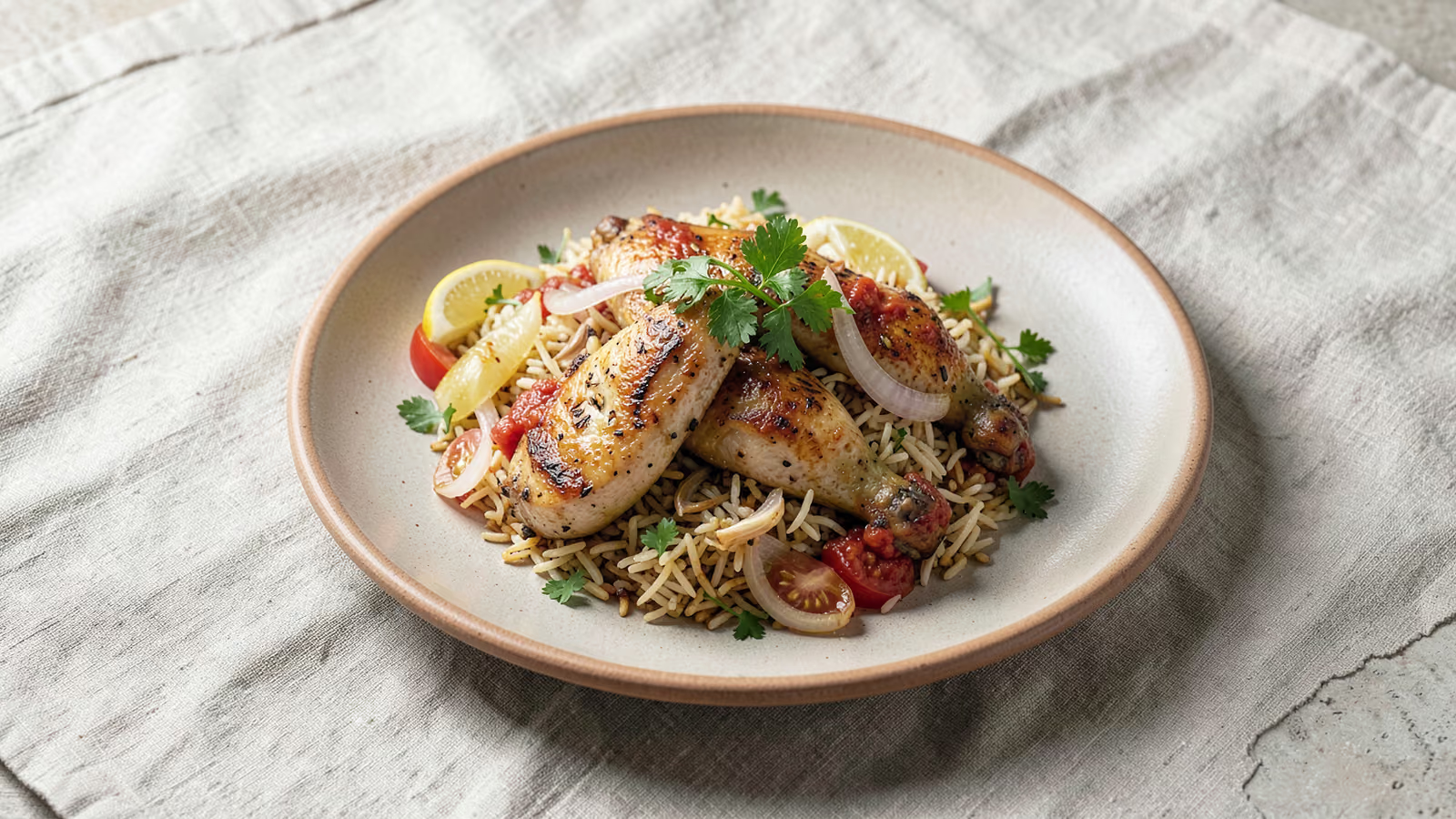
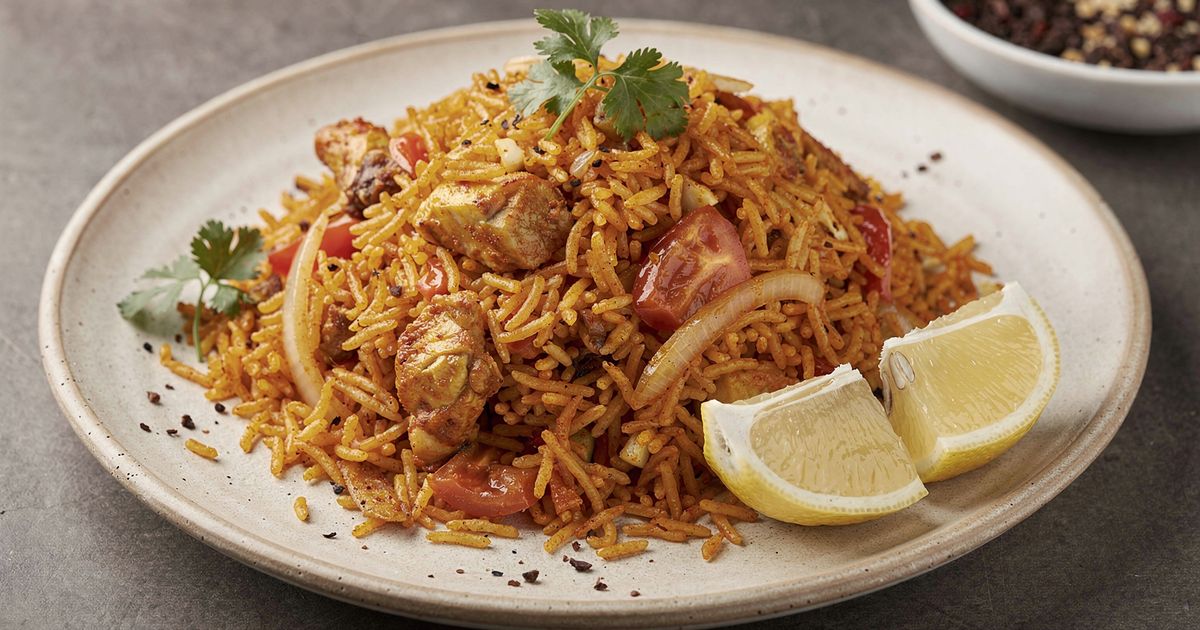
Chicken Harees
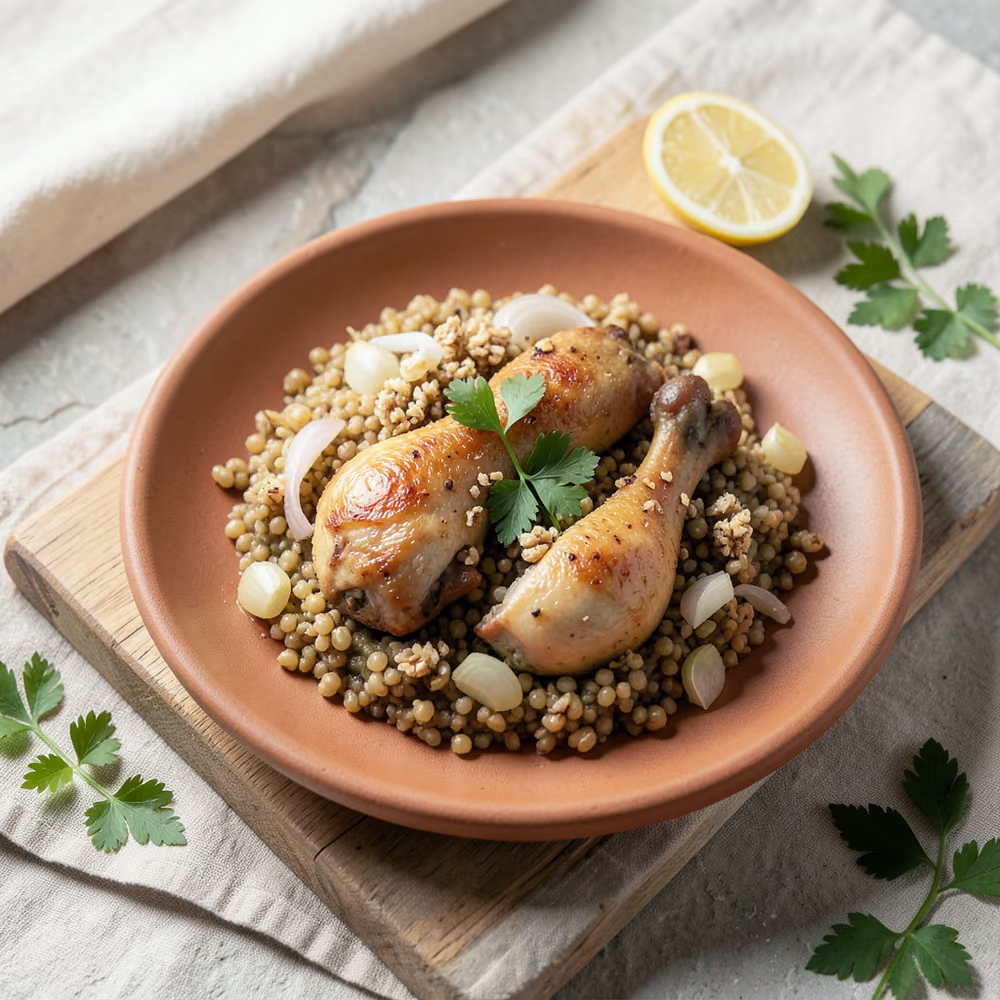
Pearl barley and cracked wheat cook down with chicken thighs until soft and porridge-like. Onion, cinnamon, cardamom and a spoon of ghee go in early; serve it with yogurt and flatbread.
- Prep
- 20 min
- Cook
- 150 min
- Total
- 170 min
- Serves
- 6
Ingredients
What you’ll need — tap to tick off as you go
- 800 g
- 150 g
- 200 g
- 2 ½ l
- 2 tsp
- 1 tsp
- ½ tsp
- ½ tsp
- 3 tbsp
- 100 g
Process
Timers built in · swap anything · ask as you cook
Put the chicken thighs, quartered onion, 2.5 l water and 1 tsp of the salt in a heavy pot. Bring to a boil over high heat, then skim off any foam that rises.
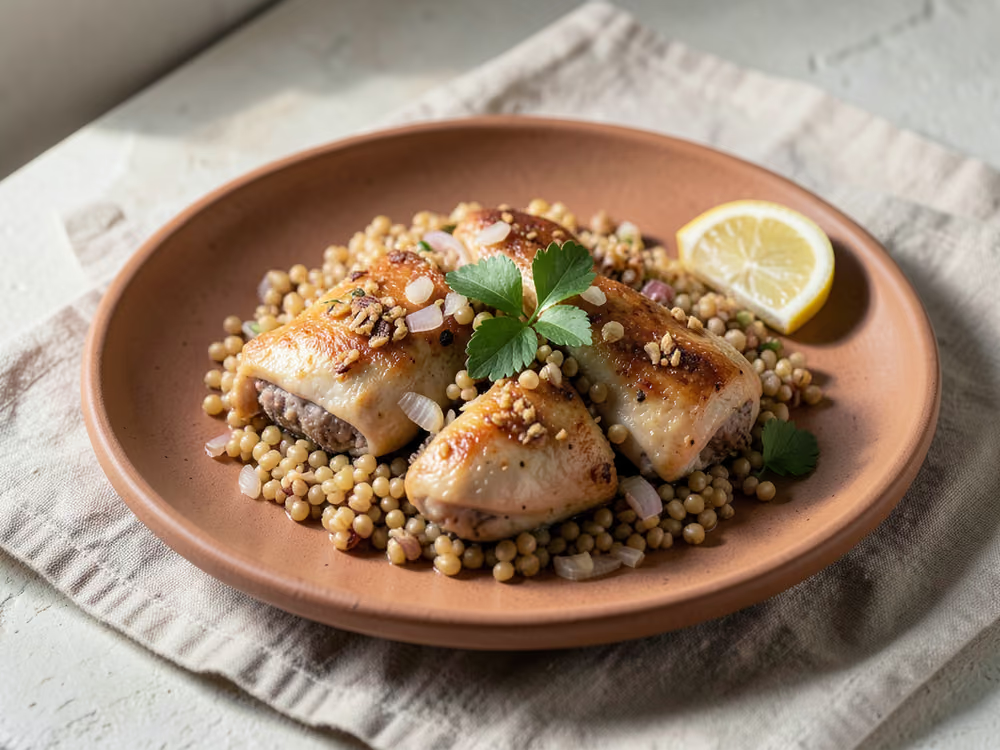
Lower the heat to medium-low, cover and simmer for 40 minutes, until the chicken is cooked through and pulls apart easily with a fork.
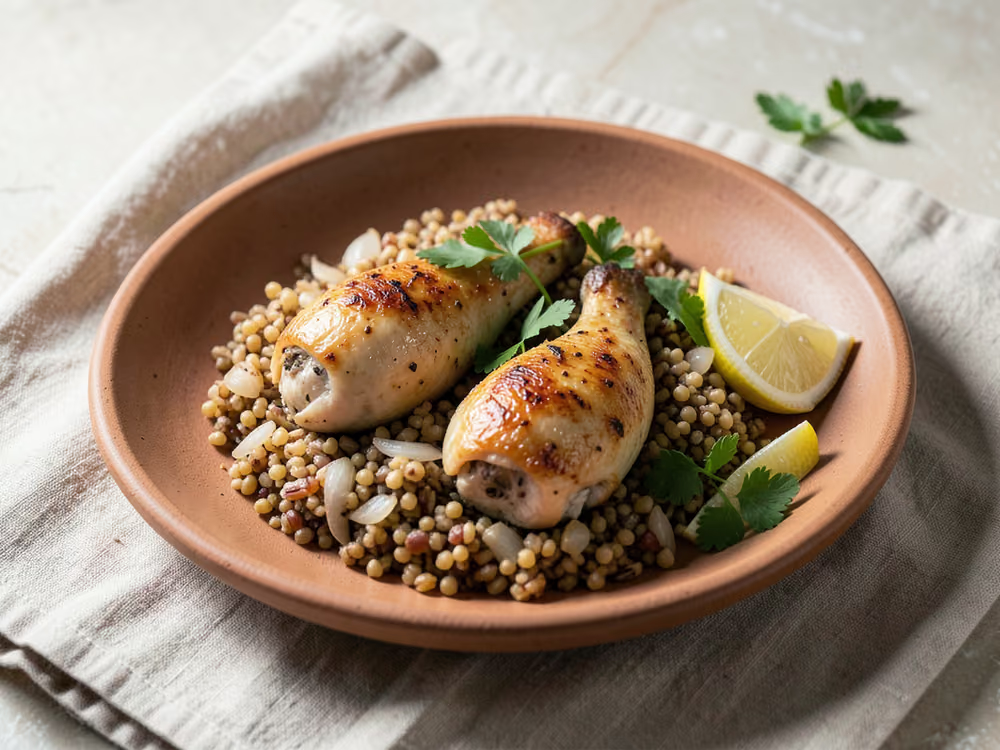
Lift the chicken out into a bowl and set aside. Strain the cooking broth through a sieve into a jug, discarding the onion, and return the broth to the pot.
Add the rinsed pearl barley and cracked wheat to the broth with the ground cinnamon, ground cardamom and ground white pepper. Stir well.
Bring to a boil, then reduce the heat to low, cover and cook for 60 minutes, stirring every 10 minutes so the grains do not catch on the bottom. Add hot water 100 ml at a time if it looks dry.
While the grains cook, shred the chicken with two forks, discarding the bones, and set it aside.
After 60 minutes the wheat and barley should be soft and breaking down. Stir in 2 tbsp of the ghee and the shredded chicken.
Cook uncovered on low for 20 to 30 minutes, mashing and beating the mixture with a wooden spoon until it is thick, smooth and porridge-like. It is ready when a spoon dragged through leaves a clean trail for a second.
Taste and stir in the remaining 1 tsp salt if needed. Spoon into bowls, drizzle with the last 1 tbsp ghee and dust with a little extra ground cinnamon.
Serve hot with plain yogurt and warm flatbread on the side.
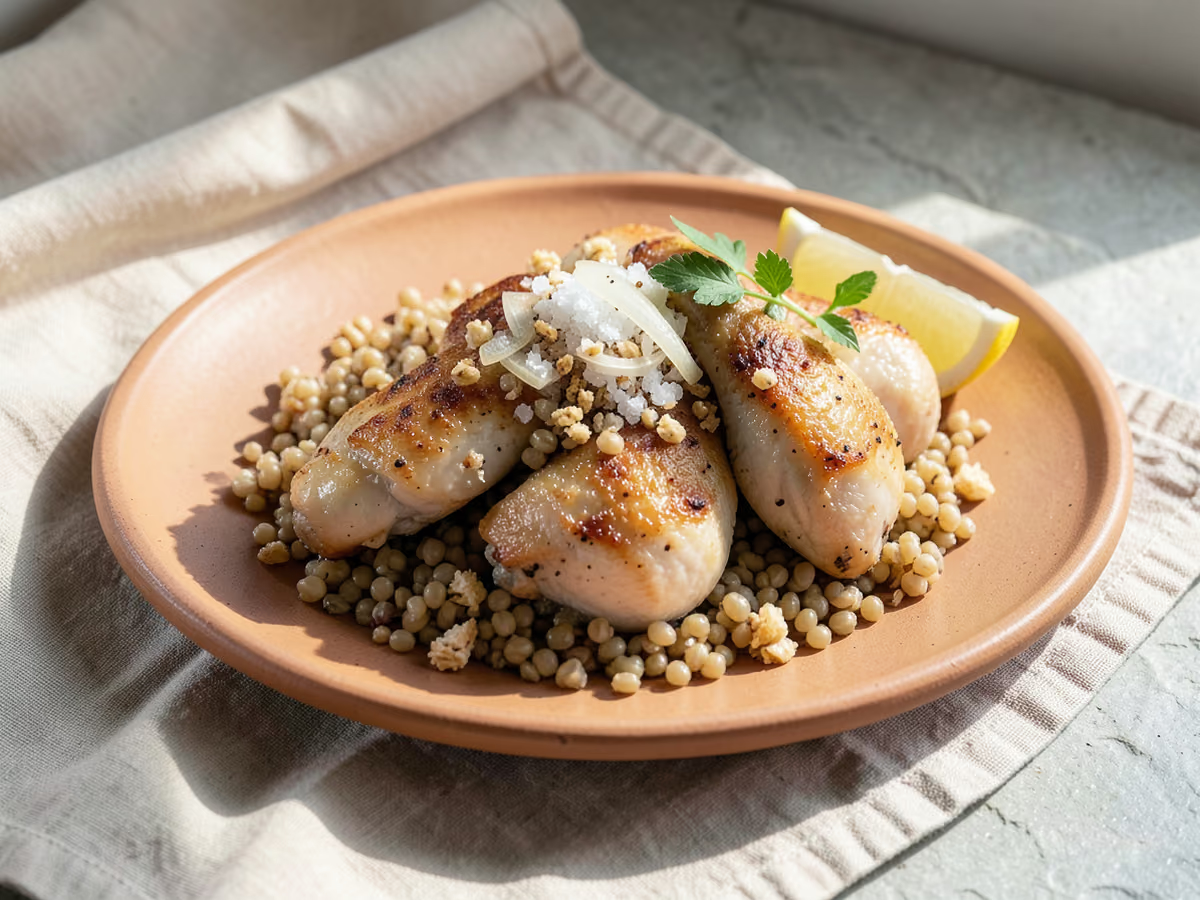
Kitchen notes
Kitchen notes
- The most common mistake is not stirring: harees catches and burns on the base of the pot. Stir every 10 minutes during the grain stage and every few minutes during the final mashing stage.
- Doneness marker: the grains should be completely collapsed with no separate barley pearls visible, and the mixture should hold a soft mound on a spoon rather than run off it.
- Use bone-in chicken thighs, not breast. The bones and connective tissue give the broth body, and breast meat turns stringy after the long simmer.
- If the harees tightens too much before serving, loosen it with hot water a few tablespoons at a time; it thickens considerably as it cools.
Substitutions
- pearl barley→more cracked wheat (use 350 g total)
- chicken thighs→lamb shoulder, cut into chunks, simmered 60 minutes instead of 40
- ghee→unsalted butter or olive oil
- ground cardamom→a pinch of ground cloves
Storage & reheating
Cool within 2 hours, then store in an airtight container in the fridge for up to 3 days. Harees thickens to a solid block when cold, so reheat in a saucepan over low heat with 100 to 150 ml water or broth per portion, stirring until loose and hot; or microwave covered in 1-minute bursts, stirring between. It freezes well for up to 2 months in a freezer bag flattened flat; thaw overnight in the fridge before reheating.
Gallery
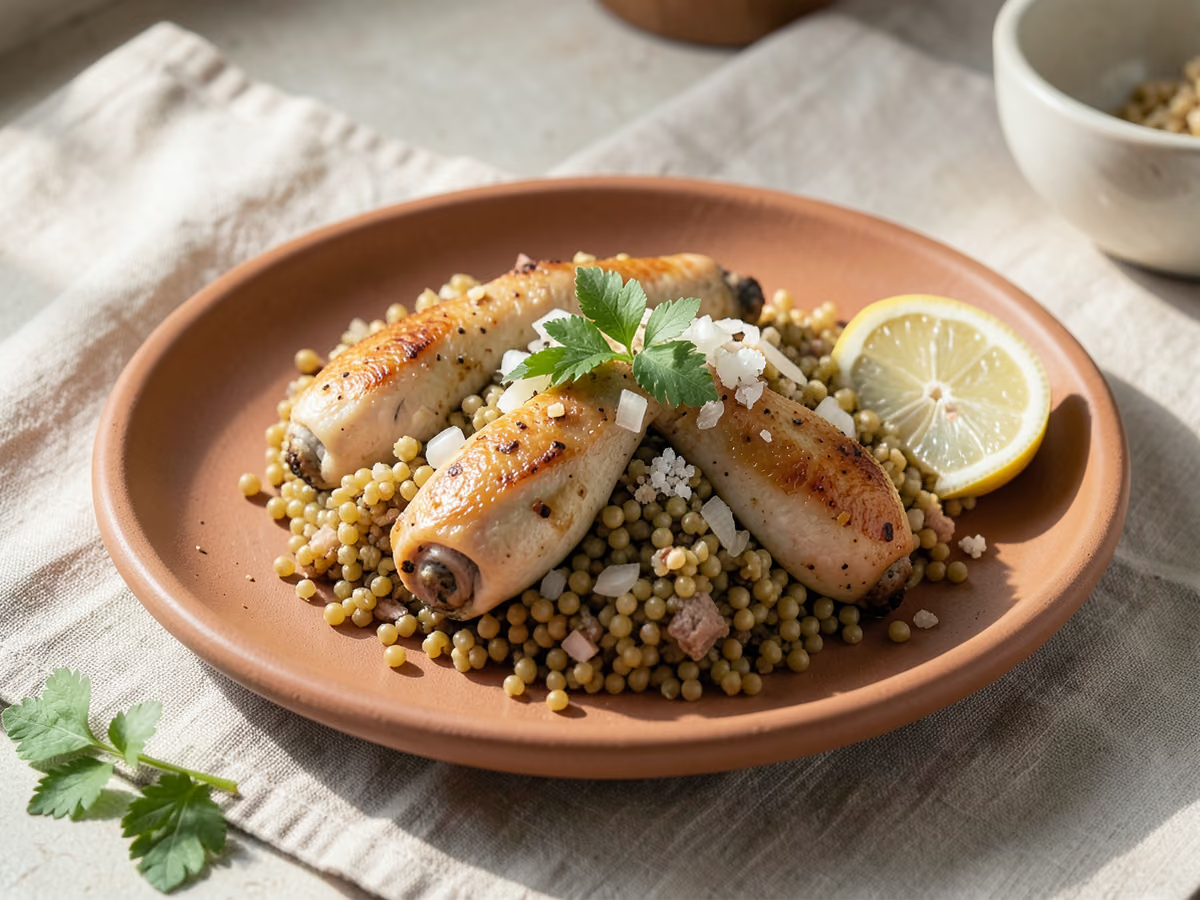
FAQ
The questions we get asked most
Why did my harees turn out lumpy instead of smooth?
Lumps come from undercooked grains or from adding dry wheat to hot broth too quickly. Cook the cracked wheat and barley until they collapse completely, and beat the mixture firmly with a wooden spoon during the last 20 minutes. If lumps remain, press them against the side of the pot with the spoon or pulse briefly with a stick blender.
Can I make chicken harees in a pressure cooker to save time?
Yes. Cook the chicken with the onion and water under pressure for 15 minutes, release naturally, then add the grains and pressure-cook for 25 minutes. Finish by mashing on the stovetop over low heat for 10 minutes, because the pressure cooker will not evaporate enough liquid to thicken it.
How do I know when harees is done?
The barley and wheat should be fully broken down with no distinct grains left, and the mixture should be thick enough that a spoon drawn through it leaves a brief clean line. It should mound on a spoon instead of dripping off. If it still tastes gritty, add hot water and keep simmering.
Can I use chicken breast instead of thighs?
It works but the result is drier and less flavorful. If using breast, simmer it only 20 minutes, remove it, and add it back only in the final 10 minutes of mashing so it does not shred into dry strands. Adding an extra tablespoon of ghee helps restore richness.
Why is my harees sticking to the bottom of the pot?
The heat is too high or you are not stirring often enough once the grains thicken. Use a heavy-bottomed pot, keep the heat on low, and stir every few minutes during the final stage. If you smell scorching, transfer the harees to a clean pot without scraping the burnt layer.
Can I freeze leftover chicken harees?
Yes, it freezes well for up to 2 months. Pack it in a freezer bag pressed flat so it thaws quickly, and defrost overnight in the fridge. Reheat gently with a splash of water or broth, stirring, since freezing makes it even thicker.
Is harees supposed to be this thick or should it be soupy?
Traditional harees is thick and porridge-like, not soupy, but it should still flow slowly from a spoon. If yours sets like a brick, loosen it with hot water a few tablespoons at a time. If it is watery, simmer uncovered on low, stirring, until it reduces.
Ask KitchenMind about this recipe
Tell it what’s different tonight — it works within the actual recipe.