Creamy Chicken Alfredo
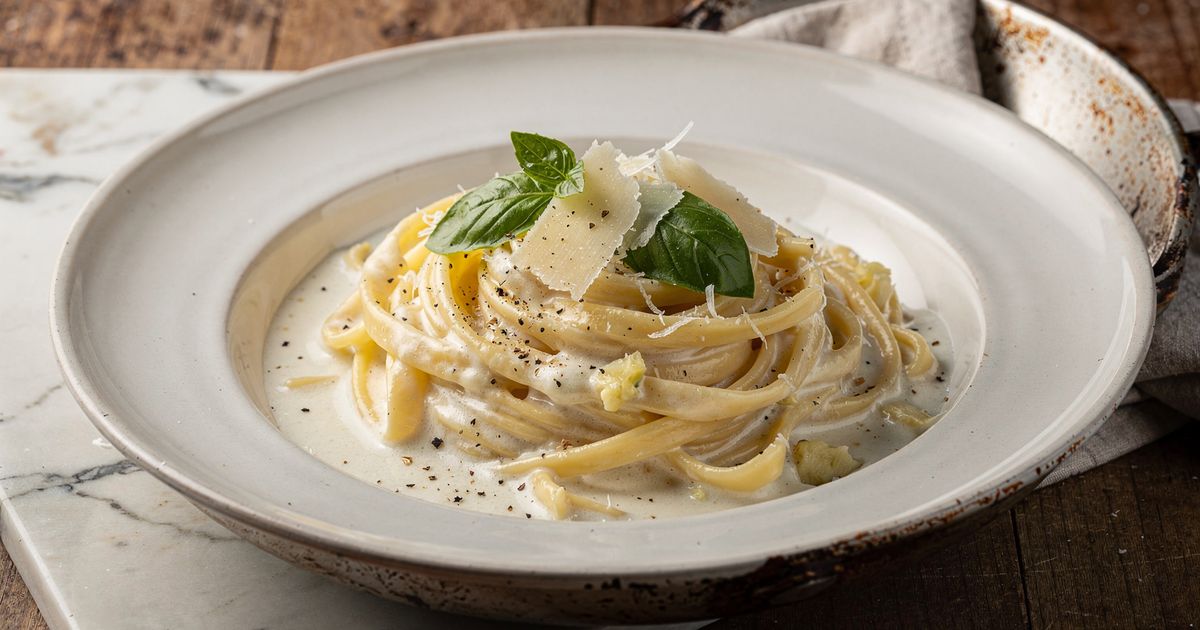
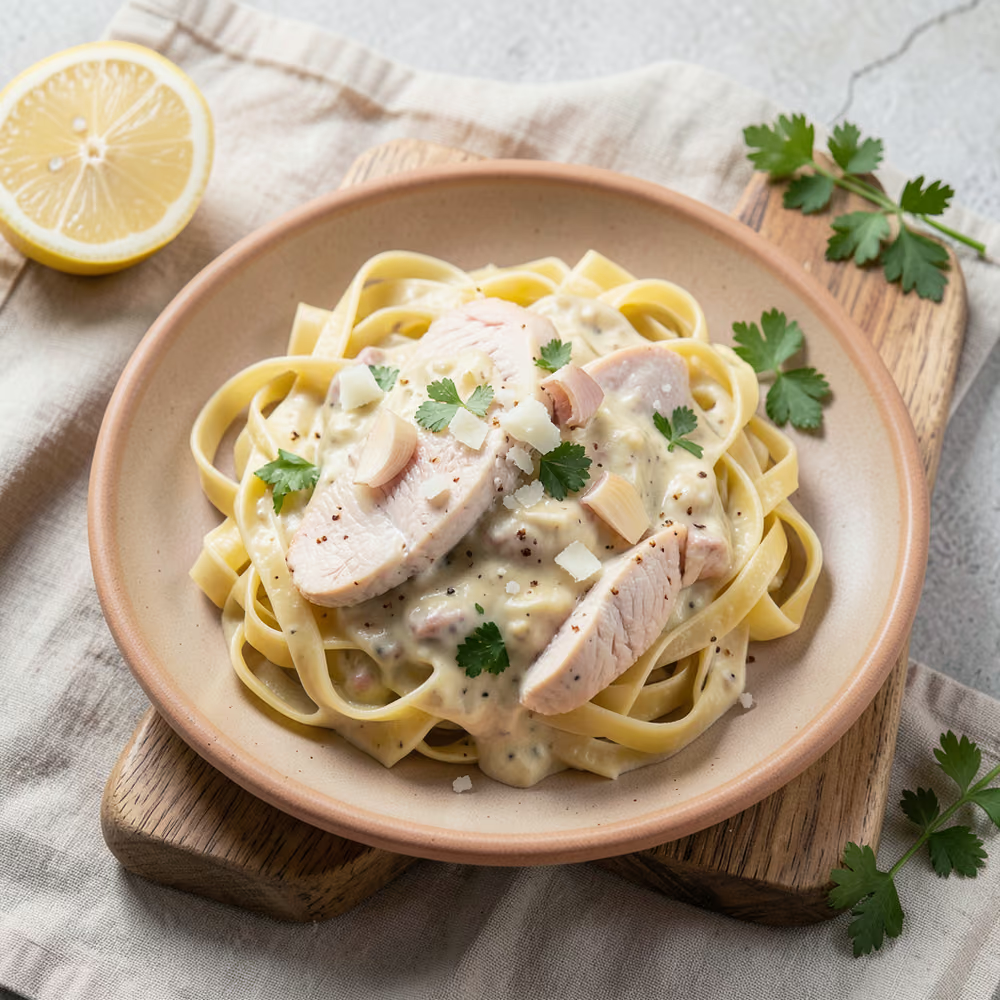
Creamy chicken alfredo is the Italian-American pasta-house favorite built for a weeknight: golden strips of chicken breast and fettuccine folded into a garlicky Parmesan cream sauce that clings to every strand. One skillet does the chicken, the garlic and the sauce, so the browned bits season the cream and there is little to wash. Three moves decide the result — sear the chicken to 74°C without overcooking, keep the cream at a bare simmer, and use reserved pasta water to pull the sauce together. Thirty minutes, mostly at the stove, feeds four.
- Prep
- 10 min
- Cook
- 20 min
- Total
- 30 min
- Serves
- 4
Ingredients
What you’ll need — tap to tick off as you go
- 300 g
- 500 g
- 2 tbsp
- 3 cloves
- 240 ml
- 80 g
- 1 tsp
- ½ tsp
- 2 tbsp
Process
Timers built in · swap anything · ask as you cook
Bring a large pot of well-salted water to a rolling boil, add the 300 g fettuccine and cook according to the package directions until al dente, just shy of the printed time. Reserve 120 ml of the cloudy cooking water, then drain. That starchy water is the tool that pulls the final sauce together, so scoop it before the pot goes anywhere near the sink.
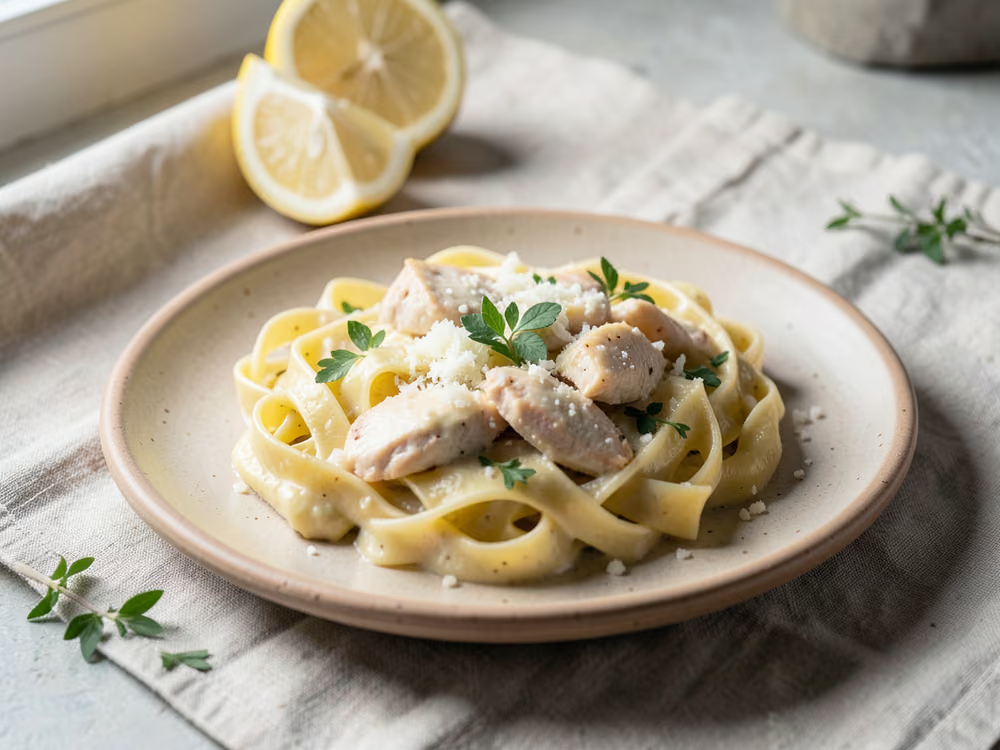
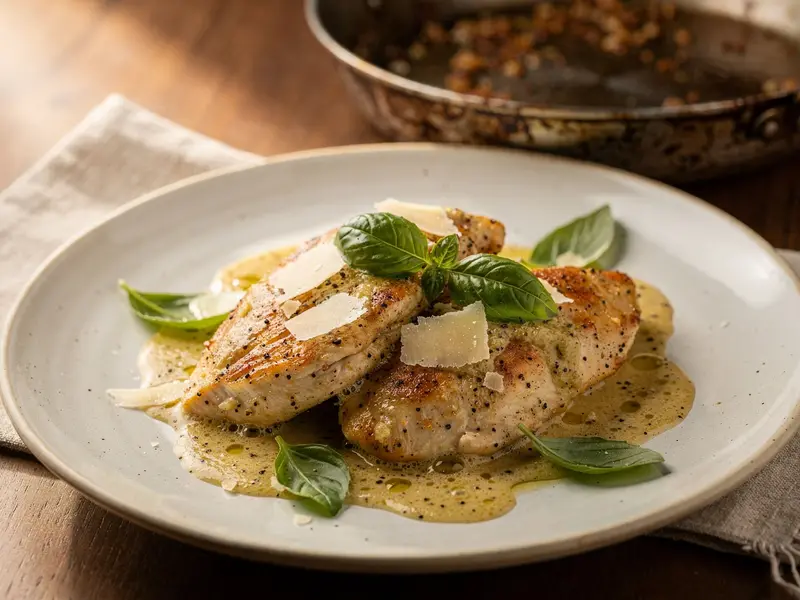
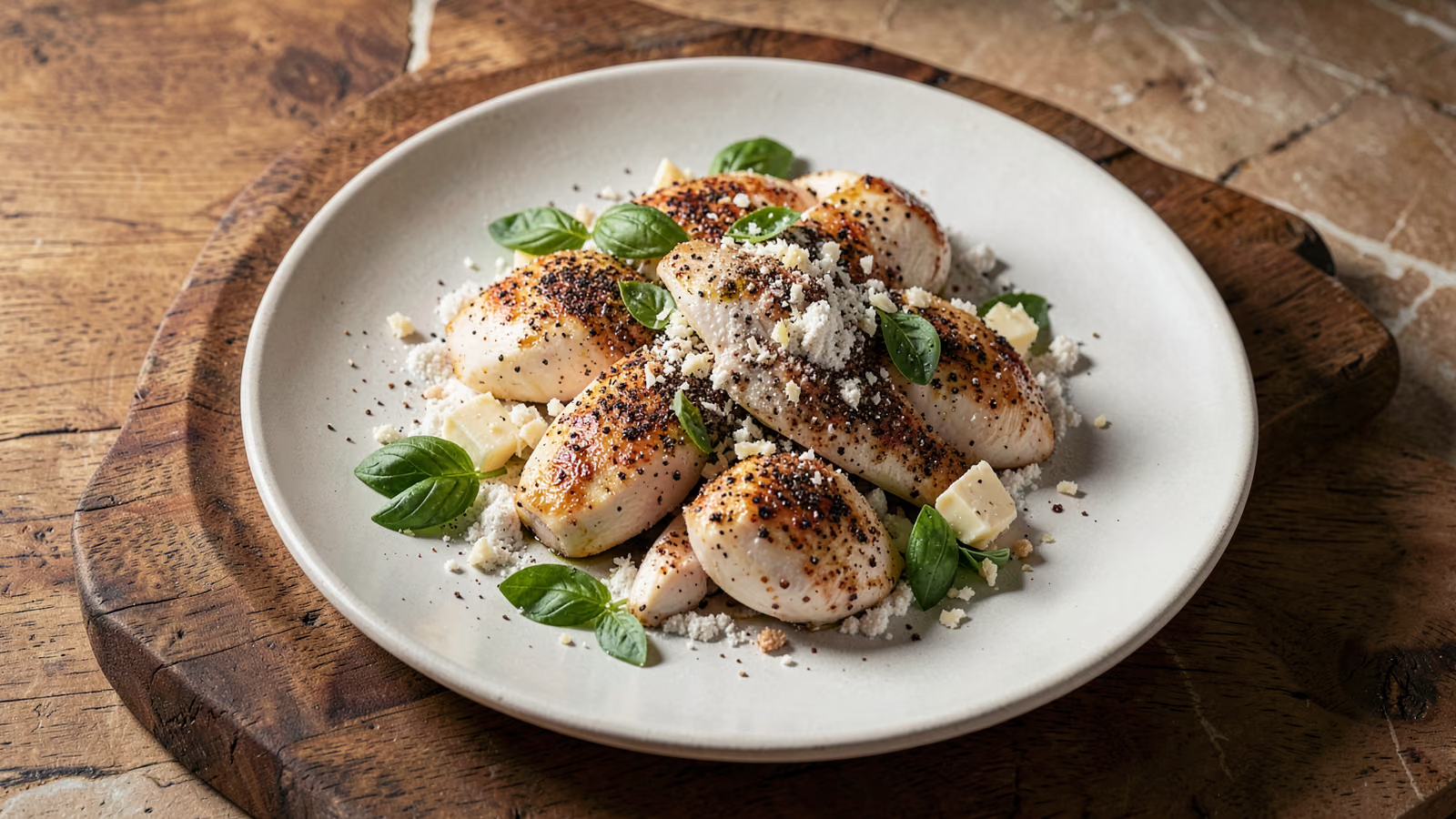
Pat the 500 g chicken strips dry and season with 0.5 tsp salt and 0.25 tsp black pepper. Melt 1 tbsp butter in a large skillet over medium-high heat until it foams, lay the chicken in a single layer and cook 4–5 minutes per side, until golden outside and opaque through, 74°C on an instant-read thermometer. Move it to a plate; it finishes in the sauce, and overcooking dries it out.
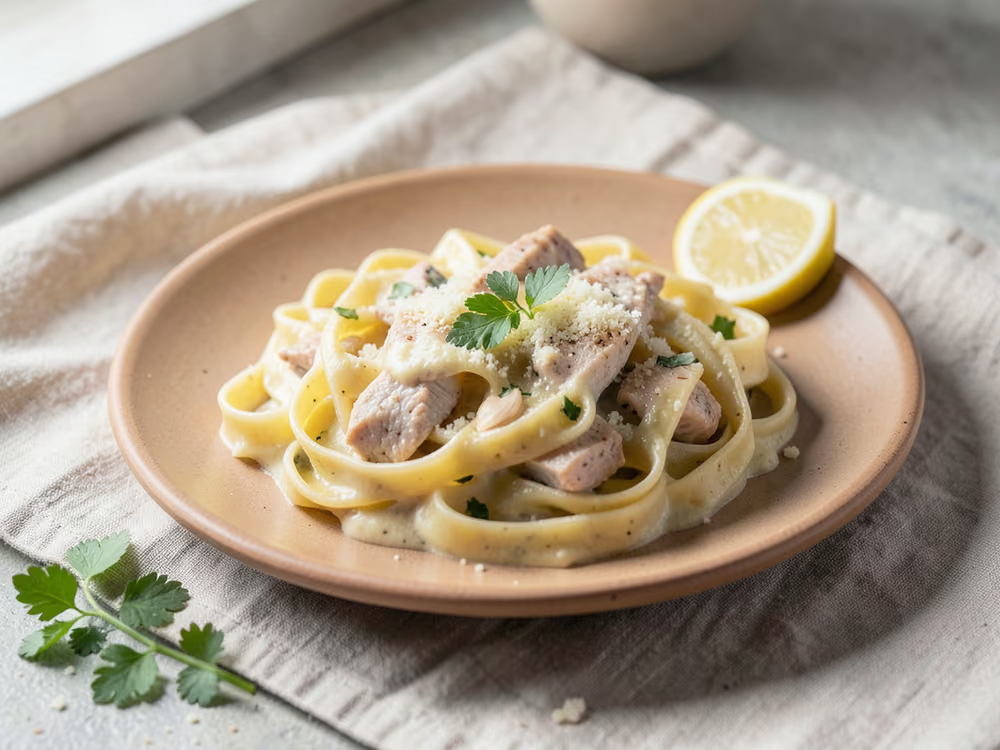
Reduce the heat to medium and melt the remaining 1 tbsp butter in the same skillet, scraping up the browned bits the chicken left behind; that fond is the sauce's savory base. Add the 3 minced garlic cloves and cook for 30 seconds, stirring, until just fragrant — pale and sweet, never browned, because scorched garlic turns the whole sauce bitter.
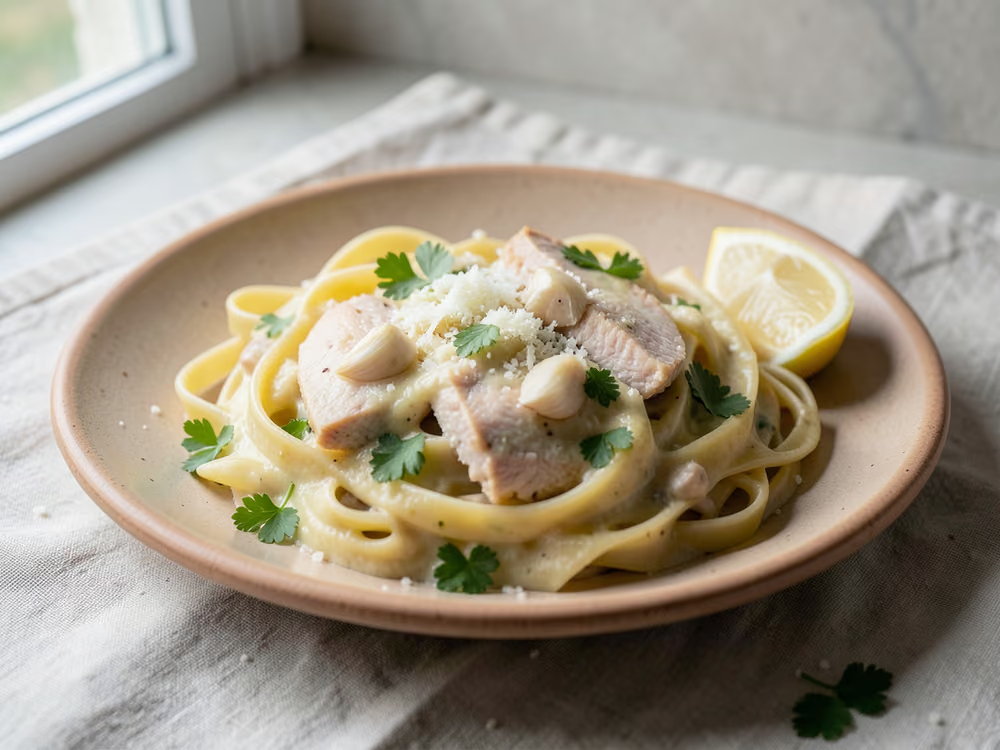
Pour in the 240 ml heavy cream and bring it to a gentle simmer — small bubbles at the edge, never a rolling boil — and cook 2–3 minutes, until the cream thickens slightly and coats a spoon. Whisk in the 80 g grated Parmesan with the remaining 0.5 tsp salt and 0.25 tsp black pepper, a handful at a time, until the sauce is smooth and glossy; hard heat now makes it grainy.
Return the chicken and its resting juices to the skillet, tip in the drained fettuccine, and toss over low heat. Add the reserved pasta water a splash at a time, folding until every strand is glossy and the sauce clings rather than pools. Use only as much water as it takes; too much and the sauce slides off the pasta.
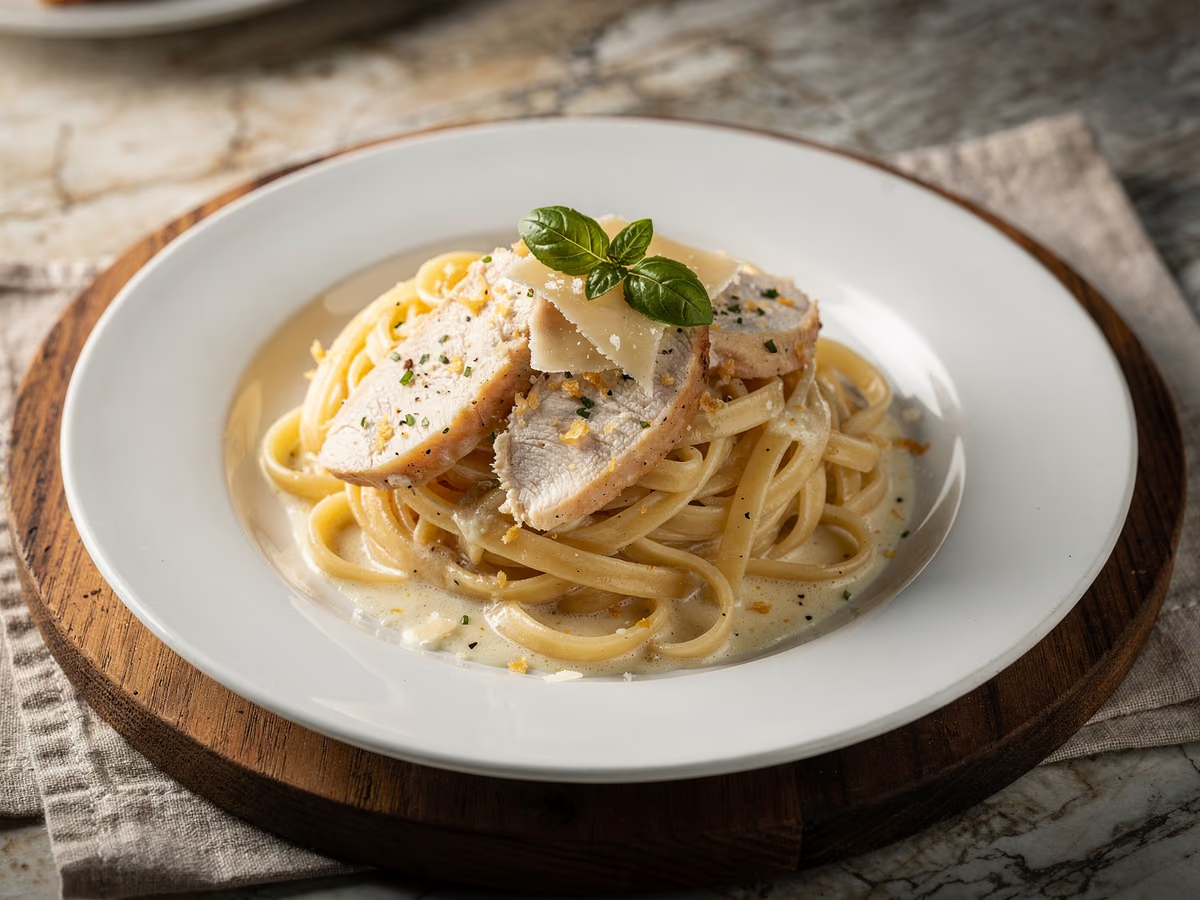
Take the pan off the heat and serve straight away in warm bowls, topping each portion with the 2 tbsp chopped parsley if using, extra Parmesan and a crack of black pepper. Alfredo thickens as it cools, so it is at its silkiest within minutes of the final toss, while the chicken is hot and the sauce still fluid.
Why this recipe works
Alfredo sauce lives or dies as an emulsion, and the method protects it. Heavy cream simmers just long enough to shed some water and thicken; Parmesan then melts into that warm fat-and-water base, and the starch from the reserved pasta water helps bind them so the sauce coats the noodles instead of pooling. Heat is the enemy: push a cream-and-cheese sauce to a hard boil and aged-cheese proteins tighten, squeezing out fat — the graininess and oil slick of a broken sauce. The chicken follows the same logic, sliced thin and pulled at 74°C so the final warm-through cannot dry it, while the sear's browned fond gives the cream its savory depth.
Equipment
- Large pot for the pasta, about 5 litres, so the 300 g of fettuccine can move freely
- Large deep skillet or sauté pan, about 28-30 cm, that can hold the chicken, then the sauce and all the pasta
- Colander, plus a heatproof jug for the reserved pasta water
- Fine grater or microplane for the Parmesan
- Chef's knife and cutting board for slicing the chicken
- Wooden spoon or tongs for tossing
- Instant-read thermometer for checking the chicken
- Measuring spoons and a jug
Kitchen notes
Kitchen notes
- Grate the Parmesan on the fine holes of a box grater or a rasp: feathery shreds melt in seconds, while coarse ones can clump before they disappear into the sauce.
- Warm the bowls or plates before serving; a cold plate grabs heat from the sauce and tightens it before it ever reaches the table.
- Keep the reserved pasta water warm in its jug. Cold water dropped into a warm sauce cools it right where the emulsion is most fragile, and warm water blends in without a fight.
- Taste before you salt the sauce. Parmesan runs from nutty and mild to quite sharp, and salt already sits in the chicken and the pasta water, so the final pinch is easy to overdo.
- Cut the chicken into strips of even 1 cm width so every piece hits 74°C at the same moment; mixed thicknesses put dry ends and underdone middles on the same plate.
Common mistakes
- Grainy sauce: the Parmesan went into cream that was boiling hard, or it went in too fast, so the cheese proteins tightened and squeezed out their fat. Keep the sauce at a bare simmer, add the cheese in small handfuls, and grate from a block, since the anti-caking starch on pre-shredded cheese also turns sauces sandy.
- Greasy, separated sauce: the cream boiled after the cheese went in, or the pan sat too long over high heat. Pull the pan off the burner the moment the cheese is whisked in, and if an oil slick appears, whisk in a splash of warm pasta water off the heat to pull the emulsion back together.
- Dry chicken: the strips stayed in the pan chasing a deep brown crust. They are 1 cm thick and need only 4-5 minutes per side; pull them at 74°C, let them rest on the plate while the sauce cooks, and return them at the end just to warm through.
- Sauce that slides off the pasta: too much pasta water went in, or the noodles overcooked and lost their grip. Add the water a splash at a time only until the sauce coats, and cook the fettuccine just shy of al dente so it finishes in the pan.
- Flat, under-seasoned sauce: the pasta water was barely salted, or the cheese measure came up short. Salt the cooking water generously, use the full 80 g of Parmesan, and taste at the end — only then add salt, since the cheese is salty on its own.
- Bitter, acrid edge: the garlic browned while the chicken was being tended. Add it after the heat drops to medium and stir for 30 seconds; if a clove does catch, wipe the pan and start the sauce over rather than carrying the burnt note into the cream.
Serving suggestions
- Serve right away in warm bowls: a quarter of the pasta and a quarter of the chicken per person, with plenty of the pan sauce spooned over.
- Garlic bread or warm focaccia alongside for mopping, and a crisp green salad with a squeeze of lemon to cut the richness between bites.
- Pass extra Parmesan and a mill of black pepper at the table; the optional parsley keeps the plate from reading monochrome.
- Keep the drinks cold and simple: sparkling water with lemon, iced tea or chilled barley tea stands up to the cream without weighing the meal down.
Variations
- Vegetable add-ins: blanch a few broccoli florets or a handful of frozen peas and fold them in with the pasta; they lighten each serving and stretch the pan without changing the sauce.
- Spicier finish: add a pinch of red pepper flakes or a minced chili with the garlic, and crack more black pepper over the bowls; the heat cuts through the cream and keeps the dish from reading too rich.
- Gluten-free plate: gluten-free fettuccine or penne cooked in its own well-salted pot works fine, since the sauce is built from cream and cheese; expect a slightly softer bite and toss it a touch more gently.
Refrigerator
- RefrigeratorCool the leftovers within 2 hours of cooking, then refrigerate in an airtight container for up to 3 days. The sauce sets thick and the pasta keeps drinking it, so the second day tastes a little drier; plan to reheat with a splash of milk or water.
- ReheatingWarm gently in a skillet over low heat with a splash of milk or water, stirring until steaming hot throughout. Skip the microwave on high, which can split the cream sauce and toughen the chicken; if the sauce breaks anyway, a splash of warm water and steady whisking often brings it back.
- FreezingNot recommended. Cream sauces tend to separate and turn watery or grainy on thawing, and the pasta softens to mush. If you freeze a portion anyway, use it within 1 month, thaw overnight in the fridge and reheat very gently, accepting a looser sauce.
- Make aheadCook the chicken and make the sauce up to 1 day ahead and refrigerate them separately. Reheat the sauce over low heat with a splash of milk, cook fresh pasta, and fold everything together so neither the chicken nor the noodles overcooks.
Updated:
How this recipe was developed
- FoodSafety.gov (USDA) safe minimum internal temperature chart: chicken and other poultry 74°C (165°F)
- USDA FSIS leftovers and cold food storage guidance: refrigerate cooked food within 2 hours; keep leftovers 3-4 days refrigerated; reheat until steaming hot
- Serious Eats, Roman-Style Fettuccine With Alfredo Sauce (Daniel Gritzer): starchy pasta water binds the butter-cheese emulsion so it clings instead of breaking, finely grated young Parmesan melts smooth, and gentle heat protects the sauce
- Serious Eats, The Science of Melting Cheese: high heat makes aged-cheese proteins squeeze out their fat and turn sauces grainy, while starch and added moisture keep the emulsion stable
Editorial references are kept internally for verification. This page makes no claim of external certification or professional testing.
FAQ
The questions we get asked most
Why did my chicken alfredo sauce turn out grainy?
Graininess is a broken emulsion: the cheese proteins tightened and released their fat. The usual causes are cream boiled hard before or after the Parmesan, cheese dumped in all at once, or bagged pre-shredded Parmesan whose anti-caking starch melts sandy. Keep the cream at a bare simmer, add the 80 g of cheese in small handfuls, grate from a block, and pull the pan off the heat the moment the sauce is smooth. If it has already gone grainy, a splash of warm pasta water and steady whisking off the heat can sometimes pull it back.
Can I use milk instead of heavy cream in chicken alfredo?
Yes, with a texture trade. Whisk 1 tbsp flour or cornstarch into 240 ml of whole milk to replace some of the cream's body; the sauce comes out noticeably thinner and less rich, and whole milk is the minimum, because skim milk curdles more readily as it heats with the Parmesan. Add the pasta water cautiously and expect a lighter, looser sauce.
How do I keep the chicken from drying out in chicken alfredo?
Slice the 500 g of chicken into even 1 cm strips, sear them over medium-high heat for 4-5 minutes per side, and pull them at 74°C, the USDA FSIS minimum for poultry and also the point where the strips stay at their juiciest. Let them rest on their plate while the sauce comes together and return them only for the final warm-through, so they are never cooked twice.
Can I make chicken alfredo ahead of time?
Partly. Cook the chicken and simmer the sauce up to 1 day ahead and refrigerate them separately; on the night, reheat the sauce gently with a splash of milk, cook fresh fettuccine, and fold everything together. A fully assembled dish waits badly, because the pasta keeps absorbing the sauce and the chicken firms up on reheating.
How long does chicken alfredo keep in the fridge?
Up to 3 days in an airtight container, and refrigerate it within 2 hours of cooking. The sauce sets thick when cold and the pasta softens as it stores; reheat over low heat with a splash of milk or water, stirring until steaming hot. Plan to finish it inside that window rather than stretching it.
Can I freeze creamy chicken alfredo?
It is not recommended. Cream sauces tend to separate on thawing and come back watery or grainy, and the pasta turns soft, so the dish loses exactly what makes it worth eating. If you want a freezer version anyway, freeze for up to 1 month, thaw overnight in the fridge and reheat very gently; expect a looser sauce and softer noodles.
Can I make chicken alfredo with rotisserie chicken?
Yes, and it is a genuine shortcut: pull the meat from a rotisserie chicken and fold it in with the pasta at the end, since it only needs to warm through. You lose the browned crust and the pan fond that seasons the sauce, so add the chicken's resting juices to the cream and taste for salt before serving.
Ask KitchenMind about this recipe
Tell it what’s different tonight — it works within the actual recipe.