- Prep
- 15 min
- Cook
- 15 min
- Total
- 30 min
- kcal
- 620.8
- protein
- 42.7 g
- Serves
- 4
Ingredients
What you’ll need — tap to tick off as you go
- 600 g
- 300 g
- 400 ml
- 60 ml
- 2 tbsp
- 1 tbsp
- 10 g
- 2 cloves
- 1 tsp
- 1 tbsp
- 1 tsp
- 1 pinch
Process
Timers built in · swap anything · ask as you cook
Put the short-grain rice in a bowl and rinse it under cold water 3 to 4 times until the water runs almost clear. Drain well, then add the rice and 400 ml water to a pot with a tight lid.
Bring the rice to a boil over medium-high heat, then reduce to low, cover, and cook for 12 minutes. Turn off the heat and let it steam, covered, for 10 minutes. Do not lift the lid during cooking.
While the rice cooks, whisk the soy sauce, honey, rice vinegar, grated ginger, and grated garlic in a small bowl. Stir the cornstarch with 1 tbsp cold water in a separate cup to make a slurry.
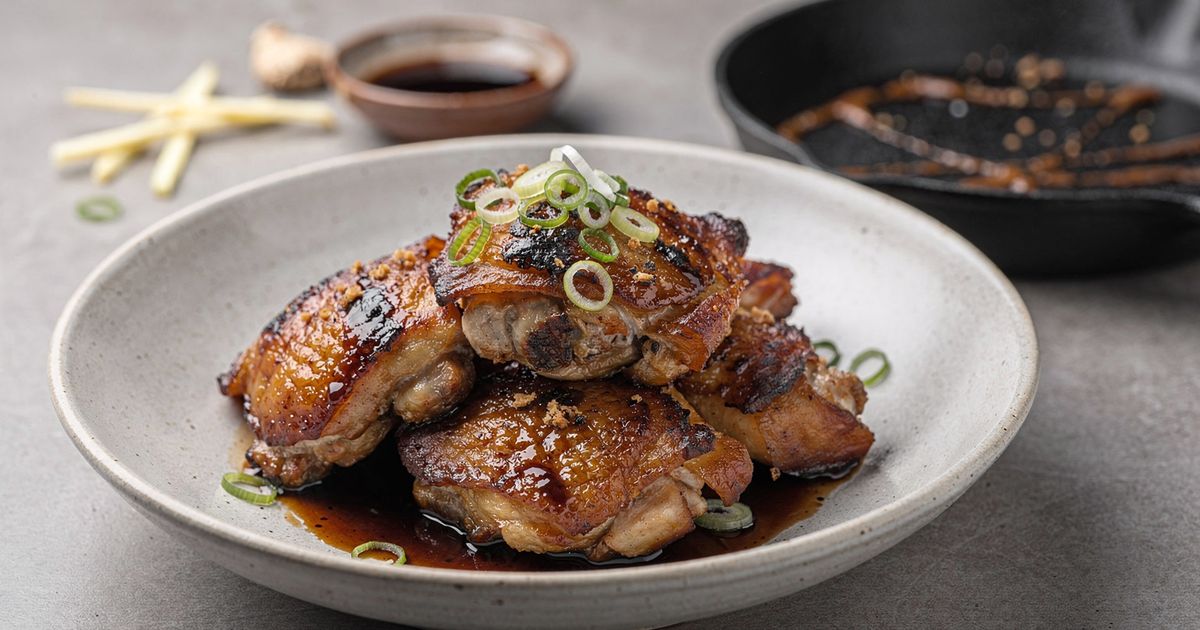
Pat the chicken thigh pieces completely dry with paper towels and season lightly with a pinch of salt. Heat the neutral oil in a large frying pan over medium-high heat until it shimmers.
Add the chicken in a single layer and sear without moving for 3 minutes, then stir and cook for another 3 minutes until browned on all sides and nearly cooked through.
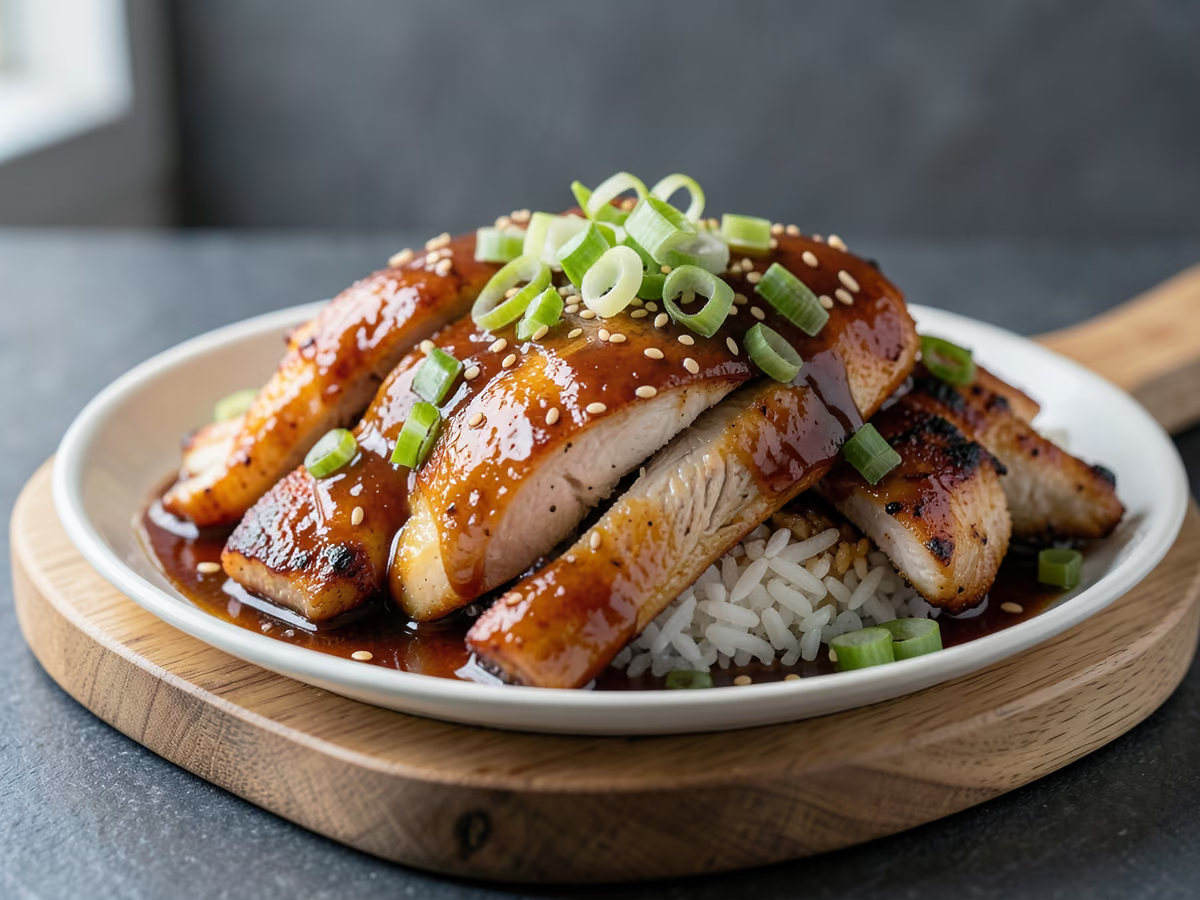
Pour the soy sauce mixture into the pan and let it bubble for 1 minute, tossing the chicken to coat. Reduce the heat to low, add the cornstarch slurry, and stir constantly for 30 to 60 seconds until the sauce thickens into a glossy glaze that coats the back of a spoon.
Fluff the steamed rice with a fork and divide it between 4 deep bowls. Spoon the chicken and its teriyaki glaze over the rice.
Scatter the sliced scallions and toasted sesame seeds over each bowl and serve immediately.
Kitchen notes
Kitchen notes
- The most common mistake is crowding the pan: if the chicken pieces touch each other they steam instead of sear, so use a large pan or cook in two batches.
- Dry the chicken well before it hits the pan. Surface moisture is the main reason teriyaki chicken turns pale and grey rather than golden brown.
- Add the cornstarch slurry only after the sauce bubbles and the heat is low, then stir constantly. Boiling it hard after thickening can make the glaze thin and cloudy again.
- The glaze is ready when it coats a spoon and a line drawn through it on the pan bottom stays visible for a second. If it is still watery, simmer 30 seconds more.
Substitutions
- chicken thighs→boneless skinless chicken breast, cut into 3 cm pieces and cooked 1 to 2 minutes less
- honey→brown sugar or maple syrup in the same amount
- rice vinegar→apple cider vinegar or lime juice
- short-grain rice→jasmine rice or medium-grain rice, cooked the same way
- cornstarch→potato starch or arrowroot powder
Storage & reheating
Store leftovers in an airtight container in the fridge for up to 3 days, keeping the rice and chicken in separate containers so the rice does not soak up all the glaze. To reheat, sprinkle a teaspoon of water over the rice, cover, and microwave on high for 1 to 2 minutes, or warm the chicken gently in a covered pan over low heat with a splash of water. Do not freeze the assembled bowls; the rice becomes grainy and the glaze separates, though the cooked chicken alone can be frozen for up to 2 months.
| Nutrient | Per serving |
|---|---|
| Calories | 620.8 kcal |
| Protein | 42.7 g |
| Carbohydrates | 71.4 g |
| Fat | 17.1 g |
| Saturated fat | 4 g |
| Fiber | 1.3 g |
| Sugar | 9.1 g |
| Sodium | 1042 mg |
| Cholesterol | 129 mg |
FAQ
The questions we get asked most
Why did my teriyaki sauce turn out thin instead of glossy?
The sauce needs starch and a gentle simmer to thicken. Whisk 1 tsp cornstarch with 1 tbsp cold water and stir it in over low heat for 30 to 60 seconds. If you add the slurry to a furiously boiling pan, the starch breaks down and the glaze stays watery.
Can I make chicken teriyaki donburi ahead of time?
Yes, cook the chicken and glaze up to 2 days ahead and refrigerate it in an airtight container. Cook the rice fresh on the day, because reheated rice loses its texture. Reheat the chicken in a covered pan over low heat with a splash of water until it is steaming hot.
How do I know when the chicken is fully cooked?
Cut the thickest piece in half: the center should be opaque white with no pink, and the juices should run clear. An instant-read thermometer inserted into the middle should read 74°C. If it is not there yet, simmer it in the glaze for another minute or two.
Can I use chicken breast instead of thighs?
Yes, but breast meat dries out faster. Sear it for 2 minutes per side instead of 3, and add it back to the glaze only for the final 30 seconds. Thighs stay juicier because their fat bastes the meat as it cooks.
Is this teriyaki sauce the same as the bottled kind?
Homemade teriyaki is thinner and less sweet than most bottled sauces, which often contain thickeners and preservatives. This version uses soy sauce, honey, rice vinegar, ginger, and garlic, then gets its shine from a small cornstarch slurry. You can adjust the honey up or down to taste.
What can I serve with chicken teriyaki donburi instead of rice?
Steamed short-grain rice is traditional, but you can serve the chicken over soba noodles, quinoa, or cauliflower rice. If using cauliflower rice, saute it briefly in a dry pan first to remove excess moisture so the glaze does not turn it soggy.
Why is my teriyaki chicken dry and tough?
Overcooking is almost always the cause. Chicken thighs need only about 6 minutes total in the pan before the glaze goes in, and they continue cooking in the hot sauce. Take the pan off the heat as soon as the thickest piece reaches 74°C.
Ask KitchenMind about this recipe
Tell it what’s different tonight — it works within the actual recipe.