Pad Thai
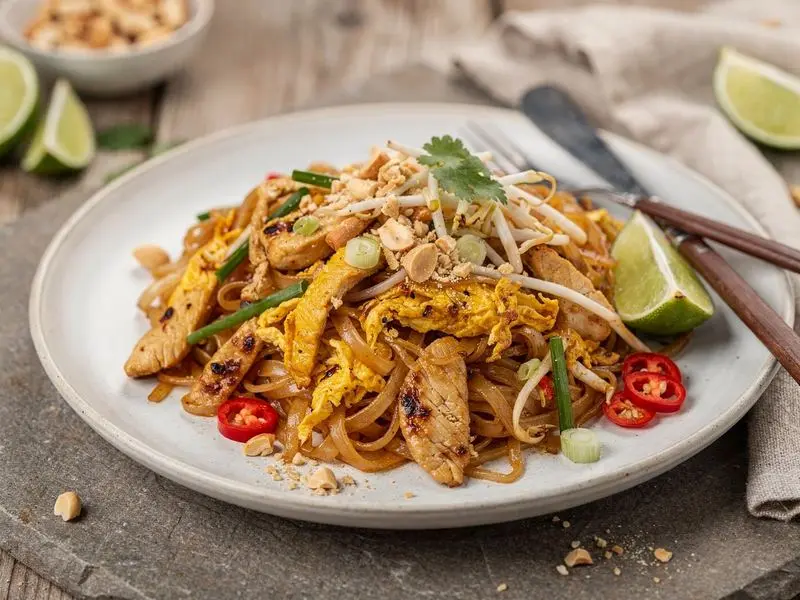
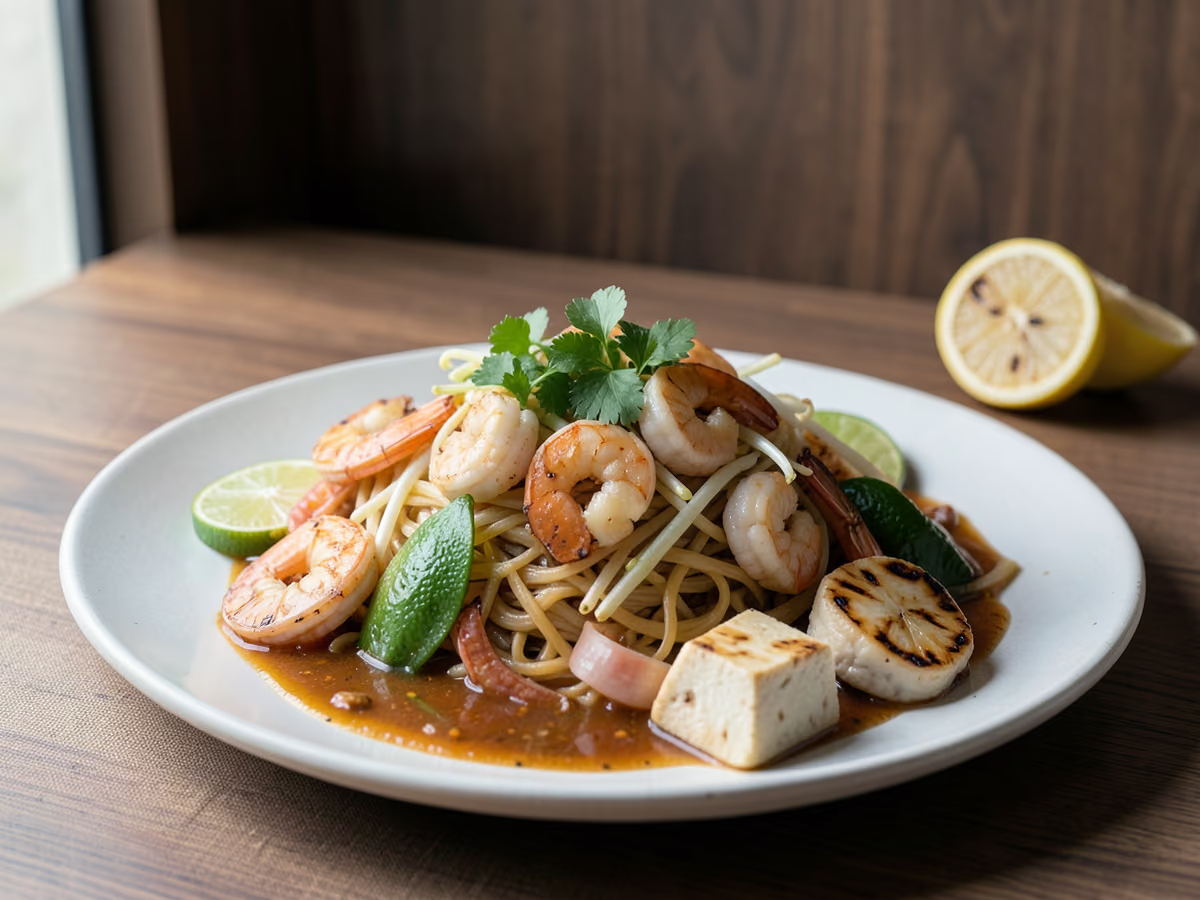
Pad thai is Thailand's most famous street-food noodle, and this is the classic restaurant plate: flat rice noodles with shrimp, egg, and firm tofu, tossed in a sauce of tamarind, fish sauce, palm sugar, and soy sauce, then finished with raw bean sprouts, crushed peanuts, and lime. The 200 g of noodles soak rather than boil, and they finish in the wok, which is the difference between glossy strands and a gummy clump. From there it is a fast dinner: about 10 minutes at the stove, four generous servings.
- Prep
- 20 min
- Cook
- 10 min
- Total
- 50 min
- Additional time
- 20 min
- Serves
- 4
Ingredients
What you’ll need — tap to tick off as you go
- 200 g
- 300 g
- 150 g
- 2 tbsp
- 2 tbsp
- 2 tbsp
- 1 tbsp
- 2 cloves
- 100 g
- 50 g
- 2 tbsp
- 1 tsp
Process
Timers built in · swap anything · ask as you cook
Tip the 200 g of rice noodles into a large bowl, cover them with warm water, and soak for 20 minutes, until a strand bends without snapping but still feels firm at its core. Start checking at 15 minutes, since brands vary. Drain well in a colander and let the strands drip dry: surface water steams the wok and glues the noodles together, and they finish cooking in the pan, not the bowl.
While the noodles soak, whisk the 2 tbsp tamarind paste, 2 tbsp fish sauce, 2 tbsp palm sugar, and 1 tbsp soy sauce in a small bowl until the sugar is fully dissolved and the sauce is smooth. Rub a drop between your fingers: it should feel slick, with no grit. Taste it now: you want it bold, balanced, slightly too strong on its own, because the noodles mellow it as they absorb.
Heat the 2 tbsp vegetable oil in a wok over high heat until it shimmers and slides across the metal. Add the 2 minced garlic cloves and the sliced shallot and stir-fry for 30 seconds, just until they are fragrant and still pale. Garlic goes from sweet to acrid in seconds, so the shrimp, tofu, and eggs should already be cut and within reach.
Add the 300 g shrimp and the 150 g tofu cubes and stir-fry for 2–3 minutes, keeping everything moving, until the shrimp turn pink and opaque and the tofu is golden at the edges. Pull them at that point: a shrimp curled into a tight O is already overcooked, and these stay in the pan through the noodle stage.
Push the shrimp and tofu to one side of the wok, tilt the pan so the cleared side sits over the heat, and pour in the 2 beaten eggs. Let them set for about a minute without stirring, then break them into soft curds and fold everything together. Setting first keeps the egg tender instead of dry specks.
Add the drained noodles and pour the sauce over them. Toss constantly for 2–3 minutes, lifting and folding from the bottom of the pan, until the noodles are tender and glossy and have absorbed most of the sauce. If the strands still look stiff or the pan looks dry, add a splash of water and keep tossing: motion is what keeps them separate.
Add the 100 g bean sprouts and half of the crushed peanuts and toss for 30 seconds, just until the sprouts are hot but still crisp. This is a texture step, not a cooking step: any longer and they wilt and release water that thins the sauce. Take the wok off the heat.
Serve straight away in warm bowls, with the remaining peanuts scattered over the top and the 1 lime cut into wedges on the side, plus the chili flakes if you want heat. The plate is at its best in the first minutes: the noodles firm up as they cool, and the peanuts stay crunchy only until they meet the steam.
Why this recipe works
Two decisions carry the plate. First, the soak: hydrated in warm water, the noodles stay firm through the core with their surface starch bound, so they finish cooking in the wok and absorb the sauce instead of shedding starch and welding into a brick. A hot soak or a boil does the opposite. Second, the heat: a ripping-hot wok flashes moisture off the strands so they fry rather than steam, and constant motion keeps them separate. The sauce balances sour tamarind, salty fish sauce, and sweet palm sugar, and it goes onto noodles already in motion, so it glazes rather than pools. The egg sets alone in a cleared zone, staying soft; sprouts and peanuts land last, for crunch.
Equipment
- Wok or wide, heavy skillet, about 30 cm, that can take high heat
- Large heatproof bowl for soaking the noodles
- Colander for draining
- Small bowl and fork or whisk for the sauce
- Chef's knife and cutting board
- Measuring spoons
- Wok spatula, tongs, or two long spoons for tossing
Kitchen notes
Kitchen notes
- Cut or break any very long noodle strands into shorter lengths before soaking. Long strands tangle around the spatula and turn the toss into a wrestling match; shorter pieces lift and separate easily, which also keeps them cooking evenly.
- Line up every ingredient before the wok goes on: garlic minced, shallot sliced, eggs beaten, sauce whisked, sprouts and peanuts at hand. Once the oil is hot there is no time to chop, and the whole dish takes only minutes from the first sizzle.
- Add the sauce all at once to noodles that are already sizzling and moving, not in slow dribbles. A single pour onto hot, tossing noodles cooks off and glazes; a trickle onto cool patches pools, cools, and turns sticky.
- The sauce should taste slightly too strong on its own, because the noodles mellow it as they absorb. If it tastes perfect straight from the bowl, the finished plate will taste faint.
- Learn the finger test for the noodles: wrap one strand around your finger. If it bends all the way without snapping but still resists a little, it is ready; if it cracks, soak it longer, and if it flops limply, it has gone too far for the wok to rescue.
- Keep the lime wedges for the table and squeeze them over just before eating. The wok's heat mutes the sauce's brightness, and the raw citrus is the one note that arrives fresh; it also revives the plate as it cools.
Common mistakes
- Mushy, waterlogged noodles: the soak ran long or the water was too hot, so the strands soften past pliable before they ever reach the wok. Soak in warm water only, test at 15 minutes, and drain thoroughly; once noodles are waterlogged, nothing later in the recipe can undo it.
- A sticky noodle brick: too little heat, too much surface water, or sauce poured onto noodles that were sitting still. Get the wok hot before the oil, drain the noodles well, pour the sauce in one go onto noodles that are already moving, and keep tossing from the bottom of the pan without long pauses.
- Stiff, chalky noodles that never soften: they were under-soaked, or the pan went dry before they finished. Add water a splash at a time and keep tossing; the steam completes the hydration without turning the plate wet.
- Scorched, bitter garlic: two minced cloves catch in seconds at wok heat. Give them 30 seconds and no more, take them only to fragrant and pale, and have the shrimp, tofu, and eggs measured and within reach before they go in.
- A sauce that is too sour or too flat: tamarind strength swings between brands, and sugar that never dissolved hides at the bottom of the bowl. Whisk until no grit remains, taste before cooking, and correct with a little more palm sugar for sourness or a squeeze of lime at the table for flatness.
- Limp sprouts and soft peanuts: they went in too early, or the plate waited. Add both in the final 30 seconds, scatter the rest of the peanuts at serving, and get the bowls to the table while the noodles are still glossy.
Serving suggestions
- Serve straight from the wok into warm bowls: four people get a generous portion each, with the rest of the peanuts, the lime wedges, and the chili flakes passed at the table so everyone can sharpen their own bowl.
- Eat it the Thai way, a fork in one hand pushing the noodles onto a spoon, rather than chasing strands with chopsticks; pad thai is a fork-and-spoon dish, and dinner is far less frustrating for it.
- Keep the sides cool and crisp: cucumber slices, a little crisp cabbage salad, or extra raw bean sprouts contrast the sweet-sour noodles far better than another hot dish would.
- Make it the last dish to reach the table, because the noodles firm up as they cool; anything else on the menu should already be served when this comes off the wok.
- Keep the drinks cold and unsweetened, such as iced tea, jasmine tea, or sparkling water with a wedge of lime; the sauce is already sweet, and a sugary drink flattens its sour edge.
Variations
- Plant-based version: leave out the shrimp and the fish sauce, replace the fish sauce with the same 2 tbsp of soy sauce, and brown a second 150 g of tofu in place of the shrimp. Tamarind, palm sugar, peanuts, and lime carry the classic sweet-sour profile, but it is a different plate from the one as written, so treat it as its own recipe.
- Dried shrimp version: soak about 50 g of dried shrimp in warm water for 10 minutes, drain, chop them fine, and fry them with the garlic and shallot. They melt into the noodles and deepen the seafood savor; old-style Bangkok vendors built the dish this way.
- Extra heat: stir the 1 tsp red chili flakes into the oil with the garlic and shallot, or leave them on the table; pad thai is often served with dried chili on the side, and a little heat keeps the sweetness in check.
Refrigerator
- RefrigeratorCool the leftovers quickly, spread in a shallow container so they are chilled within the hour, then keep them airtight in the fridge and eat them within 24 hours. Because this is a rice-noodle dish, it follows the stricter cooked-rice guidance rather than the three or four days you might give other leftovers.
- ReheatingReheat once, until steaming hot all the way through, which is 74°C at the center for leftovers; a hot skillet with a splash of water loosens the clump, or use a covered microwave, stirring for even heat. The noodles firm up as they chill, so the splash of water matters more than the speed.
- FreezingNot recommended. The noodles soften to mush on thawing and the bean sprouts collapse, so this is a dish for the day it is cooked.
- Make aheadStage it: whisk the sauce, mince the garlic, slice the shallot, and cut the lime up to a day ahead, all covered in the fridge; the noodles can be soaked and drained earlier the same day and kept covered. The final stir-fry cannot be done ahead, and the finished dish should not wait.
Updated:
How this recipe was developed
- USDA FoodSafety.gov safe minimum internal temperature chart (shrimp cooked until the flesh is pearly or white and opaque; egg dishes 71°C; leftovers 74°C)
- UK Food Standards Agency home food fact checker on cooked rice (cool within 1 hour, refrigerate and eat within 24 hours, and reheat only once until steaming hot)
- The Woks of Life, Pad Thai (soak the dried rice noodles about 20 minutes and drain well; a smoking-hot wok; noodles tossed with the sauce over high heat until it is absorbed; bean sprouts stirred in at the very end)
- BBC Good Food, Perfect pad Thai, Jennifer Joyce (soak until bendy but not soft because the wok finishes the cooking; stir-fry in two batches so the wok stays hot; stir-fry until the sauce is absorbed)
Editorial references are kept internally for verification. This page makes no claim of external certification or professional testing.
FAQ
The questions we get asked most
Why are my rice noodles mushy?
Usually the soak or the pan. Water that is too hot or a soak that runs past 20 minutes softens the strands before they reach the wok, and a cool wok or wet noodles steam them into a starch-glued clump. Soak in warm water only until a strand bends without snapping but still feels firm at the core, start checking at 15 minutes, drain thoroughly, and get the wok properly hot before the noodles go in.
Can I make pad thai without tamarind?
Yes, though the sour heart changes character. The closest pantry stand-in is lime juice softened with brown sugar, about equal parts, used in place of the same 2 tbsp of tamarind; the plate reads brighter and fruitier rather than deep and tangy. If you can shop first, a mild Thai-style tamarind concentrate is the better match; the dark, sticky kind is much stronger, so use less and taste.
How do I keep the noodles from sticking to the wok?
Heat and motion. Get the wok hot before the oil goes in, drain the noodles well, pour the sauce in one go over noodles that are already moving, and keep lifting and folding from the bottom of the pan. Do not crowd it: when the wok is small, cook two batches. If strands start to stick anyway, a splash of water and continued tossing will loosen them.
Can I use dried shrimp instead of fresh?
They play different roles, and the classic uses both. The 300 g of fresh shrimp is the protein; dried shrimp are a seasoning, soaked in warm water for 10 minutes, drained, and chopped or ground, then fried with the garlic and shallot for the deep seafood savor of the old Bangkok plate. Use about 50 g; they add punch, not bulk.
Is pad thai gluten-free?
Not as written, because regular soy sauce is usually brewed with wheat. The rice noodles, fish sauce, tamarind, palm sugar, shrimp, egg, tofu, and peanuts are naturally gluten-free; swap the 1 tbsp of soy sauce for tamari or a certified gluten-free soy sauce, and check the labels on your fish sauce and peanuts, since brands vary.
How do I know when the shrimp are done?
Pink flesh and a gentle curl. The shrimp turn pink and pearly white after 2-3 minutes in the wok, and the USDA describes them as done when the flesh is pearly white and opaque, so pull the batch there. A shrimp closed into a tight O went too far and eats rubbery, and since these stay in for the noodle stage, slightly under is safer than over.
Can I make pad thai ahead of time?
Partly. The sauce can be whisked and the ingredients cut, soaked, and refrigerated up to a day ahead, and the noodles can be soaked and drained earlier the same day. The stir-fry itself has to happen just before serving, because the finished dish firms into a clump as it cools. Leftovers keep up to 24 hours and reheat once, thoroughly.
Ask KitchenMind about this recipe
Tell it what’s different tonight — it works within the actual recipe.