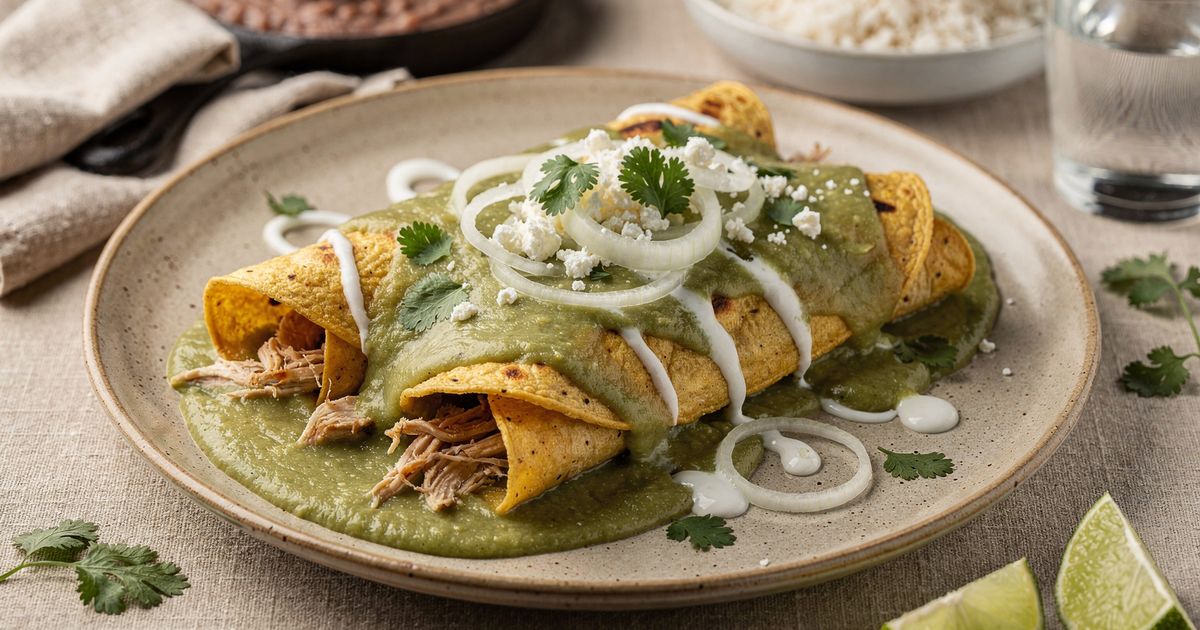
Chicken Enchiladas Verde
Enchiladas verde are rolled corn tortillas filled with chicken and cheese, blanketed in a salsa verde built from tomatillos, jalapeño and white onion, and baked until the cheese bubbles. This version simmers the salsa ingredients in chicken broth for 10 minutes, blends them smooth, and uses the sauce twice — a cup through the filling, the rest over the top — so every tortilla is seasoned inside and out. Prep is 30 minutes and the oven needs 20 to 25, which makes it a realistic weeknight bake for six.
- Prep
- 30 min
- Cook
- 40 min
- Total
- 70 min
- Serves
- 6
Ingredients
What you’ll need — tap to tick off as you go
- 900 g
- 3 cloves
- 240 ml
- 1 tsp
- 1 tsp
- 700 g
- 340 g
- 2 tbsp
- ½ cups
- ½ cups
Process
Timers built in · swap anything · ask as you cook
Preheat the oven to 190°C. In a medium saucepan, combine the 900 g husked tomatillos, 2 jalapeños, the roughly chopped white onion, 3 garlic cloves and 240 ml chicken broth and bring to a simmer over medium heat. Cook for about 10 minutes, until the tomatillos are soft and have dulled from bright green to olive.
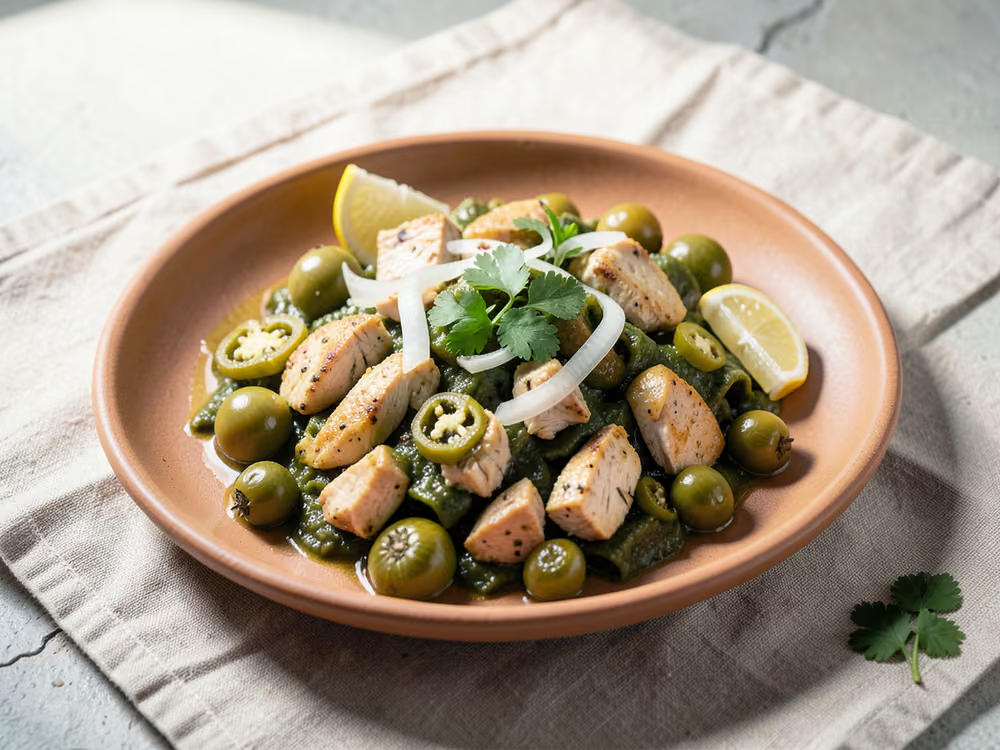
Transfer the cooked vegetables and broth to a blender, add 1 tsp ground cumin and 1 tsp salt, and blend until completely smooth, about 30 seconds. Taste and adjust the salt, then set the salsa verde aside. It should be glossy and a little fluid now, and it will thicken as it cools and as it bakes.
In a large bowl, mix the 700 g shredded chicken with 1 cup of the salsa verde and 1 cup of the shredded Monterey Jack. Toss until every strand is coated. The salsa in the filling is what seasons the chicken from the inside, and the cheese binds the rolls so they hold together as they bake.
Heat the 2 tbsp vegetable oil in a small skillet over medium heat and, one at a time, fry the 12 tortillas for about 10 seconds per side, just until softened and pliable. Drain each on paper towels. This is the step that stops the tortillas cracking as you roll and seals them so the salsa cannot turn them to mush.
Spread 1 cup of the remaining salsa verde over the bottom of a 23 x 33 cm (9 x 13 inch) baking dish. Put 2 to 3 tablespoons of the chicken mixture in the centre of a fried tortilla, roll it up snugly, and set it seam-side down in the dish. Repeat with the remaining tortillas; the rolls should sit close together but not be forced in.
Pour the remaining salsa over the enchiladas, spreading it to cover the tops and work into the gaps, then scatter the remaining 2 cups of Monterey Jack evenly down the centre. Covering the tops matters: bare tortilla dries and crisps at the edges while the rest steams, so let the sauce do its job.
Bake at 190°C for 20 to 25 minutes, until the cheese is fully melted and bubbling and the sauce bubbles at the edges. If you started from a cold, pre-assembled dish, add 5 to 10 minutes. Check the centre reads 74°C, the USDA FSIS reheat temperature for casseroles.
Let the dish rest for 5 minutes before serving, so the filling sets and the portions lift cleanly, then scatter over the chopped cilantro. Serve with sour cream on the side for anyone who wants to cool the salsa's bite.
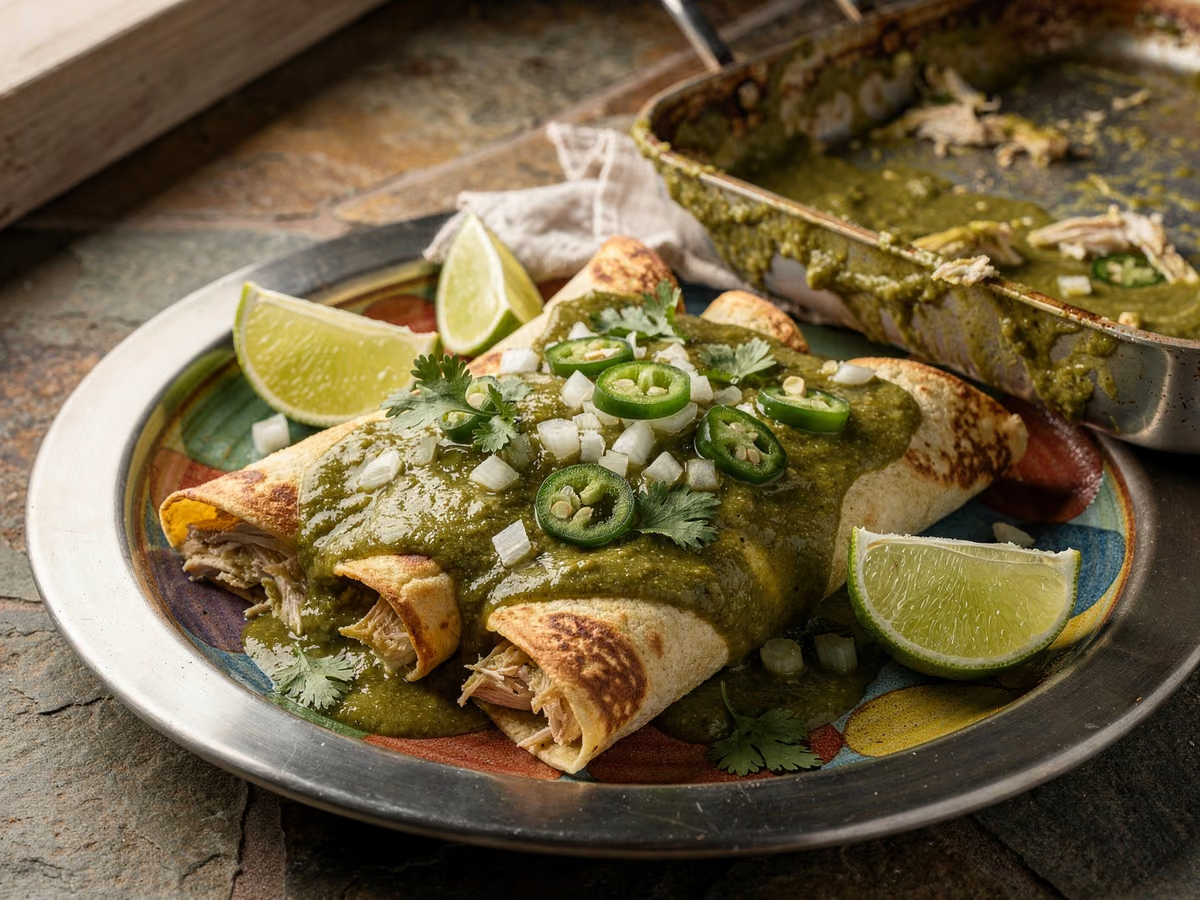
Why this recipe works
Corn tortillas give the dish its structure, but only after a flash fry: 10 seconds per side in hot oil sets the surface, makes the tortilla pliable enough to roll without cracking, and builds a moisture barrier so the salsa cannot soak in and collapse the roll. Simmering the tomatillos until they dull from bright green to olive is the doneness signal Mexican cooks use — the colour shift marks the moment their pectin has softened enough to blend silky rather than watery. And mixing a cup of the salsa straight into the chicken seasons the filling from the centre, not just from the sauce on top.
Equipment
- Baking dish, 23 x 33 cm (9 x 13 inch)
- Blender or hand blender
- Medium saucepan for the salsa
- Small skillet for frying the tortillas
- Tongs for turning the tortillas
- Colander and paper towels for draining
- Box grater for the cheese
- Instant-read thermometer
Kitchen notes
Kitchen notes
- Salt the salsa until it tastes right on its own before it touches the chicken; once the dish is baked, you cannot stir seasoning through it.
- Set out the fried tortillas, filling, salsa and cheese in a line before you roll the first one — fried tortillas stiffen as they cool, so assembly should take minutes, not a break.
- Drain each tortilla for a beat on paper towels after frying; a quick drain is what keeps the finished dish tasting baked rather than fried.
- Make the salsa up to a week ahead and keep it covered in the fridge; it thickens just enough overnight to cling to the tortillas, and the tomatillo tang deepens.
- Fry and roll one test enchilada first. It tells you whether your tortillas are pliable and whether 2 to 3 tablespoons of filling rolls cleanly, before you commit the whole dish.
- Grate the cheese on the coarse side of the box grater: coarse shreds melt into distinct, stretchy patches, while fine gratings disappear into the sauce.
Common mistakes
- Cracked tortillas: they were cold or stale, or the flash fry was skipped. Ten seconds per side in hot oil makes them pliable; if they still split, the pack was too dry to start with, so warm them briefly and roll with a lighter hand.
- Soggy enchiladas: the tortillas were not fried, or the dish was flooded with sauce. The fry seals the surface, and 1 cup under plus the rest over is all the salsa the recipe needs — extra sauce is what collapses the tortillas.
- Filling spilling out: the tortillas were overfilled or rolled loosely. Keep to 2 to 3 tablespoons per tortilla, roll snugly, and set them seam-side down so the weight of the salsa presses the rolls closed as they bake.
- Sauce tastes raw or flat: the tomatillos were undercooked, or the salsa went in under-salted. Simmer until a spoon pressed against a tomatillo collapses it, then season the blended salsa until it tastes good on its own, because baking will not fix it.
- Cheese leaking grease: the bake ran too long, or the cheese was the pre-shredded kind with a starch coating. Pull the dish when the cheese is bubbling and the centre reads 74°C instead of waiting for deep colour.
- Edges dried and crisp: parts of the tortillas were left bare. Spread the salsa so it covers the tops and works into the gaps before the cheese goes on; exposed tortilla dries at the edges while the centre steams.
Serving suggestions
- Serve from the dish with a wide spatula, two enchiladas per person as the recipe portions it, with sour cream, extra cilantro and lime wedges alongside.
- Black beans or a simply dressed salad make the plate; the dish already carries starch, protein and cheese, so keep the sides light.
- Scatter sliced radishes or pickled onions over the top at the table if you want a cold, crunchy edge against the warm salsa.
- Chilled sparkling water with lime or iced hibiscus tea cuts the tangy richness best; keep the sour cream close for anyone the jalapeño catches out.
Variations
- Charred salsa verde: blister the tomatillos, jalapeños and onion in a dry, hot skillet until blackened in patches, then blend with the broth and cumin. The sauce turns a deeper olive and carries a smoky note the simmered version does not.
- Layered enchilada casserole: spread, stack and repeat — salsa, tortillas, filling, cheese — instead of rolling. Same components and same bake, less handling, and it portions like a lasagne.
- Hotter salsa: put the jalapeños in the blender with their seeds and ribs, which is where the heat lives. Everything else stays as written.
Refrigerator
- RefrigeratorCool leftovers within 2 hours of baking (USDA FSIS) and refrigerate in an airtight container for up to 4 days, the generous end of the FSIS 3 to 4 day window for cooked leftovers. The tortillas soften further each day, so the dish is at its best in the first day or two.
- ReheatingReheat in the oven at 175°C for 15 to 20 minutes, covered, until the cheese melts again and the centre reads 74°C, the USDA FSIS reheat temperature for casseroles. Microwaved portions are ready in 1 to 2 minutes, though the tortillas turn softer still.
- FreezingUp to 3 months. Freeze assembled and unbaked for the best result: wrap the dish tightly, freeze, then thaw overnight in the fridge and bake as written. Baked leftovers can be frozen in portions and reheated at 175°C until bubbling.
- Make aheadAssemble up to 24 hours ahead, cover tightly and refrigerate; add 5 to 10 minutes to the bake time from cold. The salsa alone keeps up to a week in the fridge, and it tastes better on the second day.
Updated:
How this recipe was developed
- Serious Eats, basic salsa verde (simmer tomatillos, chile and onion about 10 minutes until completely softened, then blend with salt; a charred version blisters the same vegetables for a smokier sauce; keeps about 2 weeks refrigerated)
- Masienda on enchilada technique (flash-fry each corn tortilla about 10 seconds per side so it turns pliable and resists the sauce; keep the filling to 2 to 3 tablespoons per tortilla)
- Robb Walsh, The Hot Sauce Cookbook, salsa verde for enchiladas verdes (blanched tomatillos pureed with cilantro, onion, chile and lime; also a table sauce)
- USDA FSIS safe minimum internal temperatures and leftovers guidance (cooked poultry 74°C; reheated casseroles 74°C; refrigerate within 2 hours; 3 to 4 days in the fridge)
Editorial references are kept internally for verification. This page makes no claim of external certification or professional testing.
Gallery
FAQ
The questions we get asked most
Why did my enchiladas turn out soggy?
The two causes are skipping the tortilla fry and using too much sauce. Frying each tortilla for 10 seconds per side creates a barrier that keeps the salsa out, and the recipe's own split — 1 cup under the rolls, the rest over the top — is all the sauce the dish needs.
Why did my tortillas crack when rolling?
Cold or stale tortillas, or a skipped fry. Flash-frying for about 10 seconds per side makes them pliable; if they still crack, they were too dry to begin with, so warm them briefly and use the freshest pack you can find.
Can I use canned tomatillos instead of fresh?
Yes: about 800 g of canned tomatillos, drained, replaces the 900 g fresh, and the jar liquid loosens the blended salsa only if it is too thick. Adjust the salt after blending, since canned tomatillos are often already salted.
Can I make this dish ahead of time?
Assemble up to 24 hours in advance, cover with plastic wrap and refrigerate; bake straight from cold, adding 5 to 10 minutes. The salsa can be made up to a week ahead, and it actually tastes better on day two.
How do I know when the enchiladas are done?
The cheese is fully melted and bubbling and the sauce bubbles at the edges, about 20 to 25 minutes in a 190°C oven; a knife inserted in the centre should come out hot to the touch. Take the centre to 74°C, the USDA FSIS reheat temperature for casseroles, then rest 5 minutes.
Can I freeze enchiladas?
Yes, up to 3 months. Freeze them before baking for best results: assemble, wrap tightly, freeze, then thaw overnight in the fridge and bake as written. Baked ones can be frozen in portions and reheated at 175°C until bubbling hot.
How spicy is the salsa verde?
Medium. Two jalapeños with the seeds and ribs scraped out give a steady background heat that the cheese and sour cream soften; leaving the seeds in the blender is the step that moves it to genuinely hot.
Ask KitchenMind about this recipe
Tell it what’s different tonight — it works within the actual recipe.