Chicken Ramen with Soft Egg
Start with the broth. Chicken ramen with a soft egg is a bowl built on a soy-seasoned chicken broth sharpened with garlic, ginger, and scallions, poured over springy noodles and finished with spinach, nori, and sesame. Two details decide the result. This weeknight version keeps the structure but pins down both: a jammy egg pulled at seven minutes and shocked in ice water, and noodles cooked apart from the broth so your soup stays clear. Fifteen minutes of prep and twenty-five minutes of cooking yield four generous bowls.
- Prep
- 15 min
- Cook
- 25 min
- Total
- 280 min
- Additional time
- 240 min
- Serves
- 4
Ingredients
What you’ll need — tap to tick off as you go
- 500 g
- 400 g
- 1 ½ l
- 4 tbsp
- 4 cloves
- 1 tbsp
- 2 tsp
- 1 tsp
- 100 g
- 1 tsp
Process
Timers built in · swap anything · ask as you cook
Bring a medium pot of water to a rolling boil, about 100°C. Seven minutes, then ice. Gently lower the 4 eggs in with a slotted spoon, start a timer the moment they hit the water, and cook exactly 7 minutes for a fully set white around a jammy yolk. Move them straight into ice water for 2 minutes to stop the carryover cooking, then peel and halve.
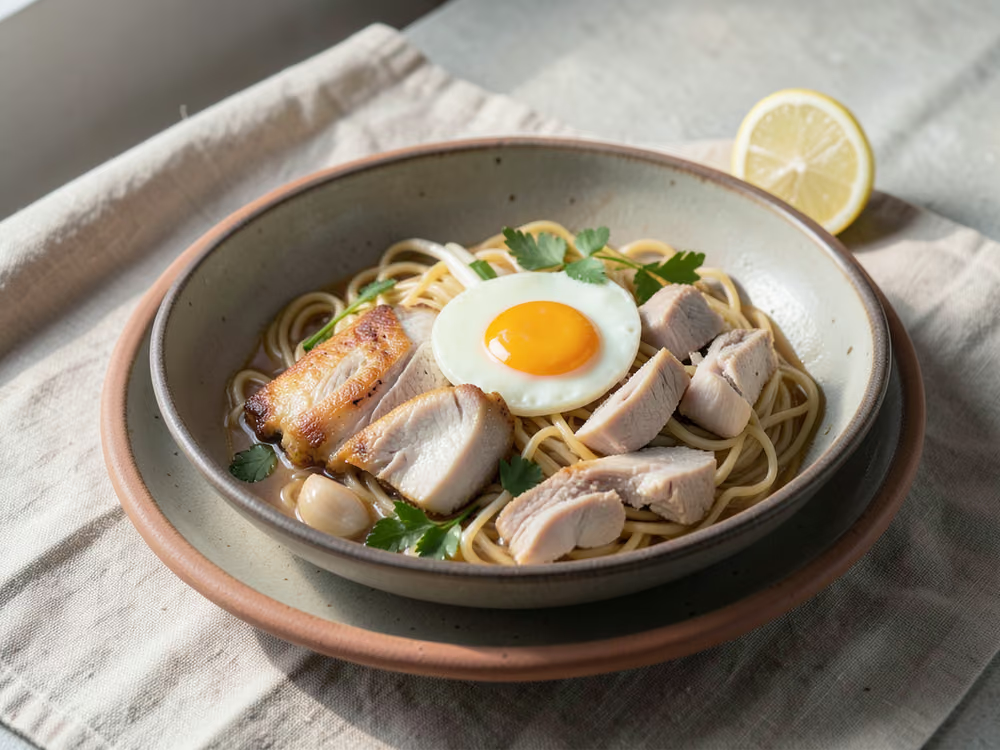
With the eggs on the boil, set a large pot over medium heat and warm the 2 tsp sesame oil in it. Single layer only. Lay the 500 g chicken thighs in a single layer and leave them for 5–6 minutes, turning once, until they brown lightly and leave a film of fond across the pot bottom; that fond is where your broth gets its depth. (A splatter screen saves the stovetop.)
Thirty seconds, no more. Add the garlic, 4 cloves minced, and 1 tbsp of grated ginger, and stir constantly for 30 seconds, just until the aroma lifts; garlic goes bitter the moment it browns, so keep it moving. Stir in 4 tbsp soy sauce and 1 tsp sugar, scraping the browned bits off the pot bottom as the liquid loosens them.
The 1.5 l chicken broth goes in next, along with the white parts of the 4 sliced scallions. Low and steady. Once it simmers gently, drop the heat to low and cook 10 minutes with the surface barely trembling; a hard boil churns fat and fine particles into the liquid and turns a clear bowl cloudy. Taste, then add more soy sauce in small increments until the seasoning sits right.
Noodles cook separately. Meanwhile, cook the 400 g ramen noodles in a separate pot of boiling water: fresh noodles need 2–3 minutes, dried 4–5, and both are ready when just tender with a slight chew. Drain and shake the noodles well, then divide them among 4 deep bowls; keeping their starch out of the broth pot is what keeps your soup clear.
If you use the spinach, drop the 100 g baby spinach into the simmering broth and stir until it wilts, about 30 seconds. The leaves shrink fast. So pull them while they are still bright green; spinach left in the pot longer goes drab and gives the broth a flat, vegetal edge. (A slotted spoon lifts the leaves out without dragging broth with them.)
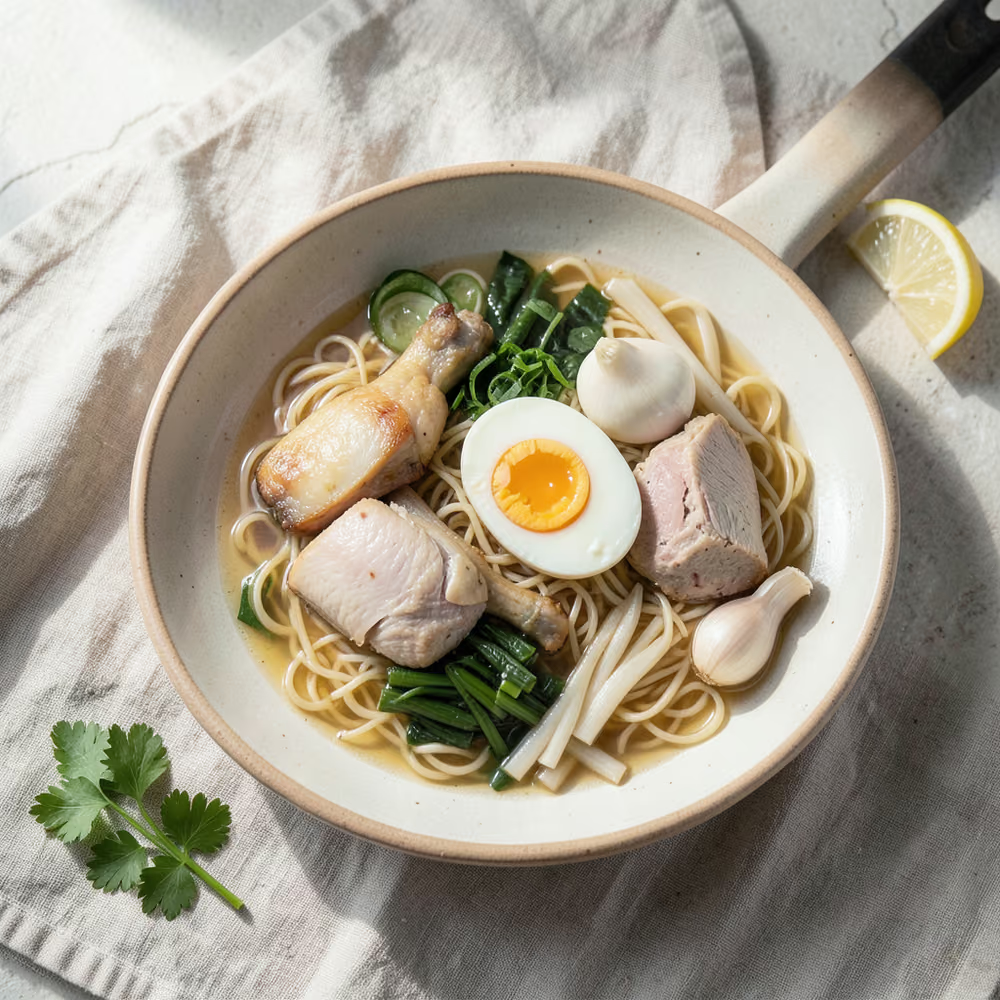
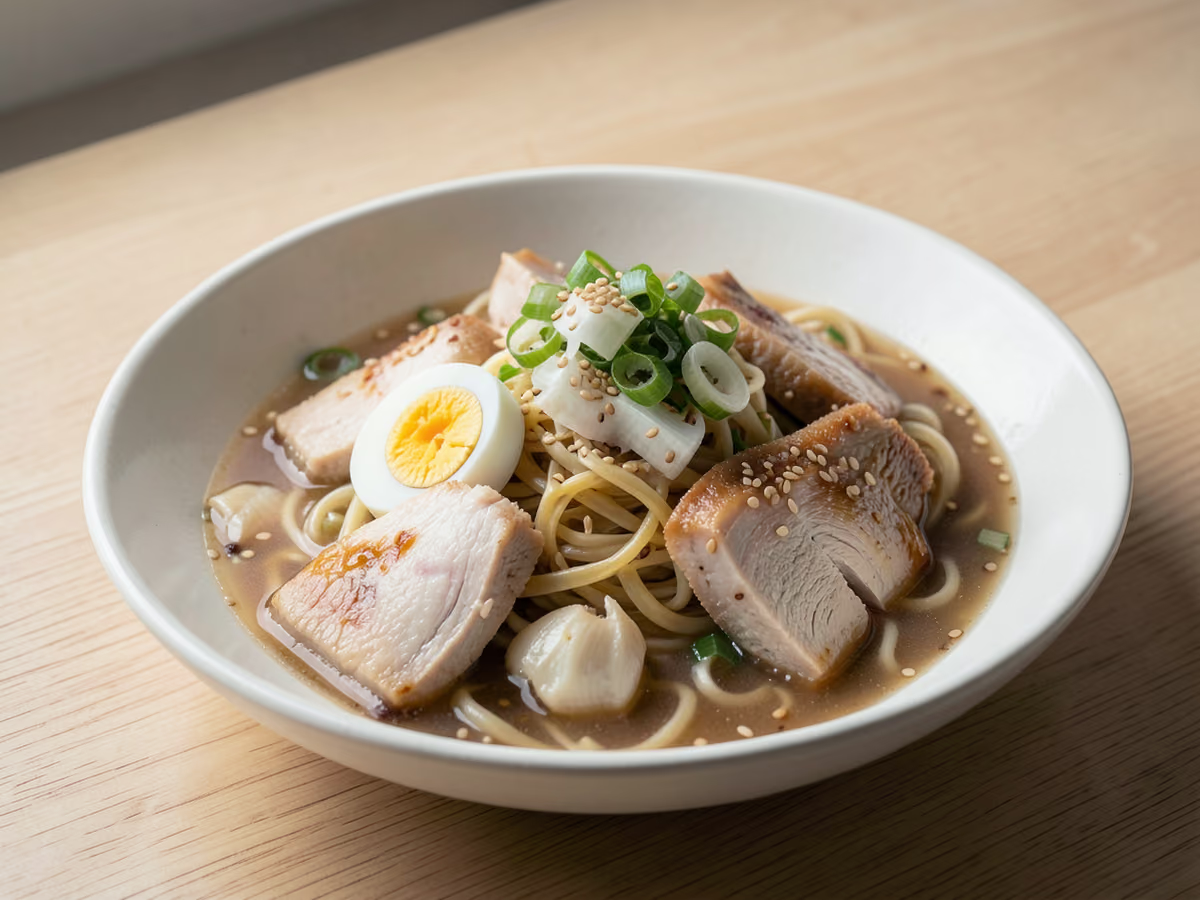
Ladle the hot broth and chicken over the noodles, dividing the chicken evenly among the 4 bowls. Top each bowl with 2 egg halves set cut side up, then the scallion greens, and if you like, nori strips and a sprinkle of sesame seeds. Serve it immediately. The noodles keep drinking broth as they sit, and the eggs go on last so the hot soup warms them without cooking the yolks further.
Why this recipe works
The bowl works because the flavor is built in stages rather than dumped in at once. Season in stages. Searing the chicken in sesame oil leaves a browned layer of fond in the pot; the garlic and ginger bloom in that fat for half a minute; then the soy sauce and sugar go in to loosen the fond into the liquid. Keep the heat low. A bare simmer for the final ten minutes merges everything without churning fat and fine particles into the broth, which is what keeps your soy-seasoned bowl clear instead of muddy. The egg is pure timing. Seven minutes sets the white while the yolk stays soft, and the ice bath halts the carryover heat that would otherwise push it chalky. The yolk is the sauce.
Equipment
- Medium saucepan wide enough to hold the 4 eggs in a single layer
- Large pot or Dutch oven, about 4 litres, for the broth
- Separate large pot for boiling the noodles
- Large bowl of ice water for shocking the eggs
- Fine grater for the garlic and ginger
- Chef's knife and cutting board
- 4 deep serving bowls
- Instant-read thermometer for checking the chicken
Kitchen notes
Kitchen notes
- Older eggs peel cleaner: shells from eggs a few days past purchase release without tearing the white. If your eggs are very fresh, tap the egg all over, roll it on the counter, and peel it under a trickle of cold water.
- Set the egg halves cut side up in your bowl. The exposed yolk warms through in the steam without hardening, while an egg laid cut side down steeps its yolk in near-boiling broth and turns it firm. Setting the halves cut side up is worth the small effort.
- Chop the garlic and grate the ginger before the chicken goes into the pot. They cook for only 30 seconds, and a scorched clove turns the whole pot bitter before you can mince a replacement. (A damp towel under the board keeps it from sliding while you mince.)
- Is your pot crowded? Brown the chicken in two batches instead of one. A packed pot traps steam, the pieces gray instead of brown, and the fond the broth is built on never forms.
- Keep the soy sauce at the table: a few drops stirred into a bowl sharpen that serving without pushing your whole pot over the salt line.
Common mistakes
- Chalky, gray-edged yolks: the eggs cooked past 7 minutes or kept cooking in the hot pot afterward. Do not wing the timing. Start the timer the moment they hit boiling water, begin with room-temperature eggs so the timing stays honest, and leave them the full 2 minutes in ice water to stop the carryover heat.
- Gluey noodles and a cloudy broth: the noodles were boiled in the broth pot, so their starch and salt ended up in the soup. Cook them in their own water, drain and shake them well, and keep the broth at a bare simmer instead of a rolling boil.
- A bowl that tastes harshly salty: regular broth used in place of low-sodium, or soy sauce that concentrated as the liquid reduced. Use the low-sodium broth the recipe calls for, hold the gentle simmer, and taste before you add more soy sauce.
- Dry, pebbled chicken: bite-size pieces left in the pot past the point where they were done. Brown them 5-6 minutes, let them finish gently in the simmering broth, and if you want certainty, check that a thick piece reads 74°C; thighs also punish overcooking. No thermometer? Cut the thickest piece open; opaque all the way through means it is ready.
- Bowls that go soggy before they reach the table: the noodles sat in hot broth while everything else was finished. Keep noodles and broth in separate pots, divide the noodles at the last minute, and ladle the broth in just before serving.
Serving suggestions
- Serve in deep bowls. Chopsticks for the noodles, a spoon for the broth; your bowl is at its best in the first few minutes. Dig in while the steam is still rising; that first spoonful is what all the timing was for.
- Iced tea or barley tea alongside, or sparkling water — something cold and unsweet cuts the salt and richness of the broth.
- Extra toppings at the table: toasted sesame seeds, torn nori, and more soy sauce for anyone who wants a sharper bowl. (Nori softens within a minute of hitting the broth, so tear it at the table.)
- This is a full one-bowl dinner as it stands; if you add a side, keep it light and cool, like cucumber dressed with a little rice vinegar. Leftover noodles and broth turn into a fine next-day lunch: warm them together in a pan and slide a fresh egg on top.
Variations
- Give the eggs time. Marinated eggs: after peeling, soak the eggs in soy sauce loosened with the same amount of water, plus a pinch of the sugar, for at least 4 hours and up to 12 hours in the refrigerator; the whites firm slightly and the surface turns glossy and amber. Don't worry if the color looks patchy on the first day - it evens out as the eggs sit.
- Spicy bowls: warm chili flakes in the sesame oil before the chicken goes in, or pass chili oil at the table for more heat. For a first try, stick with the flakes in the oil; save the table oil for anyone chasing real heat.
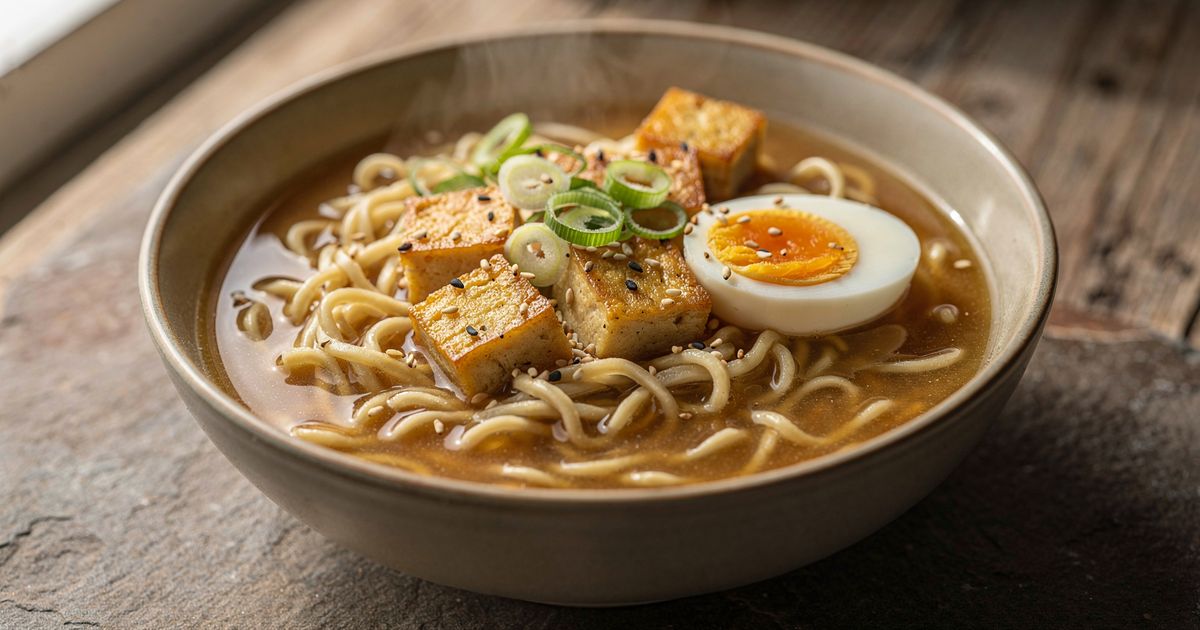
- Vegetarian version, a different dish: swap the chicken for firm tofu seared in the sesame oil and the chicken broth for vegetable broth, same 1.5 l; keep the eggs and the toppings. Still a full bowl.
Refrigerator
- RefrigeratorKeep the parts in separate airtight containers in the fridge. The broth and chicken keep for up to 3 days, the noodles for up to 2 days, and the peeled eggs for up to 2 days.
- ReheatingOn the stovetop, return the broth and chicken to a gentle simmer; the microwave works too, in 30-second bursts until steaming. Leftovers should reach 74°C. Warm the noodles briefly in the broth and add the eggs last so their yolks do not overcook.
- FreezingFreeze the broth and chicken for up to 2 months; thaw them overnight in the fridge, then bring back to a simmer. Do not freeze the noodles or the eggs, which turn spongy and watery.
- Make aheadYou can simmer the broth up to 3 days ahead; it often deepens overnight as the aromatics settle. The eggs can marinate up to 12 hours. Cook the noodles and assemble the bowls at the last minute. It's fine to leave the chicken in the broth overnight; a low reheat keeps the pieces tender.
Updated:
How this recipe was developed
- USDA FSIS Safe Minimum Internal Temperature Chart and FoodSafety.gov safe-temperature charts (all poultry, including chicken thighs, cooked to a safe minimum 74°C; leftovers reheated to 74°C)
- FoodSafety.gov, Salmonella and Eggs (cook eggs until the white and yolk are firm; refrigerate cooked food within 2 hours; diners at higher risk should avoid soft yolks)
- Serious Eats Food Lab, Ajitsuke Tamago (testing gives 6 minutes for a liquid yolk and 7 minutes for a jammy yolk; an ice-water shock stops carryover cooking; marinate at least 4 and up to 12 hours)
- Serious Eats, Stovetop Chicken Chintan Stock and From-Scratch Shio Ramen (a clear soy-seasoned broth is held at a bare simmer around 96°C because agitation churns fat into the liquid; noodles are boiled in a separate pot)
Editorial references are kept internally for verification. This page makes no claim of external certification or professional testing.
Gallery
FAQ
The questions we get asked most
How do I get a jammy soft egg every time?
Room temperature first. Start from room-temperature eggs, lower them gently into a rolling boil, and set the timer for exactly 7 minutes the moment they hit the water; six minutes leaves the center looser, and the jammy target is seven. The 2 minutes in ice water matter as much as the boil, because the residual heat keeps firming the yolk after the pot. Anyone advised to avoid soft yolks should simmer the eggs a couple of minutes longer, until the center is fully firm.
Why did my broth turn out cloudy?
Two habits, clear soup. Almost always a hard boil or noodles cooked in the pot. A rolling boil churns fat and fine particles into the liquid, and starch from the noodles clouds it further. Keep your broth at the barest simmer once the soy sauce goes in, and boil the noodles in their own water; that is nearly the whole secret to a clear bowl.
Can I make the broth ahead of time?
Yes — it keeps refrigerated for up to 3 days and often tastes deeper on the second day as the aromatics settle. Reheat it to a gentle simmer rather than a boil, and cook the noodles fresh when you are ready to eat.
Why is my ramen lacking flavor?
Pale chicken tastes thin. Low-sodium broth is designed to be seasoned, so it reads quiet straight from the pot. Cook the full 10 minutes, then taste and add soy sauce in small increments. If it is still flat, look at the sear: was the chicken browned, or merely cooked? Pale pieces make for thin broth — the fond from the sear is a real part of the flavor — and a pinch more sugar or a drizzle of the sesame oil can round out the edges.
Can I use dried ramen noodles?
Dried noodles carry salt. Cook them in their own boiling water. Follow the package directions, usually 4-5 minutes. Drain well, then season the broth a little more cautiously until you taste it. Test a strand a bit early, because they move from firm to soft quickly.
Is this ramen gluten-free?
Not as written, because both the soy sauce and the ramen noodles contain wheat. Swap in tamari for the soy sauce and use gluten-free ramen or rice noodles; everything else in your bowl stays the same.
Can I make the eggs ahead of time?
Peeled eggs keep refrigerated for up to 2 days, and the marinated version is better still on the second day. Add them to the bowls cold or at room temperature. Worried about cold eggs in a hot bowl? Broth and steam close that gap in moments, without the yolks firming. Reheating them in the pot would ruin the yolks.
Ask KitchenMind about this recipe
Tell it what’s different tonight — it works within the actual recipe.