- Prep
- 25 min
- Cook
- 35 min
- Total
- 60 min
- Serves
- 4
Ingredients
What you’ll need — tap to tick off as you go
- 1 tsp
- ½ tsp
- 60 g
- 120 g
- 500 ml
- 2 cloves
- 1 tbsp
- 2 tbsp
- 1 tsp
- 500 ml
- 2 tbsp
- 1 tbsp
- 600 g
Process
Timers built in · swap anything · ask as you cook
Pat the chicken breasts dry, place them between two sheets of plastic wrap and pound with a rolling pin or the flat side of a mallet until an even 1.5 cm thick. Season both sides with the salt and black pepper.
Set up three shallow dishes: put 60 g all-purpose flour in the first, the beaten eggs in the second, and the panko breadcrumbs in the third. Dredge each chicken breast in flour, shaking off the excess, then dip in egg, then press firmly into the panko so the coating sticks. Set the breaded cutlets on a plate.
Heat the vegetable oil in a deep frying pan over medium heat until a panko crumb dropped in sizzles immediately, about 170°C. Fry the cutlets two at a time for 4 to 5 minutes per side, until deep golden brown and cooked through. Drain on a wire rack, not paper towels, so the crust stays crisp.
While the chicken fries, start the curry. Heat 1 tbsp of the frying oil in a separate saucepan over medium heat. Add the onion, carrot and potato and cook for 6 to 8 minutes, stirring, until the onion is soft and translucent.
Stir in the garlic, ginger, curry powder and garam masala and cook for 1 minute until fragrant. Sprinkle in the 2 tbsp all-purpose flour and stir constantly for 1 minute to form a loose roux that coats the vegetables.
Pour in the hot chicken broth a little at a time, stirring to prevent lumps. Add the soy sauce, honey and bay leaf. Bring to a gentle simmer, then reduce the heat to low and cook for 15 minutes, stirring occasionally, until the potato and carrot are tender and the sauce has thickened enough to coat the back of a spoon.
Remove the bay leaf. If you prefer a smooth sauce, blend about half of it with an immersion blender and stir it back in, or leave it chunky as is. Taste and adjust with a little extra soy sauce if needed.
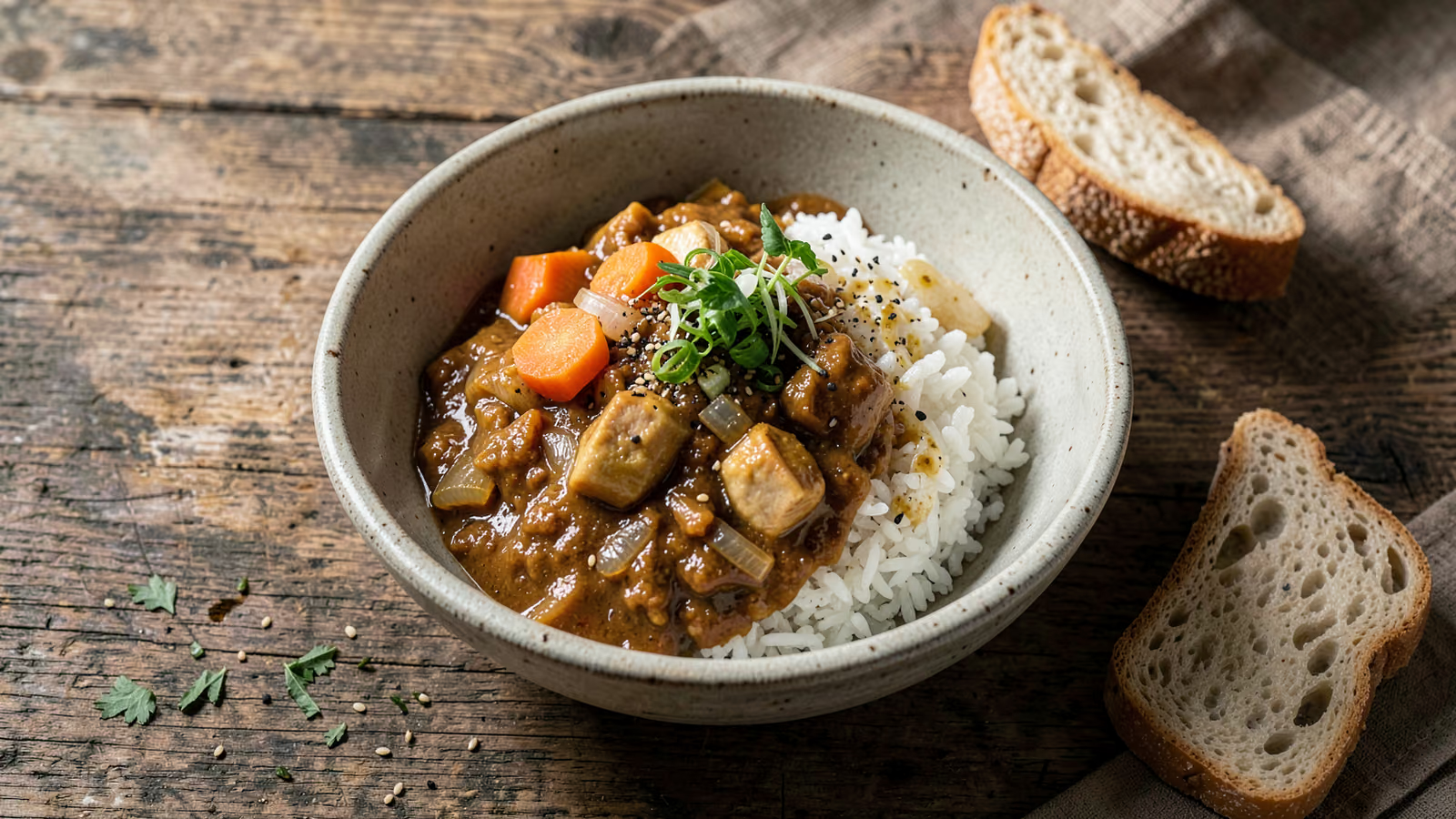
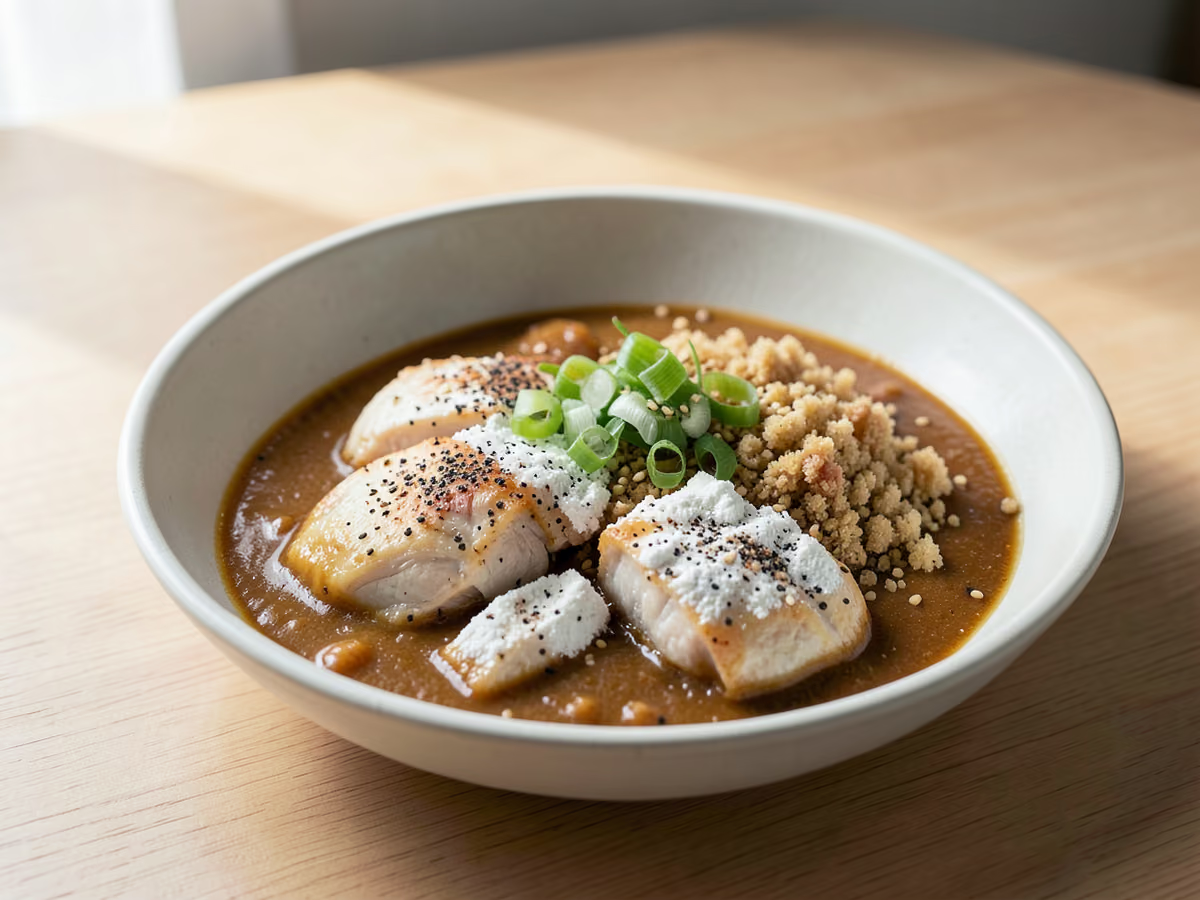
Slice each fried chicken cutlet crosswise into 2 cm strips. Divide the hot cooked Japanese short-grain rice between four bowls, lay the sliced katsu on top, spoon the curry sauce generously over and around the chicken, and scatter with sliced spring onions.
Kitchen notes
Kitchen notes
- The most common mistake is frying at too low a heat: the panko drinks oil and turns greasy before the chicken cooks through. Test with a single crumb, it should sizzle and rise within 2 seconds.
- Press the panko on firmly with your palm and let the breaded cutlets rest for 5 minutes before frying; this prevents the crust from sliding off in the oil.
- Drain the katsu on a wire rack set over a tray, never on paper towels, so steam escapes and the underside stays crunchy.
- For a glossy, restaurant-style sauce, blend half the curry and return it to the pan. Add a splash of hot broth if it thickens too much while you fry the chicken.
- Slice the chicken only after it has rested for 2 minutes; cutting too hot lets the juices run out and softens the crust.
Substitutions
- chicken breasts→boneless chicken thighs or firm tofu slabs for a vegetarian version
- panko breadcrumbs→coarsely crushed cornflakes for a gluten-free option
- all-purpose flour→rice flour or cornstarch in both the breading and the roux for gluten-free
- honey→brown sugar or maple syrup
- chicken broth→vegetable broth for a vegetarian sauce
Storage & reheating
Store leftover curry sauce and rice separately from the fried chicken in airtight containers in the fridge for up to 3 days; the katsu will soften, so keep it in its own container. To reheat, warm the curry in a saucepan over medium heat with a splash of water or broth, and re-crisp the chicken on a wire rack in a 180°C oven for 8 to 10 minutes rather than microwaving it. The curry sauce freezes well for up to 2 months; thaw overnight in the fridge and reheat gently. Fried katsu is best eaten fresh and does not freeze well.
FAQ
The questions we get asked most
Why did my chicken katsu turn out soggy instead of crispy?
The oil was likely too cool, so the panko absorbed oil before it could crisp. Fry at around 170°C, test with a crumb that should sizzle on contact, and drain on a wire rack instead of paper towels. Also avoid crowding the pan, which drops the oil temperature.
Can I make the curry sauce ahead of time?
Yes, the curry sauce actually improves after a day as the spices meld. Cool it quickly, refrigerate for up to 3 days, then reheat gently with a splash of broth. Fry the chicken fresh just before serving so the crust stays crisp.
How do I know when the chicken katsu is fully cooked?
The crust should be deep golden brown and the juices should run clear when you pierce the thickest part with a knife. If you have a thermometer, the center should read 75°C. At 1.5 cm thickness, 4 to 5 minutes per side over medium heat is usually enough.
Can I use store-bought Japanese curry roux cubes instead of making the sauce from scratch?
Yes, use about half a standard box of curry roux cubes. Sauté the onion, carrot and potato first, add 500 ml broth, simmer until the vegetables are tender, then take the pan off the heat and stir in the cubes until dissolved. Simmer for 2 minutes more to thicken.
Why is my curry sauce lumpy?
Lumps form when broth is added all at once to the flour-coated vegetables. Add the hot broth in small splashes, stirring constantly, and whisk out any lumps before adding more. If lumps still form, blend the sauce with an immersion blender.
Can I bake the chicken katsu instead of frying it?
Yes, for a lighter version. Place the breaded cutlets on an oiled wire rack over a baking tray, drizzle or spray the tops with oil, and bake at 200°C for 18 to 22 minutes, flipping once halfway. The crust will be crisp but slightly less rich than fried.
Is chicken katsu curry spicy?
Japanese curry is usually mild and slightly sweet rather than hot. The heat depends on your curry powder; use a mild Japanese blend for the classic flavor, or add a pinch of cayenne or extra garam masala if you want more warmth. The honey and soy sauce round out the spice.
Ask KitchenMind about this recipe
Tell it what’s different tonight — it works within the actual recipe.